TOI blogs
January 22, 2026
LinkedIn post: https://www.linkedin.com/feed/update/urn:li:activity:7419958646102708224/
My Op-ed on TOI blogs: https://lnkd.in/d9dt8UYy.
I begin with a quote from Mark Carney‘s famous speech of 2015, long before his speech at the ongoing #WorldEconomicForum – #Davos – went viral!
With seven of the nine #planetaryboundaries breached, several #earthsystems are wobbly and likely to hit #tippingpoint. The once faraway manifestations – what Mr. Carney the former Bank of England Governor and the current Canadian PM alluded to as “a tragedy of the horizon” – have begun to unfold before us.
The renowned Dr. Johan Rockström warns: Many scientists, myself included, are increasingly worried that, by continuing to warm the planet, we are bringing multiple Earth system tipping points closer to being crossed.
The #AMOC, for instance, was expected to stall only by the turn of the next century. Such is the intensity and speed of what is unravelling that many #climatemodels are faltering.
“An actuarial review of key climate change assumptions shows we may have seriously underestimated the rate of warming as well as the related economic impacts”, says Sandy Trust of the Institute and Faculty of Actuaries (#IFoA).
The Parasol Lost report – from the IFoA and University of Exeter warns: “That without action, global warming is now likely to reach 2°C before 2050, a level associated with catastrophic impacts on societies and economies worldwide… This raises the risk of climate-driven #inflation, #financialshocks, and the withdrawal of insurance from high-risk areas much sooner than many expect…”
Other than risk carriers, #insurers (and #reinsurers) are also investors and risk managers. Do they have the luxury of business as usual? Who is better equipped than the actuaries to #steward the insurers away from “tragedy of the horizon”?
TOI Blogs
January 8, 2026
LinkedIn post: https://www.linkedin.com/feed/update/urn:li:activity:7414892488957575169/
In a recent piece (https://lnkd.in/dZrWQ8SR) I pointed out it was time to revisit vestiges of the yore. Notwithstanding opening up of the insurance biz, knock-for-knock agreement remains embedded in the system. But in this instance, in our rush to rid ‘price controls’ – we also threw away a semblance of risk management practices. That was 25 years ago.
Besieged by a rising frequency and severity of climate risk – just when a new #riskmanagement order ought to be in place – we believe #parametric is the mantra to chant. As a procedure it sounds good and may provide short-term liquidity.
However, substantively they do nothing to reduce underlying risk. Without steep cuts to #globalemissions, storms like Melissa – which recently devastated Jamaica – will intensify, eroding the viability of these financial products altogether. I quote Lisa Sachs, Director, Columbia Center on Sustainable Investment & Columbia Climate School.
Aren’t we barking up the wrong tree?
illuminem
December 24, 2025
illuminem link: https://illuminem.com/illuminemvoices/india-was-in-a-dire-economic-crisis
LinkedIn post: https://www.linkedin.com/feed/update/urn:li:activity:7409513517495541760/
TOI Blogs
December 16, 2025

Link to TOI blog: https://timesofindia.indiatimes.com/blogs/outlier/stop-the-risk-at-its-source/
Dr. Ashok Desai is an eminent economist, scholar, author and journalist. A PhD from University of Cambridge, he was the Chief Economic Advisor to the MInistry of Finance (1991- 93). He played a key role in designing and implementing a radical reform of economic governance, dismantling controls and restrictions that were 50 years old and had outlived their usefulness.
Praveen Gupta: If you were to revisit the Indian reforms agenda of 1991 – what is it that you would wish to do differently?
Ashok Desai: Nothing. India was in a dire economic crisis, what we had to do would have been clear to any economist, the crisis started some years before we came to power, the government had been running to Washington and borrowing from International Monetary Fund (IMF) and World Bank (WB), they set conditions for lending which the government did not fulfil – either because it did not have sufficient political support or because it had ideological objections – and what needed to be done was clear to any rational economist.
“When I entered the office of Chief Economic Advisor, the file on the top was the IMF file. IMF said very succinctly what needed to be done, I wrote that I agreed, and sent the file to the minister“
When I entered the office of Chief Economic Advisor, the file on the top was the IMF file. IMF said very succinctly what needed to be done, I wrote that I agreed, and sent the file to the minister. Later, I published my analysis of the crisis in my first Economic Survey 1991-92; you will find what I thought in the two volumes. The first volume A is fundamental and brief.
PG: The resultant trajectory was at the cost of environmental sustainability. Would you agree?
AD: No. If anyone says what you have and gives a rationale for it; I will refute it. India is the world’s leading superpower in solar power. It could improve its policy on global warming, but whatever it may do or not do will have only a minor impact on global warming. The biggest contributors to global warming over the past 150 years are the industrial countries.
“The answer is complicated, scores of scholarly books and hundreds of articles have been written about it… I will give a brief answer”
PG: What came in the way of India catching up with China?
AD: You presumably mean growth. The answer is complicated, scores of scholarly books and hundreds of articles have been written about it, and I can’t summarize them here. I will give a brief answer. China has done better for four reasons: First, it is a dictatorship: it does not have divisive democratic decision-makers. Second, it used its dictatorial state to save and invest twice India’s savings/GDP and investment/GDP ratio. Third, it did not follow international conventions; it copied and stole technology from all over the world. Finally, although it is a dictatorship, it does not control government authorities lower down. So they had to work out their own ways to grow. There was enormous innovation both in technology and governance at lower levels.
PG: What were the key findings from your thesis on post-war Germany? Can India leverage some of the learnings?
AD: My thesis was not on post-war Germany. It was about investment and income distribution in Germany before World War I. Here it is.
India can learn nothing from Germany before the First World War.
PG: Just like the Japanese economy, Germany too appears to be struggling with its legendary momentum. Does that concern you and if so why?
AD: Both are extremely rich; their people are living well, and will continue to do so even if they don’t do too well. Their problems are very different. Germany is trying to improve the performance of the European Union and manage its relations with Trumpian America; Japan has close economic relations with China and strategic relations with the US and is trying to balance China and USA.
PG: Grateful thanks for these excellent insights, Dr. Desai.
Sanctuary Asia
December 2025
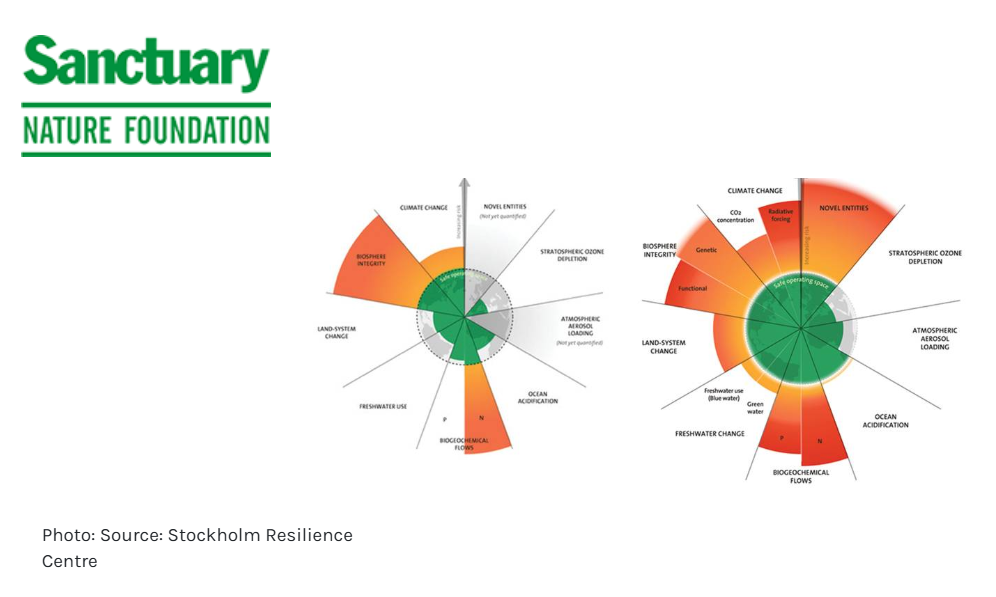

Sanctuary Nature Foundation: https://www.sanctuarynaturefoundation.org/article/let%E2%80%99s-stop-pushing%3A-planetary-boundaries
TImes Of India blogs
December 7, 2025
https://timesofindia.indiatimes.com/blogs/outlier/time-to-knock-off-knock-for-knock/
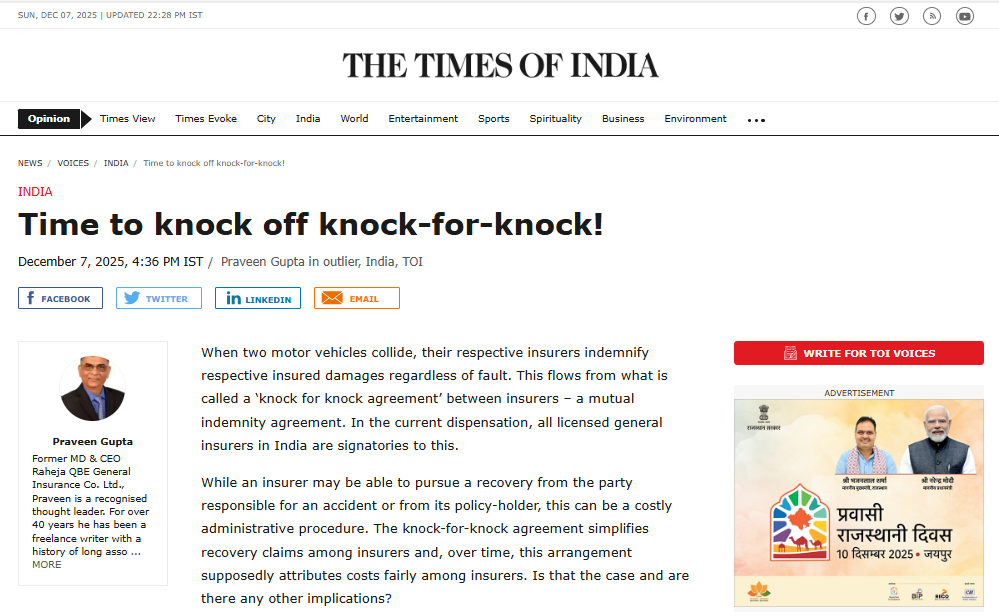
Time to revisit vestiges of the yore. Notwithstanding the opening up of the insurance market, knock-for-knock agreement remains embedded in the system. Dismantling it should clear the path to segment the market. It is not only about profitability of insurers, fair pricing for insureds but also disciplining how we drive on our roads.
LinkedIn post: https://www.linkedin.com/feed/update/urn:li:activity:7403627404125986816/
illuminem
November 17, 2025

https://illuminem.com/illuminemvoices/does-the-amoc-deserve-to-be-a-flop-at-the-cop
LinkedIn: https://www.linkedin.com/feed/update/urn:li:activity:7396106146262163457/
My Op-Ed for illuminem.
As scientific evidence mounts – the Atlantic Meridional Overturning Current (#AMOC) could be on course for collapse. Iceland’s government has made the unusual move of designating the risk a national security threat, prompting a high-level response into how to prepare for this “existential threat.”
Now is our opportunity “to make the #tippingpoints move.. from breakdown to breakthrough”. Given its far-reaching planetary consequences – the #AMOC presents that very opportunity.
If you are seeking to understand “How soon might the Atlantic Ocean break?” Please do read Sandra Upson‘s insightful piece (link in the comments).
🌀 𝐖𝐡𝐚𝐭 𝐚𝐛𝐨𝐮𝐭 𝐭𝐡𝐞 𝐀𝐌𝐎𝐂? – Praveen Gupta maps out the reality of our planetary crises, and asks if we’re truly choosing to look the other way: https://lnkd.in/e2tecF2M:

Sanctuary Asia
October, 2025

Fasting or on a frugal diet while awaiting the return of sea-ice in Hudson Bay – when it can return to seal or beluga hunting.
Online story: Climate Learnings From Polar Bears
LinkedIn post: https://www.linkedin.com/feed/update/urn:li:activity:7379184164971053057/
Polar bears: ”Fat white hairy canaries in the coalmine”
Spotting polar bears in an ice free terrain is the last thing one would expect, as I did: https://lnkd.in/dBsYr_Uy.
Churchill (Manitoba, Canada) a small remote town in Western Hudson Bay area is the ‘polar bear capital of the world’. When sea ice melts in summer – some 600 plus of them move on land awaiting return of ice. As the ocean warms, the return period of ice is getting longer. Much of such time the bears generally fast and can lose a kilo of weight each day.
The fat white furry things are ‘lipovores’. Lack of their favourite seal meat over an extended period results in a lower ‘replacement rate’ for an already shrinking population. Scientists are also concerned about growing shipping activity as the arctic is becoming ice free.
Polar bears are canaries in the coal mine. However eco-tourism entrepreneur Wally Daudrich, a longtime Churchill resident tells me – he remains hopeful.
Sanctuary Asia
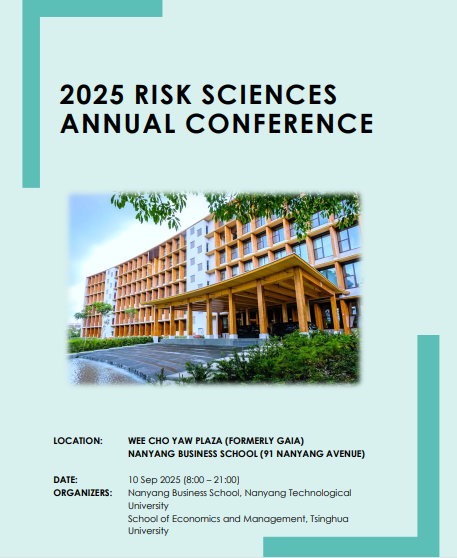
2025 Risk Sciences Annual Conference
September 10, 2025

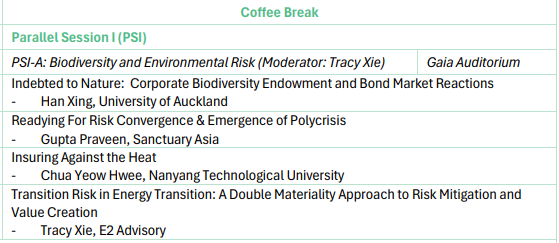

LinkedIn: https://www.linkedin.com/feed/update/urn:li:activity:7371758004553146368/
 The Diversity Blog