“If the forests are destroyed the tiger will go and if the tiger is wiped out the forest will be destroyed”: Tiger talk with Bittu Sahgal.

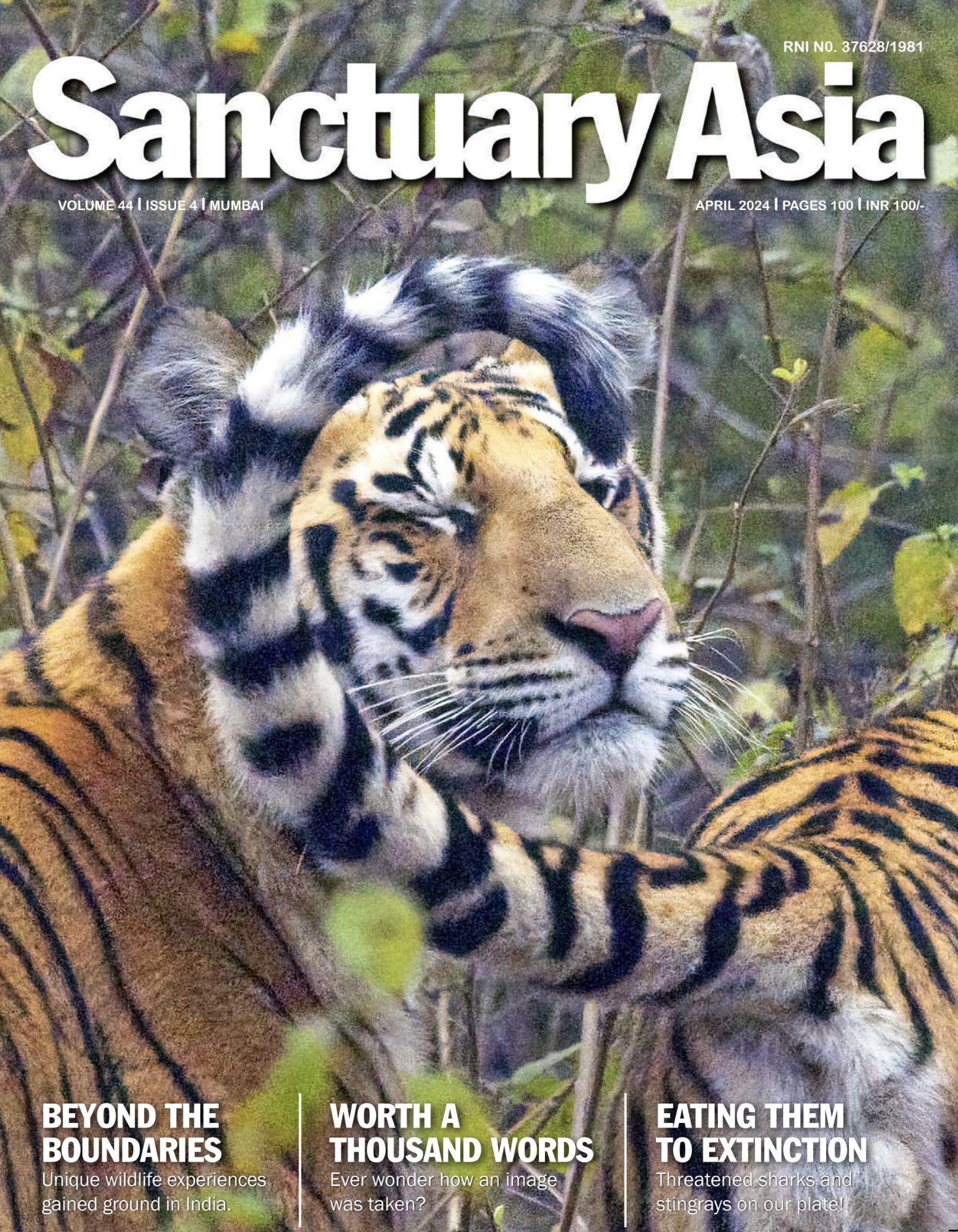
Bittu Sahgal is the Editor of Sanctuary Asia magazine and heads India’s Sanctuary Nature Foundation. With near five decades of brilliant work in Nature conservation and first hand insights into Project Tiger – Bittu is the go to person for anything to do with tigers. But the tiger is just a metaphor, he reminds!
Praveen Gupta: As a keystone species, how critical is the role of tigers for the reserves they live in?
Bittu Sahgal: Tigers are apex predators that keep prey species numbers in check… which prevents herbivores from overgrazing the plants upon which countless lifeforms are dependent. Tigers also happen to be among the most charismatic and loved animals in the world and are worshipped as gods in India. This enabled conservationists to set aside vast, intact forested areas of the Indian subcontinent for the striped predators, which would almost certainly otherwise have succumbed to the axe, plough, bulldozers and dam reservoirs. As far as criticality goes, post-Independence, Project Tiger turned out to be the world’s first, to scale, rewilding project and it continues to be a metaphor for the resurrection of wild nature across the world.
“We can be very sure that fragmentation of tigers habitats, which is ongoing in India will result in a loss of genetic diversity, not only of Panthera tigris, but of uncounted species that occupy the diverse habitats”
PG: Compared to the Asiatic lion which has just one home in the wild, does their extensive spread make tigers more resilient owing to genetic diversity?
BS: Without a shadow of doubt, the Gir lion is in a genetic cul-de-sac. As little as 15,000 years ago, we had Barbary lions in North Africa, Cape lions in South Africa, and cave lions in parts of North America and Eurasia. The cave lions vanished some 14,000 years ago and the others were driven to extinction by Homo sapiens and their evolving weaponry in the last couple of centuries.
PG: How critical are wildlife corridors for the tigers?
BS: Very critical! Cornell’s College of Vetinarary Medicine quotes geneticist Uma Ramakrishnan, principal investigator of the 2021 study published in Molecular Biology and Evolution thus:
The tiger (Panthera tigris) is an iconic and charismatic endangered species that once spanned 70 degrees of latitude across Asia. It is estimated that between 2,154 and 3,159 tigers remain, which occupy less than 6% of their 1900 AD range (Goodrich et al. 2015). Despite this recent range collapse, tigers are present across 11 Asian nations, occupying diverse habitats including estuarine mangrove forests (the Sundarbans), dry deciduous forests (parts of India), tropical rainforests (Malay Peninsula), and cold, temperate forests (Russian Far East). However, the specific adaptations of the various populations to their habitats remain largely unknown.
We can be very sure that fragmentation of tigers habitats, which is ongoing in India will result in a loss of genetic diversity, not only of Panthera tigris, but of uncounted species that occupy the diverse habitats India was able to set aside in 1973, precisely to protect varied ecosystems together with their plant and animal constituents. We have examples of both Sariska and Panna tiger reserves, which witnessed the tragic local extinction of tigers. Forget genetic diversity, even though we managed to restock these tiger reserves, I wonder whether lessons for the long-term survival of Panthera tigris were actually learned.
“So tiger reserve numbers are rising as are tiger numbers themselves, yet the future of the tiger is looking bleaker by the day because of the loss of corridor connectivity”
PG: Is the tiger mobility between reserves closely tracked?
BS: Yes tiger mobility is being very closely tracked using satellite collars and thousands of camera traps, but the recommendations made by conservation biologists do not seem to carry much weight with India’s policy makers and land manager. So tiger reserve numbers are rising as are tiger numbers themselves, yet the future of the tiger is looking bleaker by the day because of the loss of corridor connectivity.
Dr. Anish Andheria of the Wildlife Conservation Trust explains this well in Sanctuary Asia:
Habitat connectivity must therefore be seen to be critical to the survival of Panthera tigris tigris through a combination of stable corridors such as riparian/riverine forests with minimal human disturbance and well-protected Territorial Forests situated within 50 km. from national parks and sanctuaries. It is equally important that the human population living close to tiger forests know how to and are willing to live in relative peace with tigers and the wild herbivores upon which the carnivores depend.
PG: Which part of our geography makes their most secure home?
BS: It’s like shifting sands. The future of the tiger depends on whose advice India’s policy makers implement.
The Sub-Himalayan Terai Ark Landscape has great resurrection potential. So do the forests of Central India comprising Madhya Pradesh, Maharashtra and Chhattisgarh. Without a shadow of doubt the forests of the Western Ghats could offer tigers a secure future too. It all depends on whether India believes that its own future in an era of a galloping climate crisis is dependent more upon the resurrection of natural infrastructures, or on the iffy technology on which Homo sapiens seems to be placing all its bets today.
“It all depends on whether India believes that its own future in an era of a galloping climate crisis is dependent more upon the resurrection of natural infrastructures, or on the iffy technology on which Homo sapiens seems to be placing all its bets today“
Q6. What is the biggest threat in the long list of challenges? Is it poaching, encroachment, human wildlife conflict, deforestation, dam building, loss of bio-diversity or climate change?
BS: All the above! The greatest threat is the mistaken belief that the Homo sapiens’ ‘intelligence’ can prevail over the ‘survival rules’ laid down by the biosphere… that Darwin was wrong when he placed adaptation to the biosphere higher on the survival scale than brute strength or intelligence. Lord Nicholas Stern, one of the world’s most respected economists seems to agree with Darwin and has been warning for decades that the cost of (climate) inaction will prove to be far greater in the future than the cost of action today!
PG: You have been watching tigers in the wild for close to 50 years. What is one thing that you would wish to reverse if you could go back into time?
BS: I would return to the wisdom of the ages, to resurrect India by protecting and nurturing its natural wealth, which is what gave birth to our great cultures. That is where lie the Earth’s solutions to the climate catastrophe we have brought down upon ourselves:
निर्वनो वध्यते व्याघ्रो निर्व्याघ्रं छिद्यते वनम्। तस्माद्व्याघ्रो वनं रक्षेद्वयं व्याघ्रं च पालयेत् ॥ -महाभारत – उद्योग पर्व : ५.२९.५७
Loosely translated this line from the Mahabharata suggests (metaphorically) that If the forests are destroyed the tiger will go and if the tiger is wiped out the forest will be destroyed. – Mahabharat -Udyoga Parva: 5.29.57.
PG: Grateful for these candid insights, Bittu. Your passion for Nature is truly inspiring. May you keep showing us the path in these tough times.
 The Diversity Blog