“India was in a dire economic crisis…”
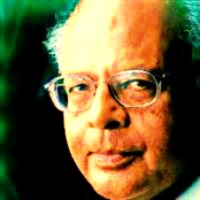
Dr. Ashok Desai is an eminent economist, scholar, author and journalist. A PhD from University of Cambridge, he was the Chief Economic Advisor to the MInistry of Finance (1991- 93). He played a key role in designing and implementing a radical reform of economic governance, dismantling controls and restrictions that were 50 years old and had outlived their usefulness.
Praveen Gupta: If you were to revisit the Indian reforms agenda of 1991 – what is it that you would wish to do differently?
Ashok Desai: Nothing. India was in a dire economic crisis, what we had to do would have been clear to any economist, the crisis started some years before we came to power, the government had been running to Washington and borrowing from International Monetary Fund (IMF) and World Bank (WB), they set conditions for lending which the government did not fulfil – either because it did not have sufficient political support or because it had ideological objections – and what needed to be done was clear to any rational economist.
“When I entered the office of Chief Economic Advisor, the file on the top was the IMF file. IMF said very succinctly what needed to be done, I wrote that I agreed, and sent the file to the minister“
When I entered the office of Chief Economic Advisor, the file on the top was the IMF file. IMF said very succinctly what needed to be done, I wrote that I agreed, and sent the file to the minister. Later, I published my analysis of the crisis in my first Economic Survey 1991-92; you will find what I thought in the two volumes. The first volume A is fundamental and brief.
PG: The resultant trajectory was at the cost of environmental sustainability. Would you agree?
AD: No. If anyone says what you have and gives a rationale for it; I will refute it. India is the world’s leading superpower in solar power. It could improve its policy on global warming, but whatever it may do or not do will have only a minor impact on global warming. The biggest contributors to global warming over the past 150 years are the industrial countries.
“The answer is complicated, scores of scholarly books and hundreds of articles have been written about it… I will give a brief answer”
PG: What came in the way of India catching up with China?
AD: You presumably mean growth. The answer is complicated, scores of scholarly books and hundreds of articles have been written about it, and I can’t summarize them here. I will give a brief answer. China has done better for four reasons: First, it is a dictatorship: it does not have divisive democratic decision-makers. Second, it used its dictatorial state to save and invest twice India’s savings/GDP and investment/GDP ratio. Third, it did not follow international conventions; it copied and stole technology from all over the world. Finally, although it is a dictatorship, it does not control government authorities lower down. So they had to work out their own ways to grow. There was enormous innovation both in technology and governance at lower levels.
PG: What were the key findings from your thesis on post-war Germany? Can India leverage some of the learnings?
AD: My thesis was not on post-war Germany. It was about investment and income distribution in Germany before World War I. Here it is.
India can learn nothing from Germany before the First World War.
PG: Just like the Japanese economy, Germany too appears to be struggling with its legendary momentum. Does that concern you and if so why?
AD: Both are extremely rich; their people are living well, and will continue to do so even if they don’t do too well. Their problems are very different. Germany is trying to improve the performance of the European Union and manage its relations with Trumpian America; Japan has close economic relations with China and strategic relations with the US and is trying to balance China and USA.
PG: Grateful thanks for these excellent insights, Dr. Desai.
 The Diversity Blog