“To educate a woman is to educate a nation”
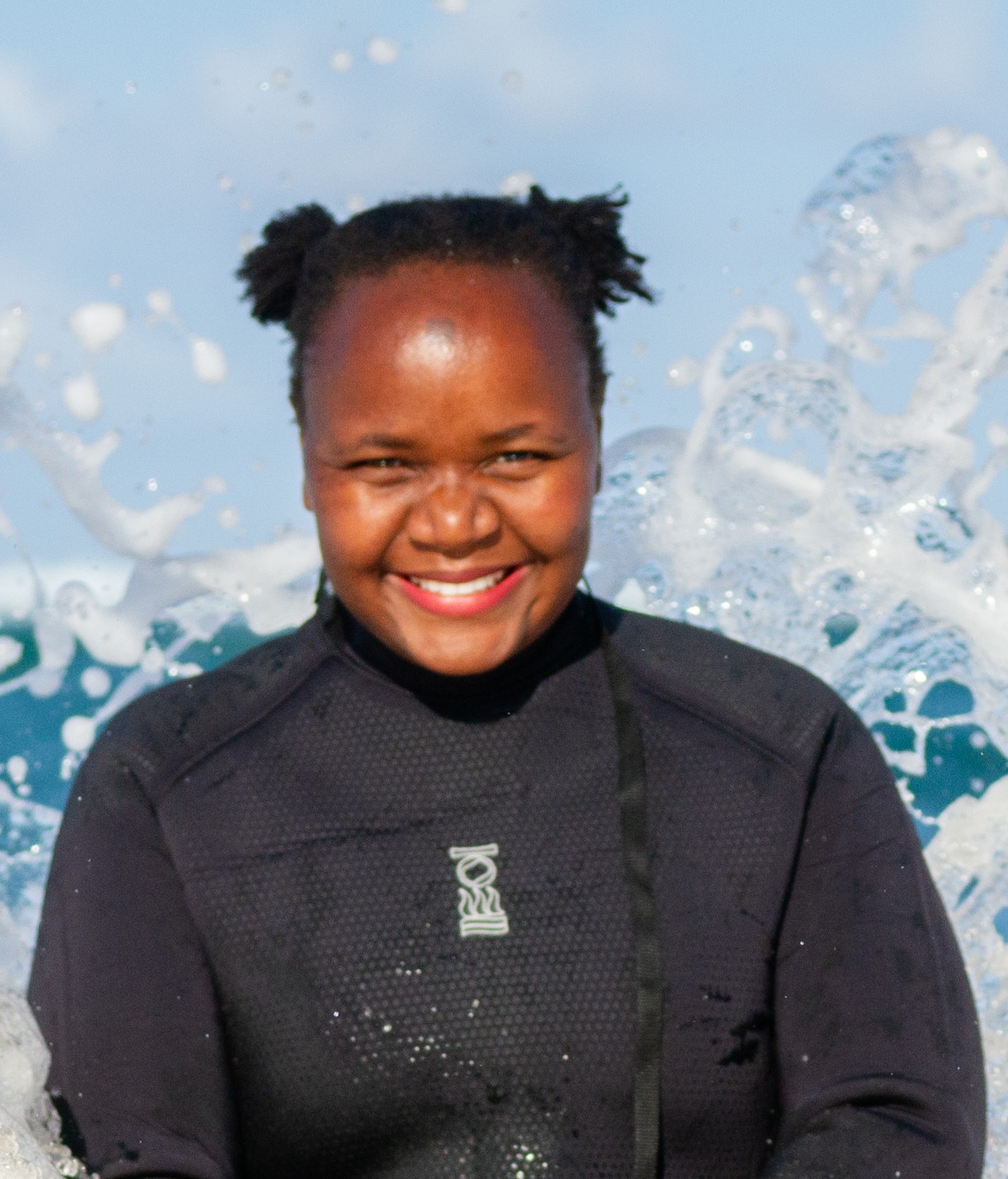
Juila Sitoe is a Marine Biologist based in Mozambique. Her work focuses on species identification and marine resource sustainability. She currently serves as Regional Coordinator for Minorities in Shark Sciences (MISS) in Africa, where she advocates for greater representation of African early-career professionals in ocean sciences.
Julia holds a degree in marine, aquatic, and coastal biology from Eduardo Mondlane University and has experience in research, scientific curation, mangrove conservation, and studies on ichthyoplankton & elasmobranchs. Julia is committed to advancing marine conservation through research, community education, and capacity building.
“A mother who understands the basics of marine biology contributes to raising a generation of children, adolescents, and young people with a clearer understanding of marine ecosystems, resource management, and the consequences of poor environmental practices“: Julia shares this nugget with me.
Praveen Gupta (PG): Why do you believe community education is very important as a first step towards desired change?
Julia Sitoe (JS): I believe that community education is a fundamental first step towards meaningful and lasting change. When a community is educated about environmental conservation whether marine or terrestrial the impact of any implemented project extends beyond its duration. Even after the project ends, the community continues the work because its members understand the importance of preserving their natural resources. They recognise that they are the primary beneficiaries of sustainable fisheries and terrestrial resource management.
PG: How is a women-focused ocean literacy programme key to introducing marine biology concepts to community members?
JS: I believe that a women-focused ocean literacy programme is key to introducing marine biology concepts to community members. In most Mozambican households, mothers are primarily responsible for their children’s education. A mother who understands the basics of marine biology contributes to raising a generation of children, adolescents, and young people with a clearer understanding of marine ecosystems, resource management, and the consequences of poor environmental practices. As a result, children and young people share this knowledge with friends, colleagues, and neighbours, multiplying its impact. There is a saying that “to educate a woman is to educate a nation,” and I strongly believe that women are central to fostering a more environmentally conscious generation.
PG: What are threats arising from the use of micro-nets and bottom trawling in your waters?
JS: Yes, the most recurrent threats associated with the use of micro-nets include the disruption of fisheries sustainability due to habitat destruction and the capture of juvenile species. The small mesh size makes these nets highly non-selective, leading to increased bycatch. This directly affects local communities by increasing the risk of a drastic decline in fish stocks.
“Illegal fishing poses a serious threat to food security and to the livelihoods of artisanal fishers, directly impacting coastal communities
We also face significant challenges related to bottom trawling and illegal fishing. One of the main obstacles in addressing these issues is the weakness of our monitoring and enforcement systems, which are insufficient to properly control and supervise foreign vessels that do not dock in national ports. Additionally, the growing demand for deep-sea shrimp has intensified bottom trawling activities. Due to limited coastal enforcement in Mozambique, unidentified industrial vessels can operate destructively, damaging marine habitats. Illegal fishing poses a serious threat to food security and to the livelihoods of artisanal fishers, directly impacting coastal communities.
PG: What was your role in shark science development and your work on advocacy for African early-career professionals and women?
JS: My involvement in shark research began through my affiliation with the North American organisation Minorities in Shark Science (MISS), which supports underrepresented groups in ocean sciences, with a focus on elasmobranch research. I participated in the Diversifying Ocean Science Fellowship, which focused on tropical ecology. During this programme, I gained hands-on experience in shark and ray conservation efforts in Miami’s Biscayne Bay aboard the research vessel Dr. Garvin.
I was trained in capture techniques and in the collection and processing of biological and morphometric data. This experience enabled me to develop a final project focused on the biodiversity of elasmobranchs, fish, and macroinvertebrates in Biscayne Bay.
Regarding advocacy, I volunteered as the Regional Representative for Africa within MISS. In this role, I work to raise awareness about opportunities available to minorities in the Global South, with the goal of increasing the representation of Black African professionals in ocean sciences.
PG: As an Outreach Officer at ‘Love the Oceans’, what was your mission and how did it go?
JS: As Outreach Officer at Love The Oceans, my primary mission was to raise awareness among private and international schools in Maputo about the marine conservation projects developed in Inhambane, Mozambique. The goal was to spark interest in participating in our school expeditions.
In terms of awareness-raising, the mission was successful. The school visits provided students with a more realistic understanding of how marine conservation initiatives are implemented in practice. However, participation in the school expeditions was limited due to the political instability in the country between mid-October 2024 and mid-2025, following demonstrations related to the general election results. During this period, school principals and administrators did not feel it was safe for students to travel to another province.
“Overfishing these species can lead to uncontrolled algal proliferation, ultimately damaging coral reef ecosystems
PG: As a member of the plankton lab team what was the collection of mesozooplankton samples about?
JS: During the multidisciplinary oceanographic cruise conducted in February 2025, the main objective was to assess the initial state of fishery resources in the Sofala Bank, with a particular focus on plankton communities. Mesozooplankton samples were collected to study their spatial distribution in the area. This information is essential for informing future fisheries management measures, especially considering that the Sofala Bank is the most important shrimp fishing area in Mozambique. Understanding the early-life stages of marine resources is therefore crucial for sustainable management.
PG: Any key learnings you would wish to share?
JS: During my time in Jangamo, where I monitored artisanal fisheries, the sustainability of fishing practices varied by location. At Guinjata Beach, fishing nets were predominantly used, while at Paindane Beach, line and hook methods were more common. This difference in gear strongly influenced the types of species caught.
At Guinjata Beach, many of the species caught were herbivorous fish, which play a crucial role in maintaining coral reef health by controlling algal growth. Overfishing these species can lead to uncontrolled algal proliferation, ultimately damaging coral reef ecosystems. To address this issue, Love The Oceans developed a sustainable fishing project that included providing kayaks to local fishers, preceded by extensive awareness-raising activities.
At Paindane Beach, fishing methods were generally less harmful to the marine environment, requiring less intensive awareness efforts.
Jangamo Bay is rich in marine biodiversity, including several species of sharks, rays, and dolphins. The dolphins observed in the bay often dispersed when they heard boat engines. They typically travelled in groups, sometimes consisting of a mother and calf, and in other cases groups of more than five individuals.
Humpback whales were commonly observed in Jangamo Bay between May and December. Frequently observed behaviours included breaching and tail slapping. Males competing for females and mothers accompanied by calves were also documented.
PG: Many thanks Julia for sharing these interesting insights. Best wishes for your endeavour in safeguarding our ocean biodiversity.
Blog interview also carried by illuminem: https://illuminem.com/illuminemvoices/to-educate-a-woman-is-to-educate-a-nation
 The Diversity Blog