
Walter Murphy began his career in the U.S. political world serving a member of Congress before transitioning to the insurance industry. He spent almost twenty years in the property & casualty market, working for ISO, AIG and QBE in a product development and compliance role. He currently is an Environment, Societal & Governance (ESG) Risk Associate at BMO Capital Markets where he helps manage ESG risk for the bank’s first line of defense (1LOD).
Praveen Gupta: You recently mentioned that the Florida state fund is now bigger than the private sector as more and more insurers refuse to provide homeowner insurance in the state?
Walter Murphy: That’s correct. Florida’s state-run insurance program, which is supposed to be an insurer of last resort, has instead become the largest insurer in the state. Since more and more private carriers have become insolvent or have withdrawn from Florida, Florida Citizens Property Insurance Corp. has become the largest property insurer in the state. Citizens has grown to provide nearly 20 percent of Florida’s property insurance. Insurance costs have risen tremendously due to the intensity and frequency of hurricanes battering the state, resulting in more carriers to exit the state rather than deal with rising costs. If the state-run program does not have enough funds to cover insurance claims because of hurricanes, then Florida taxpayers will need to cover the balance.
PG: Given the growing hurricane activity on the Florida coast, the climate risk exposure is only bound to rise?
WM: Indeed. The Atlantic hurricane season is starting earlier and ending later due to the warming of the oceans in the Atlantic Ocean as well as the Gulf of Mexico. As you know, it’s this warming of the oceans which increases the intensity of the storms and dumps more rain than ever before. Another climate risk exposure that is particular to Florida is, of course, the issue of rising seas. Not only are properties that are situated on Florida’s coasts vulnerable, but because Florida is mostly lowland and just above sea-level there is now the threat that as oceans rise seawater will now begin permeating the geology and begin mixing with and polluting the groundwater.
“A recent report by First Street Foundation, a non-profit focusing on climate risk research, found 23.9 million properties in the US are at risk from damaging winds, 4.4 million properties at risk from wildfire, and a further 12 million properties have a significant risk of flooding.”
PG: It does not stop with Florida?
WM: It’s not just in Florida. You will see this in other parts of the country as well. California (wildfires), Louisiana (hurricanes/flooding), Texas (wildfires/hurricanes) are all feeling the stress of climate change and seeing large insurance carriers either dramatically raising rates or have abandoned the marketspace entirely. And it will not be relegated to coastal states. The Midwest is seeing more intense weather events – flooding, tornados, wind, hail – which are impacting insurance prices. In fact, a recent report by First Street Foundation, a non-profit focusing on climate risk research, found 23.9 million properties in the US are at risk from damaging winds, 4.4 million properties at risk from wildfire, and a further 12 million properties have a significant risk of flooding.
PG: How much of this is about politics? One impression emerging is that the state regulators do not wish to see the insurance rates going up too fast. And that these rates are not profitable enough for the insurers to stay in the game?
WM: Politics certainly does play its part in all of this. Insurance is regulated at the state level, so there is an insurance regulator in each state whose main role is to ensure that insurance rates and premiums remain affordable and that there is adequate coverage in its state. Climate change is and will continue to make regulators’ jobs harder and harder. As more frequent and costlier weather events occur, it puts more and more strain on private carriers. And it’s not just the small and medium sized enterprises. The major carriers also are struggling and rethinking where they want to off coverage.
Take California for example. In 2023, State Farm, one of the US’ biggest insurance providers, announced it too would stop selling new home insurance policies in California due to historic increases in construction costs outpacing inflation, rapidly growing catastrophe exposure, and a challenging reinsurance market. This was due to the devastating wildfires and floods in recent years, and the ever-looming threat of a major earthquake. For years, the California Department of Insurance would not allow carriers to price climate risk into their rates. The Department finally had to acquiesce because it could not afford to lose any more carriers to flee the state and allowed insurance companies to consider climate change when setting their prices which, of course, raised homeowners rates even higher.
“U.S. insurers currently have approximately $582 billion invested in fossil fuels, including nearly $90 billion in coal alone.”
PG: But then insurers are aiding and abetting climate breakdown by investing in and insuring the fossil fuel business?
WM: Unfortunately, that is still the case. In the United States, the insurance industry continues to support existing and expanded fossil fuel projects with few restrictions in place limiting – or excluding – either. U.S. insurers continue to underwrite polluting projects while making investments in an industry whose continued expansion poses multiple serious dangers to overall economic stability and to insurance services in particular. Many U.S. insurance companies are beginning to limit the scope of coverage they will provide – or pull out of markets entirely – due to their assessments of the likelihood of coming “catastrophic risk” caused by climate change. At the same time, and despite evidence that new and expanded oil, coal, and gas development is incompatible with global climate goals and long-term economic stability, the U.S. insurance industry is continuing to support fossil fuel expansion: U.S. insurers currently have approximately $582 billion invested in fossil fuels, including nearly $90 billion in coal alone.
PG: Not only does the insurance sector need to divest from fossil fuel, but also rethink its operating model – as climate change clearly has disrupted the old way of doing business?
WM: The insurance and reinsurance sectors are facing what many other financial and industrial sectors are facing and that is the concept of “double materiality”. Double materiality considers both the effects an organization has on the climate and environment and the potential impact of these factors on its financial performance. A double materiality approach recognizes that organizations contribute to, and are affected by, climate change.
The insurance and reinsurance sectors continue to underwrite fossil fuel projects and continue to invest premiums in fossil fuel companies, thereby exacerbating the climate risks (hurricanes, flooding, wildfires, etc.) that directly affect their business. They have and continue to contribute to climate change. In double materiality, the insurance sector is also highly vulnerable to transition risk. As the world accelerates its energy transition pace to move from a fossil fuel-based economy to one run by renewable energy, all those fossil fuel assets that the insurance and reinsurance sector continue to hold and finance become highly vulnerable to becoming stranded assets. Any energy sector asset, including coal, oil, gas reserves, and fossil fuel power generators, are considered the most potential climate stranded assets.
PG: Why aren’t the likes of pollution and biodiversity loss factored as externalities when pricing risks?
WM: I think you are beginning to see more traction when it comes to the plight of biodiversity loss and what it not only means for the insurance sector but for humanity in general. Deforestation, land-use change, overfishing, pollution, climate change and the introduction of invasive alien species have resulted in biodiversity losses. One million known species could go extinct within decades. At the same time, more than half of the world’s economic output depends either highly or moderately on nature and its benefits, such as fertile soils, food supply, clean water, climate control, erosion prevention and flood control.
“The potential economic loss from the biodiversity crisis is driving a need for insurers to better assess related risks.”
The Taskforce on Nature-related Financial Disclosures (TNFD) has really tried to bring more attention to the biodiversity crisis and how the insurance sector can price biodiversity into its risk models. The success of insurance underwriting always lies in the proper pricing of risk. The potential economic loss from the biodiversity crisis is driving a need for insurers to better assess related risks.
PG: This is an election year in the US. How would the political outcome influence the way insurers behave?
WM: Biden good, Trump bad. At the federal and international level, the presidential election will have tremendous bearing on the future of U.S. climate policy. As I indicated earlier, since insurance is regulated at the state level, it’s the down ballot elections that matter more – insurance commissioner, state legislature, governor. But I am not sure politics is really the main influencer when it comes to financial institutions and insurance companies turning away from fossil fuels.
Policy and regulations certainly do have an effect, but I think change is being driven more by economics and by choices being demanded by society. More people than ever believe that humans have affected the climate and are buying products and investing more of their money into green and sustainable products and services. Most renewable energy is now cheaper than or on par with fossil fuels and is getting cheaper every year. Economics and society are accelerating the transition. Pro-environment governments and their aggressive climate policies certainly would be welcome.
PG: ESG does not get even lip service. Any prospects for moving the needle there?
WM: Well, in America, ESG was all the rage until Republicans heard about it. Then ESG became a dirty three letter word as a symbol for being “woke” and it has become Republicans’ bogeyman. As you know, there has been a considerable amount of anti-ESG legislation that has been introduced throughout the country and some of it has been signed into law in “red states”. We’ve also seen the abuse of the term – products and financial services listed as “green” or “ESG-friendly” which has led to a considerable rise in claims of greenwashing.
Ultimately, I think the principles of ESG will continue to be touted and incorporated in financial institutions and the insurance industry simply because they are values that are proven to increase financial, societal, and environmental impact as well as ensure long-term competitiveness. In fact, I think ESG considerations are becoming more – not less – important in companies’ decision making simply because more of society is insisting upon these values and insisting that they be incorporated in companies’ that they work for and interact with in their daily lives.
PG: Many thanks Walter for these fantastic insights. It is really critical that the U.S. sets its house in order on the Climate and Bio-diversity front. I quite agree with you that your insurers cannot continue underwriting polluting projects and making investments in an industry whose continued expansion poses multiple serious dangers to overall economic stability and to insurance services in particular.
Illuminem.com
April 11, 2024


A tiger in the crosshairs image from an early campaign of ‘Project Tiger’ has stayed with me forever. The initiative ensured that the tiger stays on and continues to roar & rule our jungles.
Bittu Sahgal represents a rare breed that has relentlessly worked to ensure this success. “Project Tiger turned out to be the world’s first, to scale, rewilding project and it continues to be a metaphor for the resurrection of wild nature across the world”, he tells me in this fascinating conversation.
“Fragmentation of tiger habitats, which is ongoing in India will result in a loss of genetic diversity, not only of Panthera tigris, but of uncounted species that occupy the diverse habitats”, warns Bittu.
Moreover, the choices we now make will be very critical: “It all depends on whether India believes that its own future in an era of a galloping #climatecrisis is dependent more upon the resurrection of natural infrastructures, or on the iffy technology on which Homo sapiens seems to be placing all its bets today”.
Can we really afford to ignore his wise counsel?
The Journal, Chartered Insurance Institute
April 9, 2024
https://thejournal.cii.co.uk/2024/04/09/boeing-it-really-about-supply-chain

https://www.linkedin.com/feed/update/urn:li:activity:7186562350299111424
My Op-ed for the Journal, Chartered Insurance Institute.
For a discerning flier – howsoever infrequent – an airline and its fleet are no longer under-the-radar. Not just the 737 MAX, anything everything to do with the top aircraft manufacturer Boeing tends to raise an alarm.
Some assorted stories flying in the popular media range anything from: Assembling of 787 Dreamliner sections that could weaken the aircraft over time; deliveries falling off the cliff; stock on its worst losing streak since 2018; the Federal Aviation Administration looking into an engine cover that came off a flight; a supplier said it tried using other household products like Vaseline and cornstarch as lubricant before it settled on using liquid Dawn soap; awards outgoing CEO Dave Calhoun a 45% pay rise; Airbus claiming it will leave Boeing in the dust this year. In operation for at least four decades, the last one-and-a-half months are proving not to be a good time for Boeing’s US-made AH-64 Apache heavy attack helicopter. (Stories with respective links in the comments).
Boeing’s acquisition of McDonnel Douglas, believe some, was the starting point of this turbulence. It compounded with the outsourcing of Dreamliner (787). The root cause, however, can be traced to its board room rather than #supplychain. A case study of one of the finest engineering companies going off the flight path. Thanks to an astute observer and commentator – Alison Taylor – that we arrive at this level of discernment.
#corporateculture #groupthink #speakup #corporatecapture #governance

Bittu Sahgal is the Editor of Sanctuary Asia magazine and heads India’s Sanctuary Nature Foundation. With near five decades of brilliant work in Nature conservation and first hand insights into Project Tiger – Bittu is the go to person for anything to do with tigers. But the tiger is just a metaphor, he reminds!
Praveen Gupta: As a keystone species, how critical is the role of tigers for the reserves they live in?
Bittu Sahgal: Tigers are apex predators that keep prey species numbers in check… which prevents herbivores from overgrazing the plants upon which countless lifeforms are dependent. Tigers also happen to be among the most charismatic and loved animals in the world and are worshipped as gods in India. This enabled conservationists to set aside vast, intact forested areas of the Indian subcontinent for the striped predators, which would almost certainly otherwise have succumbed to the axe, plough, bulldozers and dam reservoirs. As far as criticality goes, post-Independence, Project Tiger turned out to be the world’s first, to scale, rewilding project and it continues to be a metaphor for the resurrection of wild nature across the world.
“We can be very sure that fragmentation of tigers habitats, which is ongoing in India will result in a loss of genetic diversity, not only of Panthera tigris, but of uncounted species that occupy the diverse habitats”
PG: Compared to the Asiatic lion which has just one home in the wild, does their extensive spread make tigers more resilient owing to genetic diversity?
BS: Without a shadow of doubt, the Gir lion is in a genetic cul-de-sac. As little as 15,000 years ago, we had Barbary lions in North Africa, Cape lions in South Africa, and cave lions in parts of North America and Eurasia. The cave lions vanished some 14,000 years ago and the others were driven to extinction by Homo sapiens and their evolving weaponry in the last couple of centuries.
PG: How critical are wildlife corridors for the tigers?
BS: Very critical! Cornell’s College of Vetinarary Medicine quotes geneticist Uma Ramakrishnan, principal investigator of the 2021 study published in Molecular Biology and Evolution thus:
The tiger (Panthera tigris) is an iconic and charismatic endangered species that once spanned 70 degrees of latitude across Asia. It is estimated that between 2,154 and 3,159 tigers remain, which occupy less than 6% of their 1900 AD range (Goodrich et al. 2015). Despite this recent range collapse, tigers are present across 11 Asian nations, occupying diverse habitats including estuarine mangrove forests (the Sundarbans), dry deciduous forests (parts of India), tropical rainforests (Malay Peninsula), and cold, temperate forests (Russian Far East). However, the specific adaptations of the various populations to their habitats remain largely unknown.
We can be very sure that fragmentation of tigers habitats, which is ongoing in India will result in a loss of genetic diversity, not only of Panthera tigris, but of uncounted species that occupy the diverse habitats India was able to set aside in 1973, precisely to protect varied ecosystems together with their plant and animal constituents. We have examples of both Sariska and Panna tiger reserves, which witnessed the tragic local extinction of tigers. Forget genetic diversity, even though we managed to restock these tiger reserves, I wonder whether lessons for the long-term survival of Panthera tigris were actually learned.
“So tiger reserve numbers are rising as are tiger numbers themselves, yet the future of the tiger is looking bleaker by the day because of the loss of corridor connectivity”
PG: Is the tiger mobility between reserves closely tracked?
BS: Yes tiger mobility is being very closely tracked using satellite collars and thousands of camera traps, but the recommendations made by conservation biologists do not seem to carry much weight with India’s policy makers and land manager. So tiger reserve numbers are rising as are tiger numbers themselves, yet the future of the tiger is looking bleaker by the day because of the loss of corridor connectivity.
Dr. Anish Andheria of the Wildlife Conservation Trust explains this well in Sanctuary Asia:
Habitat connectivity must therefore be seen to be critical to the survival of Panthera tigris tigris through a combination of stable corridors such as riparian/riverine forests with minimal human disturbance and well-protected Territorial Forests situated within 50 km. from national parks and sanctuaries. It is equally important that the human population living close to tiger forests know how to and are willing to live in relative peace with tigers and the wild herbivores upon which the carnivores depend.

PG: Which part of our geography makes their most secure home?
BS: It’s like shifting sands. The future of the tiger depends on whose advice India’s policy makers implement.
The Sub-Himalayan Terai Ark Landscape has great resurrection potential. So do the forests of Central India comprising Madhya Pradesh, Maharashtra and Chhattisgarh. Without a shadow of doubt the forests of the Western Ghats could offer tigers a secure future too. It all depends on whether India believes that its own future in an era of a galloping climate crisis is dependent more upon the resurrection of natural infrastructures, or on the iffy technology on which Homo sapiens seems to be placing all its bets today.
“It all depends on whether India believes that its own future in an era of a galloping climate crisis is dependent more upon the resurrection of natural infrastructures, or on the iffy technology on which Homo sapiens seems to be placing all its bets today“
Q6. What is the biggest threat in the long list of challenges? Is it poaching, encroachment, human wildlife conflict, deforestation, dam building, loss of bio-diversity or climate change?
BS: All the above! The greatest threat is the mistaken belief that the Homo sapiens’ ‘intelligence’ can prevail over the ‘survival rules’ laid down by the biosphere… that Darwin was wrong when he placed adaptation to the biosphere higher on the survival scale than brute strength or intelligence. Lord Nicholas Stern, one of the world’s most respected economists seems to agree with Darwin and has been warning for decades that the cost of (climate) inaction will prove to be far greater in the future than the cost of action today!
PG: You have been watching tigers in the wild for close to 50 years. What is one thing that you would wish to reverse if you could go back into time?
BS: I would return to the wisdom of the ages, to resurrect India by protecting and nurturing its natural wealth, which is what gave birth to our great cultures. That is where lie the Earth’s solutions to the climate catastrophe we have brought down upon ourselves:
निर्वनो वध्यते व्याघ्रो निर्व्याघ्रं छिद्यते वनम्। तस्माद्व्याघ्रो वनं रक्षेद्वयं व्याघ्रं च पालयेत् ॥ -महाभारत – उद्योग पर्व : ५.२९.५७
Loosely translated this line from the Mahabharata suggests (metaphorically) that If the forests are destroyed the tiger will go and if the tiger is wiped out the forest will be destroyed. – Mahabharat -Udyoga Parva: 5.29.57.
PG: Grateful for these candid insights, Bittu. Your passion for Nature is truly inspiring. May you keep showing us the path in these tough times.
Illuminem
March 20, 2024

This blog-piece is my third conversation with Michele Wucker. I am really grateful that despite her demanding schedule – Michele carved out time to address my curiosity and concerns. The first two of my pieces were around her compelling bestsellers – ‘The Gray Rhino’ and ‘You Are What You Risk’.
That a seminal author and thinker of her calibre devotes increasing bandwidth to insurance, is a blessing.
The timing couldn’t have been better. She is reading the writing on the wall when #insurers seem afflicted with myopia. The#NZIA has abdicated; actuaries, accountants and auditors prefer going with the flow; rating agencies do not seem inclined to assert; the #IAIS has outsourced some critical issues to UNEPFI; #IFRS has onboard an ISSB which ignores double materiality and #SBTi must demonstrate it is indeed what the name suggests.
This list – and the ever-growing challenges – keeps expanding as time runs out. While the #grayrhinos hurtle towards us, we have chosen to be ostriches!
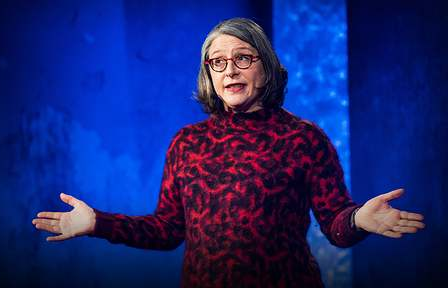
Author and strategist Michele Wucker coined the term “gray rhino” for obvious, probable, impactful risks, which we are surprisingly likely but not condemned to neglect. She is the author of four books including the global bestseller THE GRAY RHINO: How to Recognize and Act on the Obvious Dangers We Ignore. The metaphor has moved markets, shaped financial policies, and made headlines around the world. It helped to frame the ignored warnings ahead of the COVID-19 pandemic and inspired the lyrics of the hit pandemic pop single “Blue & Grey” by the mega-band BTS, about depression as a gray rhino. Michele’s 2019 TED Talk has attracted over two million views.
Michele is founder of the Chicago-based strategy firm Gray Rhino & Company. She has been honored as a Young Global Leader of the World Economic Forum and a Guggenheim Fellow. She has held leadership positions at The Chicago Council on Global Affairs; the World Policy Institute; and International Financing Review. Her writing has appeared in publications around the world including The Economist, The New York Times, The Washington Post, and The Wall Street Journal. A much sought-after media commentator.
Startling observations
Michele’s recent observations on insurance in The Gray Rhino Wrangler are startling. Appearing under the head of ‘Insurance and Real Estate’, these are precisely the gray rhinos hurtling towards insurers:
- Insurers have been worried for some time about whether they are sufficiently capitalized to withstand claims related to climate disasters from flood to fire and drought. The answer has become increasingly clear: they are not.
- Year after year of record insurance payouts finally prompted insurers to withdraw en masse from the most climate-vulnerable areas.
- The insurance industry is now exploring new financing models and public-private partnerships even as it continues to revisit climate risk pricing.
- The climate challenge will make it increasingly difficult to ignore gaps in risk pricing whether in insurance, real estate, financial markets, agriculture. It also will increase pressure for policy change, particularly the reduction of fossil fuel subsidies – which continue to surpass government support for renewables.
- This will have growing implications for real estate as owners are priced out of their homes by the high costs of insuring them – though for some, it appears that the ability to self-insure and shrug off the possibility of catastrophic flood and wind damage is a status symbol.
- Water scarcity is threatening cities and homes in arid areas, while an overabundance of water is flooding other communities.
- Record insurance payouts as a result of extreme weather have caused a stampede of insurance companies away from the most climate – vulnerable areas and astronomical price increases in places where they remain. The implications for real estate prices and municipal budgets (which rely heavily on property taxes) are stark.
- This will compound the financial strain on municipalities needing to build up resilience to flood or drought – and to rebuild when investments in resilience fall short.
Q&A
Praveen Gupta: The US is surely and steadily moving in the direction of ‘uninsurability’. Homes and auto are the first stop. When could it reach the Oil and Gas segment?
Michele Wucker: The past year’s mounting losses in places vulnerable to hurricanes and wildfires made it clear to insurers that property coverage in those areas was no longer a good risk-reward proposition.
Insurers face bigger underwriting and investment choices in oil and gas. Do they want to keep insuring fossil fuel activities that are costing them more and more in extreme weather-related claims and lost business where it has become impossible to keep insuring clients? Activist shareholders and plaintiffs in lawsuits by more than 20 US cities, states, and non-profits are trying to convince them that the answer is no.
Some insurers have taken steps to cut back on their underwriting of oil and gas. It’s still nothing near as many companies nor as bold as what climate activists want to see. And it lags activists’ success in pushing insurance companies to exit coal. But there is increasing momentum.
Oil and gas insurers will see more and more shareholder proxy voting campaigns asking insurers to report how specifically they plan to support greenhouse gas reductions. Several recent activist campaigns appear to be having a small amount of impact even though they got minority support in the 30 percent range and were non-binding anyway.
A growing number of states and cities – including Chicago, where I live – are suing fossil fuel companies because of their climate impact. If courts start ruling for the plaintiffs, that could make a difference in insurability.
PG: As this unfolds in the US, developing countries are trying to increase their insurance penetration?
MW: Insurance regulators and companies in the US market are looking closely at protection gaps related to extreme weather. Most likely we will see gaps increasing in some areas as insurers withdraw or raise prices so high that property owners opt to “self-insure.” But gaps may narrow elsewhere as property owners become more concerned with protecting themselves.
“Increasing insurance penetration in developing countries likely will require a blended finance approach”
The dynamic in developing countries is so different from developed countries that it’s practically an apples-versus-oranges scenario. First, the protection gaps are much wider and penetration rates are much lower. Many of the most climate vulnerable areas are also the least likely to be insured and the least likely to be able to afford insurance.
Increasing insurance penetration in developing countries likely will require a blended finance approach; this scenario could combine development bank financing for resilience and adaptation with some carefully targeted private sector policies in areas with more awareness of and ability to afford insurance. Increasing interest in catastrophe bonds and global risk pooling may play a part as well. And, more controversially, climate resilience also may require moving people from climate-vulnerable areas to higher ground or less water-stressed areas.
PG: What numbs humans to recklessly ignore climate risk?
MW: Humans’ reckless ignorance of climate risk is the consequence of a combination of influences. First is what some social scientists call “solution aversion” which is a tendency to deny the seriousness of problems when we don’t like the solution. This is quite prevalent in part because most humans don’t like change of any kind, so solution aversion comes into play more than we think.
Manufactured denial also comes into play: people who don’t like solutions to climate change because they are making money from dirty energy know that they can exploit human nature.
“I think it’s important to call out as false – that climate change is “slow moving” and something that will happen in the future”
The media also comes into play. Here I hesitate to repeat the mistaken impression they disseminate, lest I reinforce it, but I think it’s important to call out as false – that climate change is “slow moving” and something that will happen in the future.
It’s here now: extreme weather, rising seas and inland water levels, droughts, wildfires. Finally, a sense of agency is important, but climate change feels so big that many people feel powerless, even though we have more power than we think.
PG: Insurers understand risk. Yet they – the large American ones in particular – continue to invest in and insure the very reasons responsible for the Climate breakdown?
MW: It’s very much in insurers’ interest to help solve the climate crisis, and you’re right – it’s a big problem that many insurers continue to invest in and insure the fossil fuel industry. If you insure coastal real estate, businesses and individuals who are prone to flood or fire damage, or any other entities vulnerable to climate change-induced extreme weather, why would you want to contribute to the very influences that put your insured clients – and in turn, yourself – in harm’s way? That question is especially apt when it’s clear that fossil fuels are at a turning point when both investors and policy makers are going to be making big changes.
There has been rising concern by financial regulators and by insurers themselves over whether the industry has enough capitalization to withstand expected losses caused by climate change, and it’s time to stop hand-wringing and take serious action. The insurance industry also is well positioned to push for meaningful changes by insured entities. Just like many auto insurers reduce your premiums for avoiding accidents, driving fewer miles, and allowing apps to monitor (and hopefully improve) your driving habits, there are so many ways that insurers could nudge clients to reduce their carbon impact.
PG: Many thanks, Michele for the eye-opening insights from time to time. How I wish the insurance industry wakes up to your warnings.
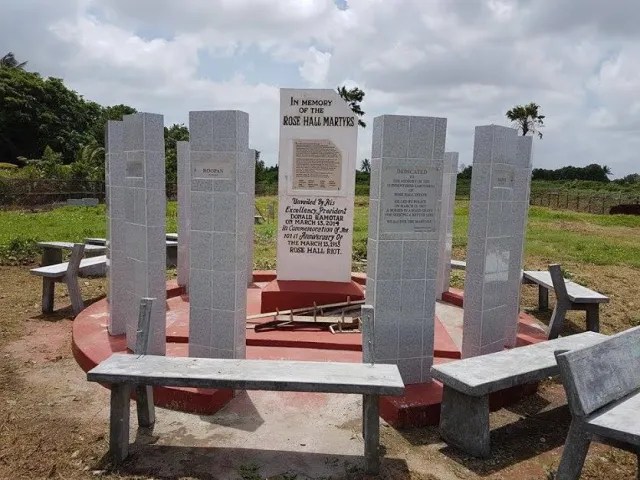
Rose Hall Martyr’s Memorial at Canje, Berbice: Built by the Government of Guyana and unveiled on March 13, 2013, by President Donald Ramotar.
A long time ago in far away Berbice, British Guiana (modern day Guyana) – some oppressed indentured workers of Indian origin put up a resistance against unjust colonial masters. One hundred and eleven years ago it was – on March 13th 1913 to be precise – this resistance on Rose Hall Plantation ended up in a bloody carnage.
“British colonial police killed fifteen, including a woman they shot in the stomach, and injured another thirty-nine, seriously enough to warrant amputations. It was perhaps the deadliest indenture-era suppression of unrest in the Caribbean”. I quote Gaiutra Bahadur – author of Coolie Woman: The Odyssey of Indenture – a Guyanese-American journalist who has devoted much of her career to telling the stories of immigrants, refugees and asylum seekers.
“Never in the history of this South American colony has so much blood shed occurred, and at such a petty excitement to the police”
Dr. R.N Sharma in The Modern Review, Calcutta
“It wasn’t just that the indentured worked more hours than were legal, without being paid the legal minimum. The wrongs exposed by the immigrants weren’t merely economic. There had also been insults to their honour”, explains the author to Guyanese Online.
“The façade of justice was general. The incestuous social life of planters, magistrates and immigration agents utterly undermined any safeguards built into indenture, allowing for widespread abuse of “coolies” by their masters”.
Shades of Brigadier General R.E.H Dyer
“The colony’s police chief, Colonel G.C. de Rinzy, paraded through with a phalanx of men and a Maxim gun. That weapon of war had been credited with swiftly subduing large swathes of Africa for colonial rule in the 1890s, as much because of the panic inspired by its fearsome appearance in battle as the bullets it discharged rapid-fire”.
“Imagine him with his maxim gun and all his men fully armed, and then imagine the poor, thin-faced, half-starving coolies, armless except for a few sticks and their instruments of agriculture, standing on the opposite side”
Dr. R.N. Sharma in The Modern Review, Calcutta
“Six months after it, in the Viceroy’s Legislative Council in Delhi, a pioneer in India’s nationalist movement posed a question on the record about the shooting…” writes Ms. Bahadur. “And he called for compensation to the wounded and the families of the dead – a call that ultimately went nowhere…”
Also present at the site was the Ms. Bahadur’s great grandmother who came to British Guiana as an indentured labour.
“A month and six years later – on April the 13th 1919, about twenty five thousand unarmed Indians had gathered in Jallianwalla Bagh in Amritsar to mark a protest against the recently imposed Rowlatt Act. Also present were several children – to rest, relax and catchup with friends.
A little after five in the evening, a detachment of soldiers, led by Brigadier General R.E.H. Dyer, entered the Bagh. Without warning the crowd to disperse, Dyer ordered his troops to open fire. Atleast 1,650 rounds were fired. Several hundred died and several hundred more were injured. The massacre was universally condemned by all Indians and even shocked many Britons, who thought it one of the worst outrages in all of British history”. A gripping narrative by Navtej Sarna – in his book – Crimson Spring is unmissable.
“I wonder if the thoughtful people of India will realise the necessity of protesting strongly against the present system of indentured emigration”
Dr. R.N. Sharma in The Modern Review, Calcutta
Colonial compulsions
As a predecessor of fossil fuel, sugar was a compelling driver of colonialism. Abolition of slavery would have scuttled colonial continuity. Indentured was invented as a necessary evil. The theatre thus significantly shifted from Africa to Asia. The biggest brunt was borne by the then Indian empire.
The rebellion of 1857 wasn’t the first ‘mutiny’ as we tend to be fed. Thanks to Bankim Chandra Chatterjee’s Anand Math, the Sannyasi rebellion remains alive in our collective imagination.
That in a distant West Indies, far away from the motherland, an exploited workforce refused to be cowed down by the coloniser. The ‘master’ chose to brutalise. The Rose Hall playbook had to replay. Rather than be grateful for the blood and sweat of the labour and the soldier, Jallianwalla Bagh was its most unfortunate magnification.
P.S. Dr. Ram Narayan Sharma was a medical practitioner at Berbice, British Guiana (BG). He was reportedly persuaded by Bhai Parmanand and other revolutionaries to locate there and look after the indentured cause. Dr. Sharma was at the location during this event.
Arrived (BG) in 1911. He passed away mysteriously, at a young age, in 1920. His activities and movements were under close and constant surveillance of British intelligence.
March 6th, 2024
Illuminem.com
Also published on http://www.thediversityblog.com

#IndigenousPeoples deserve special attention after centuries of abuse. On the eve of #IWD, here are some powerful and first hand insights from Amelia Marchand.
The dotted line from #colonialism to #climatebreakdown traverses through #Indigenous terrain. While America does not monopolize exploitation, very few can match its scale of brutality.
“I have heard again and again that climate change is a ‘threat multiplier’, says Amelia. “That means that the living conditions and quality of life from the richest to the poorest will be vulnerable to climate impacts, but that those climate impacts will be exacerbated – felt most extremely – by those on the margins of power, equality, and access to resources.”
Well known author and climate champion Amitav Ghosh provides a context in an interview with the Guardian: “Because for two centuries, European colonists tore across the world, viewing nature and land as something inert to be conquered and consumed without limits and the indigenous people as savages whose knowledge of nature was worthless and who needed to be erased. It was this settler colonial worldview – of just accumulate, accumulate, accumulate, consume, consume, consume – that has got us where we are now.”
“Unfortunately, the #patriarchal systems of many colonial and capitalistic governments, as experienced in the United States where #class and #racial #inequalities are still perpetuated, are structured in favor of benefiting men and boys. Some people may believe this subject is uncomfortable or unrelated to #climate and the #environment. But that belief is precisely why the topic must be discussed”, explains Amelia in this very candid conversation.
#diversity #inclusion #dei
March 7, 2024
The Journal, Chartered Insurance Institute

https://thejournal.cii.co.uk/2024/03/07/health-ethical-pushback

https://www.linkedin.com/feed/update/urn:li:activity:7173868669163257856
When possibilities are humongous – there is bound to be an intense interplay of multiple currents. The Pharma industry is just that today. I highlight some unintended consequences insurers encountered in the Purdue Pharma L.P. – McKinsey & Company tango.
From painkillers – here are some interesting trends in yet another hot segment (ongoing coverage by Quartz Daily):
Surging demand for weight loss medications have created a drug duopoly. Novo Nordisk & Eli Lilly and Company currently dominate the market. This has transformed the two pharmaceutical developers into some of world’s most valuable companies – and they could become the first $1 trillion pharma firms.
Novo Nordisk’s weight loss drugs Ozempic and Wegovy are popular, and powerful. So popular that they’re raising the GDP of the company’s native Denmark.
So popular that food company executives are fearfully calling Novo Nordisk CEO Lars Fruergaard Jørgensen to ask for advice because patients don’t want to eat.
Oprah Winfrey recently announced that she’s leaving the board of WW International (formerly known as WeightWatchers), which she’s served on since 2015 as one of the company’s largest shareholders.
Btw she revealed last year that she takes a weight loss drug. She didn’t specify which one! WW’s share price responded by dropping nearly 20%.
From making a difference in weightloss and type2diabetes, could they tamp down inflammation, too? Needs to be seen.
Other players want a slice of the success as well. Since the possibilities are compelling, some may resort to say ‘turbo-charging’ their sales.
Covid misadventures seem to be almost forgotten. Obesity and diabetes are here to stay. So are painkillers. And grow!
In such exciting times, insurers need to watch that insurance does not end up as a license to stray outside the ethical terrain.
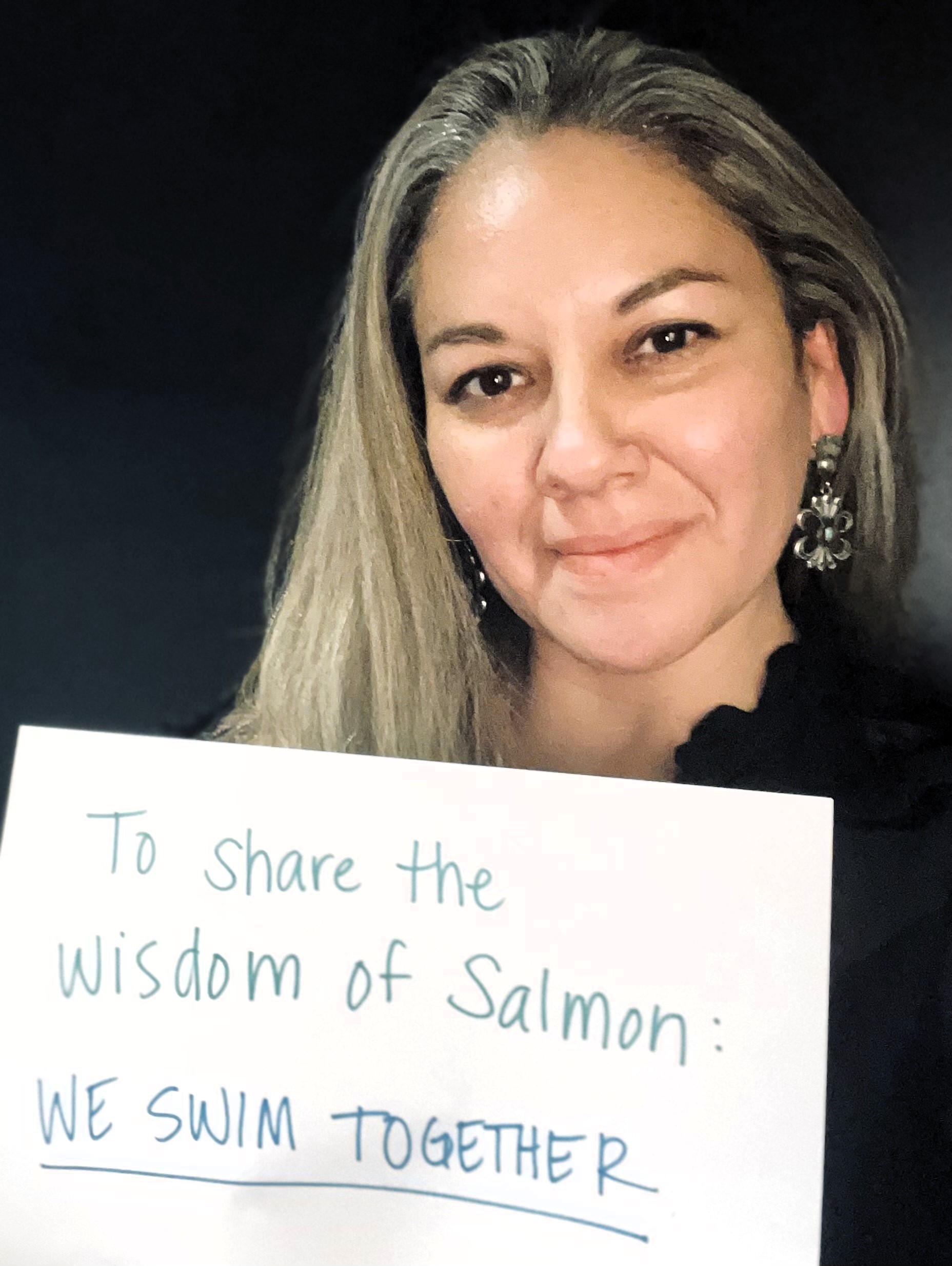
Amelia Marchand is a citizen of the Confederated Tribes of the Colville Reservation. She is the founder and lead advisor of the Indigenous-led conservation nonprofit L.I.G.H.T. Foundation (LF), the Senior Tribal Climate Resilience Liaison for the Affiliated Tribes of Northwest Indians (ATNI), and a volunteer board member with the Center for World Indigenous Studies (CWIS). She also serves on various Advisory Committees.
Amelia earned her BA in anthropology from Eastern Washington University, her MA in environmental law and policy from Vermont Law School and has over 25 years working in the cultural and natural resource fields. She is a Public Voices Fellow of the OpEd Project at the Yale Program on Climate Change Communication, an Associate Scholar of CWIS, and an alumnus of Presidential Classroom and the Ronald E. McNair Scholars Program.
Amelia’s lineage includes Okanogan, Lakes, Moses-Columbia, Palus, Chief Joseph Band of Wal’wama Nimiipuu, French, Irish, German, and Dutch. She is a wife, daughter and granddaughter of U.S. Army veterans, and a descendant of U.S. prisoners of war, the U.S. American Indian residential (boarding) school system, and the U.S. relocation program for American Indians.
Her personal experiences and family history have increased her passion for Indigenous rights, environmental justice, and implementing socially equitable solutions for climate change adaptation and mitigation that not only honor values of community and reciprocity; but also heal wounds from intergenerational trauma and institutional colonialism.
Praveen Gupta: Kindly tell me about your work towards elevating community-led climate action and environmental justice?
Amelia Marchand: There’s several different ways that I try to elevate not just climate justice, but Indigenous Peoples’ perspectives on climate justice. One of them is through my volunteer work with the L.I.G.H.T. Foundation. Sometimes that looks like writing public comment letters, sometimes that looks like bringing people together at different events and sharing ideas about topics like rights of nature or advancing Indigenous conservation of native plants and pollinators.
Other times through my formal work, it also looks like bringing people together for training and meetings to learn and share from one another about community and nation-building work. Those all provide opportunities for Tribes to advance their own climate initiatives, like investing and initiating in food security or energy sovereignty work.
PG: What are the challenges native communities face when responding to climate change?
AM: It’s very difficult to identify just one or two climate impacts affecting Indigenous Peoples because there are so many. The approach that I try to take is to look at identifying the baseline, of where Indigenous Peoples are right now. And in many different demographics and studies, you’ll see that today – in 2024 – American Indian, Alaska Native, and Native Hawaiian in the United States have significantly higher health risks than the rest of the population. They have significant challenges to higher education access and economic opportunities compared to other demographics. As a result of those disparities in access to health, access to education, and diverse economic opportunities, that makes those communities all the more vulnerable to climate impacts.
Those may be vulnerabilities resulting from direct climate impacts, like health impacts from wildland smoke, which is difficult for elders, youth, and those populations with asthma or respiratory conditions. Vulnerabilities can also look like reduced abilities to perpetuate cultural identity and traditional cultural practices. As an example, that could be loss of biodiversity which impacts ceremonial, subsistence, and medicinal foods important for survival in Indigenous communities; especially in rural areas where there’s food and water security issues.
All the impacts that the rest of the population are experiencing are also being experienced by Indigenous Peoples. However, the lack of economic parity and direct access to resources exacerbates climate impacts in Indigenous communities.
PG: Are Indigenous women/girls more vulnerable to climate breakdown than the[ir] male counterparts?
AM: I have heard again and again that climate change is a ‘threat multiplier.’ That means that the living conditions and quality of life from the richest to the poorest will be vulnerable to climate impacts, but that those climate impacts will be exacerbated – felt most extremely – by those on the margins of power, equality, and access to resources.
Unfortunately, the patriarchal systems of many colonial and capitalistic governments, as experienced in the United States where class and racial inequalities are still perpetuated, are structured in favor of benefiting men and boys. Some people may believe this subject is uncomfortable or unrelated to climate and the environment. But that belief is precisely why the topic must be discussed.
Just as Indigenous Peoples have fought for their human rights, so too have women, girls, and those with identities which do not confirm to Westernized colonial concepts of gender. Those in the marginalized and fringe sectors of American society will always be more vulnerable – and for Indigenous women/girls and two-spirit, lesbian, gay, bisexual, transgender, queer, etc. (2SLBGTQ+) peoples, a significant portion of the climate issues they experience may be the disruption in access to and availability of health and medical care.
For example, when temperatures rise, there is a correlation to increases in domestic violence. Most often, victims of domestic violence are women and children. When a flood, fire, or other natural disaster displaces people from their homes and communities, how well is the continuity of care for prenatal, postpartum, and menstruating women and girls? Will the evacuation centers be places of safety, security and inclusion where access to birth control and menstruation medical needs are freely available and abundant? Will sexual, reproductive, and behavioral health accommodations be safe and secure to prevent sexual harassment? When wages are lost and food, water, and necessities are scarce; who will ensure that sexual harassment, rape, prostitution, and human trafficking are not used as devices of control, submission, and power?

“We don’t need climate change impacts to highlight the humanitarian disaster happening in conflict zones far away, domestic abuse occurring in residences down the road, or discrimination impacting youth in the nearby school”.
These are things unpleasant to consider, but we must. I share these words as an Indigenous woman who has experienced harassment and discrimination throughout my life in many different ways: for being Indigenous. For being part-white. For choosing to end a relationship. For being a woman. For my age. For having an education. For being a mother. For being me.
The acronym “MMIWP” stands for Missing and Murdered Indigenous Women and People. I also share these words as a niece who lost her aunt to domestic violence before I ever had an opportunity to hear her voice. My aunt’s untimely death traumatized my family so much, and her loss so painful, that I was well into my teens before the story of her life and death was even shared with me.
We don’t need climate change impacts to highlight the humanitarian disaster happening in conflict zones far away, domestic abuse occurring in residences down the road, or discrimination impacting youth in the nearby school. We need changes to the way conflict is addressed. Imagine if political leaders made decisions centered and based on protecting the human rights of Indigenous women, girls, and 2SLGBTQ+ peoples.
Imagine if every U.S. state and every country had a task force established to not just understand and address the systemic causes of violence against Indigenous women, girls, and peoples – but to end it. Imagine if research and development for women’s sexual and maternal health were equal to men’s. Imagine if women’s reproductive systems were their own to control, and if our jobs were secured with mandatory paid maternity leave in an economy that actually cared for us.
This is my challenge and charge: If you truly love and care for your wife, sister, daughter, mother, niece, grandmother, aunt, God-mother…Then swear to uphold her inherent rights to exist free from harm, as she sees fit, and to experience full body autonomy – for she is a reflection of all of creation: Mother Earth. And what happens to her, ultimately is the fate of us all.
PG: Any thoughts on rights of nature, indigenous and advocacy perspectives?
AM: Indigenous Peoples understand that humans are not apart from nature and that nature, in and of itself, has its own right to exist, an inherent right to not be bound, contained, and extracted from. Rights of Nature (RON) is a legal concept under the division of Earth law, an evolving Westernized legal concept that actually has some really great elements.
Throughout different parts of the world, and also in some areas of the United States, there’s this movement to bring RON forward and enact laws and policies which will truly protect rivers, waterways, watersheds, landscapes and also species – specific rights of species – to exist. This RON advocacy does not put humans as the ‘end all, be all’; but instead recognizes that our ecosystem is interconnected to us. Humanity is dependent upon a functioning ecosystem for existence.
One of the initiatives that I’m really in support of, an initiative with the L.I.G.H.T. Foundation is identifying pathways for RON for the Columbia River. The Columbia River is a transboundary watershed, between the United States and Canada, the most hydroelectrically developed river in North America. There have been critical, negative impacts resulting from the construction of those hydropower dams to several Indigenous Peoples in Canada and the United States, as well as non-Native populations in the Columbia River Watershed. RON is a new concept to the Western legal system, but protecting those waters, lands, environments, and species that enrich us and give us life – there is nothing new about that to Indigenous Peoples.
“We have so many relatives, large and small, and sometimes I find it a bit difficult to describe this perspective to those outside of my community”.
PG: How did cultural teachings shape your professional perspectives and relationships with Water and our non-human relatives?
AM: We have so many relatives, large and small, and sometimes I find it a bit difficult to describe this perspective to those outside of my Indigenous community. There are Cultural Teachings that I’ve had since I was young from my family. As an example, one is that water is akin to a cleanser or purifier. It’s hard to describe, but as an example, if you have a bad dream, the first thing you do when you wake up is drink water and it will help cleanse that bad dream out of your mind.
Today, nearly everyone recognizes that water helps cleanse your body, internally and externally. But my teachings are that water cleanses your spirit too, it isn’t just to benefit your physical health. Thus, water is important, but not just your body’s physical need for water – it benefits your spiritual health as well. That might be the very first lesson that I learned, which is definitely a Cultural Teaching separate from going to school. This was Teachings from my culture, spending time with my Tuptup (great grandmother), all my grandmothers, and the elders of my community. There’s ceremonies where water is first, the first thing that you partake of at a meal, in ceremony with others, and you also end those same ceremonies and meals with water. In some ceremonies, we literally drink from the same cup.
The cleanliness of the water, the health of those in ceremony, it all extends to the relationship we have with one another and with the land. What is the health and quality of the water when we obtain it? Where does it come from? Does it derive from the ice on lakes in the winter time? Was it snow on faraway mountaintops which melted? Was it fog which condensed and traveled down the leaves and pine needles? There are so many different ways of water to exist, to be. There are so many ways in which we can experience and to consider our relationship with it.
One of my shifting thoughts is how everyone, everywhere, all around the globe, interacts with water and the place I live now… I don’t have snow-capped mountains in winter. I don’t have any icy lake to ice fish on with my family. There’s not even very many rivers or streams where I live now, which is so different from the place where I call home. But there’s an ocean. And I remember that all of us are connected through water. I think that’s one of the things that can keep us connected despite our distance over space and time: Recognizing that the same water that we are drinking now, at one point, was consumed by the dinosaurs. This is a cycle. And everything that happens here is contained in that water cycle. That memory. It is refreshing to think of it in that way.
“So, we don’t just have a responsibility to do good work because it seems like the right thing, or it is popular. There is an ancestral line which came before me”.
PG: How do you recognize the gift and responsibility of being a good relative for present and future generations?
AM: I was at a meeting just over a year ago, the National Congress of American Indians (NCAI) Winter Convention. The NCAI President Fawn Sharp made a comment about how, currently, our generation today – are ancestors. Ancestors of generations coming. That is one of the values that I truly feel. In my core, I didn’t have words for it when I was a young woman. But now, more and more people are starting to understand and connect with this perspective.
There is this line of men and women that came before me: my parents, grandparents, great-grandparents, so on. I am here because they survived, I am not here because of my own accord – my ancestors saw the moment of future opportunity. So, we don’t just have a responsibility to do good work because it seems like the right thing, or it is popular. There is an ancestral line which came before me. I continue this good work for those yet to come, and in that way, it’s the best action. It isn’t a burden, but a gift. The opportunity to make changes now.
PG: How do you leverage Indigenous leadership to advance climate action?
AM: Fortunately, there are many, many forms of Indigenous leadership advancing climate action. Some of them are through very formalized means within their Tribal governments: Tribal elected leaders and officials, making big, broad, bold strokes for their citizens, lands, and resources. There is also a surge in Indigenous leadership coming from the grassroots entities and organizations like Indigenous-led nonprofits that are making a difference in their home communities and working with allies to support Tribal Nations and Indigenous communities. There is also leadership coming from Natives in academia doing research which advances Indigenous Knowledge and cultural heritage protections, advancing Indigenous research to benefit Tribal communities.
Being responsive to Tribal youth that are wanting to see change and climate action in their own communities – those are some of the things that keep me going every day, looking at the beautiful, hard, uplifting and challenging work that comes from this diverse group of leaders, officials, academics, community organizers; not just from the U.S., but other countries as well. It’s so inspiring and I try to elevate those Indigenous actions and voices as much as I can. I try to connect people as much as I can and continue to share those perspectives, priorities, and values with anyone willing to listen and learn.
“There’s so many different ways to approach climate action through adaptation and mitigation activities, but for me, what it always comes down to is: food and water”.
PG: Your thoughts on integrating climate justice and permaculture ethics into adaptive and holistic management?
AM: Around 2016 or 2017, I had started to take a permaculture certificate course through Oregon State University. Unfortunately, we experienced a family emergency and I had to withdraw from the course before I completed it. But in just that short amount of time, I was very inspired by what I was learning about permaculture principles and ethics. Part of that is because they aligned so much with what I already knew, what I already felt and experienced through the Cultural Teachings I obtained from my family, elders, and community.
There’s so many different ways to approach climate action through adaptation and mitigation activities, but for me, what it always comes down to is: food and water. Access to clean, healthy, uncompromised water and access to nutritious, wholesome food. Those two things, if done correctly, can heal and soothe the body and the mind. Take, for instance, that you might want to plan an event – any event: birthday party, book club meeting, anniversary party. At any of those types of events, if you have good food and good water, your joy and camaraderie and laughter will flow and grow.
Another Teaching I’ve learned is that when we meet with another person for the first time, we don’t just bring ourselves for a meeting of minds, but you come prepared with a gift. Maybe that gift is a blessing. Maybe that gift is a prayer, but oftentimes that gift is also food. And for Indigenous Peoples it is a gift or a blessing of their own traditional foods, which are important to them. Oftentimes those foods are even sacred to them, centered in their own creation stories and so, bringing back those values and traditions in a way which humbly honors the opening of a meeting.
All of these opportunities to change can be done in a way that is sustainable and based on many Tribal beliefs, which I believe are sustainable as well. It is a beautiful thing to integrate into many aspects of our day-to-day business operations: Land use planning, community development, permit review, economic development. We all want healthy, thriving communities now and seven generations into the future, and that always will start and end with access to clean water and healthy, nutritious foods. That ideal doesn’t separate Indigenous Peoples from anyone else. It only continues to unite us.
PG: I am so grateful for your candid insights on the challenges faced by Indigenous Peoples, their wisdom and practices, Amelia. My best wishes for your fantastic work.
 The Diversity Blog