
Who but Lahkpa Sherpa knows it best.
Speeding past Ashford – located on the north side of the Nisqually River and the main access road to Paradise in Mount Rainier National Park – you just might miss out on the low profile ‘Wild Berry Restaurant’. Wishing for a “Taste of Two Worlds”? This is where you ought to stop by. It serves both traditional American Mountain Menu as well as authentic Sherpa-Himalayan food from Nepal.
What’s really special about this place is the owner – an iconic mountaineer who has made it his abode. Mount Rainier, a glacieated and active volcano in Washington state, may be just half way the Everest, but the region has been a nurturing ground for mountaineers aspiring to scale them all.

What better proof than this testimony inside the forest at Ashford?

A view from ‘Paradise’ (base camp): Mount Rainier, 14408 feet in altitude, is the highest peak in the Cascade Range. It is the heart of Mount Rainier National Park.
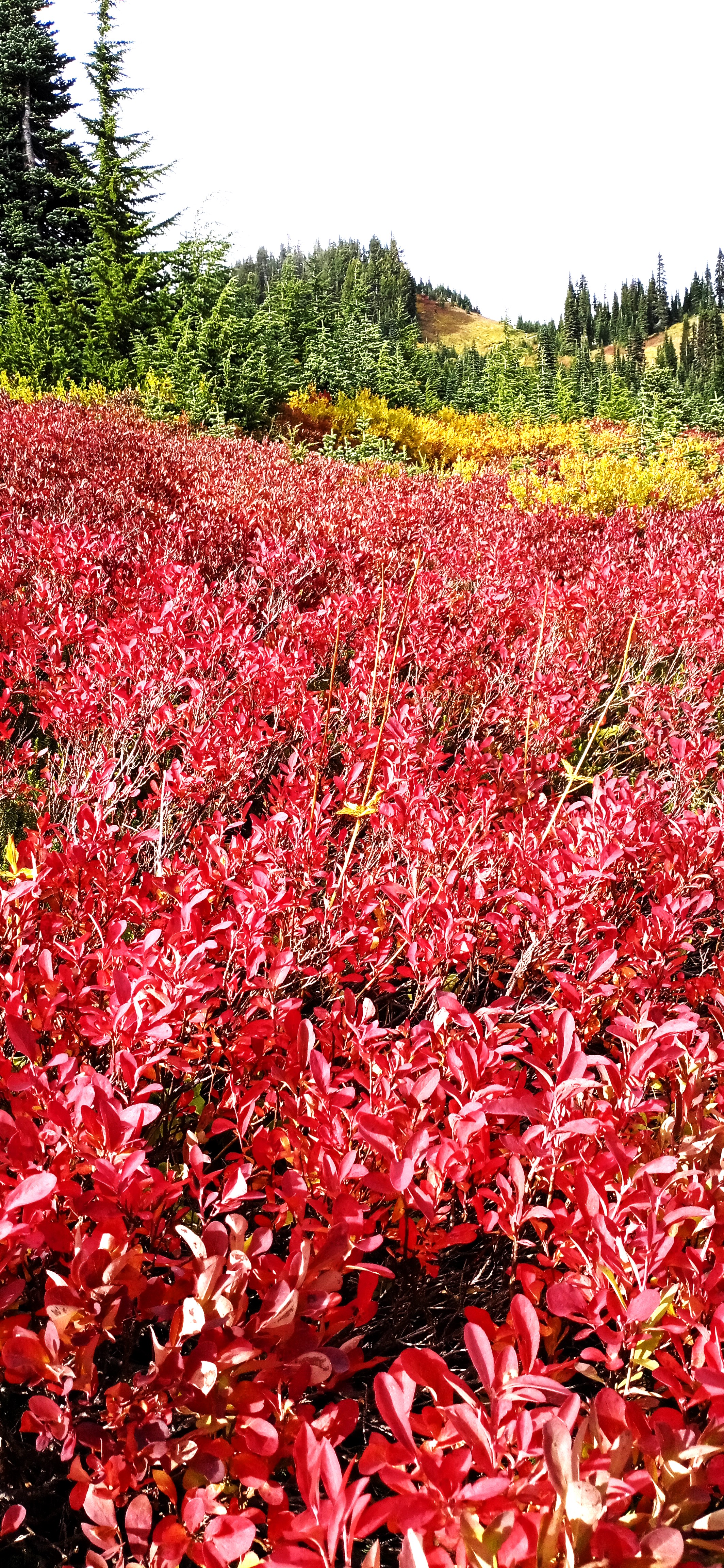
Splash of colours just ahead of the weather conditions become challenging.
The legend
Five sisters of Orting, as the Puyallup legend goes – were transformed into five mountains by Doquebuth, the changer. One of them was called Takkobad – that is Mount Rainier. Doquebuth said to Takkobad, “You will take care of the Sound country. You will supply water. You will be useful in that way.”
Mount Rainier is one of the snowiest places in the United States. Thanks to 645 inches of annual snow that it receives, Takkobad generally fulfills Doquebuth’s wish.

Wild Berry opens from May to mid-October and does not operate on Tuesdays!
The legendary Sherpa
Born in Nepal, Lhakpa Gelu is best known for holding a world record for the fastest ascent of Mount Everest in 10 hours 56 minutes and 46 seconds. Gelu’s record breaking trip was his tenth to the Everest summit. He has scaled it fifteen times (both North Ridge and South East Ridge).
Like an invisible character, he moves between the kitchen and the tables keeping a watchful eye in a supporting role. He demands no attention and perhaps much of the time most customers are not even aware of his presence amidst them. Just as he ascends the summits without fanfare, and descends. Sees it no longer but has seen it all. Before soon gets to see them yet again.
Other than the Everest, he has also been atop Mt. Denali, Mt. Ama Dablam, Mt. Cho Oyu, Mt. Baruntse, Mt. Aconcagua and Mt. Rainier. For sure, the most accomplished Sherpa mountaineer.

Yes, you cannot stay on the summit forever. But you could re-visit and pursue new ones, Lhakpa Gelu way, too. From the road to picturesque Paradise.
The Journal, Chartered Insurance Institute
October 23, 2023
https://thejournal.cii.co.uk/2023/10/23/current-climate
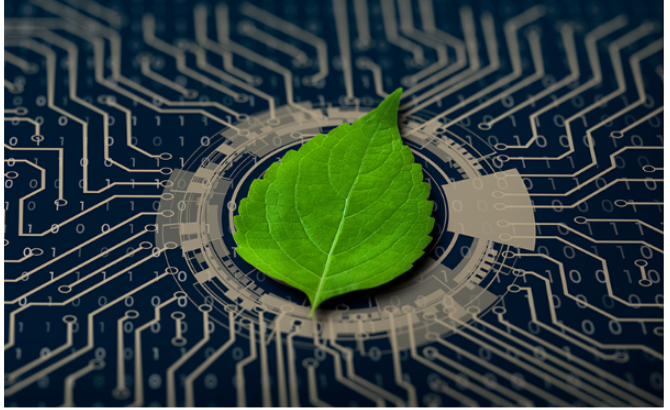
Not all tech that insurers interface with is #Insurtech. However, growing ESG demands and the resulting responsibilities demand heightened stewardship from insurers. Be that as insurers, risk managers or investors.
Illuminem.com
October 18, 2023
Mark Trexler is one of the most astute minds in Climate space. Here are some nuggets that I picked from our stimulating conversation:
To substantially accelerate the #transition to a low carbon economy requires the kinds of policy decision making and leadership that are politically very difficult to deliver.
The only way to actually #mitigate climate change reliably and quickly, assuming that’s possible to begin with, is through public policy.
In effect you would be internalizing the #externality that greenhouse gases are creating in terms of future damage.
Studies suggest that 80% of the market might be made-up of #fakeoffsets.
If offset markets continue to be dominated by fake offsets, then I think one can argue that they are little more than a distraction.
To assume that we’ll simply use markets to tackle climate change is something that we should approach skeptically.
Mark cautions: Observers often draw an analogy between phasing out #CFCs and phasing out greenhouse gases or GHGs. But phasing out #GHGs, he says, is far more complicated then phasing out CFCs, and that’s part of what makes climate change a wicked problem.
Please read on…
Republished by Illuminem.com
October 12, 2023
https://illuminem.com/illuminemvoices/from-boardrooms-to-bedrooms

Glad that Illuminem picked this story. It recently appeared in the Chartered Insurance Institute’s Journal. Not only is the climate crisis breaking the insurance silo; telling us how the cost of insurance is bound to escalate to a point where things might become uninsurable. Without any insurance the assets may become worthless. It is also telling us not to mindlessly create assets in high risk prone geographies by disregarding adaptation and resilience. That is just part of the story.
During the 2008 housing market crash, subprime mortgages were one of the primary causes of the crisis. Many homeowners who had taken out subprime mortgages were unable to keep up with their payments, leading to a wave of foreclosures. AIG nearly went bust for adventurism with the home portfolio. Regulators were caught napping.
Homes are back at the centre stage. Insurers are not only risk managers and carriers, they are also investors. By investing in fossil fuel segment they are like hospitals selling cigarettes, as Peter Bosshard puts it. Wildfires, windstorms, floods and sea level rise have just about begun to rattle the American homeowners. The debate thereby has moved from boardrooms to bedrooms. It will come back to boardrooms as more and more assets become stranded.
As the climate insurance bubble builds up, Treasury Secretary Janet Yellen has sounded the alarm. She believes it is necessary for the Financial Stability Oversight Council (FSOC) to examine how these shifts may affect the wider financial system. For one, insurers surely need to urgently stop behaving in their oxymoronish ways. The rest of the world has a lot to learn from what ails the US of A, before it’s too late.

Dr. Mark C. Trexler directs the Climatographers’ work on climate risk knowledge management. He was previously Director of Climate Risk for DNV based in Oslo, Norway, and prior to that directed Global Consulting Services for EcoSecurities. His work on climate change dates back to the World Resources Institute (1988-1991), and as President of Trexler Climate + Energy Services (TC+ES) from 1991 to 2007. TC+ES was the first consulting firm in the United States to specialize in business climate change risk management.
In addition to private-sector clients around the world, Mark has worked with national and international clients including The Nature Conservancy, the United Nations Development Programme, the U.S. Environmental Protection Agency, and the Global Environment Facility.
Mark is widely published on the technical and policy issues relating to climate change mitigation and carbon markets, has served as a Lead Author for the Intergovernmental Panel on Climate Change (IPCC), and is a member of the editorial board of Mitigation and Adaptation Strategies, a leading climate journal. Mark’s graduate degrees are from UC Berkeley, he has spent almost 10 years living abroad, and speaks five languages.
Praveen Gupta: Why do you say “Climate change is a “wicked” problem, and the last 30 years suggest we may not be able to solve it”?
Mark Trexler: “Wicked problems” constitute a class of problems that are particularly hard to solve, in part because they have no obvious or single so with respect to the ozone hole as an environmental problem, for example, all countries had to do was mandate the phasing out of a particular class of refrigeration chemicals, and then let the market figure out how to replace those chemicals with chemicals that would not damage the ozone layer. Observers often draw an analogy between phasing out CFCs and phasing out greenhouse gases or GHGs. But phasing out GHG’s is far far more complicated then phasing out CFCs, and that’s part of what makes climate change a wicked problem. Just think about some of the characteristics of the problem:
- The countries that have primarily contributed to the problem are not the countries that will suffer the most from climate change.
- Our political systems are set up to tackle short term problems, and politicians have very few incentives to tackle longer term problems, particularly if they involve upfront costs or disruptions.
- Industrialized countries owe their prosperity to the use of fossil fuels, which constitute an almost perfect way of storing and transporting energy, and now we are saying those countries need to rapidly phase out their use of fossil fuels.
- There are many legitimate uncertainties when it comes to the future of climate change, and how we might effectively tackle climate change, and those uncertainties complicate public and policy decision making.
When you combine these and many other aspects of the climate change problem, it starts to become quite difficult to figure out how to thread the needle in solving the problem. One could certainly say that technological innovation over time will lead to a low carbon economy, and that is most likely true and a process that is already underway, but it will not happen in time to avoid potentially catastrophic climate change. That is really the dilemma here.
“That to substantially accelerate the transition to a low carbon economy requires the kinds of policy decision making and leadership that are politically very difficult to deliver.
That to substantially accelerate the transition to a low carbon economy requires the kinds of policy decision making and leadership that are politically very difficult to deliver, as we have seen particularly in the United States. But even internationally, climate change poses the ultimate game theory problem, in which countries have all sorts of incentives to act or not to act based on their perceived self-interest. And when you’re dealing with a very large international community that perceives very different self interests, how do you generate the collective action that would tackle climate change in the relevant time frames, which at this point one can count in decades.
PG: Why must companies recognize climate change as a systemic risk?
MT: there are two ways to think about the relationship of the business community to climate change. First as a business risk and or opportunity that companies should treat like they would any other business risk or opportunity. Second as a societal problem that companies have an obligation to step in to try and solve, in effect proxying for the missing societal decision making.
In recent years, as the prospect of successful policy making to tackle climate change has declined in many parts of the world, the idea that companies should step up and tackle the problem has grown. I personally don’t see how that can actually work, since at the end of the day companies are not responsible to the general public and to voters, they are responsible to shareholders and to stakeholders.
It is easy to say that we have transitioned from a shareholder business model to a more public interest business model, but I’m skeptical. That doesn’t mean there is not a rationale for companies to try and tackle climate change. After all climate change does pose risks for many companies. The problem is that companies tend to think over very short periods of time, while climate change is occurring over much longer periods of time.
One way of seeing that is that companies generally use an economic discount rate of 10 to 15%, which in effect means that anything happening more than a decade into the future just does not matter to business decision making. But is there a category of climate risks that could manifest during periods of time that are relevant to business decision making? And the most obvious of these is systemic risk. For example we could see a climate change induced global food shock happen at anytime, that throws the world into political turmoil and economic recession, creating enormous business disruptions and risks.
”And the only way to actually mitigate climate change reliably and quickly, assuming that’s possible to begin with, is through public policy.
There are many potential systemic risk issues associated with climate change, from environmental migrants to global conflict. Systemic risks are not something that individual businesses are generally able to manage or hedge against on their own. At the end of the day, the only way to really manage the larger business risks of climate change is to actually mitigate climate change. And the only way to actually mitigate climate change reliably and quickly, assuming that’s possible to begin with, is through public policy. Which means that companies should be giving a lot more attention to their policy footprint than they are today, when they’re focusing almost entirely on their carbon footprint.
When I co-authored the first textbook on business climate risk in 2011, I suggested that successful climate risk management on the part of business should be thought of primarily in terms of business pushing for the public policies like carbon pricing that would actually help solve the problem. But policy advocacy is still not a significant part of most companies approach to climate change. And this isn’t just the fault of companies; most observers and NGO’s are telling companies that their primary focus should be to reduce their emissions, and to get to net zero, as if that was going to solve climate change. And while if every company in the world did go to net zero it would obviously have a big impact on climate change. There is no prospect for translating individual company behaviors into that kind of a collective outcome.
PG: What ought to be the key concerns w.r.t carbon pricing, carbon offsets and carbon markets?
MT: I got my start in the topic of climate change 35 years ago when I was hired by the world resources institute in Washington DC to work on the first carbon offset project. At the time, carbon offsets were a voluntary initiative, no one was really talking about mandatory climate policies, And I think it’s safe to say that most people saw carbon offsets as an interim measure that encouraged companies to acknowledge climate change in the first place, and to begin to take some steps against climate change that would not be overly costly.
Over time however and as public policy has failed to materialize particularly in the United states, the idea of carbon markets and even voluntary carbon markets playing a critical role in tackling climate change has taken hold. In recent years, leading observers have suggested that the voluntary carbon market needs to expand 100-fold in order to substitute for public policy and successfully tackle climate change.
“In effect you would be internalizing the externality that greenhouse gases are creating in terms of future damage.
Carbon markets are one way to put a price on carbon emissions, which most economists would suggest is the best way to tackle climate change. In effect you would be internalizing the externality that greenhouse gases are creating in terms of future damage. The question becomes what price do you put on carbon that would effectively internalize that externality? Most economic studies suggest, for example, that the social cost of carbon – a measure of the economic damage associated with emitting each ton of CO2 equivalent – is probably somewhere between $50 and $500.
But efforts to put an official price on carbon at such a level has been politically very unpopular except in a few circumstances. Some Nordic countries have had a significant price on carbon for quite a few years, and very recently the European emissions trading system has seen its price of carbon rise up to something close to $100 a ton, but generally speaking carbon is priced far below these levels particularly in the case of market mechanisms like carbon offsets.
PG: So what challenge does that pose?
MT: In fact, the average price of a carbon offset being traded even today is probably less than $5, and in many cases it’s less than two or three dollars. Now if one could reliably assume that for that little money one could actually avoid the emission of a ton of CO2, or permanently remove an additional ton of CO2 from the atmosphere, then the gap between the price of carbon offsets and the social cost of carbon might not be a big problem. But the reality is that one cannot successfully avoid large scale emissions for less than $5 per ton or successfully remove large quantities of CO2 from the atmosphere for less than $5 per ton.
“If you think of these as fake offsets, studies suggest that 80% of the market might be made-up of fake offsets.
Study after study has pointed out that a large fraction of carbon offsets are not playing the role that would be expected of a successful carbon offset. They represent tons that would never have been emitted anyway, as well as tons that would have been removed from the atmosphere anyway, with or without the existence of a carbon market. If you think of these as fake offsets, studies suggest that 80% of the market might be made-up of fake offsets. And fake offsets can be very inexpensively brought to market since you don’t actually have to do anything to create them. So that has really helped to depress the overall price of carbon offsets, which serves the interests of companies and organizations who are primarily looking for a low-cost alternative to reducing their emissions, but it does not serve the interests of climate change mitigation.
And that is a fundamental aspect of the problem that we’ve seen with carbon offsets. Carbon offsets are being used to advance two objectives. First, reducing the costs of reducing a company’s emissions. And second, mitigating climate change. The problem is that you cannot maximize both of these objectives at the same time. The more you focus on reducing costs, the morethe environmental integrity of the market is going to suffer.
The more you focus on environmental integrity, the more expensive the market is going to be for carbon offsets. At the end of the day someone has to balance these two objectives, and decide how we’re going to structure the market. Are we more concerned about cost effectiveness or about environmental integrity? The answer to that question has huge implications for how we design carbon offset markets.
Recognizing that offset markets can never be perfect, the question becomes how imperfect should we allow them to be? Are we willing to accept 5% fake offsets, 10% fake offsets, 20% fake offsets? Surely the answer cannot be 80% fake offsets, as many studies continue to suggest is the actual case.
“And if offset markets continue to be dominated by fake offsets, then I think one can argue that they are little more than a distraction.
Redesigning the offset market to go from 80% fake offsets to 20% fake offsets would be difficult, and would involve substantial changes to what can qualify as a carbon offset. But there has been very little appetite within carbon offset markets and the carbon offset industry to undertake this kind of fundamental redesign that starts from the first principles of what we are expecting this market to accomplish. And if offset markets continue to be dominated by fake offsets, then I think one can argue that they are little more than a distraction.
I’m not sure I would say that they are a fig leaf for the fossil fuel industry, they are a fig leaf for societies inability overall to actually tackle climate change. The same challenges that have led to a lack of public policy in this area, are leading to a lack of environmental integrity in carbon offset markets. It is in effect the same problem.
PG: Whether addressing Climate Crisis can be left to market mechanism?
MT: in recent years we do seem to have decided that markets are the only way to tackle problems. This is a relatively recent development, and has been encouraged by decades of organized efforts to promote the role of the market over public policies and regulation for tackling social problems. There is no question that one could tackle the climate crisis through markets. For example, one could have designed an international agreement focused on coordinating the pricing of carbon around the world to achieve the necessary reductions in greenhouse gas emissions. One could impose a carbon tax that would have the result of radically reducing greenhouse gas emissions, either very quickly or over time.
The problem is that in designing most of the market mechanisms that are out there, with carbon offsets being an example, the rules get “gamed” in such a way that the market does not achieve its original objective. I made the point at a climate change conference of the parties (COP) many years ago in a talk that I was giving there, that policymakers always forget that there are 1000 very smart people in the room next door just waiting to figure out how to game whatever the rules are that the policymakers come up with. Unless policymakers very actively think about the problem of gaming, and close the loopholes that would allow such gaming to occur, then the objectives of the policy are probably not going to be met.
“So to assume that we’ll simply use markets to tackle climate change is something that we should approach skeptically.
So the question really isn’t can we leave the climate crisis to market mechanisms? The question is, can we implement market mechanisms in a way that would successfully tackle the climate crisis? The answer so far has pretty clearly been a “no.” Which means that if we are going to radically accelerate a low carbon transition, it is going to require much more direct policy intervention and rules. Einstein has a great quote to the effect that you cannot solve a problem with the tools that led to the problem in the first place. And markets have certainly been a big contributing factor to climate change. So to assume that we’ll simply use markets to tackle climate change is something that we should approach skeptically.
PG: With the dissolution of Net-Zero Insurance Alliance what happens to the measurement and disclosure of GHG emissions associated to insurance underwriting portfolios?
MT: The Net-Zero Insurance Alliance is one of many business collaboratives with the stated goal of helping to tackle climate change. And many of these do focus on carbon footprints. For example, I recently read a white paper on how law firms should be calculating the carbon footprint of their legal advice. This is somewhat analogous to the idea of calculating the carbon footprint of an insurance underwriting portfolio.
You may have heard that last year the inventor of the doodle (labradoole among many others) apologized to humanity for that invention. I sometimes wonder whether those of us originally involved with the concept of carbon footprinting should apologize to humanity for that invention. Because there is a far greater emphasis on carbon footprinting today than is warranted by the impact of such footprinting on carbon emissions at the corporate or global level. There is this idea that we “manage what we measure,” And that conversely we don’t manage what we don’t measure. But that is an overly simplistic approach to tackling climate change.
“I’m not quite sure what the goal of such footprinting actually is, and how it is supposed to contribute to the larger goal of climate change mitigation.
If we were to put an effective price on carbon emissions, for example, companies would reduce their emissions without spending a great deal of time on calculating those emissions. And they would focus on their Scope 1 emissions as opposed to their indirect Scope 2 emissions and the vastly more complicated Scope 3 emissions. It is not at all clear what all of the effort going into Scope 3 emissions calculations around the world is actually going to accomplish. And emissions are a relatively poor proxy for business risk, unlike the relationship of global emissions to global societal climate risk.
There will be no direct correlation between appropriate insurance premiums and the carbon footprints of the companies buying those policies. I would much rather see insurance companies communicate the topic of climate risk much more effectively to governments and to companies, with the goal of promoting the necessary public policies, than to focus on calculating the carbon footprint of their insurance portfolios. I’m not quite sure what the goal of such footprinting actually is, and how it is supposed to contribute to the larger goal of climate change mitigation.
PG: What’s your vision for The Climatographers?
MT: I’ve spent about 35 years working on climate change, and founded the first US based climate risk advisory firm in 1991. Wearing different hats I’ve worked with companies and agencies all over the world on all kinds of climate change issues. I founded the Climatographers in 2012 after being forced out of my last job as part of a merger and acquisition in which my new managers refused to accept me into the organization because I had the title Director of Climate Risk. At the time my wife and I considered what direction we wanted to go in our future work on climate change, and ended up focusing on the intersection between climate risk knowledge management and climate risk business advisory.
Our view is that information exists to influence almost anyone’s thinking on climate change, and in particular business decision makers, but thatpeople rarely see the information that would influence their decision making. That’s why we started building more than a decade ago the Climate Web as a decision support tool for business learning and business risk management around climate change and climate risk. People can access that tool through its standard website at www.theclimateweb.com and the actual Climate Web at www.theclimateweb.org. And we use that tool in helping companies come to grips with climate risk assessment, climate risk disclosure, and much more.
So our vision for the Climatographers is the somewhat quixotic one of trying to turn the almost infinite deluge of climate relevant information today into actionable knowledge that might actually get individuals and companies more focused on doing the things that would really matter for climate change.
That’s also why we’ve launched our Climate Risk School, which is not only focused on business decision makers, but also includes a course on what individuals can do to tackle climate change: https://climaterisk.getlearnworlds.com/.
PG: Wonderful talking to you, Mark. Many thanks for the fantastic insights. I wish you all the very best for the ongoing evangelizing.
October 4, 2023

My blog for the Journal of Chartered Insurance Institute
https://thejournal.cii.co.uk/2023/10/04/boardrooms-bedrooms
In this blog for the Chartered Insurance Institute Journal – having followed for the last three months – I explore media coverage on state of insurance of American homes. Floods, wildfires, windstorms – a billion-dollar loss now occurs less than every twenty days – brings home insurance on the frontline of climate crisis.
Treasury Secretary Janet Yellen sounded the alarm bell: In 2020, she says, just 60% of the $165 billion in total economic losses from climate-related disasters were covered by insurance. She believes it is necessary for the Financial Stability Oversight Council (#FSOC) to examine how these shifts may affect the wider financial system.
What next for nearly 40 million insured homes in America? As more and more of them become uninsurable and/or too expensive to insure – it is increasingly becoming an emotive issue.
September 12, 2023
illuminem.com
https://illuminem.com/illuminemvoices/or-should-we-say-climate-maladaptation
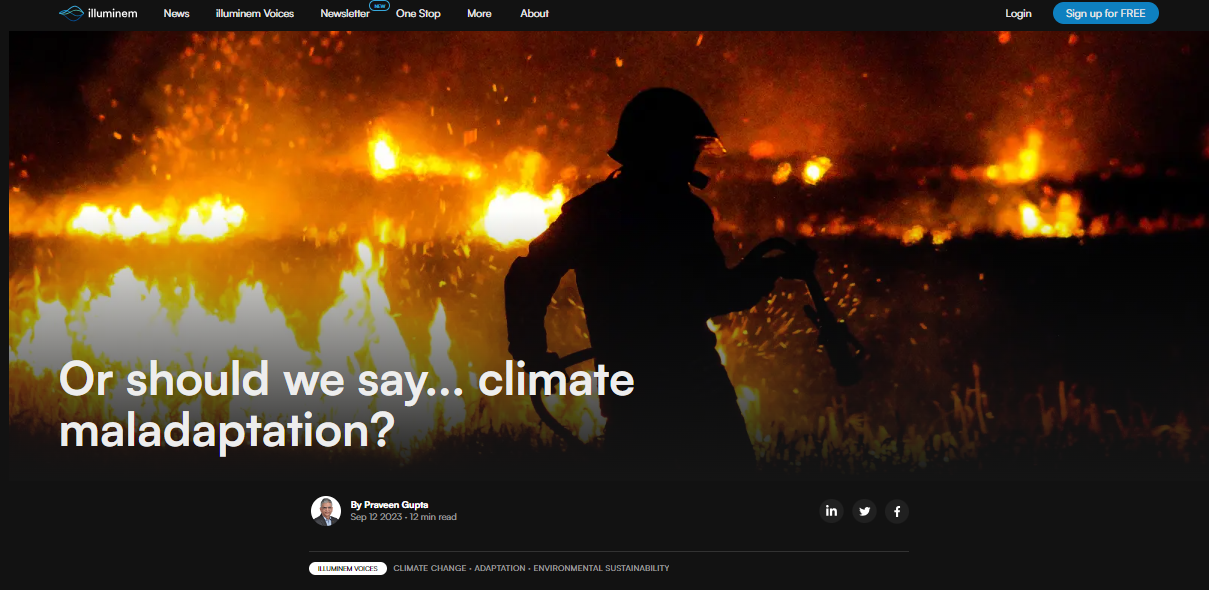
Why doesn’t the world’s largest economy get its act right in dealing with the biggest existential crisis ever? Despite all the counter-offensive from fossil fuel industry and climate deniers, the evidence of what stares at us is pretty loud and clear. In this Op-ed for illuminem, I allude to some recent stories.
For instance, within next 50 years would the US struggle to meet the population’s water demand? In these times you just cannot ignore what’s cooking across the border in Canada, as well. Can global warming push Canada’s climate past recognition in 2060? Isn’t there much to learn from the devastating fires in Maui? Shouldn’t the indigenous people play a critical role in managing the forests? Why would two of the most generously bestowed countries choose to disregard Nature and not pick the obvious signals?
The average window between billion-dollar climate disasters in the United States has drastically reduced to a mere 20 days. US Treasury Secretary, Janet Yellen, recently expressed alarm at the growing protection gap for Americans seeking insurance against property losses. According to some estimates the US alone will face over $2 trillion, in costs annually, by the end of the century due to climate change.
Yet, US is behind more than a third of global oil and gas expansion plans by mid-century (please see comments). Countering a fast-approaching dystopia calls for shedding climate maladaptation.
Blog interview with Dr. Hailong Wang republished by illuminem.com
August 28, 2023

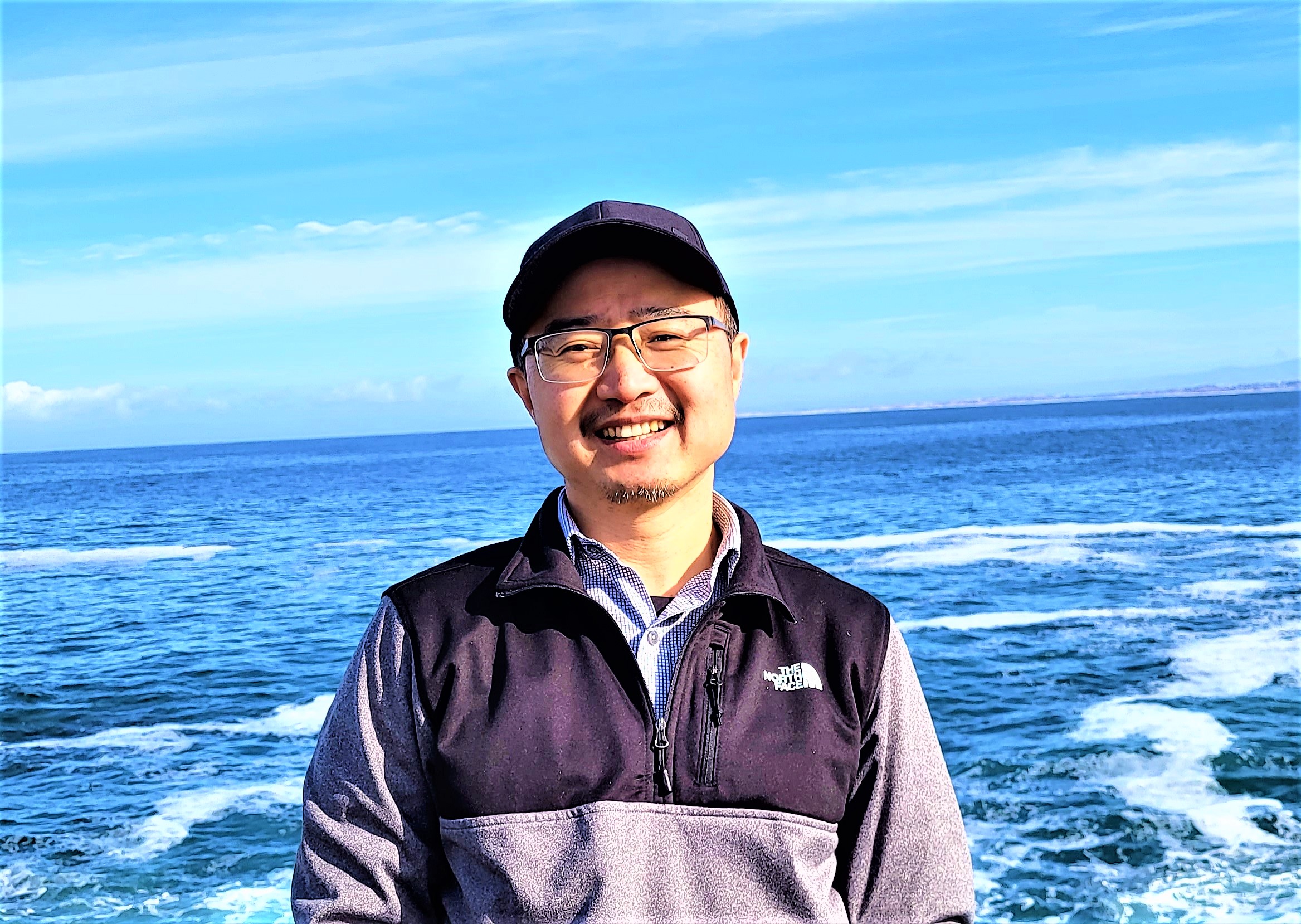
Dr. Hailong Wang is an Earth Scientist and Team Leader at Pacific Northwest National Laboratory (PNNL). Wang has wide-ranging research expertise in atmospheric aerosols, cloud physics and dynamics, aerosol-cloud-precipitation-climate interactions, light-absorbing impurities in snowpack and sea ice, radiative feedback, and high-latitude climate change and its associated impacts. His research has generated important scientific discoveries and advanced fundamental understanding of the role of aerosols in various critical components of Earth’s climate system.
Wang serves as an editor for the Atmospheric Chemistry and Physics journal, is a member of the US CLIVAR Process Study and Model Improvement Panel (PSMIP), and a co-lead of the IARPC Arctic Systems Interactions Priority Area collaboration team.
Praveen Gupta: Does arctic warming contribute to extreme wildfires in the western US?
Hailong Wang: While the relationship between Arctic warming and western US wildfires is not direct, the warming of the Arctic can influence atmospheric circulation patterns and conditions that increase the likelihood and severity of wildfires in the western US. In a recent study (Zou et al., 2021, Nature Communication) we show that increasing large wildfires during autumn over the western U.S. are fueled by more fire-favorable weather associated with declines in Arctic sea ice during preceding months on both interannual and interdecadal time scales.
“Increasing large wildfires during autumn over the western U.S. are fueled by more fire-favorable weather associated with declines in Arctic sea ice during preceding months on both interannual and interdecadal time scales.
Our analysis based on observations and climate model sensitivity experiments demonstrates and explains the Arctic-driven teleconnection through regional circulation changes with the poleward-shifted polar jet stream and enhanced fire-favorable surface weather conditions over western US.
PG: What is the impact of intruding atmospheric rivers into the Arctic?
HW: Atmospheric rivers are long, narrow corridors of moist and relatively warm air that transport large amounts of moisture from lower latitudes to higher latitudes. When these atmospheric rivers extend into the Arctic, they can bring about various changes and consequences. Intruding atmospheric rivers can introduce warmer air into the Arctic region. Warmer air brought by atmospheric rivers can accelerate the melting of sea ice by promoting direct melting and reducing ice growth during the winter months. Atmospheric rivers can bring increased moisture to the Arctic, potentially leading to enhanced precipitation and snowfall. While this might contribute to increased snow accumulation in some regions, it can also lead to more rapid melting if warmer temperatures follow, particularly during the spring and summer.
“Changes in the Arctic can have cascading effects on global climate and weather patterns, highlighting the interconnectedness of the Earth’s climate system.
The changes in temperature, precipitation, and sea ice due to atmospheric rivers can have profound effects on Arctic ecosystems. These changes can impact the distribution and behavior of plant and animal species that rely on specific environmental conditions. Additionally, changes in the Arctic can have cascading effects on global climate and weather patterns, highlighting the interconnectedness of the Earth’s climate system.
PG: How do black carbon (BC) and dust warm the Earth?
HW: Both black carbon (BC) and dust are types of aerosols that have complex effects on the Earth’s climate system, including the potential to contribute to climate warming. BC particles absorb sunlight strongly in the visible and near-infrared wavelengths. When these BC and dust particles are suspended in the atmosphere, they absorb sunlight and convert it into heat. This heats up the surrounding air and, in some cases, even the underlying surface. BC and dust particles can also land on snow and ice surfaces, reducing their reflectivity (albedo). Darker surfaces absorb more sunlight and melt faster, which can contribute to the melting of glaciers, ice sheets, and snow cover.
PG: What are the implications for the Third Pole?
HW: Changes are happening over the third pole; it contains the largest area of glaciers and ice outside the polar regions. This region is highly sensitive to climate change, and its changes have significant implications for both local and global environments. The third pole is also experiencing warming at a rate higher than the global average, causing the retreat of glaciers and reductions in snow cover. This also impacts the availability of freshwater resources through melting runoff and river flows, especially during the dry seasons. The warming also increases the speed of permafrost to thaw, leading to changes in soil stability and release of greenhouse gases.
“The third pole is also experiencing warming at a rate higher than the global average, causing the retreat of glaciers and reductions in snow cover.
Precipitation patterns including timing and intensity of rainfall and snowfall are also changing, which may cause floods and landslides. Changes in glacier melt and snowmelt also impact regional rivers, agriculture and hydropower generation. These changes eventually have complex effects on the Third Pole region’s environment, societies, and economies as well as global sea level rise and communities worldwide.
PG: Recent events across the globe point towards Climate modelling deficiencies?
HW: Climate models are never perfect. They are designed to study climate and climate changes in response to changes in greenhouse gases, solar radiation, land cover, and aerosols, rather than the prediction of weather events, by representing the interactions of various components of the earth’s climate system.
“Constraints in computing resources can still limit the level of detail and complexity that can be included in climate models.
Climate models require immense computational power. Constraints in computing resources can still limit the level of detail and complexity that can be included in models. Given these challenges, climate scientists continuously work to improve models by refining processes, incorporating new knowledge, and comparing model outputs with observations. Uncertainties and biases in models are acknowledged, and ensemble approaches (using multiple models) are often employed to provide a range of possible future climate scenarios.
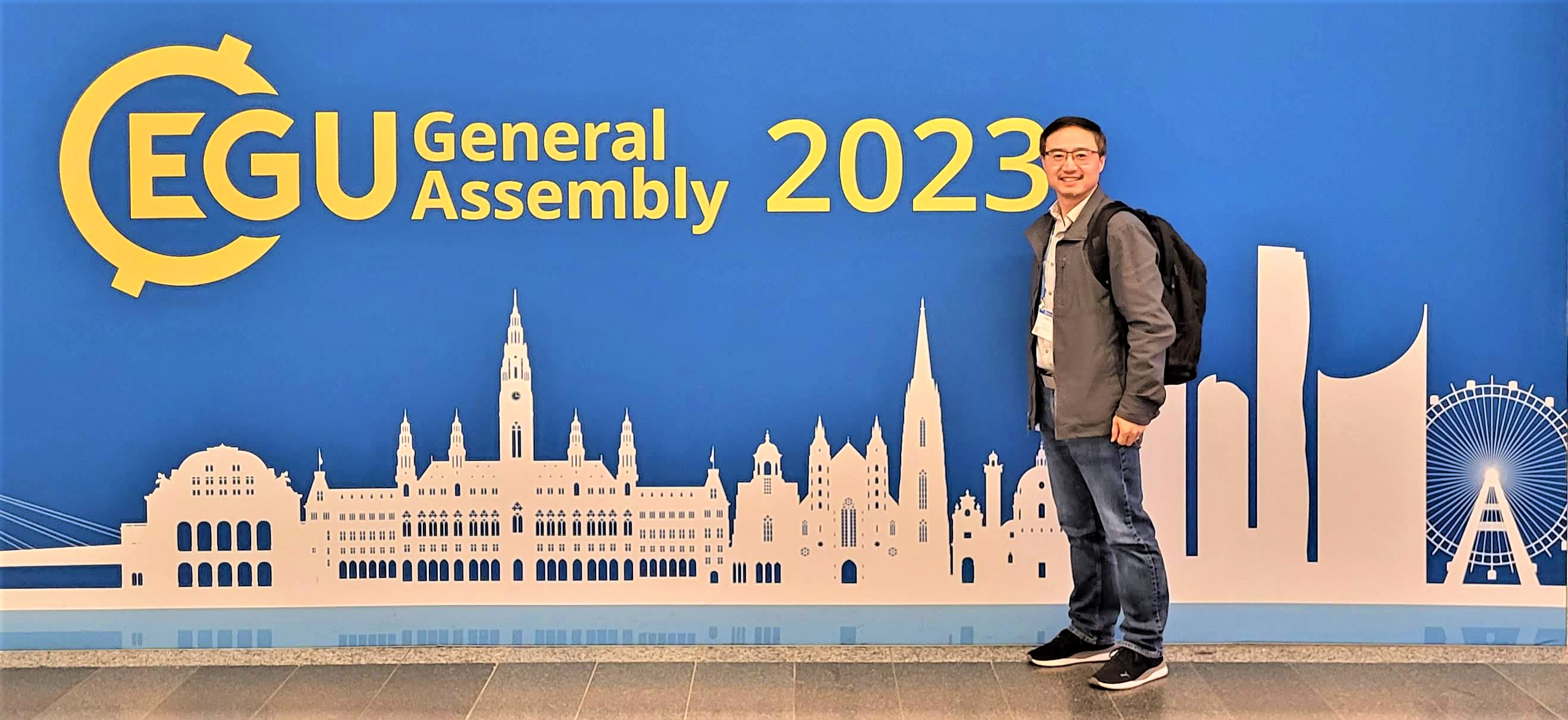
Dr. Wang was an invited speaker at the EGU event in Vienna, earlier this year.
PG: What needs to be done to prevent irreversible outcomes?
HW: This is beyond a scientific question. Preventing irreversible outcomes or tipping points requires urgent and comprehensive action on multiple fronts. The severity of the situation calls for global cooperation, policy changes, technological advancements, climate research, and societal shifts. Here are some examples of key actions:
- Reducing greenhouse gas emissions.
- Promoting sustainable land use and agriculture (with less emissions).
- Protecting forests (acting as carbon sinks).
- Adopting climate-resilient infrastructure and urban planning that can withstand climate impacts.
- Conserving ecosystems as natural carbon sinks.
- Strengthening international collaboration (such as the Paris Agreement).
- Researching and developing innovative climate solutions.
- Increasing public awareness and understanding of climate change and its impacts.
- Considering carbon pricing mechanisms and regulations that limit emissions.
- Building resilience adaptation measures that help communities cope with climate change impacts.
“The window of opportunity to take meaningful action is narrowing, emphasizing the importance of immediate and sustained efforts.
Preventing irreversible climate changes requires a collective effort at all levels – from individual actions to international cooperation. Governments, businesses, communities, and individuals all have roles to play in shaping a sustainable and resilient future. The window of opportunity to take meaningful action is narrowing, emphasizing the importance of immediate and sustained efforts.
PG: Many thanks for your brilliant insights into some very intricate challenges. My best wishes for your ongoing efforts towards preserving our Planet’s well-being.
August 23, 2023
Illuminem.com republishes my blog interview

Richard Heinberg is regarded as one of the world’s foremost advocates for a shift away from our current reliance on #fossilfuels. I have been quoting him (and ‘Post Carbon Institute’) on what thought leaders and policy think tanks call #polycrisis. Meant “to refer to the tangles of global #environmental and #social dilemmas that are accumulating, mutually interacting, and worsening”.
Here Richard shares a broad spectrum of scenarios – all that could possibly unfold if we remain addicted to a fossil fuel powered economy. His diagnosis is candid – for instance the warning not to hallucinate – and prescriptions are tough. Inequality is a top concern and cooperation the way forward.
In “Navigating the #polycrisis of environmental and social breakdown”, he goes into the root cause. “During the 20th century, he explains, humanity’s increasing adoption of fossil fuels as sources of cheap and abundant energy enabled rapid industrialization. The result was a massive increase in nearly all human activities and their ecological and social impacts, a process that has been called the Great Acceleration.
Now, in the 2020s, the Great Acceleration is losing steam and shows signs of reversing direction”.
Richard is a prolific author and speaker. Leaders and parents/grandparents, in particular, seeking a resilient future in turbulent times can only benefit from the brilliant nuggets.
The Great Unraveling – Post Carbon Institute is a must read.
 The Diversity Blog