http://www.thediversityblog.com
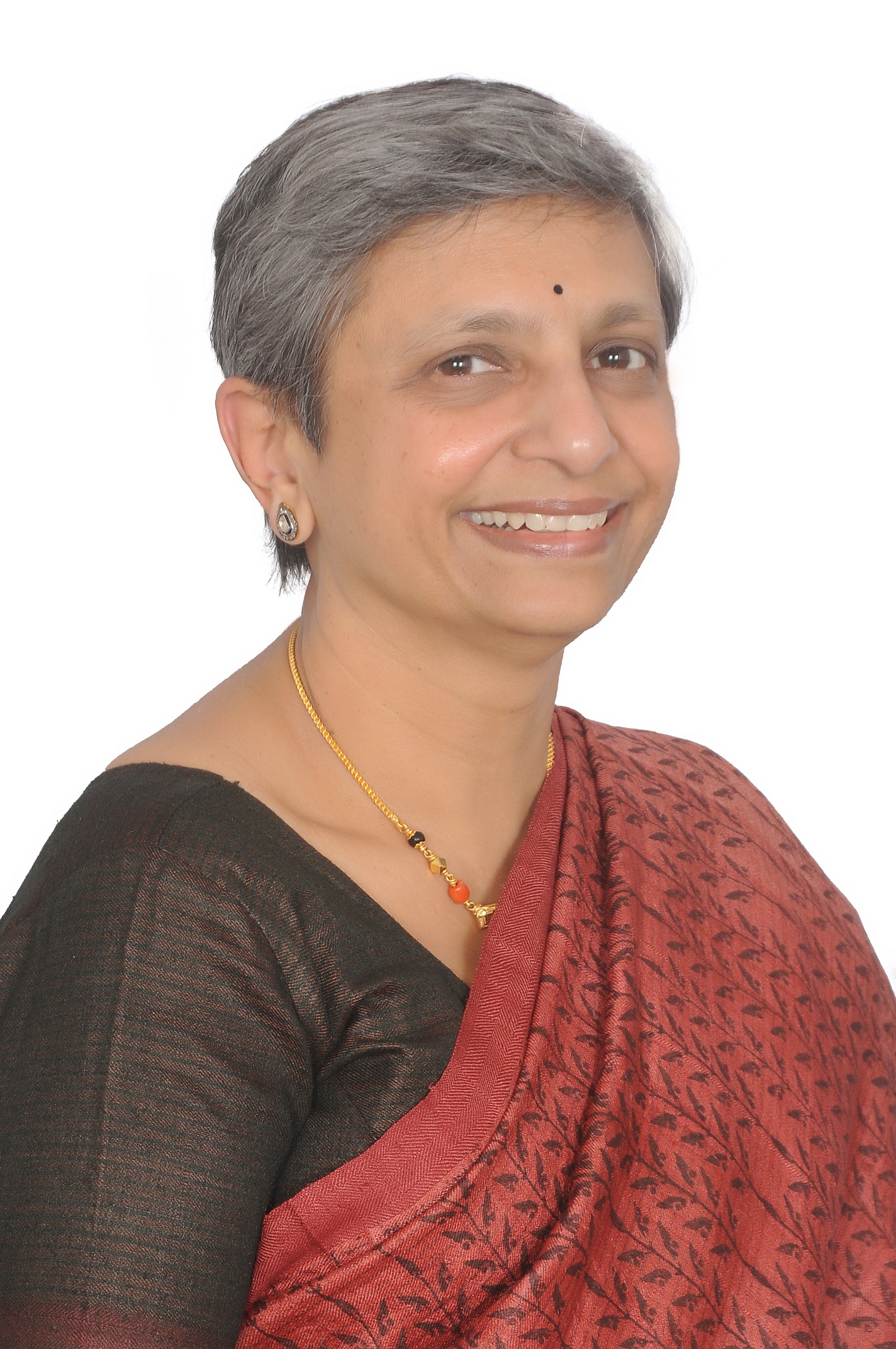
Meena Raghunathan has a rich experience of 35 years in the development sector. Much of it as a part of Centre for Environment Education, an NGO. She founded Corporate Social Responsibility (CSR) function for a major infrastructure group – with a focus on Education, Health, Skill Training, and Livelihoods. Meena serves on corporate and non-profit boards. She has considerable exposure and experience in corporate strategy and policy making.
Meena has several publications to her credit including the most recent book DOING GOOD: NAVIGATING THE CSR MAZE IN INDIA (Harper Collins). She teaches Ethics, Sustainability and Responsibility, and has played a quasi-academic role – developing textbooks for various levels, including the first textbook on Environment for the Undergraduate level. She has also contributed to key policy documents including India’s official submissions to the Earth Summit, Rio de Janeiro, 1992, and World Summit on Sustainable Development, Johannesburg, 2012.
Apart from her outstanding work in the development space, Meena is also highly regarded for institution building and setting up related systems & processes.
PG: May I ask what is the paradox of doing good and being good about?
MR: Let me talk about the situation in India. As you know that the law mandates that large companies, must spend an average of 2% of their net profits of the last 3 years on CSR. The menu of thrust areas of allowable CSR activities is also specified.
The CSR activities are usually done with good intent and also have good impacts – I have no doubt about that. What concerns me is that CSR, which is supposed to move business-thinking from profit towards purpose, from shareholder focus to stakeholder inclusion – that is completely ignored. So when a company spends its 2%, and spends it well so as to see some good changes, say in local schools, or in women incomes, it is as if it is socially responsible. This confuses the issue – as if social responsibility is about spending some part of the profit, rather than worrying about how the profit is made. So a company that is not very careful about the pollution it causes or the disruption to the local community that it creates, can still tick the CSR box by spending 2%.
This is the contradiction of the spirit of CSR – when companies spend the mandated 2% on one of the ‘allowed list’ of activities, the Law is satisfied and everyone starts believing that they are socially responsible. However, social responsibility manifests when businesses make their core business decisions, ensuring at the very least that they do no harm to their neighbours, to the environment, to society. But the CSR Law de-links this critical connection. So as far as core strategic and operational decisions are concerned, it is business as usual. And then, as a completely separate activity, 2% is spent on some social development activity.
The Law asks companies to pick any activities from the list of allowable activities. There is no stress on materiality. The CSR activity can be completely de-linked from the negative externality that the company causes. For example, a corporate may be depleting local groundwater resources or causing pollution. But it may be spending its CSR money on training rural athletes. Ironically, a vaccine manufacturer wishing to inoculate a target population would not entitle it as a CSR activity.
This to my mind is ‘doing good’, not ‘being good’. ‘Doing good’ as in ticking a box by spending a specified percentage of profits. But ‘being good’ is about a business introspecting and moving its world view from a profit focus to optimizing economic, social and environmental outcomes; moving from a shareholder perspective to a stakeholder perspective; making a shift towards business decisions with communities, society, and the environment as core considerations, rather than seeing them as externalities to be managed; a shift from management processes to governance standards.
It is about how profits are made, rather than how they are spent. To me, this is a critical issue, and one that the law and its implementation are confusing. Hope this changes soon.
‘CSR is a vague and intangible term which can mean anything to anyone, and is therefore effectively without meaning.’
PG: In your book you mention that there is no clear, unambiguous, and universally-accepted definition of Corporate Social Responsibility?
MR: Indeed! The term itself was coined in 1953 by American economist Howard Bowen in his book Social Responsibilities of the Businessman. Since then, many academics, practitioners, policymakers, and institutions have given their own definitions, but not one of these is universally agreed upon or used. The understanding of CSR is contextual – it differs from country to country, from decade to decade, company to company, and stakeholder to stakeholder. I agree with Peter Frankental (2001) of Amnesty International who goes so far as to say, ‘CSR is a vague and intangible term which can mean anything to anyone, and is therefore effectively without meaning.’ I must refer to the work of an academic, Alexander Dahlsrud (2006) here. He decided to statistically examine thirty-seven widely-used definitions of CSR. He makes the point that ‘none of these definitions actually defines the social responsibility of business’! However, he does find five widely prevalent threads across these definitions: the Stakeholder, the Social, the Economic, the Voluntariness, and the Environmental dimensions.

PG: Does the law further complicate this situation?
MR: Indeed it does. It even misses some of the five dimensions mentioned in Dahlsrud’s analysis mentioned above.
The Law of course does not define CSR, but it implies that carrying out an activity related to Education, Health, Women Empowerment, et al is CSR. So if we come to more updated thinking on CSR, we can see it does not go by most definitions – e.g., one given by the academics Andriof et al. (2002) which defines CSR as the ‘recognition that day-to-day operating practices affect stakeholders and that is in those impacts where responsibility lies, not merely in efforts to do good’, or the UNIDO definition: ‘Corporate Social Responsibility is a management concept whereby companies integrate social and environmental concerns in their business operations and interactions with their stakeholders.’
I feel that the way forward is to have a serious multi-stakeholder review of the law, given not only these concerns but the changing business environment. ESG is gaining huge importance. How do we make CSR something that pushes businesses towards a more holistic stakeholder perspective? How do we put it at the centre of strategic decision making? How does CSR relate to ESG? We have the Business Responsibility and Sustainability Reporting requirement for the top 1000 companies. Right now, it is a completely disjointed piece of reporting – from my experience, there are 5 different departments filling different sections, without any effort to reflect holistically on what it all means. The law will complete 10 years in 2024. So this is the right time to carry out such an exercise of reflection. And worry how to move from ticking boxes on environmental, climate change and social issues, to really internalizing the spirit of responsibility with regard to these.
PG: We have had a tradition of philanthropy, there is also a wave of new gen philanthropists. Then there are do gooders ‘below the radar’ who will anyway continue doing good – CSR or no CSR?
MR: Yes, India has a rich tradition of philanthropy. For instance, I believe the Rig Veda has a chapter devoted to charity, dharma, karma, reverence for life, and recognition of the interconnectedness of life. All religions do in fact stress on giving. However, scholars like Pushpa Sundar lament that there is not adequate research on our philanthropic history. But some trends are clear. During the late nineteenth and early twentieth centuries Indian businesses grew significantly and newer ways of giving became dominant. Essentially led by very wealthy individuals who had made their money from business. In fact, some scholars say that in the early nineteenth century, apart from the Western world, the CSR concept was significantly developed only in Japan and India.
The British Government definitely did not appreciate any support to the Independence struggle. But many industrialists supported the movement, both overtly and covertly.
Those were the times of the Raj, and the British Government definitely did not appreciate any support to the Independence struggle. But many industrialists supported the movement, both overtly and covertly. I would like to quote my favorite example. When Gandhiji first came to Ahmedabad, he set up his ashram at Kochrab. He invited a Dalit couple – Dudabhai and Danibehn – to come and live at the ashram. This led to considerable agitation among the ashram’s neighbours as well as many funders, leading to a financial crisis which forced Gandhiji to think of shifting the ashram. And then one day, in Gandhiji’s words: A car drew up near our quarters and the horn was blown. The children came with the news. The sheth did not come in. I went out to see him. He placed in my hands currency notes to the value of Rs 13,000 and drove away. I had never expected this help, and what a novel way of rendering it! (Mehta, 2019) This gift saved the Ashram. It is well known that the ‘Sheth’ was Ambalal Sarabhai, one of the foremost industrialists of the time. However, neither he nor Gandhiji ever admitted this!
Jamnalal Bajaj was another example. He was considered Gandhiji’s fifth son and adopted all his values – from ahimsa (non-violence) to his dedication to the poor, to his commitment to locally made goods, and his patriotic spirit. Bajaj was an active member of the Congress party, and gave up the Rai Bahadur title conferred on him by the British and joined the non-cooperation movement. Importantly, Bajaj, in line with the trusteeship concept propounded by Gandhiji, felt that inherited wealth was a sacred trust to be used for the benefit of the people, and dedicated most of his wealth for the poor and underprivileged.
It was private philanthropy that led to the creation of institutions like the Indian Institute of Science (IISc) in Bengaluru and Tata Institute for Fundamental Research (TIFR), Mumbai. It is said that J.N. Tata mooted the idea of contributing to an institute like IISc as early as 1898, long before Carnegie’s endowment to set up a technical school (today’s Carnegie Mellon University).
Bain’s India Philanthropy Report, 2022 says it is ‘often an emotional and impulsive decision’.
No less is individual giving. A lot of it used to be to and through religious institutions, but now it is getting more and more secular. However, this is not very organized. Bain’s India Philanthropy Report, 2022 says it is ‘often an emotional and impulsive decision’. The reports says that since 2015, it has been growing 5% every year, and totaled to INR 28,000 Crore (1 crore = 10 million) in 2021. But the report forecasts that with the rapid growth of our middle class and the increase in the number of donors, this will soon start to grow at about 10% annually and contribute one-fourth of total private giving by FY 2026. I would think that it is more – we in India, don’t often talk about our giving. And also many people are giving more and more, which may not all be captured. For instance, many people support the children of their staff to get a good education; they help out during health emergencies; they help them build houses. So I think there is much more than we can account for.
We have Azim Premji, the Nilekenis and Kiran Mazumdar Shaw who have signed the Giving Pledge, but so many other high net worth individuals, who are contributing to some facet of development or the other. But in India, we have a middle-class equivalent of the same – the ‘Living My Promise’ is a pledge many are taking to ‘give back at least 50% of my wealth to charitable causes of my choice while I am alive or in my will’.
Another interesting facet is giving by ‘old’ business families, and the newgen entrepreneurs. Mark Sidel (2000) refers to a phenomenon he calls ‘Bengaluru philanthropy’ (because Bengaluru-based IT companies have typically led the phenomenon). This is the philanthropy of the new-economy companies. It is led by individual first-generation entrepreneurs who have created their wealth themselves and therefore are not shackled by family pressures on how much they may give to social causes, nor are they bound by family traditions on what to support and how.
The journey of achieving compliance to CSR law has not been too difficult. Most companies are today spending what they are supposed to, and are ticking all the boxes. But that does not mean the spirit of CSR has taken root.
PG: ESG is not too well embedded here – does that make the task of CSR more onerous?
MR: ESG is the buzz word, and companies are rushing to show their credentials! Whether it is the optics or the spirit, it is difficult to say.
But I would say that ESG and CSR are not two journeys. There is only one journey – to becoming a more responsible business; of moving away from a sole focus on profits, to one towards purpose; of not putting shareholders at the top of the heap, but paying due respect and attention to all stakeholders, including the environment; of embedding good governance.
The journey of achieving compliance to CSR law has not been too difficult. Most companies today spend what they are supposed to, and are ticking all the boxes. But that does not mean the spirit of CSR has taken root.
At one level, I think, on all these issues, compliance and ticking of boxes will happen over the next few years. But about the spirit, it is a much more difficult journey, which will need a very serious change of mindsets.

Are children staying in school? And even when they are, are they learning? Results on these fronts are worrying, says Meena.
PG: Your work with children’s education – one of the most vulnerable segments of our society – what is working and what is not? How could CSR help?
MR: The issue of getting children’s education right is really crucial for our country. Some things have worked – we are able to show pretty close to 100% enrollment. But what happens after that is the big, big question. Are children staying in school? And even when they are, are they learning? Results on these fronts are worrying.
A huge chunk of CSR spending goes to education – in the first 6 years after the law was mandated, 30% of the total CSR spend went towards this cause. Some of it goes towards physical infrastructure of schools around a business; some towards improving quality of teaching-learning through training of teachers, deployment of extra teachers, or learning aids, kits; sometimes towards computers and e-learning. Sometimes it is in the domain outside the school – e.g. providing after-school tuitions. Or it may be target individual students, eg., towards providing scholarships for meritorious students. Or actually adopting or taking over or building new schools. Sometimes these are large scale – with corporates taking up whole districts. Sometimes it is just a few schools. They are working at one level and not working at another. So if I work with 5 schools, they may actually show good results. But are those results sustainable once the company withdraws? Are they scalable, replicable, adaptable? And is there the willingness in the system to do this?
There are many ways CSR can make a difference – does the company want to innovate and create new models? Does it want to work intensively and make a difference here and now in a small number of schools? Does it want to bring change at systemic level?
I think that every company must set their objectives thoughtfully, with clearly stated impacts that they wish to achieve. And put in place best processes and systems and implementation mechanisms. But we must recognize and respect that different companies have different resources, different ambitions, different challenges. I think even if a company works with 2 schools and improves learning of 100 children, that is great. If another sets out to work with 10,000 schools and is able to improve their performance, that is great too. They are both making a difference.
I also think that there needs to be special attention to the pre-school age, ie, under 6 years. Currently, the anganwaadi system is more of a child-minding and feeding approach. The focus has to shift to proactive educational inputs – education that is not only the 3Rs, but lays the foundation for holistic development of the child, intellectually, socially, psychologically, physically, every which way.
PG: Grateful for all these wonderful first hand insights, Meena! My best wishes for all your ongoing endeavours.
http://www.thediversityblog.com
December 2, 2022
Amongst the many – at the recent Sanctuary Wildlife Awards 2022 – I was honoured by the iconic Bittu Sahgal with a spotlight and a generous mention:

“PRAVEEN GUPTA
Former CEO, Insurance Risk Expert and Climate Impact Observer.
After a pioneering lifetime spent at the very top of the insurance sector, you have made it your life’s mission to wake economists, actuaries and investors who have grossly underestimated the risks posed by the climate crisis.
Your lucid and credible communications are read by thousands which is changing the very fundamentals of risk estimation caused by cyclones, floods, droughts, crop failures, landslides and even future pandemics. Human rights and ecological justice sectors have begun carrying your message to those most affected… the victims young and old, and investors who now hesitate to throw money into stranded infrastructure projects. You are making a phenomenal difference”.
In doing so, with a single stroke, Bittu mainstreamed Insurance into the world of Nature and Biodiversity. Something long overdue. Over 4.3 billion people, more than half the world’s population, depend upon #biodiversity for their livelihoods. They are among the most impacted by climate change. Insurers must focus on the good they can do rather than aid and abet the loss of nature and biodiversity…


ILLUMINEM: November 24, 2022
This column: https://illuminem.com/illuminemvoices/7e4e4d55-09d9-4fb3-8e18-88585cbb2123 covers some chinks in the armour that came up for discussion whilst the #COP27 was on. ‘Loss and damage’, only one to surface inside the ring, ensured an exothermic end to the COP. “A fund for #lossanddamage is essential – but it’s not an answer if the #climatecrisis washes a small island state off the map – or turns an entire African country to desert, warned UN Secretary General António G. “It didn’t quite deliver”, believes Alessandra Lehmen. And this strong pronouncement from Thomas O. Murtha: It’s “just monetizing a crisis for profit”. Handing over an empty bucket, to the most vulnerable of countries in #GlobalSouth, was bound to evoke strong responses, such as these. Is anyone surprised?
Prognostics of a few tools coincidentally popped up whilst the COP was on. For instance, climate #modeling failing to capture strengthening wintertime North Atlantic jets and impacts on Europe is under scrutiny. #Pricing and #reserving shortcomings’ ability to aggravate and trigger #existential crisis for insurers – just when they need to be most stable. As a consequence, they could be flying blind in an adverse climate change situation.
Tamara Close, CFA focuses on ‘climate proofing’ investment concerns. Prof. Shiva Rajgopal, on the other hand, analyses top ten U.S. P&C insurers vis-a-vis Axa, which he considers as the current gold standard in Climate risk management. His grave reservations translate into a three-part sequel for the Forbes. Must also mention the Blended Finance Group’s release of its pathbreaking report ‘Riding the Dragon’ as the theatre of the absurd unfolded at Sharm-al-Sheikh. #Anthropocentric misadventures in the #ESG arena (#greenwashing, and its ever-growing manifestations included) will invite serious wrath in the form #fiduciary#breaches and #litigation.
With vested interests slowing and blocking desired measures, are we headed for one last resort? These words of author Robert Christie may just turn out to be prophetic: “The only potential leverage that seems to remain is for the mobilization of large populations to form social movements that are too big to fail. That may be very difficult to accomplish, but it will become increasingly feasible as global conditions become much worse and political regimes become more unstable”.
Blogpiece republished by Climate and Capital Media, Australia: Interview features as the top story.
REPORTS AND ANALYSIS | | Nov 8, 2022
Former international insurance CEO, Praveen Gupta, a thought leader on financial governance and risk, looks at the RBI’s climate change consultation process in the context the global finance sector’s and regulators’ approaches to climate risk, drawing on examples from various world economies.
http://www.thediversityblog.com

Young-Jin Choi leads the impact and ESG practice at Vidia Equity, a newly established purpose-driven Private Equity climate impact investor. Prior to joining Vidia, Young-Jin served as the impact investing advisory team’s Head of Research at PHINEO gAG, a leading think-and-do-tank in the German speaking area with a focus on impact measurement and management.
Young-Jin’s previous roles include investment management at 3M’s corporate venture capital unit and strategy consulting in a variety of industries and regions with Monitor Group (now Monitor Deloitte). He holds three master’s degrees in Mechanical Engineering (RWTH Aachen), International Business Studies (University of Maastricht) and Politics, Philosophy and Economics (LMU Munich).
Here are Young-Jin’s diagnoses and the prescriptions, on the eve of #COP27, as he responds to these questions in context of my submission to the Reserve Bank of India on Climate Change consultation.
Praveen Gupta: Would you agree that a fragmented financial regulatory governance makes it more fragile whilst dealing with a climate emergency? Do you think the time to talk about Climate Crisis is running out and it is Poly Crisis that we ought to be addressing?
Young-Jin Choi: The fundamental nature of the problem includes the way our current economic and financial systems are currently designed to work (in terms of purpose, goals, rules, incentives, et al), resulting in a severe market failure. Dealing with the climate emergency requires addressing this market failure, which in turn requires a concerted, coordinated approach between various regulatory institutions, within a country as well as internationally. Financial system regulation can be most effective, when complementary economic system regulation is in place, but it can also be rendered ineffective when the economic system design continues to distort risk – and return profiles in connection with greenhouse gas emissions.
Various humanitarian, economic, geopolitical and stability-related crises continue to be induced and exacerbated through rising global temperatures and extreme weather events.
While it has become more important now to address multiple crises at once (through “multisolving”), I believe it is similarly important to maintain a sharp focus on the climate crisis as the singular, overarching long-term driver and multiplier of various risks and crises. Various humanitarian, economic, geopolitical and stability-related crises continue to be induced and exacerbated through rising global temperatures and extreme weather events, as the analysis by Chatham house of “cascading systemic risks” illustrate: https://www.chathamhouse.org/2021/09/climate-change-risk-assessment-2021/04-cascading-systemic-risks.
PG: What would your advice be to money pipelines in terms of impact investing and decarbonisation?
YJC: I would advise capital allocators to take a broader, science-based social systems perspective, taking the sustainability context and ethical minimum aspirations and thresholds into account, when assessing the desirability – as well as undesirability – of an asset’s impacts. Beyond the impact of the asset’s operations and supply chains, this also includes the direct and indirect impacts generated by an asset’s sale of products and services. It should be clear, for instance, that financing further fossil fuel-based greenhouse gas emissions (especially from new fields and projects) is simply inexcusable in a time of grave climate emergency – regardless of their (unethical) profitability and their own operational decarbonization efforts. The same applies to products and services that support or enable fossil fuel operations. At the same time, products and services that significantly support or enable climate solutions deserve proper recognition, too, besides the climate solutions themselves. Of course, climate solutions are not exempt from serious ESG issues and risks – those need to be carefully managed and mitigated over time but shouldn’t represent a dealbreaker per se.
When thinking about putting a price on carbon emissions, it is important to redistribute most of the income generated this way to affected households in order to ensure their continued political support and help lower income households transition. When thinking about rewarding carbon removal, it is important to transform current voluntary carbon markets into a global pay-for-success scheme.
Even if we should and wanted to act as if we all were universal owners and as if ethical materiality matters at least as much as financial materiality, our current instititutional frameworks, mandates, and duties don’t provide institutional investors with the same freedom that an autonomous moral agent enjoys. Moreover, it should be clear that simply cleaning up a single portfolio from polluting fossil fuel assets won’t be enough as long as the asset continues to operate under different ownership. It would also be naïve to expect a fossil fuel company to voluntarily retire a business that is allowed to remain highly profitable. Maintaining ownership of a fossil fuel asset creates an unavoidable economic conflict of interest when it comes to advocating for strong climate policies that would force an accelerated phaseout of fossil fuel production/demand and asset stranding.
We need to recognise these practical legal and economic constraints when it comes to the impact potential of portfolio company engagement and voluntary pledges. We need systemic interventions to improve the alignment between the scale and pace of capital allocations that are normatively needed and the empirical universe of available investable assets that is determined by mandates and duties as well as the way the market prices (or fails to price) impacts.
PG: Do you prescribe carbon pricing as a tool and would it work as one-size-fits-all?
YJC: Carbon pricing – which should include the whole carbon pricing matrix as described by Delton Chen (https://www.youtube.com/watch?v=6LAiYb4k0go) represents a key instrument needed to accelerate decarbonisation. When thinking about putting a price on carbon emissions, it is important to redistribute most of the income generated this way to affected households in order to ensure their continued political support and help lower income households transition. When thinking about rewarding carbon removal, it is important to transform current voluntary carbon markets into a global pay-for-success scheme, as suggested by the https://globalcarbonreward.org/.
Other key instruments include strong climate policies (e.g. mandatory minimum standards and replacement mandates) as well as increased green fiscal spending e.g. for enabling infrastructure (flexible, integrated power grids) and or de-risking and subsidising climate finance. These instruments need to be combined in a coherent policy package. Its transformational acceleration affect partly depends on their relative strength – higher carbon pricing and/or bolder climate policies can allow for less fiscal spending, and vice versa.
Companies respond with hyperbole instead of admitting that they cannot do what is needed by themselves. But they have a corporate political responsibility.
PG: How big a menace is greenwashing? Do you see effective action coming from regulators?
YJC: There is no doubt that greenwashing is a serious problem that drives complacency and waters down our collective sense of climate urgency. But stricter disclosure and transparency standards won’t by themselves fix market failure. A trend reversal into “green hushing” is not helpful either. In connection with greenwashing, I see an even bigger meta-risk in not recognising greenwashing as what it often is – a sign that voluntarism and current frameworks are insufficient to promote genuine transformations. Companies respond with hyperbole instead of admitting that they cannot do what is needed by themselves. But they have a corporate political responsibility: https://www.hbs.edu/faculty/Pages/item.aspx?num=54635.
If they were honest about their economic and legal constraints and limitations, I’m sure that they would more strongly advocate for governments to set binding rules, mandatory standards, increase fiscal spending for subsidies and de-risking, price carbon etc. They would make industry associations and thinktanks to support their views or cease support, rather than allowing market failure to continue.

“Unfortunately, the history of COPs doesn’t fill me with much hope. Neither does the counterproductive rise of ultranationalism into positions of government authority in various countries”.
PG: Any thoughts on the relevance of ‘The Ministry For The Future’ in today’s global context?
YJC: I think Kim Stanley Robinson’s book does a great job at showing a possible future in which we barely manage to turn the ship that is our civilisation around. Among the interesting solutions he explores, there is one which I believe represents a critical success factor: Inspired by Delton Chen’s Global Carbon Reward initiative (www.globalcarbonreward.org), the author describes how central banks eventually start to collaborate and mobilise enormous additional financial resources via a carbon currency that are then used to reward successful climate mitigation efforts (and even compensate Petrostates for leaving their fossil resources in the ground). This way, we can transform voluntary carbon markets into a global pay-for-success scheme, in which corporates are incentivised to participate rather than having to purchase carbon credits, and make sure that the carbon price (exchange rate) is as high as needed to serve its purpose.
Most importantly, the post-colonial hypocrisy needs to end …
PG: Do you see COP27 as a catalyst for a fundamental shift?
YJC: Unfortunately, the history of COPs doesn’t fill me with much hope. Neither does the counterproductive rise of ultranationalism into positions of government authority in various countries. It will be more pragmatic if committed large emitters form a climate club (https://www.nature.com/articles/d41586-021-00736-2) and use carbon border adjustment mechanisms, technology transfers, and additional development cooperation resources in order to globally promote and incentivise decarbonisation.
Most importantly, the post-colonial hypocrisy needs to end – developed nations cannot insist on developing their own fossil resources, and fail to deliver the international financial support they had promised. Developing nations are expected to fund the clean energy transition by themselves while voluntarily forfeiting fossil fuel export income. Every country on Earth has the ethical obligation to sign the fossil-fuel non-proliferation treaty and ensure that we keep fossil fuel reserves in the ground.
PG: Many thanks Young-Jin for these exceptional insights backed by scholarly findings. Here is wishing you all the very best in your endeavours!

My column in the illuminem: October 26, 2022.
https://illuminem.com/illuminemvoices/b2d325f5-37bc-4c89-81d3-ba41e2fb2f0c

Every other day we hear of a new manifestation of greenwashing. While on the one hand companies and countries have vied for green pledges leading to an illusory #netzero , they resort to the likes of sportswashing or nature rinsing to delude the world. That has become a sport by itself!
“We’re… seeing a growing trend for greenwishing where companies set hugely ambitious climate targets, with little or no clear plan to achieve them. That might help companies in the short term, but without realistic targets they’ll be on a hiding to nothing.” Matthew Bell observes in EY’s annual Climate Risk Barometer (many thanks Zsolt Lengyel).
“#Greenwashing is a marketing or advertising strategy where corporations recognise environmental problems but then use misleading or false information to make it appear as if they and the products they sell are providing solutions to these problems”, explains Hans Stegeman.
New research demonstrates that industry associations representing key sectors and some of the largest companies in the world are lobbying to delay, dilute and rollback critically needed policy aimed at preventing and reversing biodiversity loss in the EU and US. Highlights InfluenceMap.
Biodiversity loss due to human activity is occurring globally at unprecedented rates and faster than at any other time in human history. Despite increasing awareness of the #biodiversitycrisis, the world failed to meet any of the UN biodiversity targets for the last decade, reminds Influencemap.org. And, at the UN Biodiversity Conference (#COP15) due to be held in Montreal in December, governments from around the world will negotiate the post-2020 global biodiversity framework; a set of targets and goals for the next 10 years aimed at reversing biodiversity loss.
“The rise in litigation is important but it is the rise in regulation internationally, the growing robustness of regulators and the sharing of information and strategy amongst regulators that is more impressive. The SEC, BaFIN, ASA, CMA, FRA, EA, SEPA, EPS. FRC, DoJ, the Police in UK and Germany, Dutch Advertising agency, etc. which may be as important as litigation”. Professor Paul Watchman gives us some hope.
In the meantime, the US public relations firm Hill+Knowlton helping Egypt organise #COP27 also works for major oil companies and has been accused of greenwashing on their behalf, according to openDemocracy. Hill+Knowlton’s clients have also included Coca-Cola.
Is the world’s biggest annual climate event headed for a fizz?
http://www.thediversityblog.com

Cindy believes the most effective change we can make is in how we shape the mind-set of the rising generation and how we design our organisational systems. Her children’s book Bright New World is published by Welbeck in October 2022. She sits on various advisory boards and the steering committee of ‘She Changes Climate’, campaigning for full inclusion of women’s voices on planetary issues.
Praveen Gupta: ‘Bright New World’ – what made you write this book for children?
Cindy Forde: I wrote a book for children because I believe the stories we tell our children and how we educate the rising generation is key to creating a brighter future. Einstein famously said, we cannot solve our problems with the same thinking that created them. Even though our ecological systems teeter on the brink of collapse, threatening the stability of our global economy and society, most national curriculums are based on the industrial revolution, the system at the root of these problems. A model based on endless growth when we have finite resources, that fuels climate change, extinction, and almost unprecedented inequalities in wealth within and between countries and people. We must urgently re-design education.
There has probably never been a greater opportunity for transformation to a brighter future for humanity than now, nor the urgency to seize this been more acute.
In the midst of so much ecological breakdown and despair, there is much more than hope, there is a clear road map to a safer, kinder word. If we learn to read that map, to step out of powerlessness, bewilderment and anxiety and orient ourselves in new directions of thought and action, we can all be part of shaping a brighter future.
I wrote ‘Bright New World’ to give children, their families, and teachers the tools to read this map and to be part of building new pathways for humanity.
PG: Climate Crisis makes us all anxious. Particularly the children – who will be our inheritors. Is that why you opted to explain the social, political, and environmental issues facing the planet and how we got to this point?
CF: Yes, absolutely. To have hope and to enable children, all people, to realise their own ability to be part of co-creating the world they want, it is vital to understand how we got to this point and that most of the blocks in our way out of this crisis are social and political.
Most of the solutions, or mitigation, to our major global problems already exist. Earth still retains the resilience and abundance to support the human family and all her other life forms in harmonious co-existence. She is damaged but can regenerate. What must change for this to happen is how we think.
Anxiety can be caused by a sense of powerlessness, of things being out of our control, that nothing is being, or can be done. Instead of fear and anxiety, I asked myself, what if we changed the story for our young people and enabled them to see this as one of the most exciting times to be alive? System change begins with how we teach our children to think. What if the stories we tell start to draw new maps, to equip the rising generation to navigate themselves safely through innovation, social and political change, towards a world with a future?

PG: Would you call it a holistic view – as you choose to go beyond climate change?
CF: Climate breakdown is a symptom of our wider systems crisis. It is a by-product of how our economic and social systems have evolved over centuries of colonisation and industrialisation and cannot be tackled as an isolated issue. Earth is an interconnected web of life, just like our bodies, what happens in one part of the web can have a huge, often unforeseen, impact on another. The solutions must be systemic, holistic.
By inviting children to step into a not-too-distant future where these solutions have been able to take effect, they have the opportunity see what is possible. To visit a world where we collaborate with nature and our natural systems to create thriving cities, wild spaces, oceans; where we use our incredible technological abilities to enhance and support the genius of the natural word; where we have reengineered our systemic issues that currently cause the greatest problems, such as energy, food, travel, economics, how treat and educate girls, to become the biggest part of the solution.
PG: What are the key messages for young people?
CF: That they can be part of creating a brighter world.
Throughout the book, children are asked questions about their own ideas for how to do this. At the end of the book there is list of 10 simple things they can do to use their own power to make change. Some of these are practical lifestyle actions like what we eat, how we travel, how much stuff we consume. Others are about having self-belief, using your creativity, your voice to ask for change. I summarise this as Care. Share. Dare.
Care for Earth, collaborate and dare to think differently about the future you can create.
I frame this in a real-world context that shows that the disaster that we are facing is causing much awakening to the short-sighted folly of ‘endless growth at any cost’. Around the world people are rising up with innovation both in how we do and make things and in how we think. This evolution in mindset is the greatest key to change. The book showcases brilliant young activists at the forefront of this transition and the innovations they are developing at a local and global level, to demonstrate this change is real and already well underway.
The catastrophic imbalance in our planet is mirrored by the catastrophic imbalance in voices in national and international decision making. Decisions that affect our survival as a species are being taken predominantly by a single interest group, the old guard powerbase of the industrial global north. These voices tend to come in an older, white male package.
PG: How important is educating girls so as to take an equal place in society?
CF: I dedicate a section to this called ‘Voices for Girls’. It shows that educating women is one of the leading ways of mitigating climate and ecological breakdown, as demonstrated by the research of Project Drawdown and Population Matters among many other world leading organisation. When girls are educated, they have more control over their reproductive systems and choose to have fewer, or no children. As David Attenborough said, “All our environmental problems become easier to solve with fewer people, and harder – and ultimately impossible, to solve with more people.”
And it is not just population numbers. The catastrophic imbalance in our planet is mirrored by the catastrophic imbalance in voices in national and international decision making. Decisions that affect our survival as a species are being taken predominantly by a single interest group, the old guard powerbase of the industrial global north. These voices tend to come in an older, white male package. The outcome of this monocultural world view is, as with all monocultural ecosystems, unsustainability, and collapse. We have a fight on our hands to change this, as it is a fight against an entrenched status quo reinforced by billion-dollar corporate interests, that lobby governments and pay politicians across the globe.
Educating girls is a vital part of this fight to enable women around the world to mobilise, recognise their own value and take full part in decision making. Including the holistic, collaborative ‘feminine’ world view, and many men also hold this, as opposed to the current dominant model of relentless competition and extraction to extinction is crucial to our survival. So, educating boys to understand the value of woman and girls is also essential.
PG: Women are the ones most impacted by the Climate Crisis, how can their voices be heard? Why are they poorly represented in leadership roles at the likes of the COP?
CF: As outlined, in my previous answer, this is a deeply systemic issue. The current power structures have been put in place by and to maintain a patriarchy. The domination and exploitation of nature in many ways mirrors the domination and exploitation of women. Even in 2021 the British government saw no issue in sending an all-male delegation, at decision maker level, to the COP26 negotiations, even when challenged hard on this by influential women globally. When women in countries where we have considerably more franchise face this kind of political erasure, the devastating level of exclusion faced by women in more overtly discriminatory societies operates like a deadly bog.
Exclusion of women is hard baked into the extant model of colonisation and exploitation of countries, people, nature that has led us to the brink of extinction. Our dominant myths and cultural narratives have been shaped to support this world view and the myth making industry has only grown more powerful as media oligarchs consolidate their influence over the news, to an extent film, digital and social media. The collaborative, ‘feminine,’ natural systems world view does not support the vast profiteering for the elite at the top of the current dominator paradigm that has driven our society for so long. It is, therefore, a worldview that must be repressed, silenced, discredited.
Many men who also hold this world view are also excluded and discredited accordingly. Orchestrated violence, corruption, obscene lobbying, for example by the fossil fuel industry, is all at horrifyingly well-funded play to hold this system in place, and as it now implodes this becomes more extreme and vicious, as evidenced by the petro-state wars now reaching the level of nuclear threat, and the terrifying backlash again women’s rights, in the devastating decision of Roe vs Wade. It takes great courage, collaboration, and commitment to systemic change to get marginalised voices heard. This involves the mobilisation of influence in the diplomatic, corporate, and political sphere such as COPs, campaigning, collaboration and amplification of work and message through well organised, focused global networks of mutual support. It also takes significant funding.
Exclusion of women is hard baked into the extant model of colonisation and exploitation of countries, people, nature that has led us to the brink of extinction. Our dominant myths and cultural narratives have been shaped to support this world view and the myth making industry has only grown more powerful as media oligarchs consolidate their influence over the news, to an extent film, digital and social media.
PG: What needs to be done to ensure a key role for indigenous people and women from Global South?
CF: As outlined, in my previous answer, we need to build strong, cross global networks to influence and campaign. Where people who have power and resources understand how vital it is to include the voices of indigenous people and women from the global south, they must use it. Our time to achieve the meaningful dialogues, listening and action essential to changing our trajectory is extremely short now. We must mobilise in effective and coordinated ways to have an impact at places like COP, which are riddled with corporate interest and have a track record of failure. So, we must also build alternative platforms for global governance where voices from the global south, indigenous people, and women are built in as core constituencies.
I am on the Steering Committee of She Changes Climate https://www.shechangesclimate.org whose aim is to spearhead women’s participation in climate negotiations working in global collaboration. I also support the work of https://www.foundationearth.co, currently incubated by Climate 2025 https://www.climate2025.org to support the emergence of global governance of our biosphere.
PG: Any plans for translating the book into other major global languages?
CF: Absolutely, the rights have already been acquired by a German publishing group, and other international rights are under discussion. I would obviously like to see ‘Bright New World’ in all major languages so its message can reach children and their families in all countries of our beautiful, shared planet.
PG: May this brilliant vision for a ‘Bright New World’ become a reality soonest, Cindy!

 The Diversity Blog