
Praveen Gupta: Do you see any disconnects between our coal addiction, net zero commitments, ongoing efforts to raise the coal production and the urgency in raising the share of RE?
Kashish Shah: India is the world’s third largest and one of the fastest growing electricity markets. We will continue to need additional power capacity to serve electricity demand growth of 5-6% annually for this decade.
I think we have not been able to build renewables capacity fast enough. To reach the target of 450GW by 2030, we need an annual build rate of ~35GW from the build rate of 10-15GW last 5 years. Furthermore, we would require substantial energy storage capacity for grid-balancing.
This would allow India to phase out its coal-fired power fleet and transform its electricity system to be cheaper, cleaner and more reliable.
India is the world’s third largest and one of the fastest growing electricity markets. We will continue to need additional power capacity to serve electricity demand growth of 5-6% annually for this decade.
PG: There is a big gap between the gross capacity of thermal energy and the actual capacity utilization?
KS: Yes, India’s coal-fired power fleet has been operating an unsustainably low utilisation factor of ~55% for the last several years.
PG: Are the discoms favourably inclined towards aligning with RE sources?
KS: The discoms continue to be in bad financial shape. However, government-owned entities such as Solar Energy Corporation of India (SECI) and NTPC are playing a key role in underwriting renewable energy contracts and reducing the counterparty risk.
PG: Do you see challenges coming from the land supply, water shortages, disposal of solar panel wastes as a spoilsport?
KS: Solar power operations use a fraction of water compared to thermal power plants. Now developers are employing water-free technology for cleaning the panels.
PG: Where are we on the battery supply side? How soon can that front be ramped up?
KS: In our view, recent market and regulatory developments indicate India’s battery storage market could boom in no time. Continuing a decade-long deflation in costs, solar plus batteries are cost competitive with new coal-fired plants in markets such as the U.S. and Australia, where battery storage development is burgeoning.
In India, there is a similar prospect for a surge in uptake of battery storage as the learning-by-doing experience deepens as new projects, backed by tenders from government-owned entities such as NTPC and Solar Energy Corporation of India (SECI), are executed.
ReNew Power, one of the biggest renewable energy developers in India, and Fluence Energy, a leading battery technology provider, have announced a joint venture to develop a 150MWh storage facility in Karnataka. ReNew Power has won numerous RE plus storage tenders and the battery project will play a key role in delivering firmed RE capacity.
The cost of batteries could reduce further with local manufacture.
The Government of India is striving to support the localisation of batteries’ value-chain with a Production Linked Incentive (PLI) scheme worth Rs18,100 crore (US$2.47Bn) for 50GWh of battery storage for electric vehicles (EVs) and stationary battery storage. The tender has been oversubscribed 2.6 times with bids received for 130GWh of battery manufacturing capacity. The interested parties are Reliance New Energy Solar, Hyundai Global Motors, Ola Electric Mobility, Lucas-TVS, Mahindra & Mahindra, Amara Raja Batteries, Exide Industries, Rajesh Exports, Larsen & Toubro, and India Power Corporation.
They have a track record of delivering dramatic cost reduction in the sectors it has ventured into and it would not be a surprise if they manage to do the same in the clean energy space.
Reliance’s entry into the market could change the landscape dramatically. Reliance is looking to acquire world-leading technology and to further scale it up in the Indian market. They have a track record of delivering dramatic cost reduction in the sectors it has ventured into and it would not be a surprise if they manage to do the same in the clean energy space.
PG: How do you see dealing with rare minerals like lithium and its unique sensitive supply chain issues?
KS: Yes, that is going to be a challenge. The recent supply shortages in lithium have put a halt to the decade long deflation in lithium-ion battery storage. This is where diversification of storage technology will come into the picture. There are other battery technology alternatives such as storage, Sodium Sulphur, zinc-air, liquid metal and storage systems based on gravity and compressed air. The recent global supply shortage in lithium is mainly induced due to the pandemic driven supply-chain bottlenecks. This would probably ease out as the pandemic subsides.
PG: How do you see the equation change as private operators play an increasingly larger role in the overall pie?
KS: In my opinion, the transition should be market-driven for it to be sustainable.
PG: What is the rationale for gas?
KS: Gas has never been viable for India in the absence of local availability of the fuel. We should look to leapfrog to green hydrogen. That is the future!
PG: Do you expect any budgetary sops to further boost solar and wind generation?
KS: Rationalisation of GST on solar equipment will provide a much-needed clarity for the industry. I think we could expect that in this year’s budget. Additionally, I hope to see some budgetary allocation for the research and development of the green hydrogen industry. For example in Australia, Australian Renewable Energy Agency (ARENA) has funded roughly 10-12 test projects for green hydrogen development.
PG: Many thanks for these quick & succinct insights, Kashish. I appreciate your general sense of optimism.
Illuminem: January 24, 2022
“The US is the world’s largest historic greenhouse gas emitter. Now, standing on the verge of running out of carbon budget, US insurers need to abandon their fossil-fuel fixation.”
In today’s article, Praveen Gupta explains why climate change is driving major changes to insurance supervision and regulation in the US.
Read the full article on illuminem: https://lnkd.in/eCHvQsaT

Praveen Gupta: Do businesses fully realise that climate is both a systemic and existential risk? Why are they trying to game it rather than address the bubble? What do you think they ought to be doing?
Jerome Tagger: A growing number are coming to realize that the climate crisis could have existential consequences. At the same time, the status quo appears comfortable, cognitive dissonance is strong, the unknowns (e.g., tipping points) are confusing (as well as an excuse for inaction) and the perceived trade-offs are too high. Executives are rarely incentivized in terms of reward, to drive this sort of transformation, few seem to have the courage needed to stand out and lead, and economic systems (from investors to consumers) pressure in a different direction.
This type of societal transformation is chaotic and anarchic – there is no one at the helm, so no one will dictate transformation. What leaders should do: set their organizations on a path to rapid transformation, advocate tirelessly with their constituents, support level setting legislation (e.g., carbon pricing), strengthen rather than weaken governance and political institutions, and constantly raise the bar of their ambitions. What civil society should do: exert constant pressure for them to do so and call out insufficiencies.
PG: Suddenly everything about capitalism seems fragile? Unlike other forms of ‘isms’, can this be capitalism’s ‘antifragile’ moment?
JT: It’s too early to tell. What is capitalism anyway? Seen from Berlin, Beijing, New York or Lagos, you might come to different conclusions. Is it shareholder primacy? That’s likely to stay strong in countries with large liquid markets and matching ideologies like the US. Is it just in time global supply chains? Covid is showing the limits of that, and companies are to some degree reacting, but there are limitations, for example with natural resources where supply diversification is a challenge. Is it the increasingly concentrated economies, with 4-5 companies controlling key global sectors?
One of our advisors estimates the risk of Severe Global Disruption this century at 25% (corresponding to roughly a 25% loss in global output). Who is prepared for that? Who is doing proper risk management?
One of our advisors estimates the risk of Severe Global Disruption this century at 25% (corresponding to roughly a 25% loss in global output). Who is prepared for that? Who is doing proper risk management? You tell me. It’s relatively new that societies actually have the ability to make this sort of macro long term projection thanks to a boom in science, so it should be no surprise that we all are learning what to make with that information. What we learn from this exercise, and how humans and societies withstand and react to the pressures of the current disruption will tell how history looks back on turn of the century capitalism. I suspect it will not be kind, but then we rarely look back with kindness on humanities past moral failures. Ultimately, it’s the here and now that matters and where we have some agency.
My worry in all these conversations about the end of capitalism is that they are highly ideological and polarized. Thinking of the world as either capitalist or socialist is inaccurate and unhelpful. More pragmatism, backed by strong ethics and the leadership of courageous individuals, would be welcome, especially as we face significant global environmental, social and technological disruption.
PG: What surprises is Preventable Surprises striving to prevent?
JT: The sort of repeated financial market shocks that could be prevented by stronger governance and a focus on anticipation and mitigation rather than la-la-la-oh-no!

PG: ESG much maligned? Shouldn’t businesses be working towards a triple bottom line?
JT: I think that investor responsibility will be important so long as there are financial markets. In that sense, the idea that we have a conduit for widespread responsibility is good (although I’m sceptical about the extent to which it can be codified as current legislators would have it). Does ESG meet the challenges we discussed in the earlier questions? In aggregate, no. Mostly, ESG practitioners push weak levers, although some will argue that there is a limited availability of strong levers. Is there a ton of greenwashing? Absolutely. Do I believe in ESG professionals as agents of transformation? Yes.
The notion of business purpose is fraught. I think it is possible for some companies to embrace purpose, through the values of their founders for example, or because of the products they bring. But many of the statements of purpose that are being published now feel artificial at best. And circumstances change too, so purpose has to have some flexibility. It will be interesting to see how this debate evolves and if it can go beyond statements to behaviour change. At the moment I am much more interested in personal purpose. I want accountants and oil drilling engineers with strong ethics.
The bigger question is how values and ethics can be brought into technologies that fundamentally reshape our institutions (e.g., democracy and any notion of freedom), but also now, through AI, what it means to be human.
PG: Tech companies – the new East India company?
JT: One of the challenges of our time is that a small number of companies have too much influence and control on our daily habits, on political opinions, on personal freedoms, on capital markets, and on R&D and innovation (e.g., the future). As oligopolies tend to behave (e.g., get lazy) and with growing political interest in the damages of economic concentration, there is some hope that this might change. The bigger question is how values and ethics can be brought into technologies that fundamentally reshape our institutions (e.g., democracy and any notion of freedom), but also now, through AI, what it means to be human.
Speaking of reshaping things, it’s also important to note that these companies are also shaping the new world order and imbalances since a majority are in the US and China.
Perhaps countries who are behind on the technology race can compete on other dimensions: creativity, diversity, resilience, nature, metaphysics, freedoms. And some solid firewalls.
PG: Tech and Nature at odds? Is it arrogance or myopia or lack of sense for history?
JT: Cleaner and more efficient technology is vital, but any idea that our current technologies can substitute for nature and suffice to mitigate current environmental catastrophes and mitigate climate change and biodiversity loss on their own is absurd. Hundred years for now, who knows.
PG: Many thanks Jerome for these brilliant insights from your crystal ball. May we be in for some pleasant surprises!
Emerging risks from Climate Change: Praveen Gupta is now live across platforms
Subscribe and listen on
Apple Podcasts: https://apple.co/3thZiTU
Spotify: https://spoti.fi/3q7O1DN
Other Audio Platforms: https://bit.ly/3JQYhbr
YouTube: https://youtu.be/E-LCuojkl6w
Web: https://bit.ly/3I3on9F
Liked the story? Give a rating and write a review on Apple Podcasts (https://apple.co/2LFBCVw).
Anyone who believes Diversity, Equity & Inclusion (DEI), Gender Based Violence (GBV) et al are modern buzz words – must read A Bunch of Narcissus and other writings by nonagenarian Surjit Sarna. A no holds barred visceral account of growing up in Lahore, the partition and adapting to the new home. She weaves in patriarchy, feudalism, caste system, depravity, urban decadence and yes, the exploitative dynamics of environmental degradation in the countryside.

Here are some excerpts from the stories I wish to particularly highlight:
Court Hearing
It is Surjit’s empathy and willingness to listen and help all and sundry which makes her the magnet for the exploited and needy. ‘Perhaps Mummy is thinking of fighting elections. This has become a centre for beaten and battered wives!’ That is what her young kids thought she could be up to.
What can I say, I’m helpless; it’s in my blood. I do pretend to be tough and worldly, but I can’t keep up the sham for too long, writes Surjit. There is no servant or maid in the entire mohalla who can’t be found here some time or the other, even at odd hours.
When there is a timid, scared, soft rap at the door, I know – this is someone who has come to see me. They are afraid to even knock on the door sharply. I myself take hurried steps to open the door so that no one else can hear me.”
Pushpa, the maid and her daughters are sharing their harrowing woes with Surjit when Pushpa’s husband turns up. Mona, one of the daughters, pleads with Surjit: Keep me here; I will do all your work.
Her father turned red with rage and raised his hand as if to slap her, ‘Are you coming or not, you ill-begotten ones? Why don’t you get up…you call yourself their mother?’
‘I am their mother, no doubt about it; and you have proved your fatherliness by molesting them, haven’t you, you shameless man? You have ruined my innocent, tender girls!’
And she began to scream and wail. Now I did not tell her to hush. Such misfortunes have to be wept over. For a few moments I had not even understood what she had said. I went numb. It was as if the earth under my feet had heaved. Is he a father?!

The confrontation lands them with the police.
And now we are sitting at the police station. The policemen are making lewd remarks and sniggering. The gaze of the inspector pierces right through the girls. And this bastard! He’s sitting like one who can’t hurt a fly! Speaking in a low, meek voice, hands folded, ‘Maibaap, these girls are immoral. They ruin themselves all day long and I try to bring them back along with their mother and they curse and abuse me, Maibaap! That is the whole matter.’
We’ll get the wickedness out of them right away, and he raises a whip towards the girls.
Their ‘father’ glares at me with fiery eyes.
‘Maibaap, these people have ruined my daughters; they are the ones who have made them work as whores.’
I spring forward again to teach him a lesson. But the inspector looks at me with suspicious eyes and says, “You people go back home. What do you have to do with it; I will straighten them out.’
My husband wants to take me back home forcibly, but I am saying, ‘Where will they get a hearing? Who will give them justice?’
Echoes from the Past
In this tragic tale about Harshi, Surjit articulates: He owned her body and soul, while she had had no existence without him and had been submerged into his shadow.
Daughter, Go Back Home
Suddenly something happened to me as if I had woken up from a coma – I don’t want to die – who is this who is trying to rob me of my right to live? Who is this, who is wreaking such cruelty on me? I tried to push his hand away and he tried to tighten his grip – I couldn’t think – I bit Tarvinder hard on his arm. And he groaned and let go my throat. And thus a daughter rescues herself from a cruel husband.
Brothers inherit mansions and estates; in my fate is exile… Why don’t our people take this song out of our folk songs and bury it somewhere – Daughter, go back home! … Can someone tell me… anyone… which home can they go to?
You May Now Sleep in Peace
Why did her husband not care about her? She never complained perhaps, she accepted it all as destiny and bowed before it. I did not know what she thought about it. But her silence and apprehension were enough for me to draw my conclusions.
Why does a woman hound another woman? She alludes to a Mother-in-law’s disgraceful exploits of the daughter-in-law (Mishri Rani) and wanting to dump the girl grandchild into a dustbin.
Life Sentence
Exploitative ways have no class barrier: He is a well-known lawyer. I only want to ask him one question: Do the innocent get punished in the court of life? Is there a law which permits shattering of dreams – and humbling the other? Is money the biggest miracle in the world? Will women always be unwanted and useless objects?
The Crook
Whither equity: She left the village and shifted to the city. In the city, she washed dirty utensils in people’s houses, but actually she was only scrubbing away the ignorance in Gurmeet’s brain. Yanking out their poverty by the roots. Cutting off their shackles. Liberating her son from a life of deprivation and a feeling of inferiority.
It is not only your stories that I have liked immensely but more than that your style has greatly impressed me. You seem to be one of the few Punjabi writers to use the language so sensitively…
Balraj Sahni, Actor & writer
The End of An Era
Preying vultures: Their own land had become barren because of no rainfall. It had been such a bad drought that the jaws of death had been opened wide. First, they had to sell their shack. When they still had not been able to make ends meet, they had mortgaged their land in the village to the merchant in the village and turned towards the city, where there was work – there was grain, suffering and exploitation at every step.
The book gives graphic insights into her courage to lead whenever she could, rather than turn a blind eye. Surjit Sarna has been championing these causes for the last seven decades. Perhaps well ahead of the West even waking up to them. Each story shakes you to the core and raises questions whose answers we continue to seek.
The Journal, Chartered Insurance Institute: December 20th, 2021.
https://thejournal.cii.co.uk/2021/12/20/taking-wheel-climate-change:
Any news, at this time of the year, on yet another financial bubble in making courtesy the insurance industry is not something to look forward to. Signs of hope for a correction ought to be bring some cheer. The protracted fossil fuel fixation of American insurers, for instance, seems to be begining to get addressed. The Biden administration, via the Treasury, is bringing desired vigour into the Federal Insurance Office (FIO). Hopefully, not only the financial risks from Climate Crisis but the reputational threats to some of the biggest brands, arising from their entanglement with oil and gas industry, will soon come under sharp scrutiny. This might very well homogenise the 50 sets of insurance regulations. Will it serve as a role model for the International Association of Insurance Supervisors (IAIS)? Perhaps nudge the global insurance industry away from its ongoing procrastination, too? Mind you, this is only the starting point. All eyes on the FIO. Merry Christmas!
My article published by Margaretta Colangelo on the LinkedIn: https://www.linkedin.com/pulse/what-longevity-could-mean-health-life-insurers-view-colangelo/?trackingId=jIETes6DT6meVd8xdtD%2F0w%3D%3D
“If you ever feel inspired to write a short article about what longevity could mean for health and life insurers let me know.” Coming from Margaretta Colangelo this was some motivation!
So, I started with exploring my thoughts from a presentation to young actuaries. During lunch time, at this event, one of the participants asked me what would I do if I were to live that long? I wasn’t prepared but recall mumbling something to do with reading all the great classics, listening to all the fantastic music ever created and travel.
My rumination also took me to a cyber insurance event that I once ran in Singapore. And I did wonder whether a rejuvenated human or on his/ her way to cyborg-hood would tantamount to a Theseus’ paradox?
COVID-19 suddenly ports you into a new normal. With mother nature pushing back the father greed, this would not be last of a zoonotic manifestation. Would one really want to keep living through such extended inequitable times? Is there light at the end of this dark tunnel – leading us humanity duly uplifted?
Would that make space travel more compelling – with the possibility of abandoning the only home we have for a more flexi existence and infinite possibilities that Mr. Bezos envisions for his great grandchildren’s great grandchildren? Thereby not having to worry about CO2 or Methane emissions? The extractive pillaging and biodiversity loss?
And yes, there could be someone amongst us who may live all of 300 years!
Many thanks, Margaretta!

Praveen Gupta: Insurers tend to be lagging behind on the climate agenda. A recent ShareAction finding shows, the investment side seems to be performing better than the underwriting. Is this something to do with remuneration practices?
Frederic Barge: Although executive remuneration is not the sole driver for change, it does play a relevant role. Many corporations have established their purpose over the last decade. In line with the societal concerns, corporations have phrased their “reason d’etre” and their role in society. Their purpose statement is clearly focused on the non-financial contribution to society on the long-term. Looking at executive remuneration most of the purpose elements have disappeared. The vast majority of executive remuneration at corporations is linked to short-term financial performance, and this is often not contributing to the long-term value creation for the corporation’s stakeholders (including shareholders). This apparent gap between purpose and pay is in our view limiting or slowing down the transition to a sustainable economy.
We at Reward Value Foundation, strongly believe that the gap between purpose and pay needs to be closed. This requires changing the time horizon of pay, as well as redefining corporate success. The latter means that corporate success is defined by measuring the impact of the corporation on society from a financial, environmental, and social perspective. Extending the incentive structure, even beyond the active period of the executive, will positively affect the time orientation of the executive and potentially support the focus on innovative and R&D driven investments. Such investments are dearly needed to support the transition to a sustainable and inclusive economy.
Insurers as investment managers are more focused on incorporating ESG factors in their investment philosophy. Also, external regulation is demanding a firm commitment from investors to drive sustainable finance. The developments in the EU with the Green New Deal are a clear example of regulatory pressure on investors. In the underwriting business this awareness is currently less visible, although the impact of climate change will have significant effects on the insurance business. Looking at executive pay policies at many insurance companies; remuneration of executives is still fully or almost fully linked to financial performance criteria. A change in remuneration design may be supportive in changing behaviour of executives and their organisations.
PG: There is a serious shortage of climate literate board members. How do you resolve that?
FB: Russell Reynolds and the UN Global Compact have made an analysis of the inclusion of ESG knowledge in board and executive vacancies. It turned out that only 4% of the vacancies had some ESG requirements in the hiring process. So, looking at that study, it becomes apparent that already in the hiring process, ESG-related knowledge, and experience (including climate) should be a key component of sought expertise. Diversity of experience (as well as diversity broadly) will add to the effectiveness of boards. Secondly, ESG knowledge can and should be shared in education programmes both for existing leaders as well as for future leaders. As Reward Value we will contribute to such curriculum additions with our research on executive remuneration and our behavioural experimental research. By including ESG into executive remuneration, and more importantly in strategy, strengthening the internal expertise and obtain access to external advice will become of paramount importance.
PG: Do you see corporations talk long-term and act short-term? How do you fix this misalignment to ensure a sustainable outcome?
FB: As I mentioned, corporate purpose statements are mainly long-term oriented, while executive pay is much more short-term oriented. This misalignment needs to be addressed for several reasons. First of all, intrinsically well-motivated leaders should not be hindered by incentives that take their attention away from long-term sustainable value creation. It is key that extrinsic motivation through incentives is enforcing leaders to execute in accordance with their intrinsic motivation to do good. Secondly, incentive agreements are a contract between managers and their company, whereby shareholders are to vote on the remuneration policy. This means that a remuneration plan mainly focused on short-term financial performance also tells you something about the shareholder view on long-term sustainable value creation.
Shareholders should support alignment of pay to purpose and therewith demonstrate their own commitment to a sustainable, regenerative, and inclusive economy. Thirdly, extending incentives and maybe even extending nomination periods, may also support the willingness of leaders to invest in R&D and innovation. Dealing with today’s challenges to the environment and society requires corporations to move away from short-term earnings realization towards long-term sustainable value creation. In summary, time orientation needs change among the different market parties.
PG: Some sustainability practitioners in Europe suspect significant greenwash under the guise of green new deal. Shareholder versus stakeholder remains an unfinished agenda?
FB: I believe that with respect to environmental and especially climate related topics, we are not completely there yet. But corporations are more and more aware that change will happen. I am positive that corporations learn to think not only in risks but also in opportunities with respect to climate change. Regulation remains important, especially from a reporting and disclosure perspective, but making sure that regulation is stimulating behavioural change rather than stimulating a compliance “tick-the-box” mentality or even worse an evasion mentality. To be effective, corporate behaviour towards sustainability must be based on corporate intrinsic motivation and conviction, and not on compliant reactive response to regulatory requirements. With respect societal topics and especially diversity and inequality, the progress is much slower and also gets much less attention. Yet both climate and inequality are disruptive to society and deserve immediate action.
Your second question on shareholder versus stakeholder is more difficult to predict. The future of the current business model of corporations with (concentrated) shareholders is dependent on the success of the business and investment community to deal with the stakeholder well-being including that of the shareholders. The increased interest in different structures like B-corps and co-operative structures with shared ownership among a multitude of stakeholders is a promising development but needs a significant overhaul of legislation in jurisdictions across the globe and therefore will most probably progress more slowly. Ignoring inequality will accelerate the desire for new corporate structures. This in itself is another reason for shareholders to take societal issues very seriously and stimulate businesses to better serve its stakeholders.
PG: In absence of desired behavioural change do you prescribe an element of claw-back?
FB: Payment schemes that reward executives for realised investment returns but do not penalise negative returns, encourage excessive risk-taking. Two commonly used measures to combat the potential forms of fraud and exercise risk-taking are: Bonus caps and claw-back measures. Bonus caps create a ceiling for the variable compensation, and claw-back measures make it possible to reclaim bonusses that were awarded in the past. A disadvantage to the bonus cap is that it can potentially cause a drop in effort after the maximum bonus is reached. This is less the case for the claw-back measures. The effectiveness of claw back measures, however, is still limited. On the one hand, it requires a strong board of directors that is willing to act when needed and expected. Often such difficult decisions remain not taken. Secondly, from a legal perspective it is often difficult to execute on claw-back policies. Legislative amendments are needed to make claw-back an effective tool and therewith become effective in influencing executive behaviour.
PG: How can companies strive to become sustainable contributors to societal long-term value creation, when their chief executives are remunerated on short-term goals?
FB: Whereas purpose has evolved taking the challenges of today and tomorrow into account, pay has remained unchanged except for the level of pay. This gap has to be addressed. What analysis is needed?
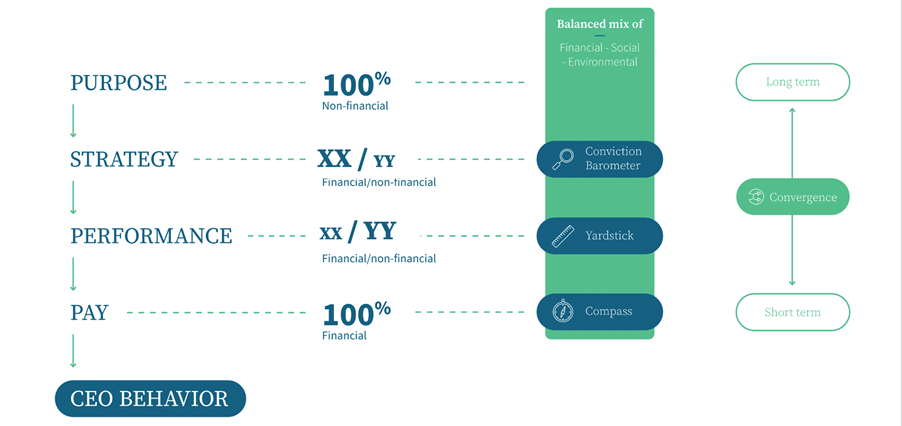
In the assumption that pay reflects a performance[1], the first question to ask is what performance should be remunerated? This requires a renewed definition of corporate success, which should entail the impact of the company on society both from a financial perspective and from a non-financial perspective (environment and social). The success of an organisation should be measured according to financial, environmental, and social impact. Ideally, the environmental and social impact is monetized to allow an overall assessment in the same currency with the financial impact. The approach of the Impact Weighted Accounts Initiative of the Harvard University is a strong tool for this.
Next to a quantitative analysis based on impact measurement, a qualitative assessment of corporate activities is needed, whereby the materiality of the sustainability strategies of companies is key, as research has also demonstrated that only the material sustainability topics add value on the long-term[2]. Many corporate governance codes require companies to contribute to long-term value creation. Often the definition of long-term is not given. Especially, when pay is structured in shares (as also recommended by Prof. Alex Edmans), it is important to understand when share valuation is a fair reflection of a company’s accounting valuation (both financial and non-financial). As you can see in the picture here above, Reward Value performs research on these three elements of long-term value creation, being quantitative impact analysis (Impact Yardstick), qualitative strategic analysis (conviction barometer) and definition of long-term (convergence).
The subsequent next important analysis to make is whether renewed remuneration design will impact executive and corporate behaviour. According to research, executives at least seem to demonstrate short-term oriented behaviour around vesting moments of incentives.[3] By means of experimental research, Reward Value is exactly examining this question. Our research is on-going, and it is too early to tell whether it will be effective, but the analysis needs to be made before any conclusions, as made in your article by some, can be made.
Finally, renewed executive remuneration also needs renewed corporate governance and strict and mandatory reporting. Moving executive remuneration away from short-term financial coupled with vague non-financial targets to long-term sustainable value creation with transparent mandatory reporting will in our view result in a better alignment of pay with purpose. The experimental research will be able to give more insights in the effectiveness of executive pay in changing corporate behaviour. Executive pay will never be the solution to all but structured well it could be a catalyst for change. From Reward Value Foundation, we invite academics and market parties to participate in and contribute to our research.
PG: There is a significant gap between what women and men get paid across the rank and file?
FB: Whereas most attention is nowadays given to climate, the other big disrupter in today’s world is inequality. An inclusive society gives equal opportunities to all and does not discriminate on the basis of gender or ethnic diversities. An inclusive society unites people and establishes a social cohesion. In a report published in 2019, ILO demonstrates that diversity leads to better corporate performance.[4] In an extensive literature review performed by Anja Kirsch, the positive effect of gender diverse boards on social and ethical aspects of firm behavior is discussed.[5] Also the Sustainable Development Goals of the UN Global Compact[6] give clear guidelines on diversity and inclusion. I mention just two sub goals:
- SDG 5.5
Ensure women’s full and effective participation and equal opportunities for leadership at all levels of decision making in political, economic and public life. - SDG 10.3
Ensure equal opportunity and reduce inequalities of outcome, including by eliminating discriminatory laws, policies and practices, and promoting appropriate legislation, policies and action in this regard.
PG: My best wishes, Frederic, in your endeavour to bridge executive remuneration with the long-term value creation. The sooner we get there the faster would we transition to a sustainable economy.
[1] Gabaix, Landier, and Sauvagnat (2013), CEO Pay and Firm Size: An update after the crisis. Frydman & Saks (2008), Executive Compensation: A new view from a long-term perspective, 1936 – 2005.
[2] Serafeim, Kahn, and Yoon (2016), Corporate Sustainability: First Evidence on Materiality.
[3] Edmans, Fang, and Lewellen (2017), Equity Vesting and Investment.
[4] ILO (2019), Women in Business and Management: The business case for change.
[5] Kirsch, A. (2018), The gender composition of corporate boards: A review and research agenda.

Praveen Gupta (PG): How do you suggest we address the biodiversity hotspots of the world? Both in terms of containing and regenerating them?
Rhett Butler (RB): I think most people who manage natural resources now understand that efforts to protect nature and biodiversity need to be broader than the strict protected areas approach which dominated conservation in most parts of the world until 20 to 30 years ago. That being said, it seems like recognition of the positive conservation outcomes resulting from other interventions – increasingly known by the clunky term “other effective area-based conservation measures” (OECMs) – has really accelerated over the past decade or so, especially in territories stewarded by Indigenous Peoples and local communities (IPLCs). But it feels like we’re still more in the messaging and commitment phase, rather than the implementation phase. I think that’s partly because of inertia: The protected areas approach is what’s been done for so long and is conceptually easier to understand than a mix of different forms of land use and management. I’m still not entirely convinced that follow-through from some conservation institutions will live up to the declared level of ambition on the inclusivity front.
Even once there is general consensus around the interventions that are effective in achieving conservation goals, the world still needs to secure the political will and financing mechanisms to actually conserve and restore ecosystems. Political will is challenging as long as conservation is viewed as a “special interest” for only a small segment of society. Therefore, one of the key aspects of driving conservation at scale is to make it relevant to everyone. That means highlighting how healthy and productive ecosystems directly underpin human wellbeing. For example, the fact that forests are a source of clean water, generate local and regional rainfall, and reduce ambient air temperature.
Sometimes focusing on only the positives is not enough because people tend to take the status quo for granted. Therefore, we also need to talk about what happens when ecosystems are degraded. For example, replacing a rainforest with a large oil palm plantation can raise local temperatures by several degrees, boost the risk of flooding, worsen erosion, diminish the availability of clean drinking water, and increase rat and mosquito populations. All of these impacts have real costs for local communities.
PG: But what does this mean for the developing world? What climate impacts will affect the frontline and indigenous communities native to the most vulnerable disaster areas?
RB: Ecosystems in the tropics are especially important in terms of carbon storage, biodiversity, and other ecosystem services. And many tropical nations are developing nations, meaning they’ve historically contributed the least to climate change, yet are the ones that are most vulnerable to it. This is even more magnified for frontline IPLCs, which generally have been the most responsible for the persistence of healthy and productive ecosystems, yet often bear the brunt of both climate change and policies that aim to stem it.
The climate impacts on these communities depend on where they live, but in many cases will include reduced food security, increasingly extreme weather events, and shifts in the ecosystems upon which they rely. In low-lying coastal areas, IPLCs will be forced to reckon with rising sea levels, which will worsen storm surges, inundate homes and agriculture, and erode coastlines. In polar regions, IPLC communities are already dealing with the effects of melting permafrost and changes in the availability of fish and game.
These communities are also suffering from the consequences of environmental degradation. For example, fires in places like Borneo, Sumatra, and the Amazon have adverse effects on local peoples’ health. And climate change is expected to exacerbate these fires, making them more common and severe.
While there is growing recognition of the contributions IPLCs have made toward stewarding “wilderness”, some communities could be further disadvantaged by some of the solutions being promoted to address climate change. For example, there is a push to promote biomass energy as a “carbon neutral”, but replacing native forests traditionally managed by communities with industrial plantations is bad for climate and dispossess local peoples of the ecosystems upon which they depend. And, of course, the “fortress conservation” approach common until relatively recently sometimes involved forcing Indigenous communities off their customary lands.
PG: Isn’t a sense of urgency amiss?
RB: To me it feels like the sense of urgency among the general public around climate change has greatly increased in the past couple of years. I think this is the result of the worsening impacts from climate change – especially crazy weather events and disasters – as well as the pandemic. But it doesn’t seem like that sense of urgency has translated into concrete action from governments quite yet beyond making commitments that will ultimately be some other person’s responsibility to turn into reality at some point in the future.
PG: How important is the role of multilateral agencies?
RB: Multilateral institutions have an important role in bringing governments and other entities together around an agenda, establishing frameworks and protocols for taking action, and aggregating funding, among other things. In general, I don’t look to multilaterals for cutting-edge leadership or ideas, but once they are on board, it can generate momentum.
PG: Techies generally believe the current mess was created by technology and will also be solved by it?
RB: I live in Silicon Valley, where there’s widespread belief that there’s a technological fix to everything. Optimism is important of course, but there’s a danger that being overly optimistic lulls some people into a sense of complacency in that there’s less reason for action if one believes there’s a tech solution just around the corner.
Still, technology can be a great tool in supporting efforts to protect the planet. Environmental monitoring, for example, has been transformed by technological advancements to the extent that we no longer have ignorance as an excuse for not taking action on issues like deforestation. We can plainly see where it’s happening and to what extent.
One of the areas I’m most excited about when it comes to technology as it applies to biodiversity is monitoring soundscape ecology with bioacoustics devices. When combined with camera traps and satellite imagery, bioacoustics can paint a much fuller picture of what’s happening within a forest ecologically (I was a co-author of a paper on this topic a couple of years ago). I think environmental DNA also has incredible potential.
Of course, technology can have downsides. At the most basic level, there are the materials that go into things like EV batteries, solar panels, and mobile phones, which often have very significant environmental impacts.
PG: How does one make these initiatives more diverse and inclusive?
RB: One of the problems with some conservation technology is it is not inclusive and does not consider local needs. Some of these products and services are designed to run on a 4G network by people with a lot of training or technological experience. An extreme example was presented to me a few years ago where an organization was pushing an anti-poaching solution that required a team of flight engineers in an office in the United States to control a pricey drone as it flew over parks in Africa. The military overtones aside, this approach was costly and didn’t build in-country capacity or buy-in.
It has been encouraging to see initiatives that focus on providing technology that’s fit for purpose, actually works in the field, and meets people’s needs. For example, IPLCs are using GPS and mobile phones to map their territories as a way to secure or strengthen land tenure. Some communities are using Google Earth, Global Forest Watch, ESRI ArcGIS, or other geospatial tools to monitor their lands for encroachment and illegal activities. And there are even examples of technologies strengthening intergenerational connections between the traditional holders of knowledge – community elders – and kids who have access to things like phones, computers, and the Internet.
Mobile phones have created new channels for communities to collaborate and learn from each other, in some cases allowing once isolated groups to find allies and mobilize broader awareness about their struggles and the challenges they face.

PG: Farmlands and urbanisation continue to rapidly decimate our forests. Do you see an ongoing Zoonotic wave resulting from it?
RB: There’s a growing body of research linking encroachment into forests, disruption of natural ecological processes, the wildlife trade, and livestock management practices to zoonotic diseases. I think Sars-CoV-2 woke a lot of people up and led them to start paying attention to these intersections, which scientists have been warning us about for years. Before COVID-19 of course, there was Ebola, Zika, MERS, SARS, Nipah, and Avian Influenza, just to name a few recent examples.
Hopefully the scale of COVID-19 will keep zoonoses a priority for policy makers and funding agencies. Still, if we carry on with business-as-usual, we should expect more zoonotic pandemics – some researchers have identified the cattle sector in the Amazon as the potential birthplace of the next big new crossover pathogen.
PG: Do you see the rise of investor activism as an effective means to direct the money pipeline towards sustainable outcomes?
RB: If we’ve learned anything from the past 30 years of climate and biodiversity talks it’s that governments are not leading the way in addressing environmental crises. Leadership more often comes from individuals, civil society organizations, and companies. Governments do play an important role, but I wouldn’t say most are at the cutting-edge in terms of big ideas.
Given the scale of the problems we face, it’s going to take an all-hands approach and companies have the resources, power/influence, and ingenuity to develop and implement solutions. Of course, some companies are more aligned with sustainability than others – the business-as-usual interests continue to oppose progress on climate change, deforestation, pollution, and other issues.
One of the mechanisms for driving corporate behavior change is investor activism. It’s been really interesting to see this play out with shareholder activists targeting big oil companies of late.
The opposite approach is divestment, which has dramatically accelerated in the past decade after emerging out of student movements at universities. Many philanthropic foundations have since stopped investing in fossil fuels. And even governments have gotten involved: Norway’s sovereign wealth fund has exited investments in a number of companies linked to deforestation and coal mining, for example.
There’s also been a tidal wave of investment in renewable energy in recent years, which is producing a transition in power generation that’s far outpacing expectations in some countries. And the shift toward electric vehicles has been much faster than I could have imagined just a few years ago. Most of this is happening because people see this as an opportunity to make money, rather than to do good, though doing good is a happy byproduct for most people.
Lastly, I’d add that environmental activism has also played an important role in influencing the conversation. In the late 2000s, Greenpeace was instrumental in driving the emergence of the zero-deforestation movement among companies that produce, trade, and buy commodities associated with deforestation. While companies haven’t yet lived up to their commitments to eliminate deforestation from supply chains, the movement has forced them to become more accountable and laid the groundwork for other developments.
PG: Net Zero has serious implications for greenwashing. Any hope for afforestation resulting from carbon offsets? Can valuing of eco system services bring some sense?
RB: There are high risks of adverse impacts from net zero goals that don’t incorporate safeguards: Net zero without the proper standards leaves huge loopholes for environmental degradation, human rights abuses, and other harms. You mention afforestation for carbon offsets, which has certainly been a problematic area going back to the Kyoto Protocol in 1997. There are plenty of examples under that old framework of carbon credits financing the conversion of natural forests for industrial plantations.
That being said, many decisions are based on economics and if nature doesn’t have a price tag on it, some companies and governments will treat it as having no value. So, it’s important to be able to talk about the economic value of healthy and productive ecosystems. But we have to be sure that everything is on the table when having this conversation. That means measuring the positive economic values of ecosystem services and fully accounting for the costs of business-as-usual, including the underpriced or ignored externalities that currently subsidize sectors like fossil fuels.
On the ecosystem services front, when it comes to forests, most of the focus the past 20-30 years has been on carbon sequestration, but I think that the role these ecosystems play in driving local and regional rainfall will increasingly be a significant part of the equation when assessing their value.
PG: Grateful Rhett for helping my understanding of all these complex linkages at the very heart of a serious existential crisis. Please keep up your great work to ensure we transition safely through these challenging times.
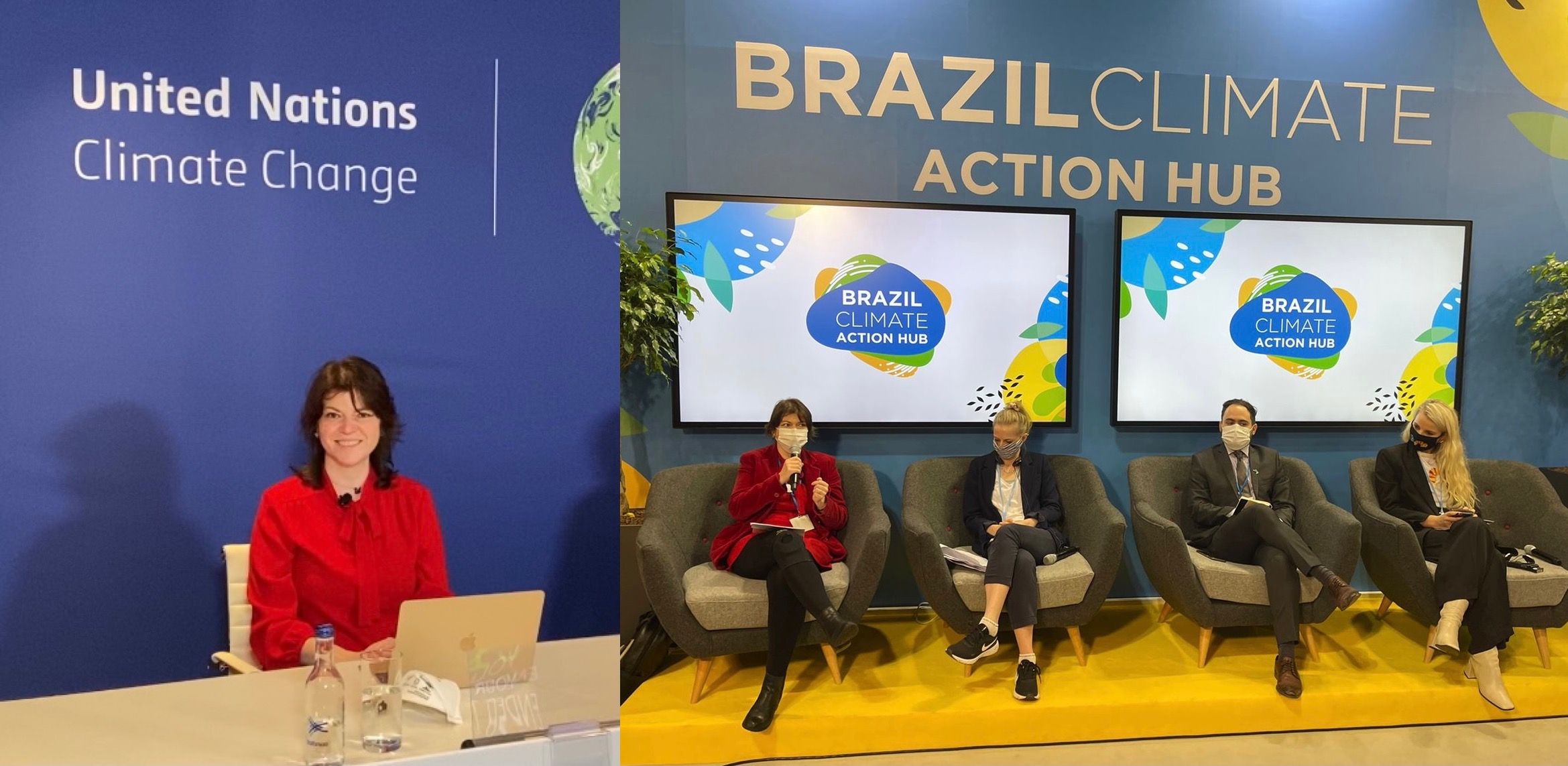
Praveen Gupta: It is ‘billed’ as the ‘whitest’ COP of all?
Alessandra Lehmen: The pandemic and the recession that followed suit posed a significant barrier to emerging countries’ participation. The UK Presidency relaxed quarantine and vaccination requirements and extended access to vaccines to participants, but it was an uncertain and costly process that, in practice, prevented wider participation from Global South delegates. Online participation was possible, but that would require proper access to the internet, something that is not readily available to all emerging countries’ delegates.
PG: Did you see many women leading the events and getting their due place in the sun?
AL: I did. Despite a lack of diversity in certain fora, women are traditionally very active in environmental and climate matters. The same holds true for Environmental and Climate Law, where notable women have been inspirational leaders for decades. One of the panels in which I spoke, for instance, was comprised only of women attorneys.
PG: Were women and youth from the Global South visible and audible?
AL: Yes. Just to give you one notable example, Txai Suruí, a young indigenous leader and the first representative of her people to attend Law school, was the only Brazilian to speak at the opening ceremony.
PG: Oil and gas industry continuing to play a spoilsport?
AL: According to NGO Global Witness, oil and gas industry representatives were the largest group at the summit, surpassing Brazil, which had the largest official delegation. At the level of the negotiations, countries that have been historically blocking measures related to phasing out fossils, such as ending subsidies, have continued to do so. Also, major producers have not adhered to the coal phase-out pledge championed by the UK presidency, but important consumer markets, such as Canada, Poland, and Chile, have done so.
PG: Does the conference first draft shock you?
AL: I see the document as comprehensive, but somewhat watered down in diplomatic language. The US and China’s joint announcement that they will work together on a number of climate-related actions has sparked some cautious optimism as negotiations draw to a close. It will remain to be seen if, before the end of the conference, further progress is made on topics that I see as crucial for keeping the 1.5 degree goal alive, such as fossil subsidies, the Article 6 rulebook, and finance.

Protests are an integral part of COPs, and there were plenty of rather creative manifestations both inside and outside the venue. Perhaps the one that touched me the most was Simon Kofe’s, Tuvalu’s foreign minister, who has filmed his speech from a podium knee-deep in the ocean. It was a stark reminder that the current generation of children could be the last to grow up in the small island state.
PG: Heroic and valiant attempts by protestors, how impactful?
AL: Protests are an integral part of COPs, and there were plenty of rather creative manifestations both inside and outside the venue. Perhaps the one that touched me the most was Simon Kofe’s, Tuvalu’s foreign minister, who has filmed his speech from a podium knee-deep in the ocean. It was a stark reminder that the current generation of children could be the last to grow up in the small island state.
PG: Was it a good idea to have a COP15 (re: biodiversity, at Kunming) ahead and separately of COP26. Deforestation being a critical component, did it receive the deserved attention?
AL: Biodiversity COP15 was aptly dubbed by the media as “the most important COP you have never heard of”. Biodiversity issues are closely intertwined with climate change, particularly in a pandemic: more climate change leads to more habitat loss, which in turn leads to more exposure to pathogens. Deforestation did receive attention at COP26, though: more than 100 countries – including Brazil – pledged to end and reverse deforestation by 2030 and the documents include almost $19.2bn in public and private funds.
I have seen commentators mention that the pledge is limited to illegal deforestation, but the statement makes no such caveat. It remains to be seen if the pledge is interpreted and implemented in a way that is conducive to effective alignment with the 1.5 degree goal.
PG: Is Net Zero a mirage?
AL: I use to say that, although a race to the top of climate ambition is welcome, I am more interested in assessing what concrete, measurable progress a country or a company has to show for by the end of the next fiscal year, rather than in who makes the biggest net zero pledge for 2040 or 2050. I mean, we know where we want to go, now let’s get moving. Also, net zero and carbon neutrality are not synonyms, so we need absolute reductions, as opposed to only relying in compensations, to get there.
PG: Many thanks for these wonderful just in time first-hand insights, Alessandra! Hearty Congratulations for your leadership.
 The Diversity Blog