Electric power plants are responsible for almost half of global CO2 emissions the world over. At the peak of the global coronavirus shutdown – pinpointed by researchers – plant emissions were down only 7.4% compared to 2018 averages, from about 44.6 million metric tons per day to about 41.3 million. Given that India is world’s third largest emitter of CO2 – calls for a radical shift from fossil fuels to renewables, to ensure a sustainable future.
Tim Buckley addresses all related concerns, the required transitioning and the need for urgent strategic shift. A very erudite and hands on energy expert, Tim is the Director of Energy Finance Studies, Australasia at Institute for Energy Economics & Financial Analysis (IEEFA). He covers the global electricity markets, with a focus on India and greater Asia. Tim also did a long stint with the Citigroup as Managing Director, Head of Equity Research.
India has the potential to be a clear world leader in embracing and benefiting from the current technology – driven, deflationary, energy system disruption, believes Tim. However, he has a word of warning, too – that policy conflicts need to be resolved before they are announced. The long term opportunities for strong, sustainably – driven economic growth across India are too important to be undermined by short term contradictions and missteps.
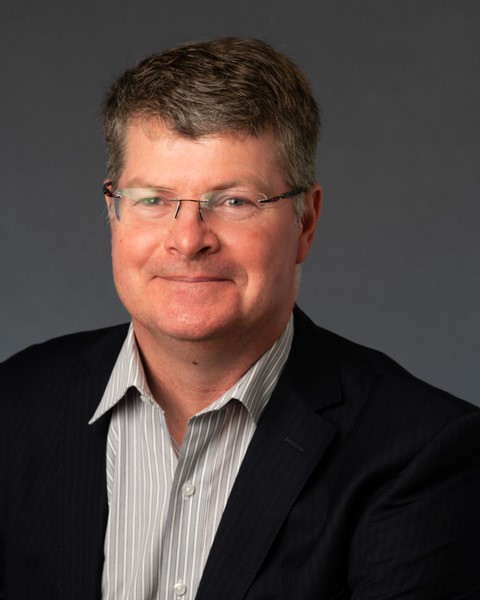
Praveen Gupta: Why is energy pivotal for any country in ensuring sustainability?
Tim Buckley: Energy is pivotal for economic activity. The more a country drives strong economic growth, the more energy is required. Different countries are blessed with different natural resources. In India’s case, it’s thermal coal, hydro, solar and wind energy resources.
Before I get to your question of sustainability, I’d start by saying that for sustainable economic growth, energy security is best served by a primary reliance on domestic resources.
When we consider India, the current economic model is unbalanced due to an excessive reliance on fossil fuel imports. This creates a massive drain on the trade account and the value of India’s currency, and generates excessive inflationary pressures that are keeping India’s interest rates at levels many multiples of global averages.
When we consider India, the current economic model is unbalanced due to an excessive reliance on fossil fuel imports. This creates a massive drain on the trade account and the value of India’s currency, and generates excessive inflationary pressures that are keeping India’s interest rates at levels many multiples of global averages.
The Government of India is very focussed on two key energy strategies: renewables and electrification. Both strategies are a clear reflection of the pressing need to improve India’s energy security by reducing reliance on imported fossil fuels. This context is important when considering the drive to improve sustainability in India’s energy system. The acceleration of energy efficiency initiatives combined with a greater rollout of renewable energy investments reduces reliance on fossil fuels.
Driving electrification of India’s transport system, be that for automobiles, 2- and 3-wheelers, trucks and buses will reduce India’s reliance on imported oil. Similarly, electrification of India’s enormous railway system will reduce reliance on imported diesel. And an acceleration of investment in wind and solar infrastructure will progressively reduce India’s reliance on imported thermal power generation.
For India, the dual move to electrification and renewable energy will also dramatically reduce pollution pressures and all the associated health costs. Fossil fuels are the largest source of air and particulate pollution, the largest contributor to carbon emissions, and the largest user of India’s precious water resources.
Where thermal power generation is enormously water intensive, renewable energy is almost zero-water reliant. It has significant sustainability benefits of reducing water scarcity in India as well as reducing the pollution in India’s water systems.
To limit the rise of more frequent and extreme weather events, we must all contribute to reducing the carbon emissions intensity of our economic footprint, as per the Paris Agreement. Energy is the single largest contributor to global warming.
The good news is that India has some of the best wind and solar resources in the world; the cost of renewable energy is already well below alternative fossil fuels; and the cost of renewables are expected to decline dramatically over the coming decade. Energy system deflation will help India deliver sustainable economic growth, and in doing so, will improve sustainability in the process.
PG: What makes fossil fuel / coal addiction so compelling despite its known downside?
TB: The global economic growth model of last century was entirely tied to an ever greater use of fossil fuels – coal, oil, nuclear and gas/LNG. We have all benefited from these energy sources before knowing/believing the damage they caused to our planet, but by then, the financial power of the fossil fuel industry had entrenched itself into political power.
The fossil fuel industry is very effective at internalising the economic gains of their activity, and externalising the costs – in terms of communities forcibly removed from their land, the inordinate use of the limited supply of water, and the right to pollute the air via carbon emissions.
Fossil fuel firms also rely on using public assets for largely private gain, more than any other industry globally. Following a Supreme Court ruling (2014) to address the Coalgate scandal, the Indian Parliament took decisive action in 2015 to address the growing portion of India’s coal resources ending up in the hands of a few billionaires by nationalising coal mining.
If we are to build sustainability, we need to change the economic paradigm of the last century by forcing polluters to value our common environment: the air, water, land, and national parks that we all rely upon.
Forcing a price on carbon emissions is a way to internalise the costs of fossil fuel use, levelling the playing field for cleaner alternatives. Requiring power generators to install pollution controls likewise puts the nation’s health at a higher priority. Mandating cleaner-burning vehicles and fuel also addresses sustainability pressures, as would the move to electric vehicles powered by renewable energy with mandated recycling of cars, solar modules and batteries.
PG: Would falling price of coal and oil not make it compete with the renewable sources?
TB: We have seen a dramatic decline in oil and gas prices in 2020 (dropping more than half relative to year-start levels). This price decline has had no real impact on renewables as electric vehicle penetration rates in India are immaterial and oil is not a primary fuel source in India’s power generation.
The vast majority of India’s coal is from domestic sources (some 80%). While international coal prices have fallen some 25% year-to-date (20% net of India’s currency devaluation), there has been little relief for electricity generators. And with electricity demand collapsing 25% in April 2020, the utilisation rate of coal-fired power plants has dropped dramatically, more than offsetting any fuel price relief.
A key lesson of the COVID-19 lockdown in India has been that once built, renewable energy has a distinct advantage over coal-fired power generation. Renewable energy has a zero marginal cost of operation (and is supported by a ‘must-run’ mandate predicated on the merit order dispatch model). This has seen coal-fired power generation wear 100% of the electricity demand destruction during the pandemic.
A key lesson of the COVID-19 lockdown in India has been that once built, renewable energy has a distinct advantage over coal-fired power generation.
While spot international liquid natural gas (LNG) prices have fallen 80% in the last few years, there is little ability to lock these prices in for the long term. As a result, few investors are likely to build multi-decade gas-fired power generation assets and the associated import infrastructure assets (ports and pipes). By the time a project was approved and commissioned, the LNG price could have doubled or tripled, making the project just another fossil fuel ‘stranded asset’.
PG: How do you manage a transition plan? 1.3 billion people need to alter their lifestyles and aspirations dramatically. What would it take to achieve that?
TB: Ever lower cost renewable energy is fundamentally disrupting the world’s electricity markets, and therefore people’s behaviour.
Thanks to record low tariffs of Rs2.50-3.00 per kilowatt hour (kWh) for both wind and solar, India is a world leader in the global energy transition, motivated by economic savings and energy security improvements. The gains from deploying ever more renewable energy are also clear in terms of reduced water stress, improved air quality and lower carbon emissions.
However, let’s not pretend renewable energy, lithium ion batteries and electric vehicles are the perfect panacea. Any industrial activity has negative consequences. If India is to double its economic activity over the coming two decades to accommodate the near 20 million new people entering the workforce every year, there will be huge negative consequences for sustainability.
If India is to double its economic activity over the coming two decades to accommodate the near 20 million new people entering the workforce every year, there will be huge negative consequences for sustainability.
Despite the significant costs of large scale wind and solar, India’s industrial solar parks like Bhadla in Rajasthan and Rewa in Madhya Pradesh – the largest in the world – are some of the lowest cost. They do have an enormous land footprint, however it is equal in size to the land requirements of a similar sized coal-fired power plant (when the coal mine area is also considered). And any utility scale renewable energy facility requires an enormous associated investment in grid transmission infrastructure, like any thermal power generation. Renewable energy microgrids, particularly when supported by rooftop solar, can address many of the negative externalities and are an ideal solution. At the moment however they lack the scale to meet India’s total energy needs.
PG: Any thoughts on incentives and disincentives?
TB: Let’s look at the facts. India is the world’s second largest producer and consumer of coal, behind only China (having overtaken the U.S. in the last year or so). Government owned Coal India Ltd contributes around 80% of the country’s total coal production.
While many environmentalists tend to consider only the adverse impacts of Coal India Ltd, I’d balance that by saying the company is playing a key role in India’s current economic development.
Coal India Ltd is a massive employer with almost 280,000 direct employees, most of whom are in the least developed parts of the country. Indian Railways gets more than half of its revenue from transporting coal and this is used as a cross-subsidy to reduce the cost of passenger rail transport. Finally, Coal India Ltd is most probably the highest taxed coal company in the world. Some 40% of Coal India Ltd’s total revenues are returned to government in the form of GST, duties, royalties, corporate tax and the Rs400/t coal cess. (Most of the coal companies I examine in Australia are either tax-haven based and/or structured to ensure they pay next to no corporate tax. On top of this, Australia’s coal industry is adept at extracting subsidies.)
India requires a financially strong government, and despite the destructive downsides in using fossil fuels, at least Coal India Ltd is contributing to state and centre coffers.
With coal paying its way to a large degree, the key opportunity now for India’s energy system transformation is renewables, which are the least cost source of new power generation and the lowest cost in terms of externalities.
With this in mind, the government is correctly focusing on accelerating renewable energy deployments to deliver on its target of 450 gigawatts (GW) by 2030. Achieving this ambition would rightly put India on the centre stage globally.
The government is correctly focusing on accelerating renewable energy deployments to deliver on its target of 450 gigawatts (GW) by 2030. Achieving this ambition would rightly put India on the centre stage globally.
The Paris Agreement identified the “common but differentiated” emission reduction requirements of developed and developing nations. India is on track to deliver more than its share of this globally important goal, even as richer countries like the U.S. renege on their treaty obligations.
PG: In a most optimistic scenario, how long do you think it would take India to accomplish the Paris Agreement target?
TB: In the area of energy, India made three key commitments under its nationally determined contributions – the (intended) reductions in greenhouse gas emissions under the United Nations Framework Convention on Climate Change (UNFCCC). Firstly, to drive energy efficiency by decoupling energy needs from economic growth; secondly, to aggressively invest in renewable energy; and thirdly, through reforestation.
Under Prime Minister Narendra Modi’s leadership, India could well be five years ahead of its 2030 Paris commitments. As a result, this is driving energy system deflation and improving India’s energy security.
The technology driven disruption of the world’s energy system has huge economic, political, and environmental prospects for India, and the country is responding well to these opportunities.
PG: What in your vision would be an ideal energy mix for India?
TB: Prime Minister Modi has outlined a clear and ambitious vision: 450GW of renewables by 2030. The whole-of-industry and regulatory buy-in to this goal is really impressive.
However, achieving this vision requires a fourfold increase in annual investment, with a clearly overdue immediate step-up in the deployment of distributed renewable energy (particularly rooftop solar). Further, all coal-fired power plants should either be put on a formal closure path over the next 5-10 years or immediately retrofitted to reduce their environmental impact (the centre government has mandated this but enforcement is entirely lacking till date).
All coal-fired power plants should either be put on a formal closure path over the next 5-10 years or immediately retrofitted to reduce their environmental impact.
India has huge hydro-electricity resources yet water is growing scarcer. This is a key constraint to sustainable economic growth. It would be in India’s interest to incorporate a plan looking at the viability of a limited expansion of hydro-electricity capacity as part of a wider flood management and whole-of-system clean water plan (bounded by the constraints of the loss of too much fertile rural land). The country should also immediately embark on a retrofit and modernisation of India’s existing 46GW of hydro capacity, given its key value for peaking electricity generation (pumped hydro storage (PHS)).
This would require an accelerated modernisation and expansion of India’s national grid infrastructure, including firming capacity (batteries, PHS, coal- and gas-peakers and demand response management).
India should also leverage its surplus electricity capacity via a tenfold increase in two-way renewable energy electricity exports to adjacent countries like Bangladesh, Sri Lanka, Nepal and Bhutan.
Along with this, India should leverage the technology convergence of the transport and energy sectors to accelerate deployment of electric vehicles (starting with buses, taxis and 2- & 3-wheelers) and continue with the electrification of Indian Railways.
This progress should be combined with a stepped-up focus on the many “Make in India” manufacturing opportunities that come with transforming and modernising the combined energy and transport needs of 1.35 billion people. The scale of domestic market opportunities means global capital will flood in, thereby supporting the government’s sensible long term investment plan.
In turn, the progressive replacement of fossil fuel imports by lower cost, clean, domestic energy alternatives would reduce currency devaluation risks and lower inflation, and hence interest rates, in India. This in turn would create a virtuous cycle, as lower interest rates are the key to lower renewable energy tariffs.
The progressive replacement of fossil fuel imports by lower cost, clean, domestic energy alternatives would reduce currency devaluation risks and lower inflation, and hence interest rates, in India.
India should also enforce a more positive centre-state dialogue to invite buy-in and regulatory compliance nationally, including mandated and enforceable recycling or reuse systems of all end-of-life components, be it fly ash from coal-fired power plants, solar modules or lithium ion batteries.
Achieving a sustainable energy system means finding a path to ongoing economic viability of state electricity discoms. Cross-subsidies from industry must be progressively removed, and a national Direct Benefit Transfer (DBT) scheme put in place to support those most in need in the rural sector. This would replace the problematic system of trading ‘free’ electricity for votes, which is in turn preventing sustainable economic growth for India as a whole.
PG: Could the Covid-19 be a game changer for good?
TB: Yes. COVID-19 has reinforced a key lesson for many countries: real leadership means relying on the advice of experts, in this case medical experts. There is another crisis in which the experts have long been ignored – the scientific experts calling for emission reductions to reduce catastrophic global warming. Ignoring climate science and the need for sustainability in the mindless pursuit of short term economic growth ignores the power of nature to give us system shocks of enormous economic and personal cost. The COVID-19 lesson is that we must work together for the common good and put the benefits of a safe and healthy environment ahead of the questionable merits of unsustainable economic growth.
Ignoring climate science and the need for sustainability in the mindless pursuit of short term economic growth ignores the power of nature to give us system shocks of enormous economic and personal cost.
PG: Imposition of duty on imported panels, does it make the economics of renewables unviable? Any thoughts on the local capabilities?
TB: This is an important question. The COVID-19 pandemic has highlighted the shortcomings of global supply chains and the risks associated with the loss of domestic manufacturing expertise.
The “Make in India” strategy provides India with an opportunity to expand its domestic manufacturing expertise, leveraging huge ongoing demand growth across a range of new low emissions industries of the future.
This opportunity was not realised with India’s temporary solar module import duty of 2018-2020. Due to poor implementation of this policy, and state-centre and centre-centre policy contradictions, no new manufacturing capacity has been established. After extremely positive renewables momentum evident in 2018, India installed with just 8GW/US$7bn of solar in 2019/20, including rooftop. This was just a third of what should have been possible absent massive regulatory uncertainty and confusion, much of which stemmed from the unexpected cost impost of the solar module import duty. Some $15-20 billion annually of new additional investment in zero pollution, zero emissions, low cost domestic power generation was lost. The 15-25% import duty undermined investor confidence and reduced the well-established value gap between solar and thermal power.
The “Make in India” strategy provides India with an opportunity to expand its domestic manufacturing expertise, leveraging huge ongoing demand growth across a range of new low emissions industries of the future… Due to poor implementation of this policy, and state-centre and centre-centre policy contradictions, no new manufacturing capacity has been established.
By comparison, the 2GW/6GW manufacturing-linked solar tender won by Adani Green and Azure Power in January 2020 should achieve the policy objectives in a win-win manner (the Rs2.92/kWh pricing is still 20% below the wholesale price of electricity in India, while the 25-year contract provides investor certainty), without negative installation issues and disruptions.
Policy conflicts need to be resolved before they are announced. The long term opportunities for strong, sustainably-driven economic growth across India are too important to be undermined by short term contradictions and missteps.
India has the potential to be a clear world leader in embracing and benefiting from the current technology-driven, deflationary, energy system disruption. Post COVID-19, a central focus on sustainability and accepting the advice of scientific experts is more important than ever.
PG: Many thanks Tim – for these exceptional insights into the Indian energy sector.
Whatever China does – tends to generate a host of conspiracy theories. However much we may disagree with the numbers, the fact remains that today it is already world’s second largest economy. ‘In many ways ahead of the US, which at the moment seems to be a bumbling power at best’, says Dr. V. Raghunathan (www.vraghunathan.com). A renowned author, thinker, distinguished academic, ex banker – his list of accomplishments is truly phenomenal and interests eclectic.
While Dr. Raghunathan reminds us that despite its rise to the top league, only less than 2% of world trade is determined in Chinese RMB. It’s desire, therefore, to correct this imbalance is quite natural. Needless to mention that what China is proposing today will go way beyond what others have tried or are trying. ‘Usually, what China strategizes, China delivers’, he says. However, in his belief ‘even if the e-RMB is rolled out, it could be a long way to go in winning the trust of the world as much as the US did in the Post World War 2 era’.

Praveen Gupta: Do you believe that national digital currencies could mean greater financial inclusion, less financial crime, and more efficient cross-border transmissions?
V. Raghunathan: At the outset, I must confess that I do not regard myself an expert in International Finance, beyond teaching the subject at the IIMA in the past. But let me answer your questions the best I can…
I am assuming of course that your question is in relation to China’s digital currency experiment, with their stated position:
“A sovereign digital currency provides a functional alternative to the dollar settlement system and blunts the impact of any sanctions or threats of exclusion both at a country and company level”.
We understand financial inclusion to mean availability and equality of opportunities to access financial services. Currently, less than 2% of world trade is determined in Chinese Renminbi, which is disproportionately small as compared to China’s share of international trade. So, if China wishes to correct this imbalance, that’s certainly financial inclusion.
PG: Digital payment platforms are already widespread in China, namely Alipay, owned by Alibaba’s Ant Financial, and WeChat Pay, owned by Tencent, but they do not replace existing currency. Facebook’s Libra has reportedly triggered the fast tracking by the Chinese?
VR: The difference lies in what is State sponsored and what is privately floated. Consider this: In its experiment on digital currency, limited to Shenzhen, Suzhou, Chengdu and Xiong’an, China plans to transfer salaries in to government workers in the form of the new Digital Currency (internally referred to as DC/EP) and tying up with a set of designated merchants to facilitate transactions using the currency. Their end goal is to have full-fledged functionality by 2022. So, you can see where the private players fit in. I guess that is the difference between their planned e-RMB and the private players.
In its experiment on digital currency, limited to Shenzhen, Suzhou, Chengdu and Xiong’an, China plans to transfer salaries in to government workers in the form of the new Digital Currency.
PG: In 2015 Ecuador launched an electronic money system followed by Uruguay piloting its e-peso in 2017. The Dutch are experimenting with a bitcoin based “DNBcoin”. And Canada, Australia, Sweden, Israel are actively exploring a national digital currency. Could China be the biggest mover and shaker in this space?
VR: Well, yes. China is among the top two world powers today. The manufacturers of the world. The exporters to the world. Financiers of the world. And with muscle to match gun-for-gun, in many ways ahead of the US, which at the moment seems to be a bumbling power at best. China’s foresight and world leadership is evident in their projects like the OBOR, China-Russia-Canada-America rail project, or the Russia China Gas project et al, which are just a few examples of China’s scale and grandiosity of their ambitions and plans. Their clout in the UN, the spread of their tentacles in Asia, South Asia and Africa, and even South-America (Nicaragua, Colombia and Brazil), and even their muscle in high-end technology and R&D are all evidence that they have arrived. And arrived in a fashion that rivals the USA true and proper.
China’s foresight and world leadership is evident in their projects like the OBOR, China-Russia-Canada-America rail project, or the Russia China Gas project et al, which are just a few examples of China’s scale and grandiosity of their ambitions and plans.
So yes, what China is proposing today will go way beyond what others have tried or trying. Usually, what China strategizes, China delivers.
PG: A decline in cash usage is expected to continue amid the growing popularity of digital payment platforms and as people avoid physical contact during the coronavirus pandemic?
VR: Yes. That is bound to happen worldwide. As a matter of fact, Europe and UK have had little use of cash currency for a long time.
But a more rural and a poorer nation like ours may have a little longer wait. That said, the fact is that various payments involving both smart and non-smart phones have gained significant currency in India in recent years. But India also suffers from connectivity issues which will be crucial if we are to move in the direction of digital currency all the way.
That is bound to happen worldwide. As a matter of fact, Europe and UK have had little use of cash currency for a long time... But India also suffers from connectivity issues which will be crucial if we are to move in the direction of digital currency all the way.
That said, I do not think China’s ambition with e-RMB has much to do with Covid-19. I think China wishes to rival the USD. Others have tried. The sterling, the Deutsche Mark, and the Swiss Franc.
PG: While Mesopotamia may have been the birthplace of the currency system, the Chinese civilisation is also one of the oldest known users of physical money. As a behaviour finance expert what implications would you anticipate? Would there be a generational bias for and against?
VR: Ha ha ha! Well, I do not really know if behaviour of 2000 years ago gets embedded into the DNA of the subsequent generations or whether there is a gene for singling out the propensity to hold on to physical money as opposed to digital money. But on the generational point, I am all the way with you. When the very mention of sending out a Zoom invite or live streaming something on the Facebook can get any senior citizen to break into cold sweat, carrying absolutely no cash on one’s person can certainly be mildly traumatising. True, many of them do on-line banking or on-line payment of bills aplenty. But to think of money digitally without a back-up currency to hold in one’s hand perhaps comes more naturally to a youngster than the older generation like ours!
But to think of money digitally without a back-up currency to hold in one’s hand perhaps comes more naturally to a youngster than the older generation like ours!
Besides, the behavioural attitude towards money is also about the level of education. A less educated person is more bound to see a transaction as an exchange of something for something else, with money usually being on one of the things in non-barter economies. So, when you get your salary online and spend online, it takes some getting used to.
PG: Do you foresee any privacy issues?
VR: Of course. Actually, both privacy and security issues. The two are linked.
KYC (Know your customer) norms of a bank alone, if shared widely, can seriously compromise the clients’ privacy. Often, digital applications go with significant amount of personal information, especially financial applications. Unscrupulous governments, corporates, politicians, and others are known to have misused such data in large scale for profit, for targeted selling, targeted vote-spiels, or for perpetuating frauds. Individuals can be monitored for their lifestyles, leaving nothing private or confidential. And what is available to some can easily become available to anybody, for a price. So yes, privacy issues could be dire.
Often, digital applications go with significant amount of personal information, especially financial applications... Individuals can be monitored for their lifestyles, leaving nothing private or confidential.
There is no on-line transaction or content which is not open to hacking and therefore misuse. More often than not illicit hackers operate as much at the cutting edge of technology as the ordinary coders or may be more so. You will be surprised at the quality of talent and the level of cutting-edge technology that goes into hacking, at minimal costs! If a legit corporate could do at a time frame, cost, and talent what a hacker does, they would be proud of themselves.
PG: As one of the largest economies, in what way/s could China’s full-fledged migration disrupt the global financial order?
VR: In the foreseeable future the disruption may not be significant. When the Euro was spawned, one imagined it would become a rival to the USD, as nations started replacing some of their USD reserves with Euros. That did not happen in any significant manner. Nor did the Pound Sterling, Swiss Franc or the Deutsche Mark ever become a serious threat to the USD even in the pre-Euro days.
In the foreseeable future the disruption may not be significant. When the Euro was spawned, one imagined it would become a rival to the USD, as nations started replacing some of their USD reserves with Euros.
Besides, I do not see a lot of countries in the world, barring a few African or South American countries and a Pakistan here or a Nepal or Sri Lanka there denominating their trades in e-RMB. I think even if the e-RMB is rolled out, it could be a long haul for China.
Notwithstanding their world-vision, China is still viewed a bully of sorts and its political leadership in the world is yet not at par with what the US had post-World War II. True, Trump may have taken the sheen off the US somewhat for now, and US too may be a bully of sorts especially if you ask some countries in the Near East and Middle-east Asia, China has a long way to go in winning the trust of the world as much as the US did in the Post World War II era. Yes, World War II was a good 75 years ago, but the benchmark remains firmly entrenched in the world psyche.
PG: Many thanks for these valuable insights!
TEDx Dharavi – the talk by Shailabh Kumar – made me sit up when I first saw it, many months ago. The warning shots he fired then echo equally aloud today, as the world watches ‘Dharavi’ with a bated breath. Shailabh’s vision is to replicate an ‘Amul’ model for Mutual health insurance, at the very bottom of the pyramid. Be it rural or tribal India and the urban slums.
A mutual is an entity which collectively pools its members’ risks, as opposed to transferring the risk to an insurer. The entity collects the premiums from its members and pays out the claims itself. The funds are retained and redistributed within the group. Members will donate funds (premium or contributions) into a pool held by the Mutual. In event of a deficit, members can be asked to make either supplementary payments or reduce the entitlement to loss compensation.
Speaking of Amul, livestock insurance was introduced in our country long before commercial health insurance for humans commenced. Coming from a family of four generations of doctors, I am aghast watching the erosion particularly in primary health care, inaccessibility to healthcare, deteriorating doctor to population ratio, health inflation, excessive commercialisation of medical education and the resulting exclusion of the poor. Covid-19 exposes the severe fragility of our healthcare infrastructure.
An alumnus of Tata Institute of Social Sciences (TISS) and an Ashoka Fellow, Pune based Shailabh has been working relentlessly to uplift the poorest of the poor from their daily healthcare challenges. Uplift Mutual works in Maharashtra, Gujarat, Dungarpur district of Rajasthan and very recently Tamil Nadu. The existing form of health insurance he says takes an ‘antibiotic approach’ – with no interest in keeping people healthy. Its current design is vastly different from what people want. Uplift Mutuals wishes to make it a ‘vitamin approach’ which prioritises well-being.

Praveen Gupta: In your experience what is the state of Primary healthcare both in rural and urban India?
Shailabh Kumar: Based on Uplift’s experiences in the slums of Pune, Mumbai and Tribal areas of Rajasthan and Gujarat – here are some observations:
| Primary Health Care | Rural/Tribal villages | Urban Slums |
| Availability | Low to negligible availability (non-working PHCs). Mostly Govt. facilities dotted with informal private providers and faith healers. | High availability, mostly private facilities. Public facilities either closed or staff unavailable. People prefer going to OPDs in public hospitals. |
| Accessibility | People prefer faith healers and local quacks. PHCs are far away and most of the time are turned away because of absence of medical staff. Where NGOs work, accessibility is better. | Doctors of all kinds are available within a kilometre’s distance. Private facilities are open based on people’s convenience whereas public facilities have fixed time often not matching with people’s availability. |
| Affordability | Low to extremely low. People prefer giving in kind to faith healers, charge low or give on credit. PHC are almost free but many times medicines are not available hence they have to buy from outside. | Can afford up to Rs.100 a consultation but should include three-day medicines (mostly generic). Otherwise short-term borrowing for managing cost of medicines. |
| Quality | Almost nonexistent, do more harm than good. | Doctors/Medical that provide immediate relief are preferred – very high use of steroids. Quality docs are available but navigation towards them is a matter of chance. |
| Seeking behavior | Waiting period ranges from 2-7 days before showing to anybody as distance and affordability major issue. | As availability is high, waiting time to seek care is lower but may hop from one to three doctors if no immediate relief. |
| Gender | Women and girls suffer the most. | Discrimination exists between girl and boy but in certain communities, overall lower than rural areas. |
PG: Don’t you think women and children need special attention?
SK: Based on what I have seen on the field there are very exhaustive public programmes available on maternal and infant health. What I have not seen are the primary screening facilities including pediatric and gynecology ones – also geriatric health is often missing.
PG: How critical is Primary Healthcare for the bottom of the societal pyramid?
SK: 7,000 people slip into poverty every hour in India because of catastrophic health expenses. 70% of all our out of pocket expenses on health care are on medicines and OPD. If one looks at this macrolevel data one realizes that if a good primary healthcare ecosystem is available, the poor will be able to take care of his/her health much earlier and therefore much better. Primary healthcare and a good quality accessible one with good referral facilities is essential if we want our bottom population to grow out of it. Primary healthcare along with follow ups and counselling can reduce hospitalization 8 out of 10 times based on our experience.
70% of all our out of pocket expenses on healthcare are on medicines and OPD… Primary healthcare and a good quality accessible one with good referral facilities is essential if we want our bottom population to grow out of it
PG: Do you come across health bankruptcy? How rampant is it?
SK: I understand you mean to ask healthcare expense induced bankruptcy for poor families! I have seen many families indebted for life, paying interest over two generations, losing all their savings, paying 50-70% of their income to health loans and this is not just rural but also urban phenomena. I have seen families stopping buying care for lack of financial resources specially for the elderly and when it comes to monthly medicines. I have seen people taking health loans at 120% per annum. I have seen children pulled out from school as one of the first casualties of health indebtedness. While I have not seen large numbers of acute bankruptcy, long term indebtedness and stopping of seeking care, is very rampant both in urban and rural areas.
I have seen families stopping buying care for lack of financial resources specially for the elderly and when it comes to monthly medicines. I have seen people taking health loans at 120% per annum. I have seen children pulled out from school as one of the first casualties of health indebtedness
PG: Are there any lessons to be learnt from countries like Cuba?
SK: Even before we look at Cuba, we need to understand the dramatic change in stance of the Government from building health care infrastructure to financing health care. COVID has laid bare this faulty thinking that the Government should increasingly get into health financing. Healthcare and education are two extremely critical infrastructure that need to be publicly funded. The fact that health is a state subject has a lot to do with the way our healthcare system is designed, and it varies from state to state. There are already many good practices available across states that can become the foundation of a comprehensive primary healthcare ecosystem. There are strong lessons emerging from the states that have been able to contain COVID and we must not lose them be it Kerala or Karnataka.
COVID has laid bare this faulty thinking that the Government should increasingly get into health financing. Healthcare and education are two extremely critical infrastructure that need to be publicly funded
PG: Is there a room for Public Private Partnership (PPP)?
SK: In fact, we should be talking about Public, Private and People Partnership. Government and Private interventions have their benefits and shortcomings but what is acutely lacking in this country is people participation in health. The supply side is far better organized than the demand side. If demand can be organized, we have better chances that health infrastructure whether public or private will be better utilised. From my personal experience health infrastructure at the primary health care level can have PPP but it should have a people financing component like an OPD cover insurance.
From my personal experience health infrastructure at the primary health care level can have PPP but it should have a people financing component like an OPD cover insurance
PG: The Gurudwaras for instance are doing commendable work locally and internationally – to fill some of the vacuum in the healthcare space due to the pandemic. This and any other similar initiatives could be institutionalised for greater good?
SK: Yes, the Gurudwaras can easily become a mutual health protection provider given the quality of solidarity and responsibility they command with their patrons. They should become the provider of primary health care financed through a mutual risk sharing model in the first stage.
PG: How could people-based infrastructure in insurance come to the rescue of the poorest of poor for their health insurance requirements?
SK: Any people-based infrastructure can organize or express demand better than a public or private entity. This is what a community based, or mutual insurance model does. For example, within Uplift Mutuals when we sat with poor women to design a mutual solution they were very clear that they would need this protection when they are old and hence the elderly should not be excluded from entering the risk pool. In another location we covered transportation costs for normal pregnancies as women said that this would heavily encourage institutional deliveries in rural areas. These features which come from listening to the ground are the ones missed often by commercial players.
Within Uplift Mutuals when we sat with poor women to design a mutual solution they were very clear that they would need this protection when they are old and hence the elderly should not be excluded from entering the risk pool
PG: As a counter to globalization, fiscal mutualisation is known to build resilience at local levels. So should an insurance mutual?
SK: We must realize the principle of proportionality in that every solution has its strong points and limitations. When only one size fits all kind of solution is available is where disproportionality affects. India has had only one model of doing insurance when there are others available too. What we need is a multiplicity of models in insurance for insurance is a very perception driven product. Mutuals build solidarity and responsibility from bottoms up. They are the building blocks that can be utilized by either public or private insurance to build better larger covers. Without a mutual base which focuses on risk reduction and good insurance behaviour neither public or private insurance solutions can last for long or will last with massive exclusions and control. It is this mutual platform that works as the first line of defense in any problem.
Without a mutual base which focuses on risk reduction and good insurance behaviour neither public or private insurance solutions can last for long or will last with massive exclusions and control
PG: Moreover, a women led and run Self Help Group (SHG) is bound to succeed in an insurance situation as well?
SK: By design, yes, but we can’t leave all to the women (they are already doing majority of the housework) and the SHG model – we need handholding, technical training, technology infusion, transparency & good governance protocols and the ability to take feedback from everyone without fear or favour. There is a gestation period of about 3-5 years where all this should happen. Yes, once the system is in place, it works without supervision, has quality checks and controls – an SHG design is one of the most suitable of institutions to run insurance. At Uplift Mutuals we have taken all the technical work away from women and women participate mostly in decision making across the functions (product design, process design, risk reduction design, claims settlement, policy governance) aided by a technical team.
An SHG design is one of the most suitable of institutions to run insurance. At Uplift Mutuals we have taken all the technical work away from women and women participate mostly in decision making across the functions
PG: What is your ultimate vision?
SK: I wish to make Uplift Mutual the Amul of health insurance.
PG: Truly inspiring! My best wishes, Shailabh.
Michele M. Wucker is a renowned American author, commentator and policy analyst specialising in the world economy and crisis anticipation. She is the author of bestseller The Gray Rhino: How to Recognize and Act on the Obvious Dangers We Ignore. In a world where metaphors tend to become cliched, as in the case of The Blackswan, Michele highlights their significance and the cultural nuances. She explains the many dimensions of globalisation, importance of global cooperation, how the pandemic makes it even more pressing. She points out the clear connections between climate and the corona virus. Reminds clean tech creates more jobs than dirty fossil fuels as renewables become more competitive.
Michele warns us about the ‘domino gray rhinos’ – made acute by the corona virus – debt crises, social unrest, and extra vulnerability to natural disasters and extreme weather by the people who have been hardest struck by the pandemic.

Praveen Gupta: How and when did you first come up with the metaphor ‘Gray Rhino’?
Michele Wucker: Right after the Greek debt restructuring deal in March 2012, I was thinking about the difference between the Greek and Argentine debt crises. I’d written a white paper in Spring 2011 arguing that Greece needed to learn from Argentina’s experience in 2001, when Argentina and its creditors passed up an opportunity to preemptively write down the country’s debt. In both cases, a debt crisis was a clear and present danger, but Greece managed to avoid a catastrophic collapse in and default, while Argentina plunged ahead into a chaotic default and prolonged crisis.
I wanted to explore the difference, and the image of a rhino came into my head when I was talking to a friend about something dangerous that was about to charge at you. He joked that I should call it a “black rhino,” referring to the “black swan” metaphor for unforeseeable, unpredictable crises that became popular in 2008. But I knew there were “black rhinos” and “white rhinos” in real life, but that both of those species were actually gray. It reinforced the metaphor for how we ignore obvious things: in this case, the color of a two ton beast about to charge at you.
I wanted to explore the difference, and the image of a rhino came into my head when I was talking to a friend about something dangerous that was about to charge at you.
PG: Storytelling is universal, and metaphors can be a very effective component. Asia where 60% of the humanity resides, do you notice any unique penchant?
MW: I have been honored by how warmly Asian audiences have embraced the gray rhino metaphor, which I think has resonated because Asian cultures tend to be more attuned to long-term thinking and to complex systems thinking which are essential parts of gray rhino theory. I do not think that the typical Western focus on short-term incentives and outcomes and use of linear logic is up to the challenges our world faces now and into the future. While the gray rhino has been very influential in European risk management circles, and in certain financial and policy communities in the United States it took a pandemic for the concept to take off in a big way here.
I have been honored by how warmly Asian audiences have embraced the gray rhino metaphor, which I think has resonated because Asian cultures tend to be more attuned to long-term thinking and to complex systems thinking which are essential parts of gray rhino theory.
PG: Do you believe metaphors have a lifecycle? They are sticky, tend to get cliched and frequently misused? The Black swan for instance!
MW: The Black Swan definitely was misused, as investors and regulators used it as a cop-out excuse in the 2008 crisis: “Oh, nobody could have seen it coming,” when in fact there were many unheeded warnings about problems with subprime loans. People forget what it ought to be used for: to broaden the idea of what might be possible and to use that widened imagination to develop more resilient systems. The elephant in the room – which just stands there and gets ignored – also has outlived its usefulness because it normalizes the idea that people don’t talk about big, inconvenient truths; it also suggests that these problems stand still and that it’s possible to ignore them indefinitely.
The gray rhino is big, impactful, dynamic, gives us a choice, and speaks to the moment we are living now. Unlike the elephant in the room, people DO talk about gray rhino risks, but they still too often fall short when it comes to dealing with them effectively. Just think about what the world might look like if more people focused on solving obvious gray rhino challenges instead of obsessing about black swans which are hard to prevent because you can’t even picture what they look like.
The Black Swan definitely was mis-used… People forget what it ought to be used for: to broaden the idea of what might be possible and to use that widened imagination to develop more resilient systems.
PG: “Walls will not stop viruses, neither they will mitigate Climate Change or protect from its impact”. Borrowing this quote, do you believe in the long-term globalization is unstoppable notwithstanding all the upcoming barriers?
MW: Globalization can have many meanings, so there are many answers to this question. The global spread of ideas and information is as hard to stop as a virus. Unfortunately, that is as true for lies as it is for truth. As for the definition of globalization that includes travel and trade, we are already seeing re-thinking of supply chains. For some countries that means bringing some production onshore, but for others it may mean finding additional global partners. It doesn’t help to have all of your production at home if your own country is crippled; you need to diversify. I do think it is a good thing for more goods to be made closer to home, in order to reduce the climate impact of long-distance transportation.
We will see significant short-term changes to travel because of efforts to contain the virus. As people become more comfortable with virtual meetings, many will deem more travel less necessary even when it is safe to increase travel again. But the big message about globalization that we should take from this involves the importance of global cooperation to solve problems: the pandemic makes clear that countries need to work together on so many issues that do not respect borders, much less walls.
But the big message about globalization that we should take from this involves the importance of global cooperation to solve problems: the pandemic makes clear that countries need to work together on so many issues that do not respect borders, much less walls.
PG: Yet, in the short-term the corona virus outbreak may exacerbate nationalism and stall climate change action?
MW: The pandemic absolutely is stoking nationalism, which not only creates all kinds of other dangers but gets in the way of dealing effectively with pandemics and other global threats. In terms of how the virus affects our response to climate change, things could go either way. Many people are noticing how nice it is to see blue skies. They also are starting to pay more attention to the importance of dealing with problems earlier on. And there are clear connections between climate and the coronavirus. For one thing, rising temperatures are releasing more pathogens from the permafrost. For another, the same greenhouse gas emissions that contribute to climate change also pollute the air and make people more vulnerable to respiratory viruses.
On the other hand, people who are not used to systems thinking want to solve one problem at a time, which pushes climate change to a back burner. And policy makers worry about the cost of new, cleaner technologies. But we also need attention to jobs and the economy – and clean tech creates more jobs than traditional, dirty fossil fuels, even as renewables are becoming much more competitive economically.
Clean tech creates more jobs than traditional, dirty fossil fuels, even as renewables are becoming much more competitive economically.
PG: What is the next big Gray Rhino likely to be?
MW: This is a question that is most helpful when people ask and answer it for themselves, so I answer it only with the greatest caution. But in general, I see a set of what we might call domino gray rhinos: things that the coronavirus is accelerating and making more acute: debt crises, social unrest, and extra vulnerability to natural disasters and extreme weather by the people who have been struck hardest by the pandemic. These are all related to the triad of gray rhinos – climate crisis, financial fragilities, and inequality – that are always on my mind and interact with each other. But I didn’t create the concept to be the world’s chief gray rhino spotter. I want it to be a tool for everyone to use to spot and wrangle the gray rhinos around them, because all of us need to change our mindsets to become more pro-active in dealing with the challenges whose existence we’d much rather deny.
I want it to be a tool for everyone to use to spot and wrangle the gray rhinos around them, because all of us need to change our mindsets to become more pro-active in dealing with the challenges whose existence we’d much rather deny.
PG: Is Asia’s hunger for limitless growth and consumerism a breeding ground for future Gray Rhinos?
MW: It’s not just Asia – the obsession with consumerism is everywhere, as is the tendency to ignore negative externalities, or the costs that a business creates that others end up paying. We need to re-think growth to include quality, not just quantity. Economic growth in one area may come with big costs to another part of the economy, and we’re not counting that well enough.
Economic growth in one area may come with big costs to another part of the economy, and we’re not counting that well enough.
PG: Why do humans tend to miss out on spotting a Gray Rhino? Are the blind-spots rooted in culture or are of cognitive nature?
MW: Humans miss spotting gray rhinos – and when we do spot them are all too likely to look away – for various reasons involving cognitive biases, culture, incentives, organizational and government structures. All these work together to shape our sense of human agency: the belief that we have the power to change the course of events. If we feel a problem is too big for any one of us to have an impact, we ignore it, as too many people have done when it comes to climate change. But when we feel we can make a difference – as so many (though still not enough) of us have learned with sheltering in place and wearing masks – people are more likely to step up to a gray rhino instead of ignoring it.
Humans miss spotting gray rhinos – and when we do spot them are all too likely to look away
PG: Appreciate these fantastic insights, Michele. Let us set our sights on all the potential #GrayRhinos…
Ashley Cooper is an ace photographer and a unique explorer, based in the U.K. He evidences #Climate Change through his brilliant work. When I last interviewed him, I had not seen his book www.imagesfromawarmingplanet.net, a classic in its own right. Having gone through his phenomenal creations again and again – which stand out both in terms of the depth and the sweep, I had to speak to him again. There could not have been a more compelling backdrop than the #pandemic that threatens the existence of us all.

Praveen Gupta: You started your book project in 2004, literally travelled across the world and published it in 2018. How do you reckon could the start and finish be any different if you were to commence this project now?
Ashley Cooper: It would be hugely different, firstly the changes I was witnessing in the Arctic 16 years ago would be hugely magnified now. A shocking change in a short period of time. Glaciers will have receded massively, and permafrost melt will have accelerated hugely. The incidence of wildfires has increased on a massive scale, so much so, that now an area larger than the size of India is burnt every year, one of the many feedback loops of climate change. Visiting places like Tuvalu to document sea level rise, would see the seas rising to higher levels now, than when I visited in 2007. Everywhere you look climate change is accelerating.
On a separate note, it would be economically impossible to set off to undertake this venture again without a wealthy backer. The 14 years it took to document climate change on every continent cost me around £300,000 not including my time. this was all funded from sales of the images into newspapers, magazines and books, at a time when they paid an ok rate for imagery. That rate has collapsed in recent years, meaning it would be financially impossible to set off today to try to undertake the same mission.
PG: Were there any symptoms you noticed that told you loud and clear – that our planet was falling sick?
AC: Yes, they were all around and obvious if people would educate themselves on the issues and open their eyes to see. With every passing year, the weather extremes are becoming more frequent and more extreme. Trees in Europe are dying of diseases that were not prevalent only a few years ago, particularly Larch and Ash trees. Parts of the Amazon rainforest are drying up and the trees are less healthy. The oceans are warming rapidly and filling even morerapidly with plastic. The bleaching events on the Australian barrier reef have killed off over half the reef, all these things scream loud and clear to us that the planets health is ailing. I am a keen birdwatcher, and I have noticed in my lifetime, once common species almost disappear. Many birds especially farmland birds, that were common in the 1960s and 70s have declined by up to 90% We just need to notice the changes that are around us. Each generation can only know what they experience, for younger generations, a landscape depleted of nature is for them the norm.
They were all around and obvious if people would educate themselves on the issues and open their eyes to see... Each generation can only know what they experience, for younger generations, a landscape depleted of nature is for them the norm.
PG: Do you see any inter-connection between Covid-19, Climate Change and pollution? Does the sweep and speed of the spread surprise you?
AC: I am not surprised by the speed of spread of Covid-19. We live in a world where a disease can be transported to every country on the planet via air travel in a single day. This interconnectedness is a luxury that leaves us vulnerable to new pathogens. The very activities that are accelerating climate change are also ones that make disease transmission from nonhuman to human ever more likely. Forests, the carbon sink of the planet is being chopped down at an alarming rate. Species in these inaccessible places have been harbouring diseases for millennia. As more forests are chopped down, people access the animals that live there for bushmeat, making it hugely more likely that diseases can jump species.

Pollution is a massive global problem and linked to the devastation that Corona is wreaking. Toxic pollution from burning fossil fuels, leads to lung disease, heart disease and cancer. All these weaken people and make them far more vulnerable to the virus. Air pollution has been linked to asthma for years, but more recently it has also been linked to dementia. Air pollution in the UK could be responsible for 60,000 cases of dementia with people exposed to dirty air 40% more likely to develop the disease.
Pollution is a massive global problem and linked to the devastation that Corona is wreaking.
PG: Malaria, Mental illness, Cancer – you allude to these in context of some of the locations that you were shooting in. Bill McKibben talks about Dengue in parts of Europe and who knows what lies in store with the melting permafrost?
AC: As temperatures rise, disease carrying vectors are changing their distribution patterns, ensuring that the diseases they carry impact on new human hosts. Malaria is an obvious example, the mosquito that carries it is moving rapidly into areas that were once too cool for it to survive and would have been considered safe from the disease. The same is the case for many other diseases. Rates of mental illness are rising steeply in the developed world. Eco anxiety is now recognised to impact the lives of many people, with folk becoming anxious at the uncertain future that climate change promises every citizen of the planet. Many cancers are linked to toxic fossil fuel emissions, these and cardiopulmonary diseases caused by fossil fuels are costing health services around the planet $billions every year.
Eco anxiety is now recognised to impact the lives of many people, with folk becoming anxious at the uncertain future that climate change promises every citizen of the planet.
In addition, millions have their lives cut short on average by 7-8 years when they live in highly polluted environments. Ironically, they now reckon that the numbers of people killed by corona in China, is less than the number of people who would have died from the levels of air pollution present, before the lockdown lead to a huge improvement in levels. Permafrost melting may well release long locked away pathogens, but far more worrying is the fact that it has the potential to release giga tonnes of methane, a greenhouse gas some 32 times more potent than CO2.
PG: Your portrayal of the fragility of Shishmaref (the island between Siberia and Alaska) and the existential crisis faced by the Inuit community is very poignant. Was that also meant to be a metaphor for the rest of the world?
AC: The Inuits of Shishmaref are a great example of something I have seen the world over. That those least responsible for climate change are most impacted by it. Living a largely hunter gatherer lifestyle, their carbon footprint was tiny compared to an average North American. Their houses were being washed into the sea, as the sea ice that used to protect their island from winter storms and subsequent coastal erosion was not forming, if at all, until 3 months later than it used to.
The Inuits of Shishmaref are a great example of something I have seen the world over. That those least responsible for climate change are most impacted by it.
When the book went to print the residents of Shishmaref took the unprecedented vote to abandon the island that had been their home for hundreds of years. In this respect, they are the canary in the coal mine, a metaphor for what millions of us can expect from ever rising sea levels, that will create unprecedented levels of global refugees.

PG: During your travels did you notice anything unique about Asia? Given its teeming population, fossil fuel intensive industrialisation, biodiversity and vulnerable geography?
AC: Many areas of Asia are very vulnerable to climate change. Typhoons are becoming more frequent and more aggressive, causing ever more destruction. Devastating flooding affects some parts, whilst others are drying up and turning to desert. Many low-lying areas, especially Bangladesh are extremely vulnerable to the impacts of sea level rise. India and China, both with rapidly growing populations and rapidly growing economies, are now significant emitters of greenhouse gas. Much of this is from coal fired power stations being built to meet the increasing demands for energy. It is vitally important that these countries be allowed to develop, but not making the mistakes that were made in the western world.
India and China, both with rapidly growing populations and rapidly growing economies, are now significant emitters of greenhouse gas... It is vitally important that these countries be allowed to develop, but not making the mistakes that were made in the western world.
PG: Was the level and pace of adoption of renewable energy, in Asia, satisfactory?
AC: China has spent $billions on renewable energy, mainly solar and wind power and India is starting to catch up, both these countries have huge potential for renewable energy generation, and both countries have masses to gain by reducing the hideous levels of air pollution that blight millions of lives. For this investment to continue, especially in India, power utilities need to pay the proper price of burning coal, i.e. all the pollution and climate change costs, that will rapidly make renewables a far more attractive and cheaper option.
PG: Any signs of hope that you see in these distressing times? Do you believe post Covid-19 the world will change for good – despite some of the countries using this as a cover for promoting questionable fossil fuel projects on the sly?

AC: We must remain optimistic. We have seen levels of emissions and pollution plummet during the Covid outbreak. This will bring relief to millions. Everyone has enjoyed the quiet and peacefulness of lack of vehicles on the road and cleaner air to breath. We need to have a conversation about how we can keep some of these benefits in a post Covid world. We have proved that it is very easy to reduce emissions. To fight Covid we need to tackle the climate emergency with the same zeal, as it poses a far greater threat to humanity than the Covid pandemic.
We have proved that it is very easy to reduce emissions. To fight Covid we need to tackle the climate emergency with the same zeal, as it poses a far greater threat to humanity than the Covid pandemic.
I hope the pandemic will allow people to see that life can be lived at a slower pace, with emphasis placed on nature and wellbeing. It is high time we stopped valuing how big our car is, and measure our wealth in the love of our family and friends, in the access to nature which sustain and supports us, and it to treading far more lightly upon the planet so that future generations stand a chance of living a fulfilling life. What Covid should really teach us is that we are vulnerable, we are a part of nature not apart from it, and that we need to work with not against nature. If we learn these lessons and implement them, then we stand a chance of avoiding the worst excesses of climate breakdown. If we don’t learn them, we do not deserve to have a future on this planet.
PG: May you continue to delight and educate the world with your creations, Ashley.
The Black Swan really stirred every imagination with the 9/11 and the GFC 2008 in the backdrop. However, once strongly entrenched – it became an unmovable goalpost and a stereotype frame of reference for every risk manager. Despite its merit, it ended up as a cliché for a lazy user. Mind you, we all have our own fascinating and unique layers and layers of stories, fables, myths and what have you. Further juxtaposed by piles of fantasy and reality – a spectrum ranging from muddied to crystal clear. Then there are times when the fantasy gets jolted by a reality check. If not, it could remain cob-webbed or make you fantasize and interpret the reality in shades and colours that are unreal.
Mind you, we all have our own fascinating and unique layers and layers of stories, fables, myths and what have you. Further juxtaposed by piles of fantasy and reality – a spectrum ranging from muddied to crystal clear. Then there are times when the fantasy gets jolted by a reality check.
In my menagerie sit many – earliest ones go back to Aesop’s Fables, Panchatantra, host of nursery rhyme influenced including black sheep. Cry wolf is one that oscillates from reality to the fake to reality and reminds you of the changing dynamics. Disney is full of them. But despite the diversity of such sign-posts – we tend to be dominantly conditioned by the once upon a time game changing jolter. That results in the time warp of our storied past. Such a risk can only be mitigated by seeking a fresh signal notwithstanding the attendant noise. Michele Wucker’s Gray Rhino is one such profound wakeup call. Whether you are looking at financial, climate or pandemic risks.
Michele Wucker’s Gray Rhino is one such profound wakeup call. Whether you are looking at financial, climate or pandemic risks.
There is nothing like a face to face interaction with an author. This was, however, a long-distance hookup with a cohort, courtesy Preventable Surprises. In the quiet of my Mumbai home, while the country is under a corona virus lockdown, I did manage to get on to the call. Listening to her build on the premise and answering a slew of amazing questions – my mind focused on some of the words that came along. But before that, this is how Michele demolishes the entrenched misplaced narrative; “Given what we know about pandemics and their increasing likelihood, outbreaks are highly probable and high impact. I coined the term “gray rhino” for exactly such events: obvious, visible, coming right at you, with large potential impact and highly probable consequences.” Interestingly, in a recent interview on ‘Bloomberg Markets’ Taleb has himself said that the coronavirus pandemic was preventable. It is not a black swan but a white swan.
Interestingly, in a recent interview on ‘Bloomberg Markets’ Taleb has himself said that the coronavirus pandemic was preventable. It is not a black swan but a white swan.
Metaphors first! Black Swans fly long distance – should they thereby allow you an opportunity to anticipate them, provided you have the right tools? A Gray Rhino will charge at you, like a sprinter it will be a short burst. You need to decide quickly as to whether flight or fight! Michele highlights how the societal mindset and diversity determines your response mechanism. The challenge in the USA is about the white male mindset and the American individualism. Some call it coronavirus maximalist versus coronavirus minimalist. On the other hand, the Chinese society is dependent on the state. The top leadership gets involved in preempting the gray rhino. The risk management process, therefore, flows top down.
At this point it is also meaningful to checkout the looking glass of the risk function – a profession charged with anticipating and mitigating risk. It needs to keep an eye on both – the rear view and the front. History shows serious lapses on its part. So, what holds it back. Is there something inherent that creates blind spots? Individualism might fester dissent. But that is good for generating diverse viewpoints. How far does it come in the way of execution? The discussion the other day did suggest it does. Could there be other reasons?
At this point it is also meaningful to checkout the looking glass of the risk function – a profession charged with anticipating and mitigating risk.
Many months ago, I was in a conversation with the Chairperson of a global risk committee. In response to how should the function be revisited – I said it is too risky to leave the risk function to ‘bean-counters’ alone. As a part of the mix you also need people with liberal arts background. That fosters diversity of the right and the left-brain. Somewhere Taleb has said it is very easy to say retrospectively that one could see something coming. But prospectively it is very difficult. Liberal arts bring along the much-desired imagination.
it is too risky to leave the risk function to ‘bean-counters’ alone. As a part of the mix you also need people with liberal arts background. That fosters diversity of the right and the left-brain.
Global businesses homogenizing risk functions – run the risk of replicating the home country’s ‘tried and tested best practices’ far and wide. In the process they create a systemic risk of their own making. That is ‘anti diversity’. You not only impose a protocol lacking diversity, but you also snuff out the opportunity to imbibe the genius of a location. This need not always be a West to East issue. Toyota’s was a case the other way around.
At this juncture neither the global leaders nor the risk managers are effectively connecting the dotted lines between Climate Change and the Pandemic. What holds them from the obvious link? A recent paper suggests that Pentagon might have been aware of the potential outbreak of the Corona virus. Ahead of the 9/11 the CIA had enough signals but as always was besieged with excessive noise. Why do banks, asset managers and insurers continue to invest in fossil fuel? Why aren’t their risk managers rebelling? Should we allow this Gray Rhino to rampage and then wait for the next one to repeat? Here is an opportunity to catch the rhino by the horn. Does not matter whether he or she has two!
Damandeep Singh, is the Founder & Director, Carbon Disclosure Project (CDP) India since 2012. Prior to this Daman spent over three decades writing and researching on environment and development issues in India. He worked as an independent researcher and journalist primarily on environment and climate change issues, executing projects for ERM UK, Worldwatch Institute, The Climate Group, Bureau of Energy Efficiency among others. He started his career as a journalist and has worked with major national dailies like The Times of India, The Pioneer, Business Standard and The Indian Express.
Given that as a country we are amongst the top three CO2 emitters in the world and with a rising aspirational middle class the emission challenge will only compound. While our industry needs to quickly transition towards renewable energy, individual lifestyles require to be tailored for sustainability. In this interesting conversation Daman covers all these concerns and much more.

Praveen Gupta: What is Carbon Disclosure Project (CDP)?
Damandeep Singh: CDP is the world’s largest disclosure platform for investors, companies, cities, states and regions to manage their environmental impacts 2019 over 8440 corporations, 950 cities, 120 states and regions disclosed through CDP. In India we work with a dozen cities and five states. In India, 49 of the top 200 companies share their data voluntarily including most of the Tata group, Mahindra Group, JSW; Vedanta all cement majors and many PSEs like NTPC, Indian Oil, GAIL among other. If you were to add another 10 self-selecting companies plus 120+ MSMEs the figure gets close to 200.
In India we work with a dozen cities and five states… 49 of the top 200 companies share their data voluntarily.
We ask them to disclose their impact on climate change, water & forests and their efforts to mitigate their impact. This is long drawn out process and requires detailed engagement as well follow. Many, understandably, are apprehensive about disclosing data that is material to their operations as even the government does not ask for it.
In a world where markets, investors and buyers are increasingly looking at ESG (environmental, social & governance) parameters, we try to convince companies on the value of sharing information which is vital to global investors and buyers. These are the two key drivers for disclosures. Investors really want to understand what the long-term impacts of their investments would be. Also, big buyers globally including Walmart, L’Oreal, Microsoft etc. are insisting on this information and as companies to disclose through CDP.
Investors really want to understand what the long-term impacts of their investments would be.
PG: How do you verify the carbon emission data shared by disclosing entities?
DS: We believe in what the companies disclose voluntarily. However, our scoring methodology gives substantial weightage to third-party verification for which we have established a protocol. About one fifth of scoring weightage ensures data integrity which is verified by third party audit.
PG: Despite one of the lowest per capita carbon emissions our numbers add up to make us world’s third largest polluter. Any thoughts?
DS: Well, ‘lowest emitter’ is a bit of a misnomer. We inflate our denominator by hiding behind 70% of our rural compatriots who have little or no emissions.We can be clever now but at some stage this will be called out. Lifestyles in our Metro cities is no different than say China and, in some cases, closer to the European averages.
We inflate our denominator by hiding behind 70% of our rural compatriots who have little or no emissions.
In economic discussions we claim to be 5th in the world based on the cumulative figure of ~$2.8 trillion. Rather than go by different criteria we need to decide on a metric and use it consistently.
PG: With a growing middle class and rapid urbanisation – we are bound to witness steep consumerism. How do we balance growth with sustainability?
DS: There is a need to provide alternatives which will promote low carbon growth be in urban design, transportation for instance. Besides, I think the global response to the COVID pandemic will, hopefully, change, our individualistic approach. In current scenario, look at Europe or even Singapore. Car ownership is not discouraged, but it costs a fortune to drive into city centres as does parking. Our middle class takes many things for granted. There must be a combination of incentives and disincentives to keep a check on pollution and individual consumption.
There must be a combination of incentives and disincentives to keep a check on pollution and individual consumption.
PG: What is the rationale behind carbon pricing and how does it work?
DS: Carbon pricing is a risk mitigation tool which helps steer company on their low carbon path to facilitate cutting down the CO2 levels. While we do not have any carbon-tax we are moving towards a carbon constrained world which will necessitate tougher measures. There will be steady tightening of screws and evolution of best practices.
Carbon pricing is a risk mitigation tool which helps steer company on their low carbon path to facilitate cutting down the CO2 levels.
A few Indian corporates do impose a form of internal carbon tax upon themselves which creates a corpus to fund their low carbon expenditure. Having an internal carbon price promotes this understanding and creating of a pool of capital. Wipro stands out at $120 per ton of CO2 & ACC is nearly $50. This is generally used as a capex for all green initiatives.
In addition, it is vital that we get to work on educating and training accountants and CFOs and internal strategic mechanism.
PG: Do you have any interaction with the fossil fuel industry? Do they demonstrate a sense of urgency to transition towards renewables?
DS: Yes, we do but turning them is a herculean task. We produce sectoral reports on what each of the high-emitting sectors is doing include the oil & gas sector. As mentioned, we are already working with NTPC, IOC, GAIL, Tata Steel, JSW and most of the cement players. Disclosure is the first step. It has a long way to go. While the fossil fuel industry enjoys subsidies and incentives – the sooner they transition towards a low-carbon trajectory cost as well as the risk will be lower.
The writing is on the wall. We are here to help them. There will be winners and losers. Earlier, this year you saw the valuation of Tesla zoom past many established players like VW, Ford & GM. Of course, we’re in uncertain territory with COVID. However, now, as the world reorders its priorities, it’ll be prudent to address the slow, but also lethal, global threat that climate change poses.
As the world reorders its priorities, it’ll be prudent to address the slow, but also lethal, global threat that climate change poses.
PG: What is the state of our forests which can be critical as carbon sinks?
DS: We need to preserve the integrity and biodiversity of old growth forests and the wildlife. Counting plantations and monoculture as forests is not the right thing to do.
PG: What will it take to deliver on our Paris Agreement commitments?
DS: We are one of the few countries on way to meet the climate pledge. However, we need to phase out our business as usual way of power generation and manufacturing to promote green supply chains and increased deployment of renewables. This might help us to attract companies looking for alternatives as they search for spreading their supply chains out of China. Investors, especially pension funds and sovereign funds are also looking at green strategies.
This might help us to attract companies looking for alternatives as they search for spreading their supply chains out of China. Investors, especially pension funds and sovereign funds are also looking at green strategies.
It calls for incentives for low carbon; disincentives for high carbon and for policymakers to keep pace. Apart from power generation, we need to fix say public transportation; steel/cement/aluminum manufacturing and step up investments in R&D. On the individual front we all need to question desires, wants and acquisitions.
PG: Best wishes in your endeavours towards addressing the CO2 emissions and building a sustainable future.
Whatever led to Covid 2019 – there are conspiracy theories galore, evolution, mutation, climate change and more. As health workers worldwide battle with the seriously affected, another theatre opened last Monday. Along with the ICUs, laboratories carrying out Clinical Trials have joined in. Over 35 drug makers are fighting with millions of dollars at stake.
Most of the vaccine research under way globally targets a protein called ‘spike’ that studs the surface of the new coronavirus and lets it invade human cells. So, this is a race to develop a vaccine that succeeds in blocking spike – which will prevent people from getting infected.
Interestingly, researchers at the U.S. National Institutes of Health (NIH) have copied the virus’ genetic code that contains the instructions for cells to create the spike protein. This vaccine code-named mRNA-1273, was developed by the NIH and Massachusetts-based biotechnology company. Moderna Inc. encased that “messenger RNA” into a vaccine. The Seattle research institute is part of a government network that tests all kinds of vaccines and was chosen for the coronavirus vaccine study before COVID-19 began spreading widely in Washington state.
This vaccine code-named mRNA-1273, was developed by the NIH and Massachusetts-based biotechnology company. Moderna Inc. encased that “messenger RNA” into a vaccine.
The idea is to make a recipient’s body a mini factory, producing some harmless spike protein. When the immune system spots the foreign protein, it will make antibodies to attack – and be primed to react quickly if the person later encounters the real virus.
While there is no chance that the participants could get infected because the shots do not contain the coronavirus itself – Monday’s milestone marks the beginning of a series of studies in people needed to prove whether the shots are safe and could work. However, Dr. Anthony Fauci of the NIH has toned down any early expectations. According to him – even if the research goes well, a vaccine would not be available for widespread use for 12 to 18 months.
Starting what scientists call a first-in-humans study is a momentous occasion for scientists. Some of the study’s carefully chosen 45 healthy volunteers, ages 18 to 55, will get higher dosages than others to test how strong the inoculations should be. Scientists will check for any side effects and draw blood samples to test if the vaccine is revving up the immune system. Kaiser Permanente, a Health Maintenance Organisation (HMO), screened dozens of people, looking for those who have no chronic health problems and are not currently sick. Researchers are not checking whether would-be volunteers already had a mild case of COVID-19 before deciding if they are eligible.
Some of the study’s carefully chosen 45 healthy volunteers, ages 18 to 55, will get higher dosages than others to test how strong the inoculations should be.
But because vaccines are given to millions of healthy people, it takes time to test them in large enough numbers to spot an uncommon side effect, cautioned Dr. Nelson Michael of the Walter Reed Army Institute of Research, which is developing a different vaccine candidate.
There is hope also in the form of Artificial Intelligence. For instance, a supercomputer can test drug effectiveness very quickly by using machine learning and AI. The traditional drug discovery process can be notoriously lengthy. It can take 10 years for a new medicine to reach the market from the time it is discovered. Therefore, researchers are also examining the efficacy of existing drugs in treating COVID-19. “The logic is if any of these compound works, it would be much quicker than the typical drug development process to get approval and widespread use”, according to Jeremy Smith, Molecular biologist.
The traditional drug discovery process can be notoriously lengthy. It can take 10 years for a new medicine to reach the market from the time it is discovered. Therefore, researchers are also examining the efficacy of existing drugs in treating COVID-19.
Roche’s arthritis drug Actemra reportedly has the backing from Chinese authorities and has launched clinical trial. AbbVie’s HIV drug Kaletra, Japanese flu drug and China’s own homegrown drug trial is under way.
German newspaper Welt am Sonntag reported that the governments of Germany and USA are wrestling over the German-based company CureVac. It claimed that none other than the US President was offering large sums of money to German scientists working on a vaccine!
In this race to the finish, there is even an element of greed. The Intercept reports mounting pressure in the recent weeks from investment bankers on health care companies fighting the novel corona virus ‘to consider ways that they can profit from the crisis’. Gilead Sciences, the company producing remdesivir, the most promising drug to treat Covid-19, is one such firm facing investor pressure.
The Intercept reports mounting pressure in the recent weeks from investment bankers on health care companies fighting the novel corona virus ‘to consider ways that they can profit from the crisis’.
“In the past, we humans have learned to control the world outside us, but we had very little control over the world inside us”, observes Yuval Noah Harari in his seminal work 21 Lessons for the 21st Century. Will the hunt for a COVID-19 remedy lead us there? Well, as of now the focus has shifted from cyber hacking to the virus that has hacked humans!
 The Diversity Blog