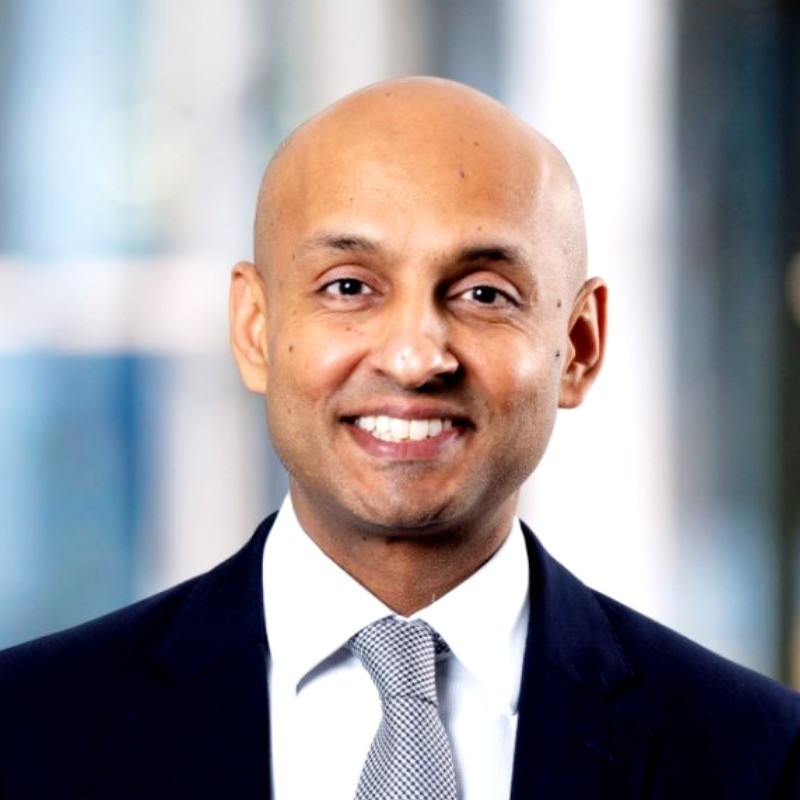
Hetal Patel is a UK based Chartered Actuary. He is Head of Sustainable Investment Research at Standard Life.
Praveen Gupta (PG): While investors increasingly recognise climate change as a financial risk, there are significant gaps in action and consistency, shows a recent report. Despite 75 per cent of investors incorporating climate risks into their strategies, many lack credible transition plans?
Hetal Patel (HP): Investors widely acknowledge climate change as a material financial risk, and many now reference it explicitly within their risk-management policies. In several jurisdictions, this is even a regulatory requirement, which has helped drive broad adoption of climate-risk frameworks.
However, far fewer investors have developed credible transition plans, and this is where the gap becomes clear. Transition plans remain voluntary and require a much deeper level of commitment than standard risk-management disclosures. They involve setting clear interim targets, providing transparent strategies for achieving them, and ensuring board-level accountability.
“Many investors recognise the risk but stop short of implementing the comprehensive measures needed for a credible transition
From my perspective, several factors contribute to this shortfall. Investors face uncertainty about transition pathways, including evolving policy and technology landscapes. There is also concern about short-term underperformance relative to traditional benchmarks, which can discourage more ambitious climate-aligned actions. As a result, many investors recognise the risk but stop short of implementing the comprehensive measures needed for a credible transition.
PG: According to Prof. Narmin Nahidi of Exeter – Pension funds, insurance portfolios and long-term savings are heavily invested in companies, infrastructure and energy systems exposed to climate risk?
HP: Long-term savings vehicles are structurally exposed to climate risk because their investment horizons overlap with the period in which climate impacts will intensify. If pension funds and insurers remain heavily invested in high-carbon infrastructure and energy systems, they face both physical risks – like asset damage and disruption – and transition risks, such as policy tightening, carbon pricing, and technological shifts.
In managing this, I’d emphasise robust scenario analysis, stress-testing, and forward-looking risk assessment using climate metrics such as implied temperature scores. The goal is to align portfolios with a credible net-zero pathway, so beneficiaries’ long-term returns are protected rather than eroded by unmanaged climate shocks.
PG: Torsten Bell the UK Pensions minister has reportedly said: “Trust in Pensions it too low”. What drives such a perception and is it being suitably addressed?
HP: Low trust in pensions is driven by several long-standing issues. Many savers find the system complex and opaque, making it difficult to understand how their money is managed or what they can expect in retirement. High-profile concerns around fees, underperformance, and whether schemes act in savers’ best interests also undermine confidence. In addition, when people see their pension funds maintaining significant exposure to sectors that conflict with their values – such as heavy investment in fossil fuels -they question whether their savings are aligned with their long-term interests.
“Low trust in pensions is driven by several long-standing issues
There are steps being taken to address this. Recent regulatory initiatives – such as the requirement for schemes to publish an annual investment governance report and enhanced climate-related disclosures – are improving transparency. These measures help create clearer communication, stronger accountability, and better insight into how trustees oversee investments and manage climate risks.
However, rebuilding trust requires more than compliance. Pension schemes, trustees, and providers need to demonstrate genuine conviction: showing how climate and other long-term risks are integrated into decision-making, how capital is being reallocated to support members’ future financial security, and how stewardship is being used to drive positive change. Only by making these actions visible and meaningful can the sector begin to restore public confidence.
PG: The way financial markets react to climate risks – are they responsive enough to extreme weather events becoming more frequent and environmental pressures intensifying? How well are they ensuring the economic security of savers?
HP: Markets are starting to price climate risk, but not fully or consistently. We see sharp reactions around major events or policy announcements, yet many climate risks are slow-burn, non-linear, and under-reflected in current valuations. That can create a danger that savers are exposed to sudden price shocks which can be a problem when pensions payments fall due.
Ensuring economic security for savers means not waiting for markets to catch up but to proactively adjust portfolios, diversifying away from vulnerable assets, and building resilience into long-term strategies. I would encourage the systematic integration of climate scenarios into risk models, more rigorous engagement with high-risk counterparties and clearer escalation when progress is insufficient.
PG: And how do you ensure that Climate change is very much on the radars of trustees’ fiduciary duties?
HP: The starting point is to frame climate change explicitly as a material financial issue, not an ethical add-on. Fiduciary duty requires trustees to act in members’ best long-term interests, and climate risk is now inseparable from long-term financial outcomes. When trustees understand that climate factors directly affect asset values, volatility, and future liabilities, it becomes clear that addressing them is part of core fiduciary responsibility.
“Fiduciary duty requires trustees to act in members’ best long-term interests, and climate risk is now inseparable from long-term financial outcomes
In the UK, trustees are supported by statutory guidance requiring them to identify, manage, and report on climate-related risks and opportunities. In practice, this means embedding climate considerations throughout governance and investment processes. Key steps include outlining the policy on climate risk into the Statement of Investment Principles, ensuring regular board training on climate and transition risks, incorporating climate metrics and scenario analysis into Task Force on Climate-related Financial Disclosures (TCFD) reporting, and making climate a standing agenda item at trustee meetings.
I also see strong stewardship policies as essential. Clear expectations on voting, engagement, and escalation – including when divestment is appropriate – help trustees demonstrate that they are actively managing climate risk rather than simply acknowledging it. Taken together, these measures ensure climate change is treated as a central component of fiduciary duty and not something peripheral.
PG: Are environment, societal and governance (ESG) factors well embedded at the governance level and diligently adhered to?
HP: ESG is often present in policy documents, but the real test is whether it shapes decisions. I’d look to capture ESG – especially climate – into board competencies, risk frameworks, and remuneration structures. For example, linking part of executive pay to climate outcomes.
When governance structures and incentives are aligned, adherence becomes much more consistent and credible.
PG: How seriously do you see fossil fuel as stranded assets in the near term?
HP: In the long term, there is a genuine risk that certain fossil-fuel assets become stranded, particularly high-cost or long-lived projects that rely on demand, policy, or price assumptions that may not hold. As climate policy tightens, low-carbon technologies scale, and investor expectations shift, some reserves and infrastructure may never be fully exploited or may lose value far more quickly than anticipated.
That said, this does not imply an immediate or wholesale exit from all fossil-fuel exposure. In periods of geopolitical tension – such as the current environment – oil and gas prices can spike, and fossil-fuel companies may outperform in the short run. The key is to be highly selective and forward-looking, rather than assuming past performance will continue.
“I would prioritise rigorous assessment of assets under stringent climate scenarios…
From a portfolio perspective, I would prioritise rigorous assessment of assets under stringent climate scenarios, reducing exposure to the segments most vulnerable to transition risk, and reallocating capital toward transition-aligned opportunities such as renewables, grid infrastructure, energy efficiency, and broader climate solutions. This helps ensure we are not left holding assets that cannot deliver an adequate risk-adjusted return as the global energy system evolves.
PG: Is the UK market witnessing law suits against pension funds for not addressing Climate Change adequately?
HP: Not yet in any significant volume. In the UK, we haven’t seen major lawsuits directly targeting pension funds for failing to manage climate risk, but the pressure is clearly rising. Regulators, campaign groups, and members are increasingly scrutinising whether trustees are meeting their fiduciary duties in a climate-aware way.
Globally, however, litigation is already happening. The McVeigh v. REST case in Australia is a well-known example, where a pension fund agreed to strengthen its climate-risk management after being challenged by a member. This and other international cases are shaping expectations in the UK.
Combined with mandatory climate reporting for larger schemes, they signal that trustees who fail to act on climate risk could face legal challenges in the future, even if the UK hasn’t seen them at scale yet.
PG: It was wonderful listening to you at the recent Global Conference of Actuaries (GCA). Many thanks for these excellent and candid insights.
Can also read here: “If pension funds and insurers remain heavily invested in high-carbon infrastructure… they face both physical risks… and transition risks” | illuminem
The Times Of India Blogs
April 17, 2026
Blog link: Climate vulnerability assessment: Here is a bellwether!
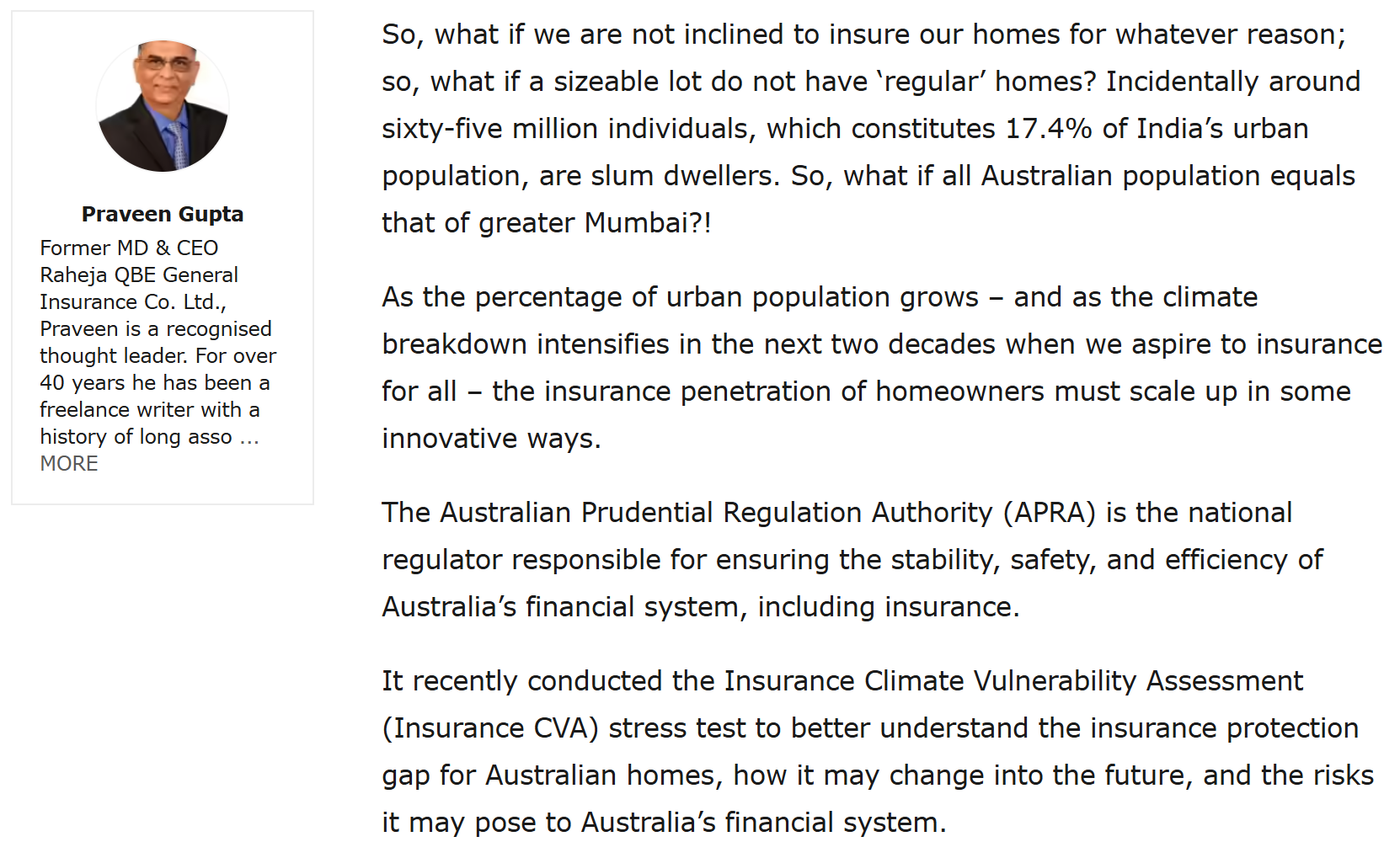
LinkedIn post link: https://www.linkedin.com/feed/update/urn:li:activity:7451170640591642624/?originTrackingId=bRKI3foiVBZSx%2F8WOPjnKQ%3D%3D
Sanctuary Asia
April – May, 2026

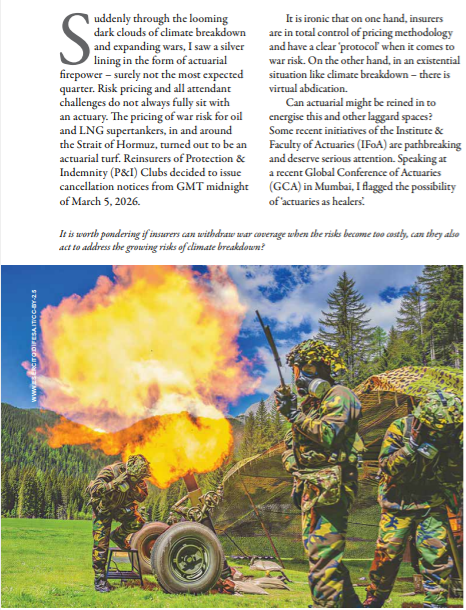
Sanctuary Nature Foundation (online version): Rising Losses, Growing Pricing, Increasing Uninsurability – Risky Future?
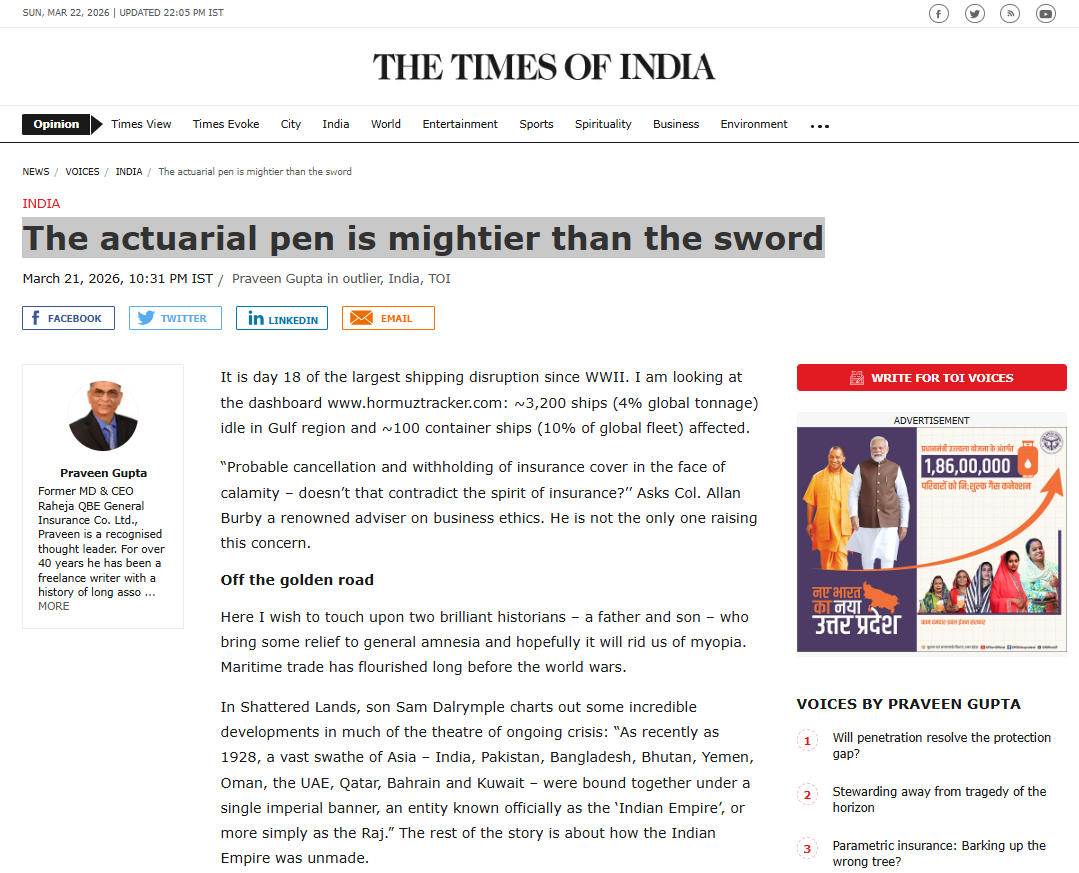
LinkedIn post: (1) Post | Feed | LinkedIn
The two sets of methi thepla tacos arrived for dinner in one go.
I wasn’t sure if they would make a meal.

They retained their soft exterior, howsoever crisp they appear in the picture, and the methi fragrance dominated all else that went into the dish.
The first bite got me into a generous chunk of cheese. Mind you it is made from buffalo milk (Amul in all probability) – the second desi component in the concoction.
Next to hit my taste buds was the sour flavour of methi. The veggies were deeply embedded – the Mexicans would be duly rewarded for their patience. Some Pax Mexicana…
Unsure of what lay in store, I hedged my bet by ordering a Parsi Dairy Kulfi for dessert.
One need not go solo with the methi thepla tacos!!!
Location: Taj Vivanta, Ektanagar
Mission: Visiting World’s tallest Statue – Statue of Unity


PS: This one takes the crown this week
A tourist sued popular New York tacos chain Los Tacos N.1 because the food was too spicy.
“In a 12-page written opinion, U.S. District Judge Dale Ho found “there is no duty to warn a consumer of the spice-associated risks that come with consuming salsa.”
Source: Jerome Tagger in White Label Impact newsletter.
The Journal, The Chartered Insurance Institute
Feb – March, 2026
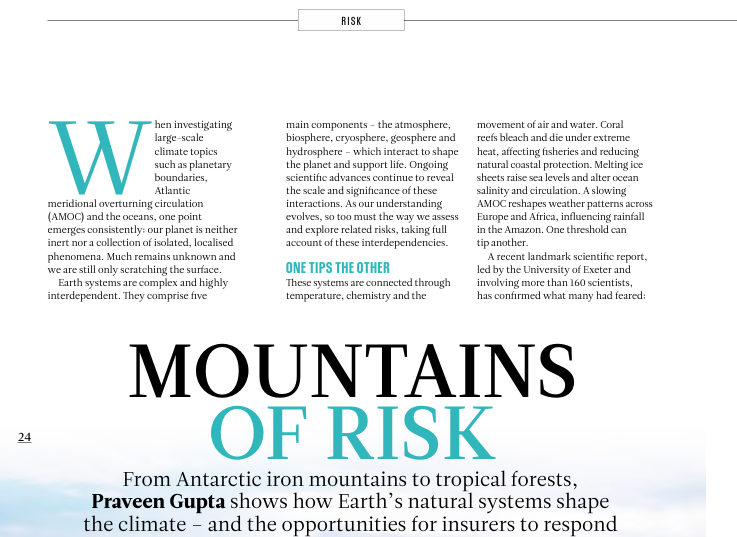

Link to the Journal issue: February/March 2026 | The Journal Magazine
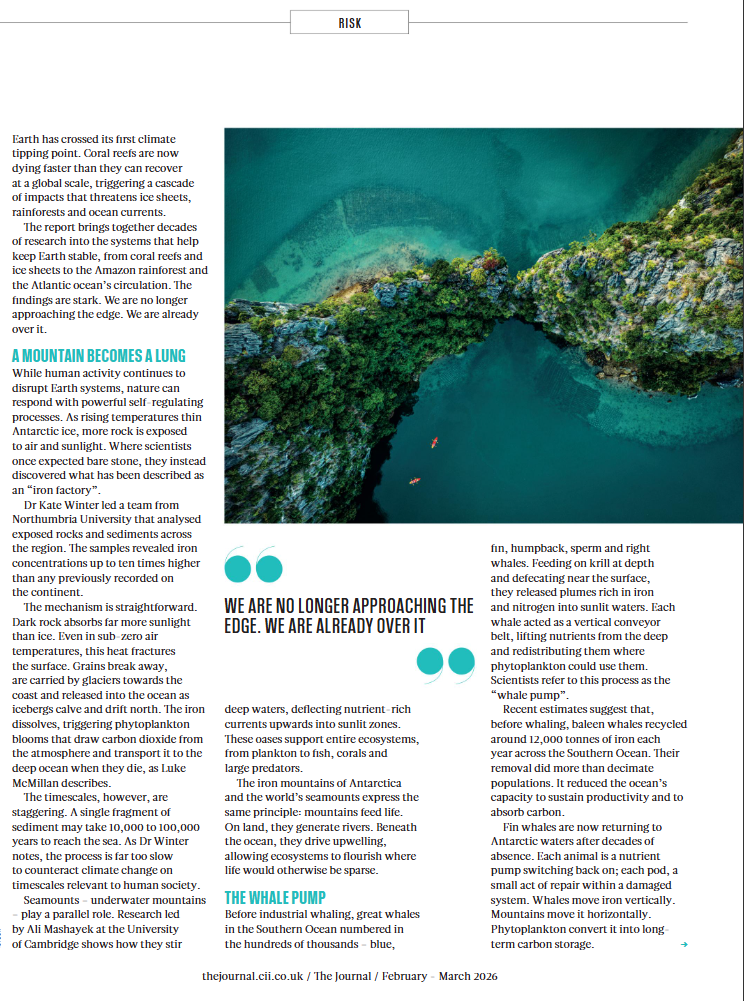
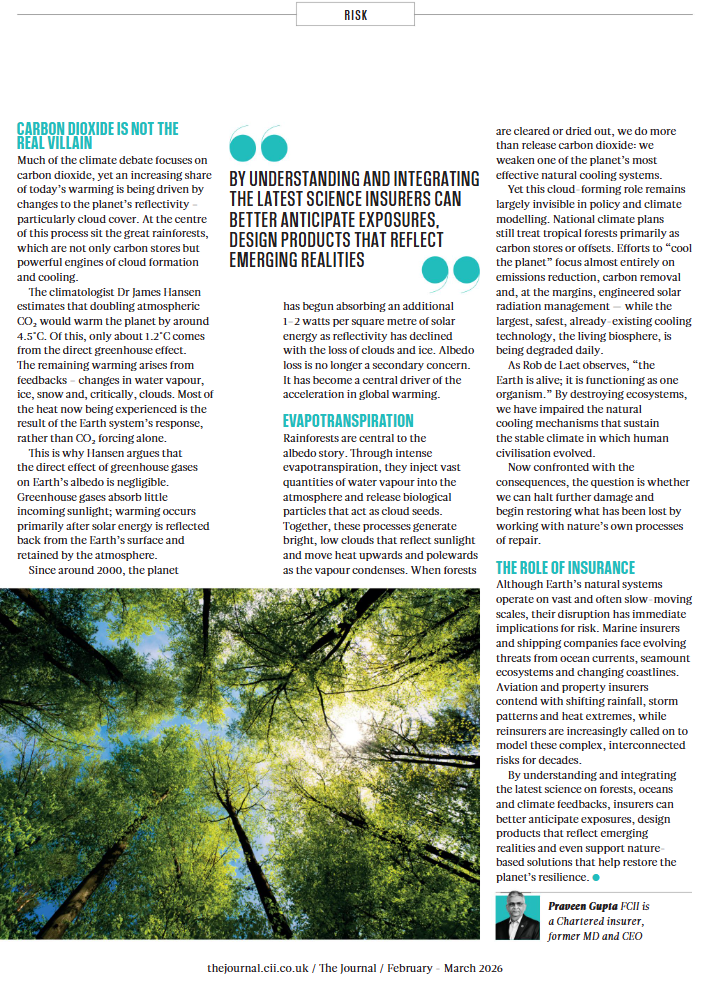
Linked post link: Post | LinkedIn
The Climate Adaptation Frontier: Designing Resilience for India’s Extreme Weather Future
February 24, 2026
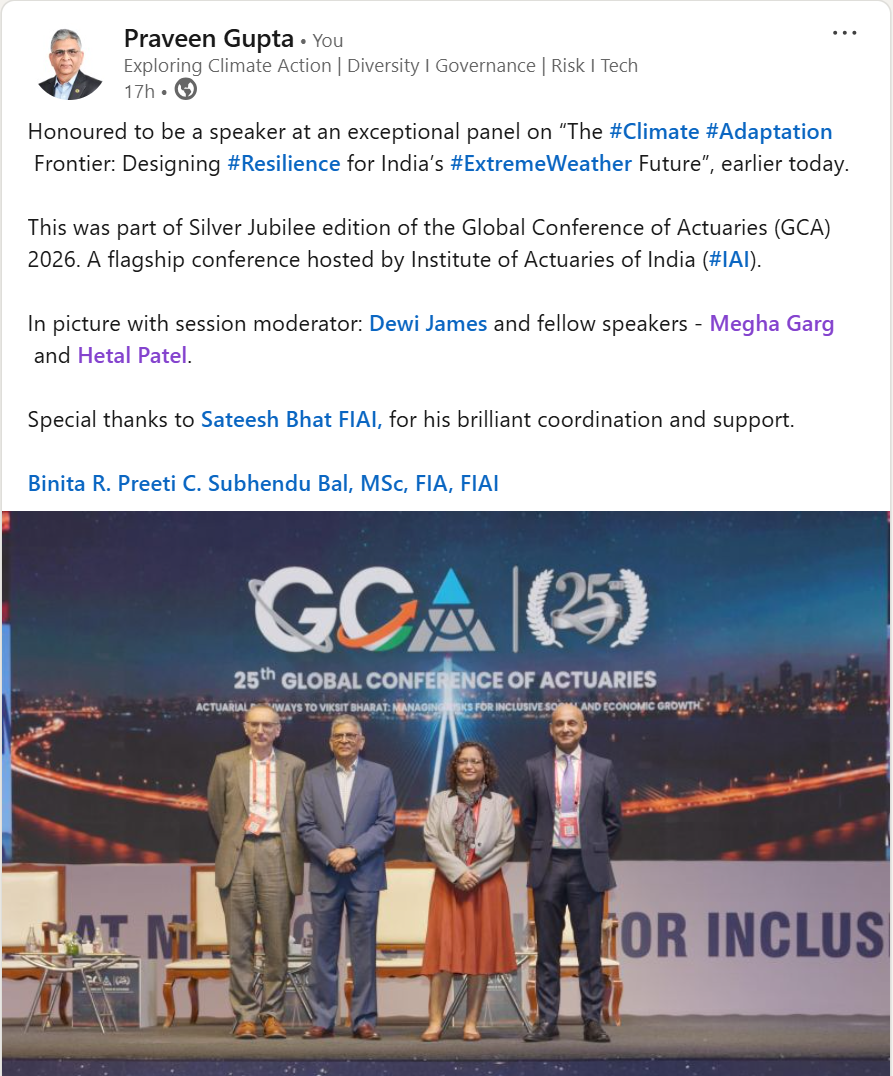
LinkedIn post:

Michele Dominique Raymond is a political strategist and an expert in policy advice & international relations. During her chequered career of over 25 years – Michele has overseen and implemented cooperation agreements for economic development, humanitarian assistance, and project planning. She has co-designed, formulated, launched, and led several high-level political conferences, programs, and negotiations, mostly in the context of diplomatic and economic cooperation with the European Union (EU).
Michele provides sought-after leadership in matters of human development, women empowerment, and culture. She creates viable and sustainable pathways for funding and compliance for NGOs, private firms, and public constituencies. She is passionate about fostering collaboration and dialogue among diverse stakeholders and advancing global peace and security.
Michele holds a Master of Arts in International Relations and Affairs from the Université libre de Bruxelles and a degree in Clinical and Pathological Psychology from the Sorbonne.
Praveen Gupta (PG). You have a degree in Clinical and Pathological Psychology from the Sorbonne. Would you please talk me through what this subject is about? Were there many women studying this when you were a student?
Michele Dominique Raymond (MDR): As far back as I can remember, I have always wanted to become a psychologist. Thus, after completing a bachelor’s degree in my country of origin, I moved to France, where I was admitted to pursue doctoral studies in clinical and pathological psychology at University René Descartes, Paris V – Sorbonne. I always felt a profound calling to explore the human psyche in its depths, its wounds, its resilience, its mysteries and the subtle processes through which healing becomes possible.
In time, I came to discern that beyond the work of tending to trauma, psychology offers individuals a way to inhabit their lives amid uncertainty, to withstand social inequalities, the pressures of natural and now climatic upheavals and the asymmetries of power, wealth that shape our collective existence on earth. My academic journey at La Sorbonne trained me to listen with precision and patience, a skill that would later prove invaluable in diplomacy. It taught me to look beyond formal narratives, to attend to what is spoken and unspoken and to analyze human behavior as it unfolds within its cultural, social, and institutional landscapes.
Back when I was studying in Paris, psychology was a predominantly female field; women were far more numerous than men. However, leadership and authority, both in academia and later in international institutions, remained largely male-dominated. This disconnect between expertise and power left a strong impression on me and partly explains why my professional trajectory increasingly focused on women’s leadership, governance, and structural empowerment rather than symbolic representation.
PG: You provide sought-after leadership in matters of human development, women empowerment, and culture. What are the unique current challenges and how are they any different from when you first started?
MDR: When I first entered this field, the central challenges in human development, women’s empowerment and cultural policy were largely framed within the paradigms of access, participation and institutional strengthening. My work focused on expanding educational opportunities, addressing structural gender disparities and supporting cultural initiatives that could foster social cohesion and national identity. Although complex, these issues evolved within relatively stable socio-political environments and were guided by long-term development frameworks.
“It is clear that women are often both the most exposed to systemic risks and the least included in decision-making processes
Today, the landscape has shifted in ways that are both profound and unprecedented. One of the most striking evolutions I have observed is that human development is now shaped by intersecting global pressures like urban resilience, migration, climate related disruptions, climate action, demographic shifts, digital transformation, widening social inequalities and the erosion of public trust in institutions. Women’s empowerment must contend not only with persistent structural barriers but also with new forms of precarity linked to technology, misinformation and geopolitical volatility. It is clear that women are often both the most exposed to systemic risks and the least included in decision-making processes.
When I began my career, empowerment strategies were often sectoral and incremental. Today, what distinguishes the current moment is the acceleration of uncertainty and the multiplication of asymmetries of power, resources and vulnerability. The task is no longer solely to promote inclusion but to equip individuals and communities with the capacities to navigate volatility, negotiate unequal power relations and sustain dignity environments marked by rapid and often destabilizing change. From my own analytical perspective, these dynamics define the contemporary challenges of leadership in human development, gender equity and cultural policy. This requires not only technical solutions, but political will, institutional courage, and culturally sensitive leadership.
PG: Are sustainable pathways for funding and compliance for NGOs, private firms, and public constituencies getting any easy?
MDR: From my experience managing and negotiating multi-country programs, sustainable funding and compliance pathways have become significantly more complex, conditional, more interdependent but also more revealing. It has clearly evolved from administrative requirements into strategic governance and risk management issues. Working closely with EU funding mechanisms, UN agencies, and the World Bank, I observed early on that access to durable financing depends less on the availability of funds than on an institution’s capacity to demonstrate credibility, foresight, and control over risk.
“Today, donors and partners increasingly expect organizations… to anticipate climate, social, and political risks, and to integrate them into decision-making frameworks
There used to be a time, the primary challenges involved securing predictable funding streams, meeting baseline reporting requirements and aligning projects with national development priorities. The regulatory environment was comparatively stable and accountability framework were largely linear: donors sets expectations, implementers complied and governments monitored.
Today, donors and partners increasingly expect organizations, whether NGOs, public institutions, or private actors, to anticipate climate, social, and political risks, and to integrate them into decision-making frameworks. Compliance today is no longer a purely administrative exercise or about checking boxes. It reflects broader expectations around transparency, accountability, risk mitigation, and long-term impact in volatile environments. Nowadays, the landscape has shifted dramatically. This is where governance intelligence and, increasingly, risk-informed and technology-enabled approaches become essential. Funding is increasingly fragmented, competitive and tied to performance metrics that demand real-time data, demonstrable impact and cross-sector collaboration.
In this sense, sustainability is increasingly linked to governance intelligence and risk awareness – areas where technology, data, and innovation can play a constructive role, provided they remain aligned with human development objectives.
In my view, the organizations that succeed are those that treat compliance, ESG principles, and risk management as enablers of strategy rather than constraints.
“The difficulty today lies not only in securing resources or meeting standards but in sustaining trust across sectors, across borders…
In this sense, the difficulty today lies not only in securing resources or meeting standards but in sustaining trust across sectors, across borders and across communities whose expectations have evolved. Sustainable pathways exist but they require adaptive leadership cross-sector partnerships and a commitment to transparency that goes far beyond what was expected when I first entered the field. When human development objectives are aligned with transparent governance, climate resilience, and robust risk assessment, funding becomes not only more accessible, but also more sustainable and transformative.
PG: Dedicating just one day (as IWD) each year does it really serve any purpose? How can more and women assume critical leadership roles?
MDR: I believe that this day dedicated to Women on March 8 holds great importance. It is worth what it is worth, yet its symbolic weight remains undeniable. It reminds the world of the intrinsic worth of women and the essential role they play in our societies. It provides a moment for recognition, a time to awaken our collective consciousness and to renew our promises to do better in the future. It is a moment to honor women’s courage on a daily basis, to celebrate their strength, and to come together around a unifying theme.
However, experience has taught me that visibility and ceremonial events alone are insufficient. Indeed, the structural conditions that shape women’s lives do not shift in twenty-four hours. IWD has meaning only if it is embedded in a longer-term strategy in relation with structural transformation which requires sustained investment in education, leadership pipelines, access to finance, and institutional reform. It also requires challenging deeply rooted norms within organizations and political systems.
“IWD has meaning only if it is embedded in a longer-term strategy in relation with structural transformation…
Women ask for nothing more than to be recognized in their capacity to lead and to exercise leadership. They lack access to the arenas where decisions are shaped and future negotiated. Very often, in speeches delivered in international forums, it is customary that men leader is generous enough to praise the great capacities of women. Yet these declarations frequently remain at the level of good intentions and are not followed by concrete action. If more women are to assume critical leadership roles, there must be a genuine willingness to rethink the system, the leadership models and to make room for them in redistributing decision-making power.
PG: Suddenly DEI seems to have disappeared from the radar as has ESG. Does it work and feel any different? Where is all the inclusivity?
MDR: It is striking how quickly DEI seems to have slipped from the radar, just as ESG has lost visibility in many institutional agendas. The language of inclusion has not disappeared but it has become quieter, more cautious, sometimes even defensive.
In my work on risk mapping, climate resilience, sustainable cities, and human development, inclusivity has proven effective only when embedded in governance structures, budgetary decisions, and accountability mechanisms. DEI and ESG must inform how risks are identified, how priorities are set, and how leadership is exercised. The real challenge today is restoring substance and trust.
Inclusivity cannot be performative; it must be operational. This is where I see a strong convergence between governance, climate action, risk technology, and human development. When these dimensions are aligned, inclusion becomes not only a moral imperative, but a strategic necessity. Throughout my career, I have come to see human development, governance, climate action, and risk management as deeply interconnected. Sustainable progress depends on our ability to address them together, with clarity, courage, and a strong grounding in human realities.
PG: Thank you very much Michele for a brilliant holistic perspective on what makes and breaks diversity & inclusion. Not only do you unravel the silos but also make us realise all that converge into it.
Also published by illuminem: https://illuminem.com/illuminemvoices/i-believe-that-this-day-dedicated-to-women-on-march-8-holds-great-importance
TOI Blogs
February 18, 2026
Please read the full blog here: https://timesofindia.indiatimes.com/blogs/will-penetration-resolve-the-protection-gap/
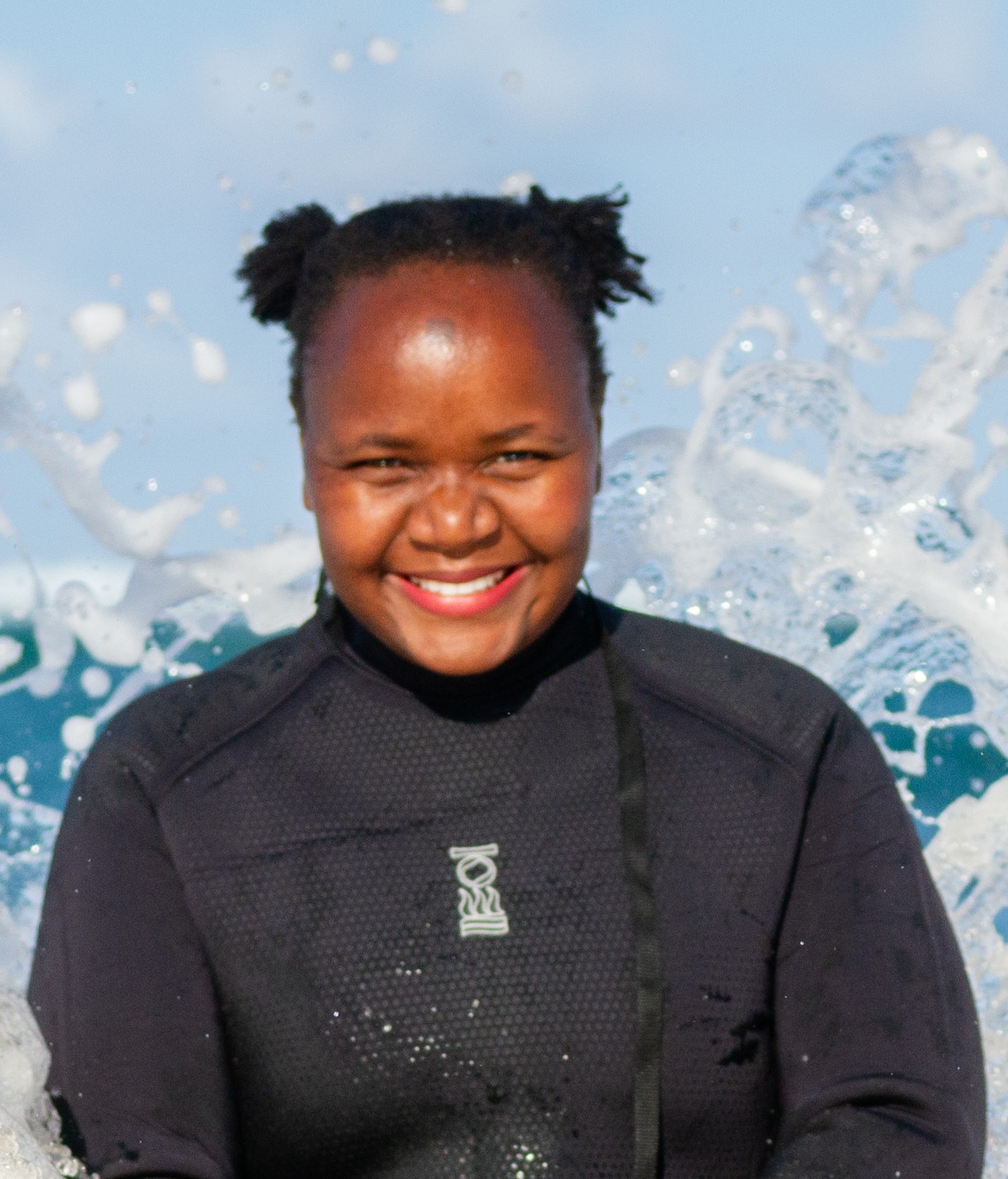
Juila Sitoe is a Marine Biologist based in Mozambique. Her work focuses on species identification and marine resource sustainability. She currently serves as Regional Coordinator for Minorities in Shark Sciences (MISS) in Africa, where she advocates for greater representation of African early-career professionals in ocean sciences.
Julia holds a degree in marine, aquatic, and coastal biology from Eduardo Mondlane University and has experience in research, scientific curation, mangrove conservation, and studies on ichthyoplankton & elasmobranchs. Julia is committed to advancing marine conservation through research, community education, and capacity building.
“A mother who understands the basics of marine biology contributes to raising a generation of children, adolescents, and young people with a clearer understanding of marine ecosystems, resource management, and the consequences of poor environmental practices“: Julia shares this nugget with me.
Praveen Gupta (PG): Why do you believe community education is very important as a first step towards desired change?
Julia Sitoe (JS): I believe that community education is a fundamental first step towards meaningful and lasting change. When a community is educated about environmental conservation whether marine or terrestrial the impact of any implemented project extends beyond its duration. Even after the project ends, the community continues the work because its members understand the importance of preserving their natural resources. They recognise that they are the primary beneficiaries of sustainable fisheries and terrestrial resource management.
PG: How is a women-focused ocean literacy programme key to introducing marine biology concepts to community members?
JS: I believe that a women-focused ocean literacy programme is key to introducing marine biology concepts to community members. In most Mozambican households, mothers are primarily responsible for their children’s education. A mother who understands the basics of marine biology contributes to raising a generation of children, adolescents, and young people with a clearer understanding of marine ecosystems, resource management, and the consequences of poor environmental practices. As a result, children and young people share this knowledge with friends, colleagues, and neighbours, multiplying its impact. There is a saying that “to educate a woman is to educate a nation,” and I strongly believe that women are central to fostering a more environmentally conscious generation.
PG: What are threats arising from the use of micro-nets and bottom trawling in your waters?
JS: Yes, the most recurrent threats associated with the use of micro-nets include the disruption of fisheries sustainability due to habitat destruction and the capture of juvenile species. The small mesh size makes these nets highly non-selective, leading to increased bycatch. This directly affects local communities by increasing the risk of a drastic decline in fish stocks.
“Illegal fishing poses a serious threat to food security and to the livelihoods of artisanal fishers, directly impacting coastal communities
We also face significant challenges related to bottom trawling and illegal fishing. One of the main obstacles in addressing these issues is the weakness of our monitoring and enforcement systems, which are insufficient to properly control and supervise foreign vessels that do not dock in national ports. Additionally, the growing demand for deep-sea shrimp has intensified bottom trawling activities. Due to limited coastal enforcement in Mozambique, unidentified industrial vessels can operate destructively, damaging marine habitats. Illegal fishing poses a serious threat to food security and to the livelihoods of artisanal fishers, directly impacting coastal communities.
PG: What was your role in shark science development and your work on advocacy for African early-career professionals and women?
JS: My involvement in shark research began through my affiliation with the North American organisation Minorities in Shark Science (MISS), which supports underrepresented groups in ocean sciences, with a focus on elasmobranch research. I participated in the Diversifying Ocean Science Fellowship, which focused on tropical ecology. During this programme, I gained hands-on experience in shark and ray conservation efforts in Miami’s Biscayne Bay aboard the research vessel Dr. Garvin.
I was trained in capture techniques and in the collection and processing of biological and morphometric data. This experience enabled me to develop a final project focused on the biodiversity of elasmobranchs, fish, and macroinvertebrates in Biscayne Bay.
Regarding advocacy, I volunteered as the Regional Representative for Africa within MISS. In this role, I work to raise awareness about opportunities available to minorities in the Global South, with the goal of increasing the representation of Black African professionals in ocean sciences.
PG: As an Outreach Officer at ‘Love the Oceans’, what was your mission and how did it go?
JS: As Outreach Officer at Love The Oceans, my primary mission was to raise awareness among private and international schools in Maputo about the marine conservation projects developed in Inhambane, Mozambique. The goal was to spark interest in participating in our school expeditions.
In terms of awareness-raising, the mission was successful. The school visits provided students with a more realistic understanding of how marine conservation initiatives are implemented in practice. However, participation in the school expeditions was limited due to the political instability in the country between mid-October 2024 and mid-2025, following demonstrations related to the general election results. During this period, school principals and administrators did not feel it was safe for students to travel to another province.
“Overfishing these species can lead to uncontrolled algal proliferation, ultimately damaging coral reef ecosystems
PG: As a member of the plankton lab team what was the collection of mesozooplankton samples about?
JS: During the multidisciplinary oceanographic cruise conducted in February 2025, the main objective was to assess the initial state of fishery resources in the Sofala Bank, with a particular focus on plankton communities. Mesozooplankton samples were collected to study their spatial distribution in the area. This information is essential for informing future fisheries management measures, especially considering that the Sofala Bank is the most important shrimp fishing area in Mozambique. Understanding the early-life stages of marine resources is therefore crucial for sustainable management.
PG: Any key learnings you would wish to share?
JS: During my time in Jangamo, where I monitored artisanal fisheries, the sustainability of fishing practices varied by location. At Guinjata Beach, fishing nets were predominantly used, while at Paindane Beach, line and hook methods were more common. This difference in gear strongly influenced the types of species caught.
At Guinjata Beach, many of the species caught were herbivorous fish, which play a crucial role in maintaining coral reef health by controlling algal growth. Overfishing these species can lead to uncontrolled algal proliferation, ultimately damaging coral reef ecosystems. To address this issue, Love The Oceans developed a sustainable fishing project that included providing kayaks to local fishers, preceded by extensive awareness-raising activities.
At Paindane Beach, fishing methods were generally less harmful to the marine environment, requiring less intensive awareness efforts.
Jangamo Bay is rich in marine biodiversity, including several species of sharks, rays, and dolphins. The dolphins observed in the bay often dispersed when they heard boat engines. They typically travelled in groups, sometimes consisting of a mother and calf, and in other cases groups of more than five individuals.
Humpback whales were commonly observed in Jangamo Bay between May and December. Frequently observed behaviours included breaching and tail slapping. Males competing for females and mothers accompanied by calves were also documented.
PG: Many thanks Julia for sharing these interesting insights. Best wishes for your endeavour in safeguarding our ocean biodiversity.
Blog interview also carried by illuminem: https://illuminem.com/illuminemvoices/to-educate-a-woman-is-to-educate-a-nation