Diversity has become clichéd and corporatised. It is almost fashionable if not mandatory to have a diversity policy, a committee and even champions. Issues relating to race, gender and colour must be addressed per prescribed protocols & templates.
Using my own (borrowed) cliché, the corporate stories are about getting the physics of diversity right. During the last two days I spotted these two interesting developments reported by Reuters. “When Cheryl Boone Isaacs presides over the Oscars on March 2, her mere presence will convey a statement on diversity in Hollywood as the first African-American president of the Academy of Motion Picture Arts and Sciences and its third woman in its 86 years.”
“Honda Motor Co. is considering diversifying its all-Japanese, all-male board by appointing a foreigner and could move as early as Monday, when it unveils its next slate of directors, sources close to the company said.
Japan’s big companies are under pressure to bring in outsiders to bolster governance, risk management and global perspective, having traditionally chosen board members from senior male managers who had spent their careers at the company.”
The author of the following piece sends home a strong message, retaining all its sensitivity, that makes you wonder why is there so much song and drama about Diversity. Is it not a basic human virtue that should be embedded into the hearts and minds of every individual – to be practiced religiously by all of us? Let’s not forget that rather than be just a policy document thrust top down, to get diversity truly right we need to get the chemistry right as well.
‘A medical-school professor once posed this medical/ethical question to his students: “Here’s a family history – the father has syphilis. The mother had TB. They already have four children. The first is blind. The second has died. The third is deaf. The fourth has TB. Now the mother is pregnant again. The parents come to you for advice. They are willing to abort their child if you decide they should. What do you say?”
After students shared various individual opinions, the professor placed them into groups to make final decisions. After deliberating, every group reported that it would recommend an abortion to the parents.
“Congratulations,” the professor told his class. “You just took the life of Beethoven!”
What is the lesson for the workplace? A person’s inherent value and potential don’t depend on family background or social station. God has created each person with worth and skill and promise. The way we treat people on the job – and the decision of whom we hire – shouldn’t be tainted by prejudice that’s based on race, economic status, appearance, or handicap. This may seem like stating the obvious, but we might be surprised if we honestly evaluated the way we perceive others.
Every person has potential to add music to the great symphony called life.’
Source: God’s Little Devotional Book For the Workplace
- Cetaceans like whales and dolphins, have a high degree of intelligence, and also have self-awareness like the humans.
- Their brains are as anatomically complex as those of humans. They also contain a particular type of nerve cell known as the spindle cell. In humans this is associated with abstract reasoning. Moreover, these are much bigger than those of great apes, thought of as humanity’s closest intellectual cousins.
- They have complex cultures, which varies from group to group within a species. They have distinct and differentiated use of vocal signals and tools. Seem to have awareness of themselves as individuals. At least some can recognise themselves in a mirror.
In my blog of July 15, 2012 I highlighted how a quiet movement to classify all cetaceans as humans is underway, in the North America.
Now interestingly a champion has emerged in the country of Romas, Romania. And I quote this breaking story from the Reuters: ‘Armed with an iPad and a letter of support from an Oscar-winning film director, Remus Cernea is pushing a cause that he acknowledges few of his fellow Romanian lawmakers care about: giving dolphins the same rights as humans.
The 39-year-old activist politician introduced a bill in parliament last week that would recognize the marine mammals as “non-human persons”, on account of their highly developed intelligence, personalities and behavior patterns.
The bill, which will be debated in the Romanian upper house in the coming weeks, would make humans and dolphins equal before the law. Dolphin killers would be given the same sentences as murderers of human beings. The bill would also ban the use of dolphins in live entertainment shows.
The aim of the bill is to help protect Romania’s indigenous dolphins in the Black Sea, Cernea said. It would also add the country’s voice to a global movement against dolphin killings.
To back his cause, Cernea has received a letter of support from American filmmaker Louie Psihoyos, famed for a 2009 documentary, The Cove, about dolphin hunting in Japan.
But gathering domestic support may be tough in a year when Romania goes to the polls twice, first in the European elections in May and later to vote for a new president. Animal rights will have to find space alongside issues such as corruption and raising living standards and public services in the European Union’s second poorest country.
“At this moment, I have no support,” Cernea told Reuters during a visit to the city of Constanta on the Black Sea coast.
“This law asks you to make a huge step, philosophically speaking, to understand and to accept that somehow there is another species which is quite similar as we are,” he added.
FISH FOR TRICKS
Cernea, who sports a pony tail and beard and wore a dolphin t-shirt during an interview on Friday, split from Romania’s Green Party to be an independent MP last year.
His constituency, Constanta, is on a strip of coastline where dolphins get entangled in fishing nets and are found dead in their dozens. The city is also home to the only two dolphins in Romania kept in captivity, both bought from China in 2010.
On Friday at Constanta’s dolphinarium, to the sound of blaring music, the dolphins practiced tricks in a green indoor pool, such as balancing balls on their noses and prodding them through hoops. Each trick was rewarded with fish from a bucket.
Cernea likened the pool to a prison – a view that brought a sharp rebuke from the dolphinarium’s scientific director, Nicolae Papadopol, during a discussion with Reuters.
Romania had good enough laws to protect its dolphins without Cernea’s bill, Papadopol said, adding that the dolphin trick shows had been a source of Romanian pride.
“Romanians have something good (here), and you are coming with this initiative to destroy it,” Papadopol said.’
Despite all the rationale for resistance to this movement, here is a challenge surely in offing for all diversity champs!
Downside first: Here is a revelation for anyone going headlong into diversity; the recent Economist story rings an alarm bell:
‘THE closest thing the business world has to a universally acknowledged truth is that diversity is a good thing: the more companies hire people from different backgrounds the more competitive they will become. Diversity helps companies to overcome talent shortages by enlarging their talent pools. It helps them to cope with globalisation by expanding their cultural horizon. It stimulates innovation by bringing together different sorts of people. And so on.’
‘Roy Y.J .Chua, of Harvard Business School, is one of the few academics to produce serious studies of this subject. Mr Chua agrees that in a world of multinational corporations and global product markets success depends more than ever on your ability to foster multicultural thinking and cross-border collaboration. But in a paper in the current issue of the Academy of Management Journal (“The Costs of Ambient Cultural Disharmony: Indirect Intercultural Conflict in Social Environment Undermine Creativity”) he goes on to note that getting people from different nationalities and cultural backgrounds to co-operate is fraught with difficulties. At best differences in world-view and cultural styles can produce “intercultural anxiety”, at worst outright conflict. The very thing that can produce added creativity—the collision of different cultures—can also produce friction. The question is whether the creativity is worth the conflict.
Mr Chua argues that creativity in multicultural settings is highly vulnerable to what he calls “ambient cultural disharmony”. Tension between people over matters of culture, he says, can pollute the wider environment and reduce “multicultural creativity”, meaning people’s ability to see non-obvious connections between ideas from different cultures. “Ambient cultural disharmony” persuades people to give up on making such connections because they conclude that it is not worth the trouble.
Mr Chua also says that “ambient cultural disharmony” has its strongest impact on people who regard themselves as open-minded. Closed-minded people expect cultural tensions. Open-minded people don’t expect them and so react to them more strongly. In another irony, Mr Chua also discovered that the only people who are not affected by cultural conflict, at least in terms of creativity, are the people who are at the heart of it. They are more likely to explain the problems in personal rather than cultural terms.
He tested this thesis in three studies. In one he surveyed participants about the amount of cultural disharmony they found in their networks at work. In a second study he asked some subjects to recall a recent conflict between two contacts from different cultural backgrounds who disliked each other. In the third he asked his subjects to watch a short video that depicted one of the following scenarios: intercultural conflict, same-culture conflict, intercultural harmony. He also measured creativity in a variety of ways, for instance by testing participants’ ability to solve word puzzles or their skills to produce products and services for different cultural groups.
In all three studies, subjects who had a greater experience of ambient cultural disharmony fell short on one or another of Mr Chua’s measures of creativity. Mr Chua says that he is not certain how much of a problem this is because his is the first study to identify it. But his results are important partly because many companies have such an optimistic view of cross-cultural pollination and partly because the second-order effects of cultural conflict (particularly among people who regard themselves as open-minded) are so hard to manage.’
So will AMBIENT CULTURAL DISHARMONY become the new buzzword in diversity studies??
Flipside next: US Gynecologists free to treat men! (Reuters).
‘A U.S. professional group that certifies obstetricians and gynecologists has loosened a decades-old restriction on its board-certified members treating male patients, after mounting pressure from doctors and researchers.
The American Board of Obstetrics and Gynecology (ABOG) had previously said members could not treat male patients except in specific circumstances, such as circumcising babies, treating transgendered patients, and helping couples overcome infertility.
However, opposition had mounted from gynecologists and others who said the policy interfered with medical research and prevented them treating male patients with chronic pelvic pain.
Some obstetricians and gynecologists had also been treating men for cancer, problems such as low testosterone, and cosmetic procedures including liposuction.
“This change recognizes that in a few rare instances board certified diplomats were being called upon to treat men for certain conditions and to participate in research,” Dr. Larry Gilstrap, ABOG’s executive director, said in a statement Thursday.
“This issue became a distraction from our mission to ensure that women receive high quality and safe health care.”
The Dallas-based board eliminated requirements that said certified members treat only women and must devote at least 75 percent of their practice to obstetrics and gynecology, saying instead a majority would suffice.’
Submitted to the 2013 Quantum Shorts Flash Fiction Competition
‘Dadaji’ (literally grandfather, metaphorically a wise man) was not just a physicist. He earned his doctorate from Cavendish Laboratory, Cambridge, working under Sir Rutherford. Amongst his many seminal works were path-breaking researches on white dwarfs and thermodynamics. His genius was in making things simple for the grasp of a common man. Sometimes one does not know whether to address his abilities in the past or present tense. Thankfully, the future has yet to unfold. It is Dadaji’s fusion of Quantum Physics and Vedanta that transcends through time and space. Two words that would perhaps best characterise him are omnipotence and omnipresence.
I am aware of his simultaneous presence in two locations. Scenic Udaipur and the wooded parts of Delhi University, as those are two places where he lived and that I have been associated with. In Udaipur, he would be with his grown up school buddies demystifying their mysteries. How could a man rise above the mundane? Just raise the atomic number of existence. Do as the alchemists did – making gold out of a lower metal by tinkering its atomic state. The choice is simple. Either seize or abdicate that power? He would then delve upon the psychology of sleep. From dream state to rapid eye movement to deep sleep. The human body and mind can both be energised to metamorphose from a lower to a higher state of existence. Again, the path need not be linear. Generally it is three-dimensional: ‘Bhakti’ (Devotion), ‘Gyaan’ (Knowledge) and ‘Dhyaan’ (Contemplation to enhance intuitive powers). He wears his erudition very lightly.
Dadaji’s storytelling sessions are nothing short of mesmerising. As the old wise men briskly walked along the Lake Fatehsagar ‘paal’ (bund) the sun was already down, the parakeets silenced and with the darkness came the fireflies, enacting a surreal drama. Dadaji never missed the message. Whenever you see this, please remember that only after you have subdued the ‘chanchal’ (restless) in you would your inner-self start glowing, he would say.
The ridge next to the university campus has forever been the natural refuge from the hustle and bustle of Delhi. The vice regal lodge and the telescope tower of the Physics department were always very reassuring landmarks. If Dadaji was illuminating and igniting bright young minds, it would generally be well past the ‘langurs’ (black-faced monkeys) having stopped foraging the flora of an offering from the last vestige of the Aravallis – one of the oldest rock formations in the world. That was perhaps the common denominator for his simultaneous presence at the two locations. The langurs would be back at their resting spots atop their favourite trees. It was just then the time for the bats, masters of the night skies, to be out. Some of the youngsters who walked past this benign looking old man deeply engrossed in conversation with young students – their antennas were not receptive enough to register the enlightening opportunity that just whizzed past them – they were rather wary of the flying foxes as a potential source of rabies. Dadaji always marvelled how well-tuned these two creatures were to the laws of nature. Do you really need to distance yourself from nature to develop your thinking faculty and thereby progress the frontiers of knowledge, he would marvel.
Would quantum physics be a good foundation for a quant role at the Wall Street, Dadaji? “Ha,” he would say, “so you wish to be a black swan spotter? I’m not sure whether you need to have a better understanding of ornithology or quantum dynamics, but remember what Vedanta has to say. ‘Hamsa’ (the swan) also connotes ‘I am He’ (the ultimate power).” If we were to bring in the Oriental philosophies including Zen (origin from the Sanskrit ‘Dhyana’), the yin and yang co-exist. Even if the existence of a black swan was unknown till the discovery of the down-under, it did not mean the black swan didn’t exist. The idea was beyond our comprehension. The good and the evil co-exist. They are but two sides of the same coin. Not only could a highly charged human intellect manifest itself physically at multiple locations but also in shades of white and black all at once.
“In his famous equation outlining the equivalence of mass and energy, Einstein proved that the energy in any particle of matter is equal to its mass or weight multiplied by the square of the velocity of light. The release of atomic energies is brought about through annihilation of the material particles. The “death” of matter has given birth to an Atomic Age. “
“Masters who are able to materialise and dematerialise their bodies and other objects, and to move with the velocity of light, and to utilise the creative light rays in bringing into visibility any physical manifestation, have fulfilled the lawful condition: their mass is infinite.”
“Maya (from the Vedas) is the magical power of illusion that underlies phenomenal worlds. Satan (Old Testament) or Maya is the Cosmic Magician who produces multiplicity of forms to hide the One Formless Verity. In God’s plan and play, the sole function of Satan or Maya is to attempt to divert man from Sprit to matter, from Reality to unreality.”
He tends to quote all these from Swami Paramhansa Yogananda who influenced his philosophy significantly.
“Is hacking a virtue or vice, even if it means getting to the bottom of truth?” An omnipotent or an omnipresent spirit would have access to timeless information stored in the repository of the universe, he would say. Soon we shall be able to listen to the sounds of inter stellar space. By the way I am told it is bird like. Before too long we will be able to decipher fundamental secrets of unimaginable immensity. Please do expand your perspective by expanding your mind. Our physical boundaries need not restrict our reach.
Let us not entangle ourselves in a limited time space, let us not identify our spirit with our body and ego, and let’s reclaim the unified space.
Posted in CII Journal December 2013 / January 2014
As India moves inexorably towards a globalised, corporate-driven reality, Praveen Gupta assesses the opportunities and risks associated with its subsequent increased need for liability insurance products
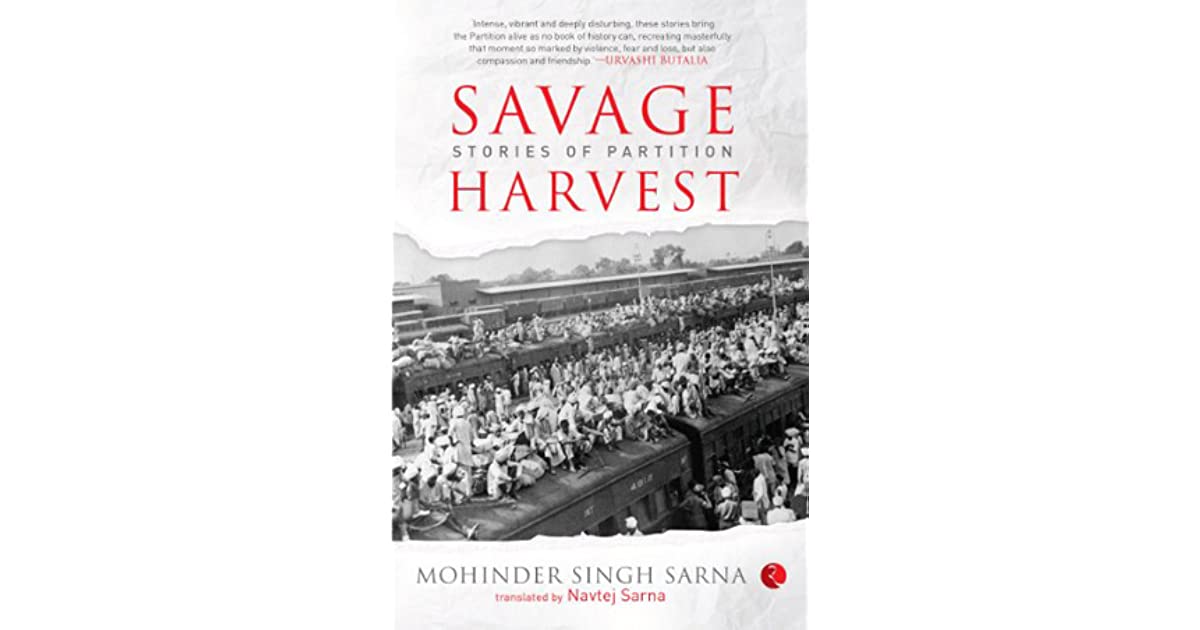
Knowing an author as a person is so different from knowing the person as an author. MS Sarna that I knew was an exceptionally calm and serene human being. Almost through with the ‘Savage Harvest’, the author has reinvented the person I thought I knew. I am not sure how I would have felt had I read these stories in original Punjabi. If only I could read Gurmukhi… But knowing the master craftsman Navtej’s delicate handling of his late father’s gems, I believe I would perhaps register the same intensity and frequency of goosebumps and tears.
Apart from their strong underlying emotive side, these stories also trigger diverse thoughts. How did a social fabric renowned for its ‘unity in diversity’ suddenly hit the boiling point? Why did the colonial masters not think through the end game of the partition? Was it an outcome of poor governance? Or, was it a logical extension of the infamous ‘divide and rule’? Thereby, was Radcliffe line one of their most callous acts?
If the empire failed, why did we choose to behave violently despite ‘an accursed political decision of departing rulers’? In ‘Hope’ the author when alluding to the Hindus and Sikhs migrating from the Northwestern part of the then-country makes a very profound observation. “They had been on the wrong side of the line which had been drawn to divide the country. To come from the wrong to the right side, to cross that bloody line, they had to pay a very heavy price; everybody’s fault was the same, but each one paid a different price.”
And then, regret its ‘sad’ demise? In ‘My Precious One’, Barkate says, ”What evil days are upon us? The days of the British Raj were so good, not even a sparrow could flap its wings out of turn.”
An interplay of rationality & irrationality
Like in the overall Partition theme, an interplay of irrationality and rationality manifests very intensely in all the stories. While violence is what one associates most with the sub-division of our sub-continent, let us also remember that its unfolding also heightened the conviction of non-violence in its most successful practitioner, the Mahatma. In ‘The Minor Gandhis’, the author brilliantly portrays the thoughts of Begma whose comatose son Sadeq gives up his life on hearing about Gandhiji’s assassination. “He did not want to live in a world where prophets of peace and non-violence were shot to death.”
How did such a calm and serene person deal with such levels of outrage; and despite it all, how did he still manage to stay calm and serene? After a voyage through 30 stories by the person I knew, I believe I finally had an inkling into the mind of the author he was. Unlike many of us he did not dramatise it, despite all its fury and bestiality he had the genius for always spotting a ray of hope in howsoever hopeless a situation. He could sublimate all his sense of anger, disgust and rather bury it deep inside his soul as he dealt with it.
His treatment of violence is generally not just subdued but a distanced theatre, as well. It is not the violent actions of his theme but the prose that inflicts the reader’s soul. It’s the artistry and not the wordsmith in him that turns the tide of hopelessness into hope. What seem like dire situations, as if by miracle, he tips them towards hope and optimism. The miracle is in his craft and more than the craft in his conviction that in the end humanity wins!
I believe all students of Modern Indian history who wish to deep dive into the subject of Partition and wish to get an authentic feel of the theatre must also ‘reap’ the Savage Harvest.
Published in the Journal of Insurance Institute of India in October-December 2013
“Clean slate for doctors on medical negligence? Are Indian medics incapable of making mistakes? The complete lack of data on cases of medical error seems to indicate as much”, reports Rema Nagarajan in TOI of December 23, 2013.
The starting point to address this malady is to diagnose how frequent and severe is it. With no data on incidence of medical errors and no authority tracking cases of medical negligence, one might be forgiven for imagining that the over 8 lakh (800,000) registered doctors in India are perfect professionals who never make any mistakes, writes Ms Nagarajan. Let us not forget the growing violent actions both in China and India, which have been alluded to in previous blogs, as a desperate attempt in trying to seek justice for the aggrieved.
“Recently, the parliamentary committee on health and family welfare expressed concern over the fact that there is negligible prosecution of medical negligence cases in India. But the committee’s observation draws attention to an even more shocking fact — there is no centralised collection of data on negligence cases filed in India or their outcome”.
State medical councils and the Medical Council of India (MCI) are supposed to maintain registers of all complaints filed against doctors, their status and the outcome of such complaints. But till today, the MCI has not bothered to put together regional data to build a central database for the nation. This means that the magnitude of the problem of medical negligence remains ignored in India notes Ms. Nagarajan.
“All members of the MCI are medical professionals and whenever any complaint of medical negligence or violation of code of ethics is brought before the council, such cases are decided by the medical professionals themselves. There are reports that the medical professionals probing into the allegations of medical negligence are very lenient towards their colleagues guilty of negligence and none of them is willing to testify another Doctor as negligent,” stated the report adding that the impact of this arrangement was that the prosecution in medical negligence cases by the MCI is dismal, highlights the author quoting the parliamentary committee’s recently submitted 73rd report on the Indian Medical Council (Amendment) Bill 2013.
According to People for Better Treatment (PBT), which was started by Dr Kunal Saha (he recently won the record settlement of over Rs 6 crore by the Supreme Court for the death of his wife due to medical negligence), hardly any doctors are found guilty by state medical councils.
For instance, PBT’s RTI enquiry found that just 515 cases were filed against doctors for either medical negligence or ethical violation in one decade (2001-10), barely four cases a month. And action was taken in just 9% — 15 doctors were removed from the council’s list of registered practitioners and 30 let off with a warning. In 91% of cases, either the case was closed or the accused let off, cites Ms Nagarajan.
“State medical councils mostly comprise doctors and most are not even functioning properly. The ones that function do not reveal any data on the complaints or their outcome,” says Dr Amar Jesani, editor, Indian Journal of Medical Ethics. In Maharashtra the medical council was not properly functional for two decades. From 1990 till 2011, it remained mired in controversies regarding malpractices in the election of council members, goes on to highlight the author.
“We had a tough time trying to get data from the different state medical councils. Even with RTI, they give vague information. There is no price to be paid when council members shield doctors in cases that come before them as the public will never know what happens,” says Dr Saha according to the TOI report.
“In other countries, non-doctors like patients and social workers are mandatorily made members of the medical council and they are known as ‘lay members’ and on occasions they may even lead the council as was the case with UK’s General Medical Council,” pointed out the report recommending that the new, revised legislation ought to make it mandatory to have such members on the council. Ms Nagarajan has indeed hit the nail here. Trust all this does not fall on deaf ears.
Not only is this matter begging attention for a fair reporting and corrective actions, we also have a serious issue with rampant quackery and spurious medical qualifications that are a blot on a profession which ought to tread the holy ground with a Hippocratic oath.
Published in Indian Express on December 23, 2013: http://www.indianexpress.com/news/time-for-a-relook-at-insurance-cover-for-corporates-decisionmakers/1210637/0
 The Diversity Blog