Garrett M. Graff writes in Doomsday Scenario: https://www.doomsdayscenario.co/p/two-scenarios-for-the-years-ahead
November 13, 2024


https://www.linkedin.com/feed/update/urn:li:activity:7263451409637892098/
Blog interview published by Illuminem
November 8, 2024
https://illuminem.com/illuminemvoices/how-purposeful-is-our-management-education

My interview with the exceptional Dr Raghunathan V.
Whether to call him a maverick or an outlier? This versatile former academic fits no stereotype. After several books of varying hues he has for us a delightful autobiographical to relish. It reveals what makes him what he is.
Raghu commenced authorship with hard core finance, steering towards management, behavioural, semi fiction, fiction. Now lays bare a fascinating assortment (and more) from working life.
Since management education is where he spent much of his professional life – having taught some of the smartest minds – I provoke him to share the good, bad and ugly. The responses are trademark crisp and candid.
Am sure you will not resist the temptation of indulging in The Lion, The Admiral and A Cat Called B. Uma Vijaylakshmi.
Raghu laments “The absence of genuine commitment to sustainability and ESG.” Could management education fix it?
Recently Mark Trexler (please see comments) told me why all students at Arizona State University, beginning this fall, must take a class on sustainability – “is a great initiative, although seems radically insufficient and decades too late in coming!’’
Where does one seek the secret sauce? Remember, the ‘philoseralogist’ (one who collects locks for a hobby) in Raghu has the keys to some very ancient and complicated padlocks in his possession.
Blog interview published by Illuminem
October 29. 2024

https://www.linkedin.com/feed/update/urn:li:activity:7256888712762961920/
My interview with the brilliant climate scientist and communicator Dr. Phoebe Barnard. I had the pleasure of meeting her recently.
Phoebe champions amongst many things hashtag#bioregionalism. She lives in the Skagit valley – the heart of hashtag#Cascadia – in the hashtag#PacificNorthwest (PNW).
With her vision that is “#regenerative, #collaborative, and #nourishing” she hopes to overcome “the disturbing human supremacy, and cultural arrogance, which also devalues and commodifies both our relationships with #Nature and each other”.
Surely we can learn better from our horrendous mistakes of the last two centuries of western individualism, extraction, profiteering, domination, and entitlement, she says.
The road ahead is short and steep, the odds are long, and the vested interests have sharp teeth and claws. All we need is “a #spiritual and #values change, which will enable economic, social-cultural and political change” believes Phoebe.

Dr V. Raghunathan is an academic, author, corporate leader, columnist, and hobbyist.
He has served as a Professor of Finance at IIM Ahmedabad, President of ING Vysya Bank, CEO of GMR Foundation, besides Director of Schulich School of Business, Toronto (India Campus). Additionally, he has been an adjunct professor at SDA Bocconi University in Milan, Italy, and Schulich School of Business in Toronto, Canada.
Raghu’s books include the The Lion, The Admiral and A Cat Called B. Uma Vijaylakshm; To Every Parent, To Every School; Irrationally Rational; Return to Jammu; The Good Indian’s Guide to Queue Jumping; Beyond the Call of Duty; Duryodhana; Locks, Mahabharata and Mathematics; Ganesha on the Dashboard; The Corruption Conundrum; Don’t Sprint the Marathon and the national bestseller Games Indians Play.
Raghu has one of the country’s most varied collections of old and ancient Indian locks.
PG: The book title sounds intriguing?
VR: Well it is! The Lion and the Admiral find a chapter unto themselves in the book. To know about the Cat called B. Uma Vijaylakshmi, you’ll have to read the book!
PG: It sounds like a sequel to your autobiographical ‘Return to Jammu’?
VR: Well, not quite. For one, Return to Jammu is not entirely autobiographical. While shaping the character of the protagonist, Balan, I drew heavily from my own childhood and those of my friends, blending these experiences to create a new character. The latter part of the book, however, is purely fictional.
The Lion, The Admiral…on the other hand is purely based on my professional memoirs.
PG: The public and private sectors tend to be positioned as one versus the other?
VR: It is generally believed that the Indian public sector is more robust in terms of systems, processes, and employee welfare, while the private sector is recognized for its productivity and efficiency. Unfortunately, neither sector has adequately prioritized sustainability or ESG considerations for the benefit of society as a whole. Just yesterday, someone shared with me in Bangalore that a large lake near CV Raman Nagar was encroached upon and developed by DRDO until the early 2000s.
“The absence of genuine commitment to sustainability and ESG – beyond mere lip service and legal compliance, regardless of how that compliance is achieved – afflicts both sectors”
Additionally, the private sector is rife with issues such as deforestation, excessive water usage, river pollution, air pollution, and the indiscriminate application of chemicals and pesticides. Unsustainable mining practices are another pressing concern. Thus, the absence of genuine commitment to sustainability and ESG – beyond mere lip service and legal compliance, regardless of how that compliance is achieved – afflicts both sectors.
PG: How did early disruptions in life nurture your mobility?
VR: In fact, these are the elements I drew upon to shape Balan’s character in Return to Jammu, rather than in The Lion, The Admiral. However, my personality was certainly influenced by the disruptions you mentioned. For instance, my struggles as a young adult, first in the Indian Navy and later in Coal India, stemmed from graduating at just 17. This early graduation was a result of our family’s move from Ambala to Jammu, which led to an unforgivable miscalculation by my father regarding the appropriate grade for me to be admitted into. Being significantly younger than my peers compelled me to work harder and, perhaps, made me more aggressive in asserting myself, and less adept in physical sports.
PG: How purposeful is our management education?
VR: Indian management schools have produced a wide array of business leaders – entrepreneurs, policymakers, CEOs, regulators, public administrators, and more. Many have been extraordinarily successful, while some have, unfortunately, been equally unscrupulous. Personally, I’m not convinced that management schools have made a significant impact on the ethical values of their students who go on to become leaders. This may be due to two key reasons: 1) By the time students enter business school, they are already adults, and much of their moral foundation has been shaped during their formative years, primarily by what they learned at home on the lap of their parents. And 2) The ethical challenges of leadership often arise years after students leave business school, so it’s hard to determine how much the curriculum really influences their values later on.
“I believe ethical values are largely shaped by the broader society”
While business schools should certainly emphasize the importance of socially responsible corporations, sustainability, and environmental, social, and governance (ESG) principles, I believe ethical values are largely shaped by the broader society. I recall that during interviews for admissions at IIMA, I would sometimes ask candidates a hypothetical question like, “Imagine on your way to this interview, you jumped a red light and were stopped by a traffic cop. The officer is not responsive to your urgency and has you waiting on the roadside. What would you do?” Some candidates were quite “candid” and would respond, “Sir, I’d be practical and maybe slip a 100-rupee note to the cop to ensure I make it to my interview on time.”
I would subtly penalize such responses because I believed that if a 21-year-old already lacked idealism and was leaning toward being “practical,” there was little hope for them by the time they turned 30. On the other hand, I rewarded responses that focused on doing the right thing, as I valued integrity over expediency.
Setting ethics aside, I think the success of leaders from our top management schools has less to do with the education or curriculum they receive and more to do with the rigorous selection process they undergo before admission. The intense competition fosters a cutthroat mindset, and I’d prefer to see a greater emphasis on cooperation rather than competition, both in the selection process and within the management curriculum itself.
PG: What are its shortcomings?
VR: Management education in India dates back nearly 70 years. It is not widely known that the country’s first business school, and indeed the first in South-East Asia, was the Indian Institute of Social Welfare and Business Management, established under the University of Calcutta. This was soon followed by four other universities: Andhra, Bombay, Delhi, and Madras. In the late 1950s and early 1960s, the vision of Pt. Jawaharlal Nehru led to the establishment of the IITs and two IIMs, laying the foundation for IIM Calcutta and IIM Ahmedabad, in collaboration with the MIT Sloan School of Management and Harvard Business School, respectively. As a result, IIM Calcutta adopted a lecture-based pedagogy, while IIM Ahmedabad focused on a predominantly case-study-based approach.
In the years that followed, MBA programs emerged at other universities, including the Xavier Labour Relations Institute (XLRI) in Jamshedpur. However, Indian management education largely modelled itself after the American system. Most of the management literature studied in these business schools remained heavily American in focus. While Indian case studies appeared sporadically over the years, the theoretical foundation continued to be predominantly American, with the U.S. remaining the gold standard for research and management education. Contributions to management theory from India, or elsewhere outside the West, have been limited.
I believe that the adoption of the American curriculum has been somewhat misaligned with India’s specific needs. For instance, many control systems and process improvements are meant to improve competitiveness and efficiencies after the basic productivity issues have first been addressed, as the industrialised world did with shop floors and production lines. If our shop floors lack consistency in workflows, if our tools are not ergonomically efficient, or if our safety standards are inadequate, then concepts like 5S, ISO 9000, Six Sigma, GMP, Lean, or Cellular Manufacturing are of little relevance.
“Even when the CEOs of our largest banks and stock exchanges have been found to be seriously compromised, they have been let off with barely a rap on their knuckles”
In my experience, I can’t recall the last time I saw a shop floor supervisor using a stopwatch to optimize production lines, as the American system presupposes. Similarly, the idea that businesses will face bankruptcy for not meeting their debt service obligations, a common theme in American management literature, does not reflect the reality in India. Here, many defaulters continue to lead a comfortable life without consequence. Our high levels of retail corruption seriously undermine regulatory systems, which on the other hand function reasonably well in the U.S. Even when the CEOs of our largest banks and stock exchanges have been found to be seriously compromised, they have been let off with barely a rap on their knuckles. I could go on, but the gap between the theory taught in our management schools and reality is there for all to see!
PG: You’ve been a maverick or more appropriately an outlier? Did management education prepare you as a leader?
VR: This is by far the most challenging question you’ve posed, Praveen. The first part of your question feels reminiscent of asking, “Have you stopped beating your wife?” It forces me to reflect on whether I even consider myself a leader! In my view, management education provides a skill set that allows individuals to integrate various disciplines and knowledge into a cohesive understanding of how to manage and operate organizations. So, yes, management education has certainly equipped me to navigate the complexities of running an enterprise as a CEO.
Regarding leadership, I often mention that while Dr. Manmohan Singh served as Prime Minister, he was not necessarily a natural leader. In contrast, I vividly remember Anna Hazare, the anti-corruption activist from 2012-13, who was once a mere driver with the rank of Havaldar in the Indian Army, while General V.K. Singh, a General, no less, stood by his side while he was making his foray into politics. This illustrates that rank does not equate to leadership. I may have been a CEO, but whether I was a leader is something I cannot determine myself.
As for being a maverick, if that’s how you see it, then so be it! My perspective is that mavericks often come across as eccentric, and I don’t quite fit that description. However, I have certainly worn many hats: I’ve been an academic for a significant time, a CEO for four years at a bank and 15 years at a large foundation, and a director for seven years at a smaller Canadian business school’s India campus, all while being a long-time columnist and author. Additionally, I have a serious hobby of collecting padlocks! Does this make me a maverick? Perhaps, but I prefer to see myself as someone interested in exploring various facets of life and maximizing my potential.
PG: The opportunity to exercise one’s leadership qualities and judgment probably comes only towards the fag end of one’s career?
VR: I’d like to clarify that my reflections on my experiences in the Navy, as shared in the book, are not based on my current perspective, but rather on how I saw things as a 20-year-old in 1975. As a cadet officer back then, I felt as though we couldn’t even blink without being told to do so! However, the truth – something I didn’t fully appreciate at the time – is that leadership is essential at every level, even for those in lower ranks, like an NCO commanding soldiers or seamen.
For instance, a Havaldar leading a section of Naiks, Lance Naiks, or soldiers, or a Master Chief Petty Officer heading a team of Able Seamen, Leading Seamen, and Seamen, must always prioritize the safety and welfare of their “men.” This responsibility demands leadership skills at every level of command. My earlier comment was more of a cheeky remark, looking for something to blame on the Navy, rather than an accurate reflection of the leadership that was actually required.
PG: Speak up – is there enough evidence in Corporate India? Don’t we need more?
VR: In Corporate India, whether one speaks up often depends more on individual personality than corporate culture. While “sucking up and kicking down” might be a global corporate phenomenon, that’s not the angle I’m addressing here. If someone is forthright, clear-headed, and respectful, most bosses will listen. Few will penalize you for expressing your views politely. However, there may be times when it’s wiser to be diplomatic and share your dissenting opinions in private rather than airing them in a public setting, such as during a meeting.
“Speaking up becomes significantly easier when there is mutual fairness, trust and transparency between both bosses and subordinates”
During my 20 years in the corporate world, I consistently expressed my thoughts openly. Even though I departed from the GMR Group five years ago, after working for nearly two decades, the Chairman, Mr. G.M. Rao still mentions that he misses my presence because I was among the few who challenged his views, prompting him to think more critically.
It’s, therefore, crucial for enlightened leaders to foster an environment of open dialogue. Speaking up becomes significantly easier when there is mutual fairness, trust and transparency between both bosses and subordinates.
PG: ‘Games Indians Play’ and ‘Corruption Conundrum & Other Paradoxes’ – reflect ethical lapses in our ‘chalta hai’ mode?
VR: The two books are quite different, despite some marginal overlap. Our “Chalta Hai” (good enough, or will do) attitude parallels our “Jugaad” mentality. Both have their advantages; for instance, “Chalta Hai” allows us to handle challenges without becoming overly stressed, while “Jugaad” enables us to find creative solutions to immediate or one-off problems. However, on the flip side, excessive reliance on “Chalta Hai” can lead to a lackadaisical approach, causing us to accept lower standards across the board, and preventing us from reaching excellence. This mindset diminishes our awareness of quality and service levels, discourages serious reflection on important life issues, and limits our exploration of better alternatives.

Both attitudes reflect our tendency toward short-term thinking rather than a long-term vision.
Similarly, the “Jugaad” approach often hinders our ability to identify systemic solutions for a broader group of issues, as we tend to focus on solving one-off problems. This narrow focus restricts our creative and imaginative potential, ultimately preventing us from cultivating a more robust R&D mindset.
Both attitudes reflect our tendency toward short-term thinking rather than a long-term vision.
PG: I am grateful for all the wonderful insights from your latest book. And many thanks for generously sharing the nuggets from your amazing experiences.
Blog interview published by Illuminem
October 23, 2024

In this interview Analí Bustos, an upcoming environmental scientist, reminds me: “We do not realise that we are Nature and that our lives depend 100% on it. If our planet is healthy, we are healthy and prosperous as well”.
Over half the world’s total GDP – is moderately or highly dependent on biodiversity and #ecosystemservices.
“The #IPBES Global Assessment estimated that one million animal and plant species are threatened with extinction”, says Dr. Andy Purvis (Natural History Museum). That is a quarter of animal and plant species. Likewise, 14 out of 18 key ecosystem services are in decline.
“These ecosystem services are essential and have no easy substitutes. Despite this, almost US$7 trillion (£5.4 trillion) per year is spent by governments and the private sector on subsidies and economic activities that have a negative impact on nature – including intensive agriculture and fossil-fuel subsidies. This compares to only US$200 billion that is spent on #naturebasedsolutions (just a third of what is estimated to be needed)”.
How finance can be part of the solution to the world’s biodiversity crisis – Emma O’Donnell, Jimena Alvarez and Nicola Ranger from University of Oxford address this riddle (The Coversation).
While the #biodiversitycrisis has been overshadowed by #climatebreakdown, is the tide turning?
“There are high expectations because this #COP16 will define the mechanisms to finance and monitor biodiversity action plans, both globally and nationally”, says Anali who is at the event now in Colombia. Hoping that she returns with same sense of optimism.

Analí Bustos is an Argentine scientist who combines her scientific expertise with a hands-on approach across various fields to advance ecosystem restoration and community engagement in climate action. As the coordinator of the Monte Alegre Foundation, she integrates scientific knowledge with community involvement and engages diverse stakeholders to foster a shared sense of stewardship for the land. As a Ph.D. candidate in agricultural sciences, her research focuses on finding innovative solutions that balance agricultural productivity with ecological integrity.
As the biodiversity lead at Nativas Climatech, she explores science-based financial mechanisms to support large-scale biodiversity regeneration in farming environments, aiming for a future where both nature and agriculture coexist in harmony. Her vision is not only to contribute to ecosystem restoration but also to create pathways for people, especially women, to enter and thrive in this field, expanding opportunities and fostering empowerment.
PG: Would you please talk about your your doctoral specialisation.
AB: My doctoral thesis, developed at the University of Buenos Aires, is titled ‘Foundations and Strategies to Promote Pollinator Diversity in Agroecosystems,’ proposes manipulative experiments at the community scale, combined with landscape analysis, to generate evidence supporting management recommendations for creating pollinator habitats within productive areas. These recommendations could be adopted and implemented by key actors such as farmers, technical advisors, scientists, and government managers, with the aim of promoting regenerative practices that are compatible with production.
Globally, pollinators are facing a worrying crisis due to a combination of factors such as habitat loss, intensive pesticide use, climate change, and the expansion of industrial agriculture. Given the numerous benefits generated by the ecosystem service of pollination, both ecological and economic, urgent action is needed to promote sustainable agricultural practices, restore natural habitats, and reduce the use of harmful chemicals to protect these essential actors in the ecosystem.
PG: What is your current project and how will it help the family farms?
AB: This type of evidence-based recommendations could be of great help to rural communities or agricultural producers who need clear and pragmatic information on how to maximize the benefits of biodiversity in their productive fields. If they can be actively engaged in these practices, considered regenerative, I believe it will be possible to achieve a sustainable productive transition, instead of the current ones that only harm and weaken the planet’s overall health.
“There is a vast body of knowledge linking the global rise of patriarchy and Western philosophical and scientific thinking with the reductionism, commodification, and objectification of nature”
PG: Do you believe patriarchal form of agriculture comes in the way of biodiversity well-being?
AB: Absolutely yes. There is a vast body of knowledge linking the global rise of patriarchy and Western philosophical and scientific thinking with the reductionism, commodification, and objectification of nature. Throughout history, various thinkers have emerged with these ideas, which are deeply rooted in our actions to this day.
This is evident, for example, in the work of Francis Bacon, particularly in his book The Masculine Birth of Time, where he speaks of how nature must be made the ‘slave’ of man. He discusses exploitation and interrogative nature through reductive experiments, stating that “by the hand of man she is forced out of her natural state, and queried and molded”, allowing us “to penetrate further” beyond “the outer courts of nature.” He also claimed that once nature is known, it may be mastered, managed, and used in the service of human life, suggesting that the object of knowledge is the control of nature. In this view, nature itself has no purpose (Bacon, 1620).
PG: Can a higher participation by women lead to healthier biodiversity?
AB: Yes, a higher participation by women can significantly lead to better health of biodiversity. Women often play crucial roles in managing natural resources, particularly in rural and agricultural communities. Our involvement can bring diverse perspectives and knowledge that are essential for sustainable practices. When women are empowered and included in decision-making processes, it fosters the adoption of more regenerative agricultural practices and conservation efforts. This not only enhances biodiversity but also promotes the well-being of ecosystems and communities.
“When women are empowered and included in decision-making processes, it fosters the adoption of more regenerative agricultural practices and conservation efforts”
PG: Are you happy with the current state of pollinators?
AB: The current situation of pollinators is truly worrying. I believe the world has yet to realize how essential these creatures are for our planet to continue supporting humans and all other forms of life that inhabit it. I hope to contribute to changing this soon
PG: How important is Nature education for children?
AB: I believe that nature education is essential and has immense transformative power for the future of our planet. For children, it fosters a profound connection to the environment, raises awareness of ecological issues, and encourages sustainable practices from an early age. It also promotes physical and mental health by offering opportunities for outdoor activities, enhances critical thinking and problem-solving skills through hands-on exploration, and develops social skills through collaborative experiences.
At the Monte Alegre Foundation, one of my projects, we focus on engaging with schools. Throughout the year, children learn about the native forests in their region, and in the spring, they visit a nature reserve to participate in outdoor activities that promote connection with nature. These journeys are both enriching and deeply transformative for everyone involved; I firmly believe that there is no better way to learn and reshape our perceptions than through direct experience.
PG. Your vision for a sustainable Planet?
AB: I believe that the current state of our planet is a direct consequence of our mindset and the complete blindness that humans have. From my perspective, this is humanity’s greatest ‘trauma’: we do not realize that we are Nature and that our lives depend 100% on it. If our planet is healthy, we are healthy and prosperous as well. For this reason, I aim to continue working on initiatives and projects that unleash natural intelligence, that make the web of life that sustains us flourish, that strengthen a regenerative culture, and that guide us toward deeper, more conscious, equitable, and sustainable ways of living.
PG: Any particular expectations from COP16?
AB: Honestly, I’m very excited to attend this COP in person, mainly for two reasons. On both a personal and professional level, I know that this event brings together many people, organizations, and institutions that are the driving forces needed to restore nature, so I’m ready to listen and learn from them. In terms of the conference as a multilateral environmental policy event under the United Nations, there are high expectations because this COP will define the mechanisms to finance and monitor biodiversity action plans, both globally and nationally. For this reason, each country is required to present its National Biodiversity Strategies and Action Plans (NBSAPs).
I hope that by the end of the conference, we will have a clear vision of that joint action plan. According to climate scientist Johan Rockström, we have less than 10 years to reverse and restore key balances for our planet, so I hope this event will be the pivotal moment we’ve been waiting for.
PG: Many thanks Anali for these excellent insights. My best wishes for your participation at COP16 in Colombia.
Illuminem
October 15, 2024
https://illuminem.com/illuminemvoices/birds-canaries-in-the-coal-mine

https://www.linkedin.com/feed/update/urn:li:activity:7251822759582806016/
A passionate concern for the well-being of #migrating #birds over the last few months, in America, lends me some hope. All this happening in the thick of drought, forest fires, floods, hurricanes and a missing #climatebreakdown discourse in the time of election.
The last of humming birds have flown past, too. An occasional pigeon, resident raven and the sea-gull is all that is generally left behind. Stories from city after city, for instance, urged that post sunset tall buildings put-off their lights to ensure safe passage of the fliers.
Would the concerns of birders have rubbed on to a wider lot? Will they in turn begin addressing the brutal destruction of #biodiversity? Perhaps!?
Over half the world’s total GDP – is moderately or highly dependent on #nature and its services and, as a result, exposed to risks from nature.
What if the migrant #pollinators were never to return ‘home’?
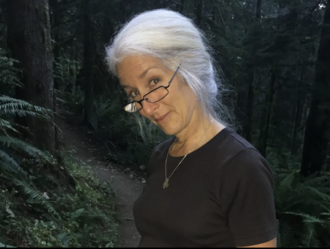
Dr. Phoebe Barnard is an American global change scientist and professor of conservation biology and environmental futures at the University of Washington. She writes extensively on the vulnerability of biodiversity and ecosystems to climate and land use change.
Phoebe is a member of several global initiatives including the Club of Rome‘s Planetary Emergency Partnership, one of five core co-authors of the 2020 paper World Scientists’ Warning of a Climate Emergency, lead author of the action-focused 2021 World Scientists’ Warnings into Action: Local to Global, second of 11 co-authors of the 2023 World Scientists’ Warning: the Behavioural Crisis Driving Ecological Overshoot, a provocative collaboration of scientists, educators and global marketing strategists.
She is also a major co-author of Earth at Risk: an Urgent Call to End the Age of Destruction and Forge a Just and Sustainable Future.
PG: Why does biodiversity not get the attention it rightly deserves?
PB: We do have a tunnel vision approach to our problems. I think it must be a function of our dominating western, colonizing society with its power relationships, reductionist science, individualism and broken relationship with Nature. We are used to looking at problems through a narrow gaze and as a result, we fail to see that virtually all our problems, whether societal or environmental, are as a result of common root causes. We don’t see our cultural dominance as part of the problem, but in my view it certainly is. We have a kind of disturbing human supremacy, and cultural arrogance, which also devalues and commodifies both our relationships with Nature, and with each other. This is desperately tragic.
The good news, though, of course is that by treating the root causes – which I see as our human numbers, appetites, and mindsets (or our population, hyper-consumption and attitudes), we can solve most of our problems all at once. And that requires a spiritual and values change, which will enable economic, social-cultural and political change. Everything flows from that.
“We have a kind of disturbing human supremacy, and cultural arrogance, which also devalues and commodifies both our relationships with Nature, and with each other”
PG: Don’t you think the political reality of today undermines bioregionalism?
PB: Yes, I do think so, especially in the USA and countries which have copied its economic and social approaches in the interests of building affluence. Australia and Canada especially come to mind, but also increasingly India, China, Brazil, Kazakhstan … the list goes on. It seems to be a particularly vile Commonwealth arrogance and profiteering mindset. Personally, and I’m invoking a family joke here, “if I were god,” I would probably place a selection of indigenous and tribal governments, and the governments of Bhutan, Costa Rica, Namibia and all the Nordic countries in charge of establishing a new global economy and united Earth Charter (I’m working on bringing all the siloed existing attempts together!) to guide governments who want to move into the future. Not every government will wish to do so, and maybe that’s fine. Let people vote with their feet, but we need to be aware that climate change is forcing people onto their feet by the hundreds of millions, too.
It is better that we manage land and waters via bioregions than by essentially colonial straight lines, or lines along rivers. African countries, and others, have been managing transboundary water basins and mountain ranges fairly effectively for decades with bioregional management. A North American-based global initiative, the Department of Bioregions, is trying to develop just that, with gentle but profound social and environmental reframing in the kind of society we wish to have, and how we might get there.
PG: Alaskan rivers are turning orange due to permafrost thawing? What are the adverse implications downstream?
PB: This is a truly distressing process. The thawing of permafrost – in the Northern Hemisphere, about one-fourth of the entire hemisphere – is unleashing a cascade of changes along with minerals like iron, cadmium, nickel and mercury, which turn rivers orange, acid, and biologically dead through acidity and toxicity. As a scientist said, “it’s a Pandora’s icebox of unexpected consequences.” The implications of this for tundra biodiversity, including for human settlements and cities downstream, are profound.
“But for those who have taken care of these lands for millennia, the removal of dams allows immense healing to be done from many wounds of land theft, genocide and cultural and economic wounds.”
To me, this shows how we are entering a whirlwind of dynamic planetary change – but it’s worse than that sounds. It’s an ecological unraveling at huge scale and rapid speed. Now, this must have happened with every rapid thaw of the planet after ice ages. We know that Earth is incredibly dynamic, with speciation often happening explosively, and extinction happening, well, like an oxygen-choked implosion. But although we scientists are still trying to assess its impacts, they will inevitably be severe. They will inevitably cause extinctions, human and other species illness, and the loss of Indigenous cultures and settlements in the far North. To my knowledge, we have never seen such events at such scale in recorded human history.
PG: Early days of hydro-dams being dismantled and rivers being freed. Is it good news for salmons, Indigenous Peoples?
PB: Yes, of course it is great news. Rivers are the lifeblood for all of us, and especially for salmon and Indigenous river tribes – all the tribes in the coastal Pacific Northwest are salmon people. An elder of the Lower Elwha Tribe, whom I met one evening at a student conference, spoke to me about the degree to which his people could breathe again, with the river running free. I also feel that way. But for those who have taken care of these lands for millennia, the removal of dams allows immense healing to be done from many wounds of land theft, genocide and cultural and economic wounds.
I am lucky to live on the only river – the Skagit River which runs from highlands in Canada down through the Cascade Mountains to an estuary at Fir Island, Washington – with all five salmon species – Chinook, coho, pink, sockeye, and chum. It’s the only river in Washington State with healthy populations of all five, and one of only a few watersheds in the entire continental USA. Cutting off these rivers with dams is not only a cultural affront and obscenity, it’s also of course an ecological obscenity with many consequences for river and ocean fauna and flora. Among these consequences is the endangerment of predators like orcas, Southern Resident Killer Whales, which are culturally, ecologically and economically important to virtually all people in our region.
PG: Deforestation of boreal forests/ old growth (whatever is left) goes on relentlessly? To top it all – fossil fuel extraction. Aren’t these recipes for irreversible disaster?
PB: Yes. A sure shot recipe. And yes, irreversible on a human timescale. Perhaps not in an aeon timescale, but we are leaving a gravely denuded, abused, depleted world crying out from our abuse. Surely we can learn better from our horrendous mistakes of the last two centuries of western individualism, extraction, profiteering, domination, and entitlement.
PG: Indiscriminate use of glyphosate and aggressive firefighting – ignoring Indigenous practices. Where are we headed?
PB: The USA is particularly corrupt in this way. I say corrupt because it’s not just ignorant management that leads people to use glyphosate or to prioritize timberlands, it’s the inevitable consequence of deliberate profiteering, corruption of policymakers, and an extractive, entitlement mentality. Most of us are by now completely aware how horrific this corruption is. The trouble is, unlike many African, Asian and European countries, this corruption in the USA is alarmingly quite legal. And, of course, those who benefit from the system are finding cruel and ridiculous ways to protect their interests.
“The trouble is, unlike many African, Asian and European countries, this corruption in the USA is alarmingly quite legal”
As I sometimes say about our path forward: the road is short (to 2030 and 2050), the hill is steep, the odds are long, and the vested interests have sharp teeth and claws. But we have no choice but to face them down, or risk annihilation for our own species and literally millions of others.
PG: What is your vision for the Cascadia bio-region? How could it be replicated in other unique bio-regions?
PB: I am happy to say that many people in the Cascadia bioregion share my vision – of a kinder, wiser, more humble, much more collaborative and sustainable society which has learned from its mistakes and lives much more lightly. In this vision, which isn’t a utopia, but certainly has retreated from its headlong hurdle towards dystopia, people with historical or recent wealth – and we have thousands in our area, especially in Seattle – have joined those few millionaires and billionaires who actually are leading change.
We will have a highly democratic and much more egalitarian style of governance, rooted in the progressive ideals that this region is known for but learning to listen to those of more conservative mindsets. We will have learned to work in a unifying way to repair our watersheds, forests and farmlands. It will be a slow process, and there will be many stresses, especially from those who resist change and wish to dominate the economy. But our vision is regenerative, collaborative, and nourishing, and we believe enough people will come to join us in time.
PG: Grateful thanks for these candid insights, Phoebe. My best wishes for your sense of optimism despite all that is happening around, as of now.
“A bird doesn’t sing because it has an answer, it sings because it has a song” – Maya Angelou

This meditative seagull is a resident of Centennial Park, Puget Sound
Birds, bees, butterflies are angels of biodiversity and ecological services (BECS). The hardy service providers that keep Nature abuzz have a critical mission. Over half the world’s total GDP – is moderately or highly dependent on nature and its services and, as a result, exposed to risks from nature. It wouldn’t take rocket science to figure out what might result if say birds went amiss.
Last three months of closely following the US media there was one thing that gave me hope. Despite all the flooding, drought, hurricanes and forest fires news – it was the serious concern for one of nature’s great wonders – migrating birds.
As they seasonally flit between breeding and wintering grounds twice a year. North to south or south to north. It is an inherently risky process, due to predation and mortality.
Turn off the lights
“Keep an eye out for feathered friends Thursday night”, reminds the Iowa Department of Natural Resources (DNR). It recommended that “Iowans be courteous and keep off unnecessary lighting to help birds find their way and reduce collisions…Keep your small pets inside, too”.
The Cornell Lab of Ornithology said peak migration traffic in Iowa includes more than 400,000 birds. Just Wednesday night, nearly 100,000 flew across the state”.
Birds usually begin to migrate 30 to 45 minutes after sunset, with the greatest number in flight two to three hours later, The Cornell Lab of Ornithology said online.
The eastern wood-peewee, American redstart, magnolia warbler and more will be among the nocturnal migrants in Iowa, according to The Cornell Lab of Ornithology.
“City lights confuse them as birds migrate into Oklahoma” – experts urge people to turn off lights at night.


Meditative to a yogic mode…
Virtues
What birds eat is often just as ecologically important as where they poop. For example, many birds are voracious predators of pests. Barn Swallows can consume as many as 60 insects an hour. Over an agricultural field, swallows rescue pest-prone crops and leave more food for us.
And installing Barn Owl boxes on farms reduces populations of destructive rodents, like gophers. Similarly, putting up nest boxes for Western Bluebirds can save grapes on vineyards. In this way, promoting and protecting bird habitat is a great alternative to widely used, harmful pesticides.
Night sky
Wisconsin naturalist Bill Volkert quoted in WPR: “During peak migration, more than 15 million birds can journey through Wisconsin skies in one night. These species join thousands of other birds making their way south for the winter”.
Hundreds of thousands of birds are migrating over the Pittsburgh area. Here’s how you can mitigate light pollution says CBS News. Peak migration season is typically mid-August to mid-October, and 200 million birds are predicted to migrate across the country on Monday night, it says.
They migrate at night because they use the stars and the moon to help with navigation,” said Rachel Handel, the communications director for the Audubon Society of Western Pennsylvania.
But Handel says Light pollution can be a big problem for birds on the move, says Handel. “That could be as big as stadium lights or really as small as keeping a light on in your home late at night. Those lights can distract the birds when they’re flying. That can lead to overexertion, that can lead to them becoming confused.”
Helping the hummingbirds
From Alaska to Mexico, many hummingbirds travel astonishing distances during late summer. These colorful pollinators will be spotted in many states as they journey southwards. In northern, cooler US hardiness zones, such as in Alaska or Michigan, this migration will happen much sooner than in southern locations, such as California or Florida, where some hummingbirds may even remain for the winter.
“There are hundreds of native flowers that attract hummingbirds. Here in Florida, hummingbirds love to feast on the nectar of flame vine, fire bush or the firecracker plant, just be sure to leave blooms and stems on the plant until the fall”, advises wildlife expert Melissa Lackey
A recent study by the University of Wyoming confirms the importance of native plants, stating that many hummingbird species are specialists, feeding only on one or a few species of flowering plants. Ensuring that we grow native plants in our yards is, therefore, vital.
Sadly, over 191 hummingbird species from across the Americas are experiencing declining population trends, but there are ways you can help native species as they commence their migration – here are some wildlife garden ideas from homesandgardens.com
Teaming up
And did you know that different bird species may team up for migration. A new study in the journal Proceedings of the National Academy of Sciences suggests that this mixing and mingling might not be coincidental.
Different bird species could have their own social networks that might boost each other’s survival.
Increasingly dangerous
Migrating birds will face many challenges during their flights south. Their winter and summer habitats are shrinking, as well as the stopover sites they use as refuge while they rest and refuel. There are tall buildings with deceiving windows, looming communication towers and predatory outdoor cats.
Essentially the world is getting more dangerous for birds, reminds Volkert.
Evolved with hurricanes
Both Hurricane Milton and Helene coincide with the fall migration of birds in North America. Scientists say such storms can be deadly for birds, but many species have ways to cope with hurricanes; some even benefit, writes Mongabay.
Birds evolved with hurricanes but climate change is fueling more frequent strong storms, and that change in intensity “has the potential to change migration patterns in ways that we don’t necessarily understand,” Andrew Farnsworth, visiting scientist at the Cornell Lab of Ornithology, quoted by Mongabay.
An appeal
“Join the 10 Million Acre Challenge and bring habitat back for birds with American Bird Conservancy (ABC)!” Goes this appeal.
Over the past 30 years, thanks to dedicated members and supporters, ABC has helped conserve millions of acres of habitat for birds. More than 3,000 bird species, many of them endangered or declining in population, have now benefited from habitat conserved by ABC and its dozens of partners. That’s 30% of the world’s total bird species!
We need them
Birds make big contributions across habitats, and they’re crucial for people and the planet to thrive. When avian species are lost, their particular functions and benefits disappear, too. And introduced species can’t easily replace the critical roles of native ones, according to a new study published in Science Advances. That means holding onto the bird diversity we have is paramount.
Birds are canaries in the coal mine. Can we afford another Silent Spring?
October 4, 2024
Alexander Martin writes: https://therecord.media/cyber-insurance-ransomware-payments-anne-neuberger-op-ed

Does #insurance incentivize #extortion payments in #ransomware attacks?
 The Diversity Blog