Chartered Insurance Institute Blog
October 3, 2024

https://thejournal.cii.co.uk/2024/10/03/dangers-new-asbestos

Illuminem
October 2, 2024
My blog interview also published here:

Talking to the inimitable Dr. Mark Trexler is always a pleasure.
If you do wish to indulge in some ‘Trexlerian’ wit in the Time of #ClimateBreakdown, this is what you will surely find here:
Tells me why all students at Arizona State University, beginning this fall, must take a class on sustainability – “is a great initiative, although seems radically insufficient and decades too late in coming!’’
Recognises: “Systems thinking is a prerequisite to solving problems, but is far from the solution”.
The role of Milton Friedman (and Ayn Rand) in landing us where we are today.
“An obvious contradiction between focusing on shareholder returns while promoting voluntary pursuit of ESG”.
“Why would we expect insurers (or any company) to really prioritize double materiality?”
That insurers “are probably one of the most resilient sectors to physical climate risks, and they’ll make money as other risks get worse as well”.
And: “If we prohibited insurance companies from rapidly increasing premiums, or dropping lots of policies, in principle we would incentivize them to take climate change more seriously”.
September 29
Shared on LinkedIn: from the Week
Author and former diplomat Navtej Sarna paints an unfolding dystopia.
Were the Homo sapiens ever so resolved to self-destroy? Does it matter if we butcher the keystone species, pollute the Planet, destroy the magical Biodiversity?
Does it really matter if some idiots question ‘what climate change’? Does it matter “when widows howl and orphans cry”? Were we ever so close to success?
https://www.theweek.in/columns/navtej-sarna/2024/09/28/when-widows-howl-and-orphans-cry.amp.html
Reshared on LinkedIn
September 28, 2024
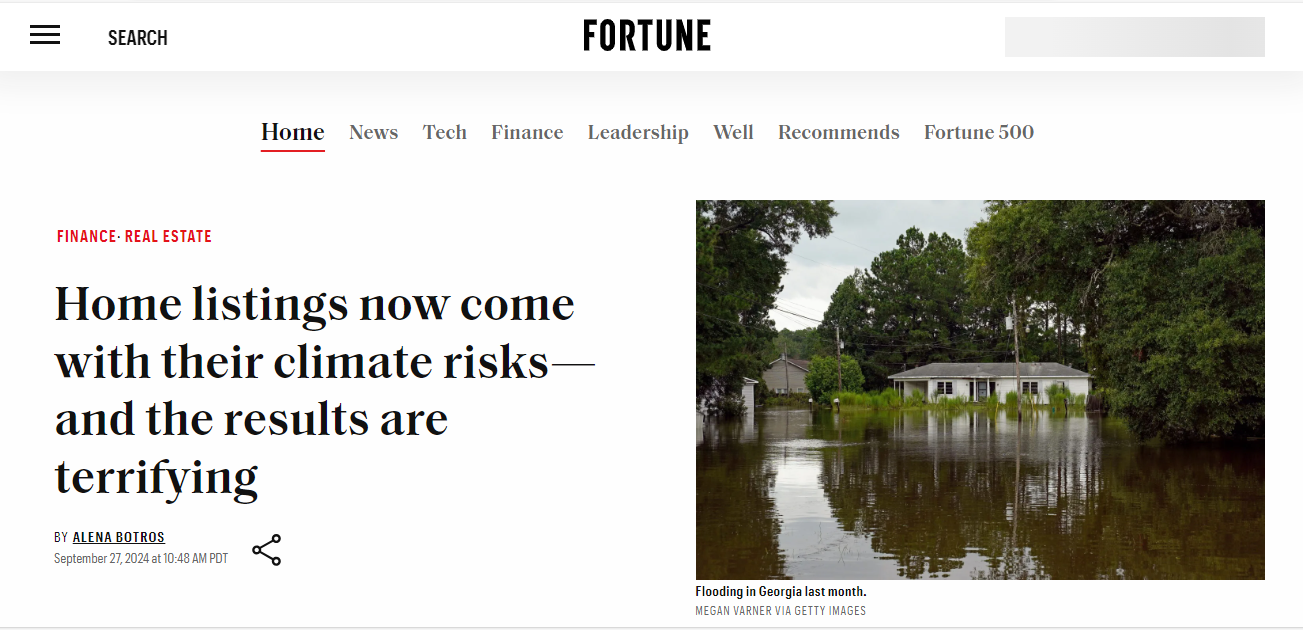
An #uninsurable #home isn’t great: Growing #insurance crisis in the US.
https://lnkd.in/dHESRyqY
https://fortune.com/2024/09/27/home-listings-climate-risks-zillow-floods-wildfire-extreme-heat-wind/
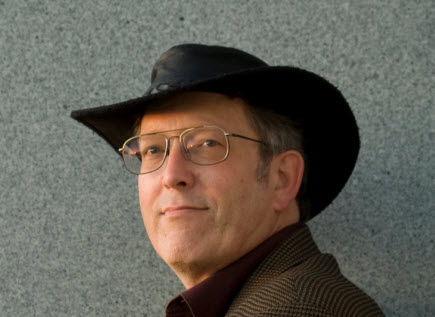
Dr. Mark C. Trexler directs the Climatographers’ work on climate risk knowledge management. He was previously Director of Climate Risk for DNV based in Oslo, Norway, and prior to that directed Global Consulting Services for EcoSecurities. His work on climate change dates back to the World Resources Institute (1988-1991), and as President of Trexler Climate + Energy Services (TC+ES) from 1991 to 2007. TC+ES was the first consulting firm in the United States to specialize in business climate change risk management.
In addition to private-sector clients around the world, Mark has worked with national and international clients including The Nature Conservancy, the United Nations Development Programme, the U.S. Environmental Protection Agency, and the Global Environment Facility.
Mark is widely published on the technical and policy issues relating to climate change mitigation and carbon markets, has served as a Lead Author for the Intergovernmental Panel on Climate Change (IPCC), and is a member of the editorial board of Mitigation and Adaptation Strategies, a leading climate journal. Mark’s graduate degrees are from UC Berkeley, he has spent almost 10 years living abroad, and speaks five languages.
PG: Beginning this fall, all students at Arizona State University are now also required to take a class on sustainability. How good a beginning and what should follow next?
MT: When you and I were on the phone I think I recall seeing a reference to the fact this requirement could be met with a course in wildlife conservation. I thought that was silly. But when I did go deeper into the actual requirement this is what I find:
“The Sustainability requirement provides students with an interdisciplinary understanding of socio-ecological systems in relation to global challenges and opportunities. The learning objectives emphasize systems thinking, where human and non-human systems are understood as intimately connected, with human actions affecting all life on a planet with limits and boundaries. Students should also become familiar with how cultural, political, economic, social and ethical beliefs, practices and systems are related to and impact planetary systems. Students will use course concepts and systems and futures thinking to address contemporary questions or challenges.
Learning outcomes
Upon completion of a course in Sustainability, students will be able to do the following:
- demonstrate an understanding of the earth and its ecosphere, including the measures that indicate their capacities and limits
- trace historical impacts of a range of socio-economic, political or cultural choices on integrated human-environmental well-being
- envision pathways toward futures characterized by integrated human-environmental well-being
- articulate an approach to addressing contemporary questions or challenges that employs concepts or practices of sustainability”
That doesn’t sound half-bad! Don’t really know why it’s called a “sustainability requirement,” which is pretty close to being a meaningless term. In terms of the content, I think it’s appalling in today’s world that most students are graduating from college having met math requirements that they’ll never have use for again, while this kind of absolutely foundational understanding of human/environmental systems is apparently not required at all. So I guess this is a great initiative, although seems radically insufficient and decades too late in coming!
“It’s appalling in today’s world that most students are graduating from college having met math requirements that they’ll never have use for again, while this kind of absolutely foundational understanding of human/environmental systems is apparently not required at all.
PG: As a champion of systems thinking, do you believe that to be the ideal way forward?
MT: Well, that makes it sounds like systems thinking could be “the” silver bullet. Yet that is entirely at odds with the whole premise of systems thinking. I think systems thinking is critical to tackling any Risk 2.0 problem in today’s world. But that’s just the beginning of the story. You still have to figure out how to communicate, teach, and learn the substance of the system you’re talking about (at whatever level is appropriate, from K-12 on up). Systems thinking is a prerequisite to solving problems, but is far from the solution.
PG: How do you reconcile with the fact that Jack Welch, “The Man Who Broke Capitalism” and “destroyer of corporate America”, continues to inspire multiple generations. As does Ayn Rand?
MT: You know, I’d have a hard time besting ChatGPT’s answer to this question! https://chatgpt.com/share/66f5e6ac-ec98-800d-838b-4485c11de632 😊 😊 There’s one paragraph in there that strikes me as particularly telling. Namely that successful people (and the people that want to emulate them) have every confirmation bias reason to want to believe that it was THEIR individual traits and hard work that accounts for their success, and that if government would just get out of the way they could accomplish so much more that could then trickle down to everyone else. That is clearly the story that will make them feel best about themselves. It’s sort of like asking whether the King of England believes in the monarchy and expecting a “no.” It’s almost a tautological question.
PG: While Welch credited Peter Drucker as his inspiration – he amplified Milton Friedman’s mantra on shareholder. Hasn’t it brought us where we are/headed?
MT: Well, in many respects Peter Drucker’s focus on management efficiency and Milton Friedman’s focus on shareholder returns are perfectly consistent. And in all fairness to Milton Friedman, companies were ignoring economic externalities long before Milton Friedman gave them “permission” to do so in the interests of shareholders. I suspect that Milton Friedman might have recognized the “small world model” nature of his argument, and might have argued that as part of that small world model government is regulating companies to ensure that necessary externalities are internalized.
“”And the oil companies have done their best to interfere with efforts to solve that problem, but that is a far cry from demonstrating that they “caused” the problem.
In some ways suggesting that Milton Friedman has brought us to where we are/headed is analogous to saying that oil company misinformation has brought us to where we are/headed on climate change. There is certainly an element of truth there, and easy to treat Friedman and oil companies as the scapegoat. But in the case of climate change, the much bigger issue is that fossil fuels are an amazingly convenient and low-cost way of powering things like industrial revolutions, economic growth, and the global middle class. They just have “one small problem” in the form of releasing millions of years of natural carbon storage back into the atmosphere in a very short timeframe. And the oil companies have done their best to interfere with efforts to solve that problem, but that is a far cry from demonstrating that they “caused” the problem.
PG: Do you think this ongoing obsession with shareholders undermines the effectiveness of Environmental, Social and Governance (ESG)?
MT: There is an obvious contradiction between focusing on shareholder returns while promoting voluntary pursuit of ESG. Focusing on shareholder concerns implicitly gives a company permission to heavily discount the future, to take advantage of economic externalities, to play down worker health and safety, et., all of which are fundamentally at odds with the stated goals of ESG. In what world can both be achieved? Certainly not in a world in which everything is left up to companies to decide, without the guidance of public policies and measures.
PG: Could this overarching influence also be responsible for insurers missing out on the double materiality and thus continue being reactive?
MT: In what sense are insurers “missing out on double materiality?” Why would we expect insurers (or any company) to really prioritize double materiality? Why is it their responsibility to look out for societal interests under our economic and political systems?
“Insurance companies have a lot of flexibility to adapt to climate change by changing premiums, by changing what they will insure, etc. etc.
PG: What must immediately change if insurers must make a course correction to educate the rank and file?
MT: Again, why “must they” make a course correction. Insurance companies have a lot of flexibility to adapt to climate change by changing premiums, by changing what they will insure, etc. etc. They are probably one of the most resilient sectors to physical climate risks, and they’ll make money as other risks get worse as well. I’ve never figured out why we would expect insurance companies to lead the charge when it comes to educating the rank and file. If we prohibited insurance companies from rapidly increasing premiums, or dropping lots of policies, in principle we would incentivize them to take climate change more seriously. But at this point we’d probably just be pushing them towards bankruptcy (since it will take too much time to change the course of climate change).
PG: Many thanks Mark for this very ‘Trexlerian’ perspective! Much appreciate your sense of humour in the Time of Climate Breakdown.
Illuminem
September 22, 2024
My blog interview with Rob de Laet also published by Illuminem: https://illuminem.com/illuminemvoices/tunnel-vision-has-overshadowed-the-need-to-cool-the-planet

Illuminem
September 4, 2014

https://illuminem.com/illuminemvoices/we-are-all-in-the-same-boat-lets-not-rock-it
The ‘Bayesian’ tragedy – first reported case of a billionaire consumed by climate violence – according to current estimates will cost insurers USD 150 million. An unsinkable super yacht going down may have repercussions on the insurance cost of keeping this class of vessels afloat.
Insurers will, however, not factor in pricing of externalities. It is not just about carbon emissions. Oceans are a critical climate regulator. All forms of shipping damage biodiversity and pollute heavily – the cost gets spread inequitably across the planet. With the likes of a ‘deteriorating’ Atlantic Meridional Ocean Current (#AMOC) staring us in the face, should we be burying our heads in the sand?
We are all in the same boat, let’s not rock it!

Rob de Laet is a principal member of the EcoRestoration Alliance and fellow of the Global Evergreening Alliance. Together with Peter Bunyard and others – he is developing the Cooling Climate Chaos project, to reverse the climate crisis fast. Working from the Lovelockian Gaia perspective to restore the Earth’s metabolisms through the restoration of the water cycles and regeneration of the biosphere. Three tipping points need to be averted right now to avoid wholesale civilizational collapse: the dieback of the Amazon Rainforest, the collapse of ocean biology and the collapse of Arctic Sea ice. This can be done if the world wakes up and acts at the speed and scale needed.
Dutch born Rob is a world traveller, serial-entrepreneur, building an international eco-tourism company with partnerships in seventeen countries, philosopher, climate activist, rewilding a damaged part of the Brazilian rainforest and working to avert the dieback of the Amazon Rainforest by strengthening the biotic pump over the area.
PG: Your diagnosis of the current malady?
RDL: Our planet’s natural cooling mechanisms are severely impaired, primarily due to the widespread destruction of ecosystems. While mainstream climate science focuses heavily on carbon dioxide and greenhouse gases, it often overlooks the critical role that living ecosystems, particularly forests, play in regulating the Earth’s temperature. The process of evapotranspiration, where plants release water vapor through their leaves, is a powerful cooling mechanism. This process not only helps to cool the air directly but also contributes to cloud formation, which further reflects sunlight and reduces warming. The degradation of these natural systems has disrupted this cooling cycle, leading to increased global temperatures and more extreme weather events. In essence, we’ve damaged the planet’s ability to cool itself.
PG: What’s your prescription in ‘Cooling Climate Chaos: A Proposal to Cool the Planet within Twenty Years’ – your book with Peter Bunyard?
RDL: Our prescription is a global, coordinated effort to restore the Earth’s natural cooling systems by regenerating ecosystems at scale. This involves strategic reforestation, restoring degraded lands, and supporting smallholder farmers and Indigenous communities to transition to regenerative practices. The effect is largest in the tropics as more sunlight comes in, so the focus should largely be there.
We propose a comprehensive plan that focuses on enhancing the water cycle through increased vegetation cover, which can stabilize temperatures and even reverse warming within two decades. Our approach also includes ocean restoration, which is critical for sequestering carbon and restoring marine ecosystems that play a vital role in cooling the planet also through cloud forming and creating precipitation. It’s a holistic strategy that addresses the root causes of climate instability by leveraging the Earth’s inherent capabilities to regulate its own climate if we support and allow the ecosystems to recover fast.
“We propose a comprehensive plan that focuses on enhancing the water cycle through increased vegetation cover, which can stabilize temperatures and even reverse warming within two decades.
PG: Isn’t there an excessive focus on decarbonisation?
RDL: While decarbonization is essential, it’s only part of the solution. The excessive tunnel vision focus on reducing carbon emissions has overshadowed the need to restore and protect the biosphere, which regulates our climate through the water cycle. Decarbonization addresses the symptoms of climate change, but without repairing the damage to our ecosystems, we won’t address the underlying causes. The Earth’s natural systems, when healthy, can absorb and neutralize carbon far more effectively than any artificial means. We must balance our efforts by focusing not only on reducing emissions but also on restoring the natural processes that keep the planet cool and stable.
PG: Are the oceans receiving due attention? How do you restore their biology?
RDL: The oceans have not received the attention they deserve in climate discussions. Oceans are crucial to the Earth’s climate system, acting as both a carbon sink and a regulator of global temperatures. To restore ocean biology, we need to implement large-scale marine ecosystem restoration projects, including the revival of coastal habitats like mangroves and seagrass beds, which sequester significant amounts of carbon. Additionally, we must address overfishing, pollution, and sedimentation that disrupt marine life. Restoring phytoplankton levels, which form the base of the oceanic food chain and play a key role in carbon sequestration, is also critical. They also trigger zooplankton blooms which take better care of the vertical mixing of the ocean water column, making surface waters cooler. By restoring these ecosystems, we can enhance the ocean’s capacity to absorb carbon and cool the planet.
PG: Any thoughts on slowing the Arctic and Antarctica meltdown?
RDL: Slowing the melting of polar regions requires urgent action on multiple fronts. One approach is to restore large, forested areas globally, which can enhance the biotic pump – a process where forests draw moisture inland from the oceans, increasing precipitation and cooling the land. This can help stabilize the jet streams and weather patterns that are currently contributing to polar warming. While this is not researched science I am pretty sure that if the Midwest of the US would have more forested areas, the moisture streams pulled in from the Gulf of Mexico would travel much further north. Thereby leading to more snow in the Canadian Arctic and Greenland, increasing their albedo, cooling the area reflectively, decreasing with that polar amplification and straightening and speeding up the Arctic Jetstream which would keep the Arctic cooler. This will keep permafrost better frozen and result into less meandering Rossby waves that now lead to extreme weather in the temperate regions. And even to things like massive flooding in Pakistan while in Russia the forests were burning and the wheat harvest were withering under drought and heat.
“The ultimate solution lies in reducing the Earth’s overall energy imbalance by restoring ecosystems worldwide.
Additionally, we should explore Nature-based solutions (NbS) like enhancing cloud cover over the poles through marine cloud brightening, which could reflect more sunlight and slow the melting. If we increase global cloud cover by 1-2 percent the Earth Energy Imbalance would be solved and the Earth would not warm up any longer. While these methods may buy us time, the ultimate solution lies in reducing the Earth’s overall energy imbalance by restoring ecosystems worldwide.
PG: Given your exposure, do you see Global South leading the world out of the current mess?
RDL: I see a lot of positive energy among the youth, especially in large Asian countries and Africa. I think they can lead the way to regenerative climate restoration. Also the Indigenous folks and the large armies of rural small holders, if they get the chance would grab the opportunity to restore nature and their degraded lands, because they understand the land and food production very well, unlike the urban population who has no clue.
The Indigenous people often view the Earth as a living organism that must be nurtured, rather than a resource to be exploited. Many Indigenous cultures in the Global South have long understood the importance of maintaining harmony with nature, which aligns closely with our proposals for climate restoration. These regions are also where some of the most effective, large-scale ecological restoration projects can take place, particularly in the tropics, where vegetation has a powerful cooling effect. With the right support, the Global South could indeed lead the world in implementing the necessary changes to restore our planet’s climate. Their leadership, grounded in traditional knowledge and innovative practices, could set a powerful example for the rest of the world.
PG: Many thanks Rob for sharing your prescription to cool down an overheated and damaged biosphere. All good wishes in your endeavour.
Illuminem.com
August 21, 2024


My conversation with Dr Claudia Dias Soares:
https://www.linkedin.com/feed/update/urn:li:activity:7231845247733878784/
“Financial institutions’ balance sheets are heavily reliant on #ecosystemservices – such as pollination, water purification, and climate regulation – provided by a diverse and functioning natural world. And financial supervisors in the European Union (EU) are recognising this fact” – is a truly refreshing insight from her.
Claudia helps me connect some critical dots for legislative bodies to adopt more agile and adaptive frameworks. She also flags an urgent need for more proactive climate actions via expedited processes. Talking about the growing movement for climate accountability and the need for robust sanctions, she explains: “Such sanctions are not only crucial for compensating affected communities and mitigating further harm but also for deterring future misconduct”.
She is mindful: “Legislative frameworks often provide governments with substantial powers to address climate change, but the effectiveness of these powers can vary significantly… Additionally, capacity building and financial mechanisms are crucial to ensure that governments can act decisively and effectively. These resources are not always available…or made available!”
That the forthcoming advisory opinion from the International Court of Justice (ICJ) on the Obligations of States in respect of Climate Change is poised to play a pivotal role in defending the interests of future generations – is something to really cheer about. And there is a lot more.
Thanks for instilling a sense of optimism, Claudia.
 The Diversity Blog