
Dr. Claudia Dias Soares is a distinguished legal professional with extensive expertise in Law & Policy for Sustainable Transition through Public & Private Finance. With a rich background spanning academia, research, and consultancy, Claudia has contributed significantly to the field. Previously a policy expert at the European Central Bank, Claudia also served as a law professor at the Portuguese Catholic University (1994-2014). Her academic credentials include two PhDs, two MPhil degrees, and various other qualifications in Law, Management, and Educational Sciences.
Claudia has held visiting scholar positions at prestigious institutions such as Goethe University (Germany), the Danish Ministry of Environment, and Umeå University (Sweden). With over 20 years of experience in research and academia, Claudia has published more than 70 academic works and offered policy consultancy to prominent organizations including the World Bank Group, the European Commission, and the European Environmental Agency.
Active in European legislative processes and international policy, Claudia has been involved in the European Semester (European Union) and contributed to financial and environmental regulatory reforms in several European countries as well as in the European institutions. Her extensive work in European research projects, publication on EU Law, and teaching at European institutions highlights her deep commitment to advancing knowledge and shaping policy in sustainable finance and environmental law.
PG: Do you believe the legislative processes are speedy enough to address the pace of climate breakdown?
CDS: The current legislative processes often struggle to keep pace with the rapid acceleration of climate breakdown. The complexity of climate issues and the need for comprehensive, cross-sectoral responses can lead to delays and inefficiencies in lawmaking. Legislative bodies must adopt more agile and adaptive frameworks, incorporate scientific advancements promptly, and foster international collaboration to address climate challenges more effectively. There is also a need for a more proactive approach, with expedited processes for urgent climate actions.
Moreover, the urgent need to implement effective sanctions for clear breaches of environmental standards has become increasingly apparent in light of recent developments and there is a civil society’s reaction building up. For example, in the US, survivors of natural disasters, including wildfires, floods, and hurricanes, have petitioned the Department of Justice to investigate the oil and gas industry for its alleged role in exacerbating climate change and worsening these disasters (see https://www.linkedin.com/feed/update/urn:li:activity:7230136281765220352?utm_source=share&utm_medium=member_desktop). Their compelling call for accountability is rooted in the belief that the industry’s long-standing awareness of the environmental risks posed by its products, coupled with efforts to obscure this knowledge and mislead the public, constitutes a form of climate crime. Over 1,000 survivors have signed a letter demanding a federal investigation, arguing that the industry’s actions have directly contributed to the escalating frequency and severity of climate-related catastrophes.
This growing movement for climate accountability underscores the need for robust sanctions, including civil and criminal penalties, to address the industry’s disinformation campaigns and environmental damage. Such sanctions are not only crucial for compensating affected communities and mitigating further harm but also for deterring future misconduct. By imposing stringent penalties on those who flagrantly breach environmental standards, the legal system can enhance its role in protecting both the environment and public health, ensuring that perpetrators of climate harm are held accountable and that justice is served.
PG: Do legislative frameworks empower governments well enough?
CDS: Legislative frameworks often provide governments with substantial powers to address climate change, but the effectiveness of these powers can vary significantly. Effective empowerment requires not only clear legal mandates but also adequate resources, technical support, and political will. Governments must be equipped with the authority to implement and enforce policies, as well as to engage stakeholders in the transition process. Additionally, capacity building and financial mechanisms are crucial to ensure that governments can act decisively and effectively. These resources are not always available…or made available!
PG: A significant focus is on immediate, rapid, and large-scale reduction in greenhouse gas emissions. Don’t you think biodiversity loss and pollution get lesser attention?
CDS: While greenhouse gas reduction is critical, it is equally important to address biodiversity loss and pollution, which are deeply interconnected with climate change. Legal frameworks must integrate biodiversity conservation and pollution control into climate strategies. Effective legislation should encompass holistic environmental protection, ensuring that efforts to mitigate climate change do not inadvertently neglect or exacerbate other ecological issues. A balanced approach is essential for long-term sustainability.
The urgent focus on immediate, rapid, and large-scale reductions in greenhouse gas emissions is driven by the understanding that many other environmental impacts are intrinsically linked to the concentration of these gases in the atmosphere. Addressing greenhouse gas emissions is not just a priority; it is a foundational action that underpins efforts to combat climate change and its cascading effects on ecosystems, weather patterns, and global health.
“This dual focus on reducing greenhouse gas emissions and safeguarding biodiversity reflects a comprehensive approach to environmental stewardship that acknowledges the complex interdependencies between the natural world and economic systems.
However, within the European Union, the protection of biodiversity has been gaining significant momentum alongside climate efforts. This shift is largely influenced by the realization that financial stability is deeply interconnected with the health of ecosystems. Financial supervisors have increasingly recognized that financial institutions’ balance sheets are heavily reliant on ecosystem services – such as pollination, water purification, and climate regulation – that are provided by a diverse and functioning natural world. As a result, any threat to biodiversity is now seen as a direct threat to financial stability, prompting the EU to integrate biodiversity protection more robustly into its regulatory frameworks. This dual focus on reducing greenhouse gas emissions and safeguarding biodiversity reflects a comprehensive approach to environmental stewardship that acknowledges the complex interdependencies between the natural world and economic systems.
PG: Our oceans account for 71% of the planetary surface and are a critical regulator of climate. Are you mindful of this while formulating regulations?
CDS: Absolutely. The role of oceans in regulating climate and supporting biodiversity is crucial. Regulations must reflect this by incorporating marine conservation and sustainable management principles. Policies should address ocean acidification, marine pollution, and overfishing, and promote the protection of marine ecosystems. Effective regulation requires a comprehensive approach that recognizes the oceans’ integral role in climate stability and ecological health.
Oceans are increasingly becoming a focal point in European Union environmental policy, particularly within the framework of the “blue economy,” which emphasizes the sustainable use of ocean resources for economic growth, improved livelihoods, and ecosystem health. Recognizing that oceans are not only vital for the climate system – acting as the planet’s largest carbon sink and a crucial regulator of climate -but also for the economy, the EU has been advancing policies that promote the sustainable management of marine resources. This includes initiatives aimed at protecting marine biodiversity, combating illegal fishing, reducing marine pollution, and fostering innovation in sustainable marine industries, such as renewable energy, aquaculture, and marine biotechnology.
On a personal note, let me tell you that, for someone coming from Portugal, the oceans hold an even deeper, affective value! Portugal, with its extensive coastline and rich maritime history, has always had a close relationship with the sea. The ocean is integral to the nation’s identity, culture, and economy, serving as a source of livelihood, inspiration, and recreation for its people. The Portuguese have a profound respect for the sea, viewing it not just as a resource to be managed but as a cherished part of their heritage that must be protected for future generations.
This personal and cultural connection amplifies the significance of the EU’s blue economy policies for those from coastal nations like Portugal, where the health of the oceans is directly linked to the well-being of the community, the preservation of traditions, and the sustainability of economic activities that have been passed down through generations. The EU’s increasing emphasis on the blue economy resonates strongly in Portugal, where the sea is more than just a policy issue – it’s a way of life.
Fun-fact: the European Maritime Safety Agency (EMSA), which offers technical expertise and operational assistance in maritime safety, security and pollution, is headquartered in Lisbon!
PG: What comes in the way of enacting regulations against harmful effects of fossil fuel?
CDS:** Several factors impede the enactment of stringent regulations against fossil fuels. These include entrenched economic interests, political resistance, and the challenge of transitioning away from established industries. Fossil fuel subsidies and lobbying by energy companies are also hindering progress. Addressing these challenges requires strong political commitment, public support, and the development of alternative energy solutions to facilitate a smooth transition.
“Fighting greenwashing and the spread of fake news by the fossil fuel industry is crucial for gaining public support in the transition away from fossil fuels.
Fighting greenwashing and the spread of fake news by the fossil fuel industry is crucial for gaining public support in the transition away from fossil fuels. The industry has long employed tactics to downplay the environmental impacts of their operations, misleading the public with false narratives about the sustainability of fossil fuels and the feasibility of cleaner alternatives. These tactics not only hinder the progress of environmental policies but also sow doubt and confusion among the public, weakening the momentum for necessary changes.
By actively combating greenwashing and exposing the misinformation spread by the fossil fuel industry, we can foster a more informed public discourse, build trust in science-based solutions, and galvanize collective action toward a sustainable energy future. Ensuring transparency and accountability in corporate environmental claims – a priority strongly emphasized by the European Union – is crucial for shifting public opinion and garnering widespread support for the urgent transition away from fossil fuels.
PG: Shouldn’t aviation and shipping be brought under the purview of the Paris Agreement?**
CDS: Yes, aviation and shipping are significant sources of greenhouse gas emissions and should be more explicitly integrated into the Paris Agreement framework. Including these sectors would enhance global efforts to mitigate climate change and ensure a more comprehensive approach to emission reductions. This integration would require international cooperation and sector-specific strategies to address the unique challenges posed by these industries.
In the European Union, this integration is already a matter of fact. Aviation and shipping have been increasingly integrated into the Emission Trading Scheme (EU ETS) as part of broader efforts to mitigate climate change. The EU ETS, a cornerstone of the EU’s climate policy, is a market-based mechanism that sets a cap on the total amount of greenhouse gases that can be emitted by covered sectors. Aviation was included in the EU ETS in 2012, requiring airlines operating within the European Economic Area (EEA) to purchase allowances to cover their CO2 emissions. This inclusion aims to incentivize airlines to reduce emissions through improved fuel efficiency and investment in greener technologies.
More recently, the European Commission has taken steps to address emissions from the maritime sector. In July 2021, as part of the “Fit for 55” package, the Commission proposed extending the EU ETS to cover CO2 emissions from maritime transport. Under this proposal, shipping companies would need to buy and surrender allowances for their emissions, starting with voyages within the EEA and gradually extending to all international voyages. This integration of aviation and shipping into the EU ETS represents a significant effort to hold these sectors accountable for their environmental impact and aligns with the EU’s broader goal of achieving climate neutrality by 2050.
PG: Do you believe the emerging laws protect inter-generational interests?
CDS: Emerging laws increasingly recognize the importance of intergenerational equity, but there is still much work to be done. Effective legal frameworks should ensure that the rights and interests of future generations are safeguarded by promoting sustainable development, environmental protection, and resource conservation. Incorporating principles of intergenerational justice into legislation can help ensure that today’s actions do not compromise the well-being of future generations.
“This process could profoundly impact climate justice and the protection of human rights, offering a critical legal tool to safeguard the interests of future generations against the ongoing and escalating threats of climate change.
The forthcoming advisory opinion from the International Court of Justice (ICJ) on the Obligations of States in respect of Climate Change is poised to play a pivotal role in defending the interests of future generations (see https://www.linkedin.com/feed/update/urn:li:activity:7230525874465378304?utm_source=share&utm_medium=member_desktop) . This advisory opinion, which has garnered substantial international engagement with 62 written comments filed by States and organizations, will address critical legal questions about the responsibilities of nations under international law to mitigate climate change impacts. The Court’s opinion is expected to set important precedents regarding State liability for climate-related damage and provide legal frameworks that could influence future litigation and policy-making. This process could profoundly impact climate justice and the protection of human rights, offering a critical legal tool to safeguard the interests of future generations against the ongoing and escalating threats of climate change.
PG: How to ensure ecocide laws work effectively?
CDS: Ecocide, which refers to the extensive destruction of ecosystems through actions such as pollution, deforestation, and habitat destruction, is gaining increasing attention as a potential international crime. Ensuring the effectiveness of ecocide laws involves several key measures. First, defining ecocide clearly and comprehensively in legal terms is essential. Additionally, strong enforcement mechanisms, international cooperation, and robust legal frameworks are necessary to hold perpetrators accountable. Public awareness and support are also crucial for the successful implementation of ecocide laws. Finally, integrating ecocide provisions into broader environmental and human rights frameworks can enhance their effectiveness and impact.
On January 25, 2023, the Parliamentary Assembly of the Council of Europe (PACE) passed a pivotal Resolution urging its 46 member states to officially recognize and codify ecocide as a criminal offense within both national and international legal frameworks. This Resolution also strongly advocated for the amendment of the Rome Statute of the International Criminal Court (ICC) to include ecocide as a distinct crime. It is important to distinguish the Council of Europe and its Parliamentary Assembly from the EU institutions, such as the Council of the EU and the European Parliament, which are part of the European Union’s legislative and decision-making bodies.
The Council of Europe, based in Strasbourg, operates as an international organization focused on human rights, democracy, and the rule of law, and its Parliamentary Assembly, while influential, does not possess legislative authority. Consequently, while the Resolution from PACE does not carry legal force, it plays a significant role in galvanizing global support and advancing the initiative to formally recognize and prosecute ecocide under international law.
However, the European Union is also taking steps towards the adoption of ecocide laws. The legal regime of ecocide within the European Union (EU) represents a progressive step towards addressing severe environmental harm with a robust legal framework. Within the EU, there is a growing movement to integrate ecocide into existing legal structures, reflecting a broader commitment to environmental protection and justice. While the EU does not yet have a specific, consolidated ecocide law, several member states have begun to incorporate ecocide principles into their national legislation. For instance, countries like France and the Netherlands are pioneering efforts to criminalize severe environmental damage, recognizing the profound impact on biodiversity, climate stability, and human health.
At the EU level, the European Parliament has also shown interest in advancing the discussion on ecocide, supporting initiatives that aim to align EU law with global efforts to recognize and prosecute ecocide. This evolving legal landscape highlights the EU’s proactive stance in addressing environmental degradation and its role in fostering international collaboration to establish ecocide as a serious and actionable offense, thereby enhancing the protection of ecosystems and promoting sustainable environmental stewardship across the region.
PG: Appreciate your brilliant insights, Dr. Soares. Best wishes in your endeavour towards adopting agile and adaptive frameworks to address climate challenges more effectively.
August 1, 2024
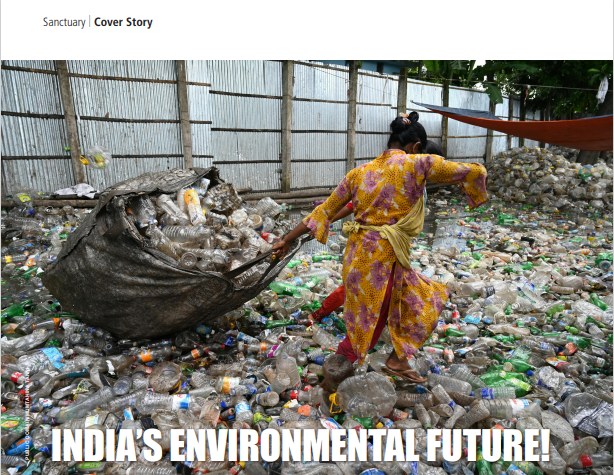
Delighted to share my thoughts with eminent contributors:
https://www.sanctuarynaturefoundation.org/article/indias-environmental-future


July 24, 2024
Illuminem.com
https://illuminem.com/illuminemvoices/embedding-nature-at-the-very-core-of-what-insurers-do-iii-2
https://www.linkedin.com/feed/update/urn:li:activity:7222021246765416448/
My commentary (Part II) for illuminem on the recent presentation (online) at – China International Conference on Insurance and Risk Management (CICIRM) 2024 #Ningbo.
‘How do we embed #Nature at the very core of what insurers do?’ Is so dependent on how we learn, think and practice #insurance (and related risk management). #Indemnity (betterment courtesy #adaptation and #resilience – facilitated by Nature) and #insurableinterest (by factoring #externalities, thereby pricing the risk more soundly). There’s a lot more to it. Insurance education needs a serious re-visit. Industrial age definitions are seriously deficient and do not stand up to the existential crisis staring at us.
I guess what’s amiss with insurance education – a #systemic challenge – is faced by much of education today. Or else, for instance, why shouldn’t you have a book like ‘The Hidden Life of Trees’ by Peter Wohlleben in school syllabus?
Cannot resist sharing this extract from Tim Flannery in his foreword to the above-mentioned book:
“But the most astonishing thing about trees is how social they are. The trees in a forest care for each other, sometimes even going so far as to nourish the stump of a felled tree for centuries after it was cut down by feeding it sugars and other nutrients, and keeping it alive… A tree’s most important means of staying connected to other trees is a “worldwide web” of soil fungi that connects vegetation in an intimate network that allows the sharing of an enormous amount of information and goods. Scientific research aimed at understanding the astonishing abilities of this partnership between #fungi and plant has only just begun.”
Knowing what whales do to our environment as a #keystone species, shouldn’t news such as this disgust us all: Greenland police said they arrested a veteran environmental activist and anti-whaling campaigner on Sunday on an international arrest warrant issued by Japan… Paul Watson was arrested when his ship docked in Nuuk, Greenland’s capital, a police statement said. Paul is the founder and President of the animal rights and environmental Sea Shepherd Conservation. He was enroute to the North Pacific on a mission to intercept a new Japanese #whaling ship.
Finance will have to be ‘nature-fied’. Prof Aled Jones of Anglia Ruskin University (ARU) wants thought to how capital can protect nature.
As a risk manager, risk carrier and investor – insurance ought to be way ahead of all financial services and assert as a duly nature-fied steward!
Chartered Insurance Institute Climate Majority Project
Illuminem
July 17, 2024

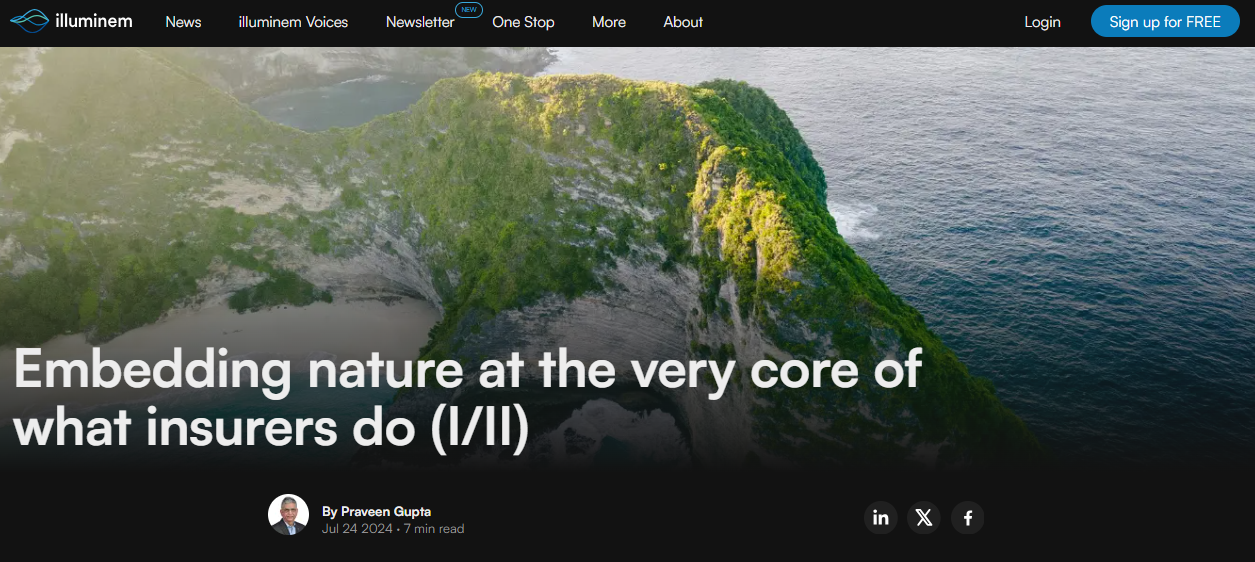
My commentary (Part I) for illuminem on an online presentation today at – China International Conference on Insurance and Risk Management (CICIRM) 2024 – Ningbo.
Just as #nature can be multi-faceted – destroyer, preserver and healer – so can insurance. However, insurance has thus far generally chosen to be the handmaiden with a coloniser mindset. It is inclined to approach any threat as conqueror or tinkerer and not a healer.
Blending Nature’s benign powers with healing capability of insurers ought to be the ultimate goal.



The Journal, Chartered Insurance Institute
July 5, 2024
https://thejournal.cii.co.uk/2024/07/04/climate-change-chocapocalypse
https://www.linkedin.com/feed/update/urn:li:activity:7215936370018557953/
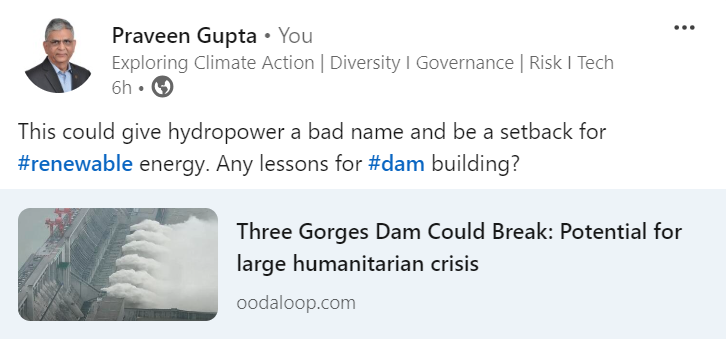
Here’s my piece of chocolate in the latest issue of the Journal, Chartered Insurance Institute!
While cocoa, the source of chocolate, originated in South America – today Ivory Coast and Ghana account for 50% of its annual yield. Africa currently puts together 75%. Tracked back to 450 BC, the sweet treat was once a preserve of the rich. Today it cuts across all geographies and age barriers.
However, climate change threatens to seriously disrupt cocoa supply. While some promising alternatives have already hit the market, there is still some hope in the form of ethical and sustainable practices. Crop insurers also have a positive role in the desired transition.
Needless to mention that cocoa is a part of a larger global malaise. According to Nature.org: “Approximately $500 billion in agricultural subsidies worldwide perpetuate unsustainable food and land use systems, which lead to environmental degradation, poor nutrition and income inequality. If we do nothing about the way we produce and consume our food, it will amount to damage estimated to cost $16 trillion each year by 2050.
By redirecting harmful subsidies toward sustainable practices, including regenerative agriculture, governments can accelerate international climate and biodiversity progress. This shift could provide 40 percent of the funding we need to protect and restore nature – without having to generate new funding streams. We need to see more of these shifts, and we need them urgently”.
#sustainability #regenerative #biodiversity
illuminem/ LinkedIn
June 21, 2024
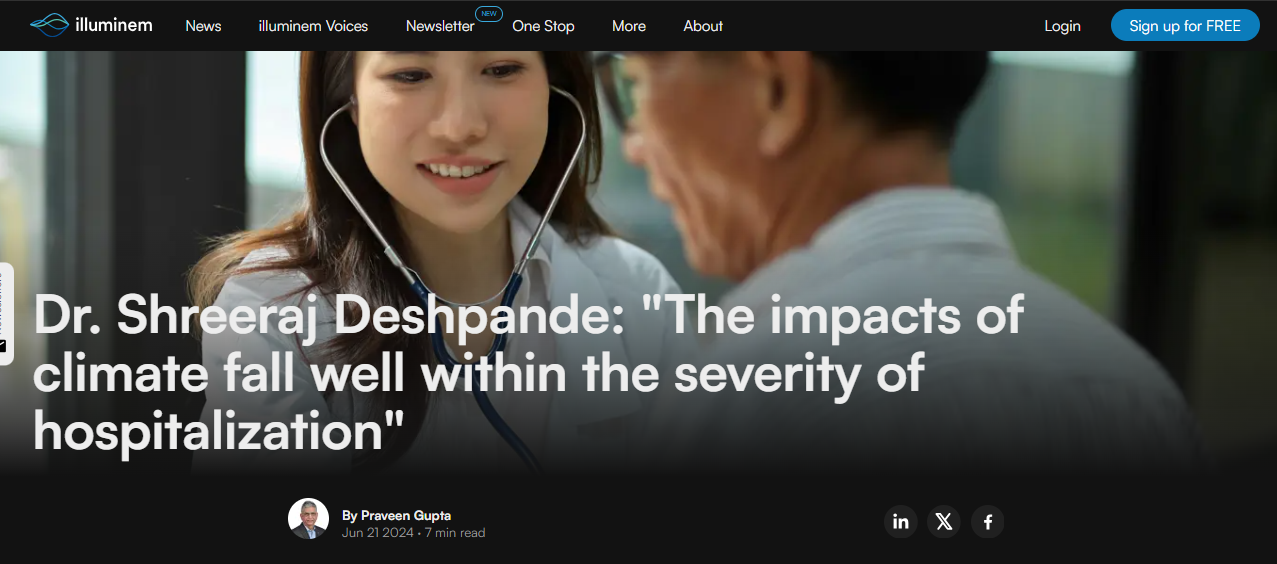
https://www.linkedin.com/feed/update/urn:li:activity:7209805029636005888/
Dr. SHREERAJ DESHPANDE helps me navigate through the challenges posed to health insurance in the times of #Climatebreakdown. The world’s most populous country, diabetes capital, dealing with obesity, malnutrition, ageing – now coping with heat and humidity, poor air quality, water crunch and a missing health regulator.
Could the growing focus on increased penetration hit a wall – as some geographies pose a serious threat to human health? Needless to mention, a rising number of senior citizens are left out of the safety network; gig workers have no protection and primary healthcare in much of the country has disintegrated.
“7,000 people slip into poverty every hour in India because of catastrophic health expenses”.
Shreeraj believes health insurance is here to stay and innovation holds the key.

Dr Shreeraj Deshpande is a well known Health Insurance expert. He has over three decades of experience in both private and public sectors of the insurance industry. Shreeraj was responsible for setting up successful Health verticals in three insurers, including the Allianz and Generali joint ventures in India. He is a much sought after member of various industry level as well as regulatory committees on Health Insurance. He was awarded a doctorate in health insurance by the University of Pune.
Praveen Gupta: ‘State of Global Air 2020’ showed that 22 children died every hour due to air pollution a day in India. During peak winters, thanks to pollution levels, a passive smoker in Delhi could inhale smoke equivalent of 10 to 15 cigarettes every single day.
With rising frequency & severity of respiratory ailments, is there a case for differential pricing in such locations?
Shreeraj Deshpande: Medical underwriting in Individual Health insurance involves health risk assessment including medical screening wherever required. The health risk assessment which insurers carry out involve seeking information on habits such as smoking, alcohol consumption, existence of life style diseases, occupation, etc., and will depend upon the extent of availability of data and applicability while underwriting. Height and Weight to calculate Body mass index (BMI) is the most common method of health risk assessment. Insurers also adopt geographical based underwriting strategies as well as differential pricing. Broadly this is based on the experiential analytics in these geographies in terms of frequencies and severity. In India Health Insurance is majorly confined to Hospitalization Insurance though Comprehensive Health Insurance is slowly making inroads.
There are various factors which could contribute to the high or lower frequencies and severity of hospitalizations which can include environmental conditions like poor air quality or water quality. The availability of data which can be analyzed and interpreted is very important. When we look at comprehensive health insurance including Outpatient Department (OPD), the more the data available for risk assessment the finer can be the pricing. Insurers do collect International Classification of Diseases (ICD) code wise data and use the same while pricing products.
The changing regulatory scenario would have a very important impact on the way underwriting is done.
One of the fall outs was that the fundamental approach of “Underwriting at Acceptance and not at Claims” started getting ignored which resulted in increased customer grievances.
PG: Do you see a shift in risk assessment: from one largely based on individual lifestyle to also a combination of individual and geographic triggers like air quality, heat, humidity?
SD: Around a decade back Indian health insurers were more into Medical underwriting basis age/sum insured and adverse declarations, the proposer was asked to undergo pre acceptance medical tests. Over the years market evolved and the pre-acceptance medical tests age limit/ sum insured limits got raised. This was also because of pressure on numbers and growth. Insurers who were into business for some time started expanding their book making sales process for health policies easier. One of the fall outs was that the fundamental approach of “Underwriting at Acceptance and not at Claims” started getting ignored which resulted in increased customer grievances.
With the emphasis of the regulator to increase customer confidence, it is now very important for insurers to have prudent underwriting strategies with growth. Insurers will have to use a mix of medical underwriting and other external parameters. This becomes even more important in automated underwriting with use of AI and ML. Analytic capabilities and platforms are now available however suitable data needs to be collated and analyzed. Profiling of customers using AI & ML will happen the way it happens for other consumer products. This should also account for adverse environmental factors.
PG: Once the data is plentiful, do you see a shift from personalized side to extraneous factors? How would that transform the way health insurance is not only underwritten but also how it is bought and sold?
SD: As the portfolio size of any insurer increases the underwriting strategies also change. In the initial periods of building a portfolio, insurers are selective and try to avoid adverse selection etc., by adopting to medical underwriting. As the portfolio increases and with good experience insurers tend to relax their strategies and grow. Ease of sales process with simplified underwriting is something which every distributor would want. Therefore insurers would profile their customers in advance – using AI and ML – well before targeting them.
The regulatory changes also have a major role to play. In some markets denying insurance covers based on pre-existing conditions or discriminating premiums charged is prohibited by law. While Insurers may be allowed to price according to geographic factors / experience, individual underwriting will in all likelihood not be allowed. In such cases use of extraneous data and pre-underwritten products would have a major role to play.
Parametric offerings to protect against rising heat and adverse quality air could become a mass offering.
While insurers do adopt underwriting strategies to balance their exposure across geographies and risk profiles even in Health Insurance it may be unfair for common citizens who are inhabitants in such places to bear the brunt of higher pricing or denial of coverage.
PG: Not just the workplace, living areas and time spent on commute – should you not account for these health stressors? Heat & humidity are known triggers for neurological and cardiac conditions – shouldn’t they be accounted for?
SD: This is similar to what we discussed above. Insurers can definitely consider these while carrying out risk assessment – subject to availability of the data. For example Insurers do generally have a question on occupation, location etc. More detailed questions can elicit more information. While type of job or location could have increased stress but whether the individual also performs activities like exercise / yoga which helps him reduce or manage stress.
How much information insurer can collect, collate and analyze and actuarially use is important. While overall frequency and severity of hospitalization is sufficient for hospitalization products more finer data would be required to assess risks covering comprehensive health care. I believe, as of now, the adverse impacts of climate fall well within the frequency and severity parameters of hospitalization. However, this needs to be fine-tuned with the OPD extension, wherever applicable.
The regulatory changes across economies are moving towards making health insurance available without discrimination to citizens and some markets do not allow refusal of coverage or even differential pricing basis pre-existing conditions. In some markets medical underwriting is used to allow discounts in premiums for medically underwritten proposals. Some markets prefer to adopt community-based pricing where risk is distributed over the community in a geographic distinction. With automated underwriting gaining momentum in retail health – use of AI and ML is increasing with wider use of data.
PG: Would employers be vicariously liable for locating work spaces in unhealthy environments?
SD: This can happen only if the workplaces do not meet regulatory compliance of locating work places or not following applicable regulations such as Pollution Control Acts and hazardous chemicals handling. The Workmen Compensation (WC) Act also lists down occupational diseases which can be revised from time to time. Anything within the workplace the employer can be made responsible, however, the responsibility of keeping geographic environment healthy, pollution free is a collective responsibility of the governments and citizens.
Health Insurance has a social need and changing regulatory scenarios across economies emphasize that health insurance be made available to all citizens and cannot be denied or discriminated.
PG: Physical assets prone to wildfire, floods, windstorms are increasingly becoming uninsurable. Could human health in challenged locations be next?
SD: While insurers do adopt underwriting strategies to balance their exposure across geographies and risk profiles even in Health Insurance – it may be unfair for common citizens who are inhabitants in such places to bear the brunt of higher pricing or denial of coverage. There are certain diseases/conditions which are endemic to some places and insurers have to adopt an underwriting philosophy combined with risk management and risk reduction on continuous basis to improve risks or keep people healthy.
Health Insurance has a social need and changing regulatory scenarios across economies emphasize that health insurance be made available to all citizens and cannot be denied or discriminated. Insurers will have to implement risk management practices like carrying out medical screenings, conducting health and wellness campaigns for improving risks in such areas.
PG: Women and children constitute a large chunk of population that remains outside the health safety network?
SD: Some innovations do give me hope. Recently a parametric offering was introduced to protect women workers in the unorganized sectors, particularly working outdoors, from exposure to excessive heat. This is an unchartered territory which deserves to be looked at closely.
PG: Many thanks for these very informed insights, Dr. Deshpande.
 The Diversity Blog