“SRM is controversial… But all solutions should be considered…”
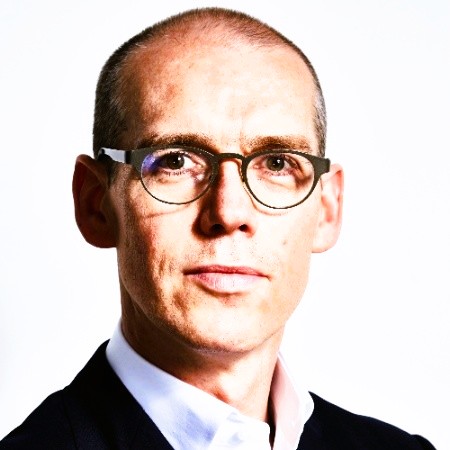
Paul Sweeting is currently President of the Institute and Faculty of Actuaries (IFoA). He also serves on the boards of a number of insurance companies.
Prior to the current role, Paul was a Senior Advisor at Hassana Investment Company. He returned to Hassana having been the Governor Assistant for Financial Sustainability and Risk Management at the General Organization for Social Insurance (GOSI) in Saudi Arabia. Before joining GOSI, Paul was Hassana’s Chief Risk Officer. Hassana is responsible for managing the assets of GOSI.
Immediately prior to this he was a Professor of Actuarial Science at the University of Kent, where he taught enterprise risk management. Paul remains an Honorary Professor at Kent. His text book – “Financial Enterprise Risk Management” – is used by actuarial associations around the world for the Chartered Enterprise Risk Actuary qualification.
Praveen Gupta (PG): ‘Planetary Solvency – finding our balance with nature’ is a pathbreaking work by IFoA and University of Exeter. Planetary solvency marks the convergence of financial risk management and Earth systems. Don’t you think it is compelling enough to be incorporated by the IFRS, soonest?
Paul Sweeting (PS): The report is excellent at highlighting the risks that we are facing at a planetary level, and presenting the various risks in a consistent manner. It should certainly influence financial reporting – to help drive the various metrics in the right direction – but that requires firm-level reporting rather than the planetary metrics used here.
PG: Climate triggers do not constitute black swan events. They are gray rhinos. I am inclined to use these powerful metaphors when much of financial regulators tend to be abdicating their responsibility on the climate front. Your thoughts?
PS: I agree, metaphors can be very helpful, though climate change often feels like the elephant in the room rather than a rhino!
PG: Double materiality too needs to be embedded in risk management?
PS: Absolutely. For issues such as climate change, it is certainly the most appropriate framework – not just what your effect is, but how you are affected. I looked at this in detail in the forthcoming 3rd edition of my textbook, Financial Enterprise Risk Management.
“The rate at which the climate is changing compared to historical periods… making forward-looking modelling harder and less certain”
PG: Likewise, natural capital remains a blind spot?
PS: It does, for many areas. The challenge is to identify or quantify the impact of aspects that many might just view as “nice to haves”. A lot of the IFoA research tries to address this.
PG: Solar Radiation Management (SRM) is controversial – but calls for courage & foresight to address potential crises that our world faces. Sandy Trust and team at IFoA also with University of Exeter have put together – Parasol Lost: Recovery plan needed. A brilliant analysis which attempts to addresses SRM.
Even though the timelines are not clear. For instance, Atlantic Meridional Overturning Current (AMOC) may just slow or stall anytime from now to 2050. However, climate models are falling short. Parasol Lost ought to be an overdue wake-up call?
PS: SRM is controversial, as some approaches seem to take us in the opposite direction from various pollution reduction initiatives. But all solutions should be considered. In turns of climate modelling, there are a number of challenges. The first is the rate at which the climate is changing compared to historical periods. This means that interactions and feedback loops may act very differently from how that have behaved in the past, making forward-looking modelling harder and less certain. However, complex models are an area where actuaries should be especially comfortable.
PG: That puts actuarial at the front and centre – what next? Lead / drive transition finance.
PS: Indeed.
PG: Do you see actuaries actively contributing to policy making in times to come?
PS: We already are – IFoA research has a broad and influential audience. This is as it should be.
PG: Many thanks Paul for your excellent insights. I am sure the IFoA will continue to play an active path-breaking role in facilitating climate mitigation, adaptation and resilience.

