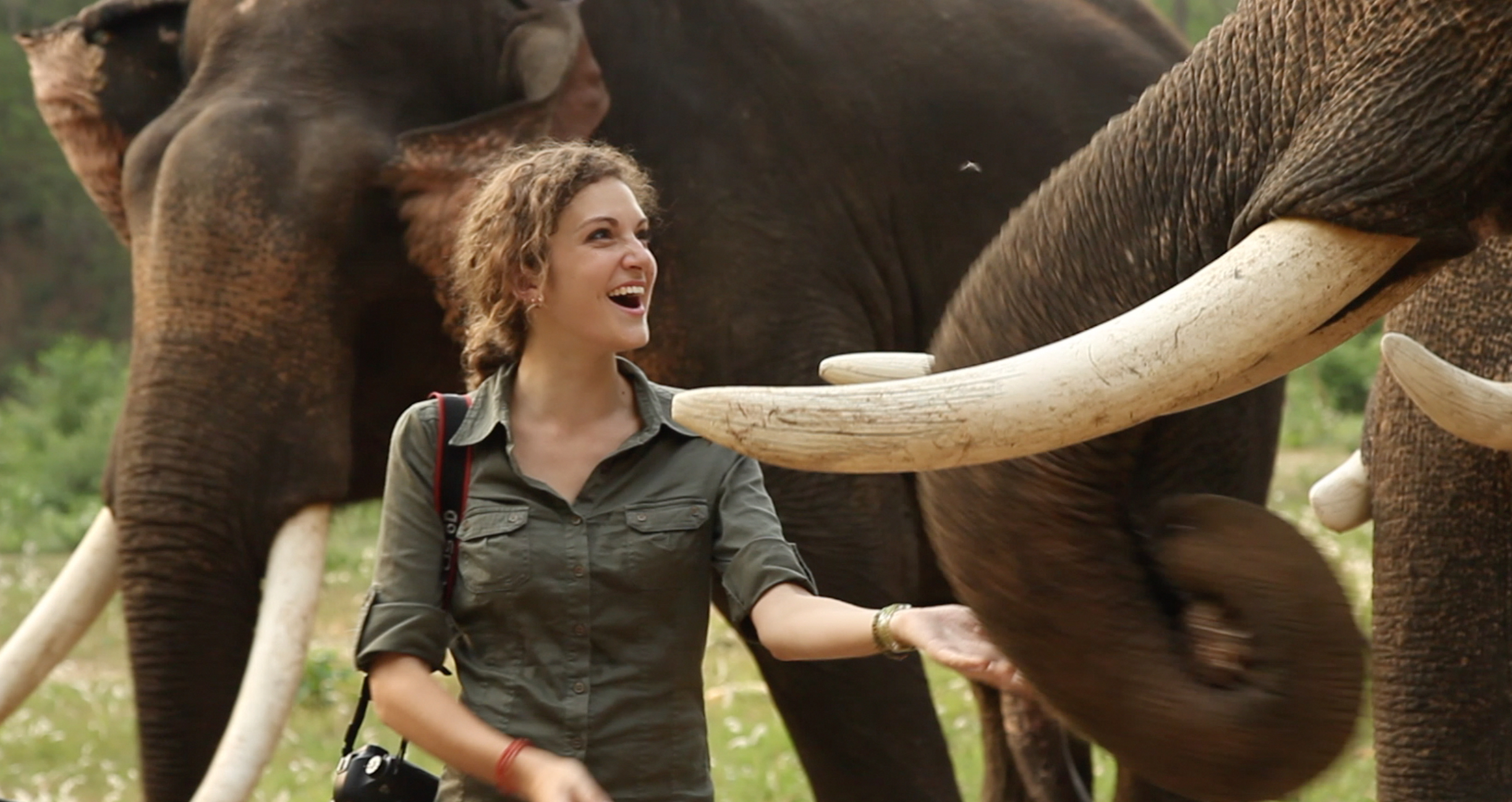
Praveen Gupta: You wear many hats: photographer, writer, filmmaker and correspondent – dedicated to documenting global environmental, human rights, and animal rights issues. What takes your most time?
Molly Ferrill: It varies from project to project; some months I’ll focus more heavily on a film production, while others will be dedicated mainly to writing and research. At the moment I would say that I dedicate most of my time to still photography projects.
PG: What symptoms of climate crisis do you experience?
MF: I have covered several stories where I’ve witnessed symptoms of the climate crisis. One thing that I have noticed in particular is the way that changing weather patterns can put humans and wildlife in conflict with each other in ways that were not previously seen. For example, the Baird’s tapir is a very water dependent species.
A drastic shift in weather patterns in Southeastern Mexico has recently led to droughts that affect these tapirs’ habitat and lead them to venture onto farmland searching for water. They sometimes eat farmers’ crops, which can lead to conflict or retaliatory killing of the tapirs. This is just one of many situations that I have seen confirming the climate crisis and how it affects both people and animals on a local level.
Many women working in these roles are challenging stereotypes in their communities (field work is considered a man’s job in many places), and paving the way for a younger generation of women to follow in their footsteps.
PG: Women, particularly in the developing world, bear the most brunt of climate emergency. Would you like to allude to some great work that you witness?
MF: Yes! I have met a number of female park rangers and wildlife protection officers around the world, and I find their work to be very inspiring. Wildlife protection officers working in the field are some of the world’s most knowledgeable witnesses of what is happening to nature on the ground, and serve as the first line of defense against poaching, trafficking, and environmental degradation.
In addition to the importance of their conservation work itself, many women working in these roles are challenging stereotypes in their communities (field work is considered a man’s job in many places), and paving the way for a younger generation of women to follow in their footsteps. I recently finished the pilot episode of Women of the Wild, a documentary film series that I hope to continue about female wildlife protection officers and the species they protect around the world.
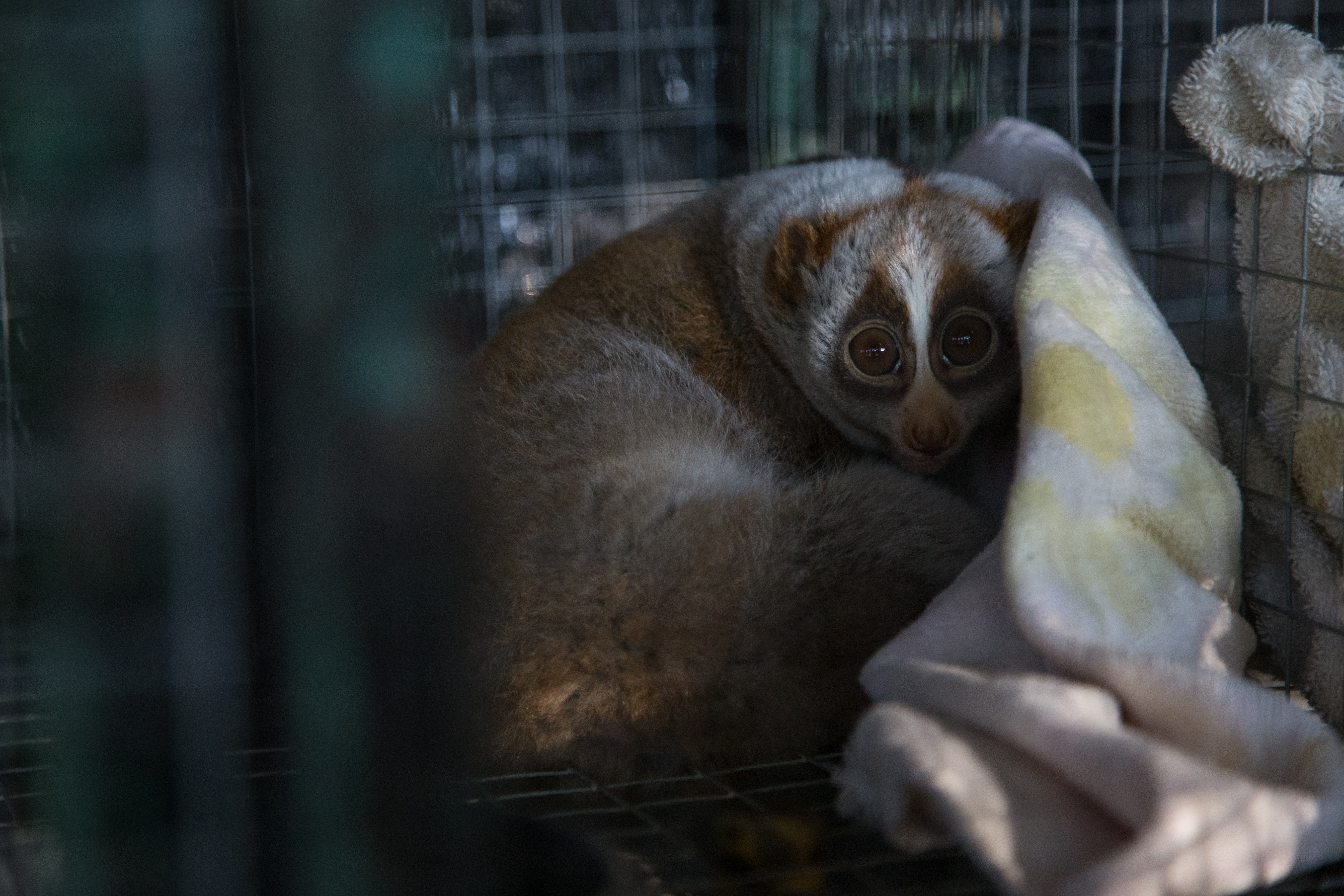
PG: Do you see large land animals getting the priority focus over the smaller ones?
MF: I do think that elephants and other large charismatic species often receive more attention in conservation work. In communicating environmental concerns, highlighting these charismatic species can be useful if they can serve as “ambassadors” that encourage the protection of their entire ecosystem. However, I think it is also important to recognize the importance of smaller, lesser-known species that also play essential roles in their ecosystems and are worth protecting.
I am currently working on a National Geographic grant project focused on preventing the illegal trade of freshwater turtles and tortoises in Southeast Asia, alongside National Geographic Explorers KM Reyes and Astrid Andersson. Turtles might be some of those smaller species considered less charismatic by some people, but to me all wildlife is worth protecting.
It has been proven over and over again that conservation strategies that integrate indigenous people as leaders and advisors are much more successful long term.
PG: Any thoughts on the role of indigenous people in preserving nature?
MF: I see indigenous people as essential leaders in the fight to preserve nature. Many indigenous communities hold valuable knowledge about ecosystems and species based on generations of experience and connection to nature. It has been proven over and over again that conservation strategies that integrate indigenous people as leaders and advisors are much more successful long term.
I have had the opportunity to interact with several indigenous communities working in ecotourism and environmental conservation, and one of the things that has struck me most is their understanding of our interconnectedness with nature. Many of us have forgotten that connection; I think that in order to protect our planet, we will need to feel and recognize our connection with the natural world again.

PG: With several wildlife trafficking hotspots in Asia, aren’t these only bound to aggravate the existing challenges?
MF: I view wildlife trafficking as one of the greatest threats to biodiversity today. I also see it as a global health concern, since wildlife trafficking can lead to the spread of zoonotic diseases like the pandemic we are experiencing today.
It worries me that there is not a more central focus in the global conversation surrounding the prevention of future pandemics. There are, however, some international groups taking the risks of wildlife trade very seriously and spreading the word, such as the EndPandemics Alliance.

PG: Best wishes for your insipring work, Molly! Please keep educating us. Thank you!
The Journal, Chartered Insurance Institute: 22.4.22.
https://thejournal.cii.co.uk/2022/04/22/paving-path-decarbonisation: This is a sequel to – TAKING THE WHEEL ON CLIMATE CHANGE (December 20, 2021), where I highlight the role of climate change in driving major changes to insurance supervision and regulations in the US. And here, the actuarial profession under the spotlight.
Borrowing from Doug Sheridan: “15 months into his Presidency, many of Biden’s voters are still waiting for him to deliver on his climate pledges. And for young people in particular-frustration has turned to anger… pace of the admin’s climate action has slowed to a trickle.”
However, there is a silver lining: Wind-Water-Solar provided 96.34% of all new US electrical nameplate capacity in the first two months of 2022. Also, in Jan/Feb 2022, U.S. renewable output was 22.8% of all electricity generation versus 19.7% in 2021 (www.renewablesnow.com).
The good part is the executive continuing to nudge the regulators to align the insurance industry with the goals of #parisagreement. Much of this sequel relates to the growing role of the actuarial profession in the climate space.
Climate Science: A Summary for #Actuaries, presented on April 13th, 2022, summarises the #IPCC’s Sixth Assessment Report (AR6) Working Group I (WGI) report in a manner tailored for the actuarial community. Actuaries, it emphasises, as risk professionals need to understand the physical impacts of climate systems and climate changes. Such impacts will affect how risks are underwritten, priced, managed, and reported, whether for general, life or health insurance, pensions, other financial institutions, or social security. It is important for actuaries to understand the magnitude of the potential changes, the uncertainty of their frequency and intensity, and the inherent volatility of such risks.
At a recent online event I asked the IAA panel – How can the IAA influence particularly North American insurers to cut their fossil fuel exposure?
Gabor Hanak, Chair of the Climate Risk taskforce answered: “IAA is not a lobbying organisation. Our influence is entirely through our contributions, papers and discussions. What’s more, the IAA is a global organisation and there is a basic principle how the IAA is operating, it is called the principle subsidiarity. So the IAA will never interfere with region’s policies unless the respective actuarial organisation in that region requests to do so. I don’t think it will happen in terms of North America.”
“If it’s not already, climate and #climate#riskmanangement need to move to front of mind for every organisation – quickly. This is not based merely on ideology, but on the undeniable link to risk management and our responsibilities as custodians of our organisations. Governance Institute of Australia’s Guide for boards and management on the path to net zero will assist with this mindset shift”, says Megan Motto 😊, CEO of the institute. The report has significant inputs from eminent actuaries.
Op-ed for Illuminem: April 20, 2022
https://illuminem.com/energyvoices/8a3bd58b-089f-4391-969e-25eacfadd4f9
Was it just the challenging circumstances under which the #securitiesandexchangecommission (SEC) announced the disclosure of climate rule that seems to be drawing much flak? Shiva Rajgopal has an interesting perspective: “Climate reporting may be the third-best, not even the second-best, way of focusing corporate minds on the climate problem…”
Estimated damages in the US – from floods, drought, extreme heat, wildfires, and hurricanes – have grown to about $120 billion a year. These are bound to grow if greenhouse gas emissions continue unabated. For the first time in history, via the Office of Management & Budget (OMB) the US federal government is formally accounting for risks of climate change.
It’s been fifty years since The Club of Rome came up with ‘The Limits to Growth’. Is #degrowth anywhere close to getting into vogue? “Global North people, businesses and institutions have operated in excess of their fair share of global resources for far too long…” says Jennifer Wilkins, author of a recent paper ‘The Degrowth Opportunity’. She quotes Colombian-American Professor of Anthropology Arturo Escobar: “We are being ecologically and culturally impoverished by a ‘patriarchal Western capitalist modernity’ and the ‘constitution of a single globalised world’…
The #globalnorth versus the #globalsouth debate gets intensified by the #colonisation dimension. The #IPCC has finally made room for it. While we are all in the same boat, the global north must quickly come clean and take a lead so as to become a good role-model.
“Crucial systems, such as food, healthcare and lifeline utilities, must be radically and justly transformed so that all people’s needs, everywhere, are provisioned using a fraction of the resources and emitting a fraction of the pollution we see today”, reminds Ms. Wilkins.
April 9, 2022
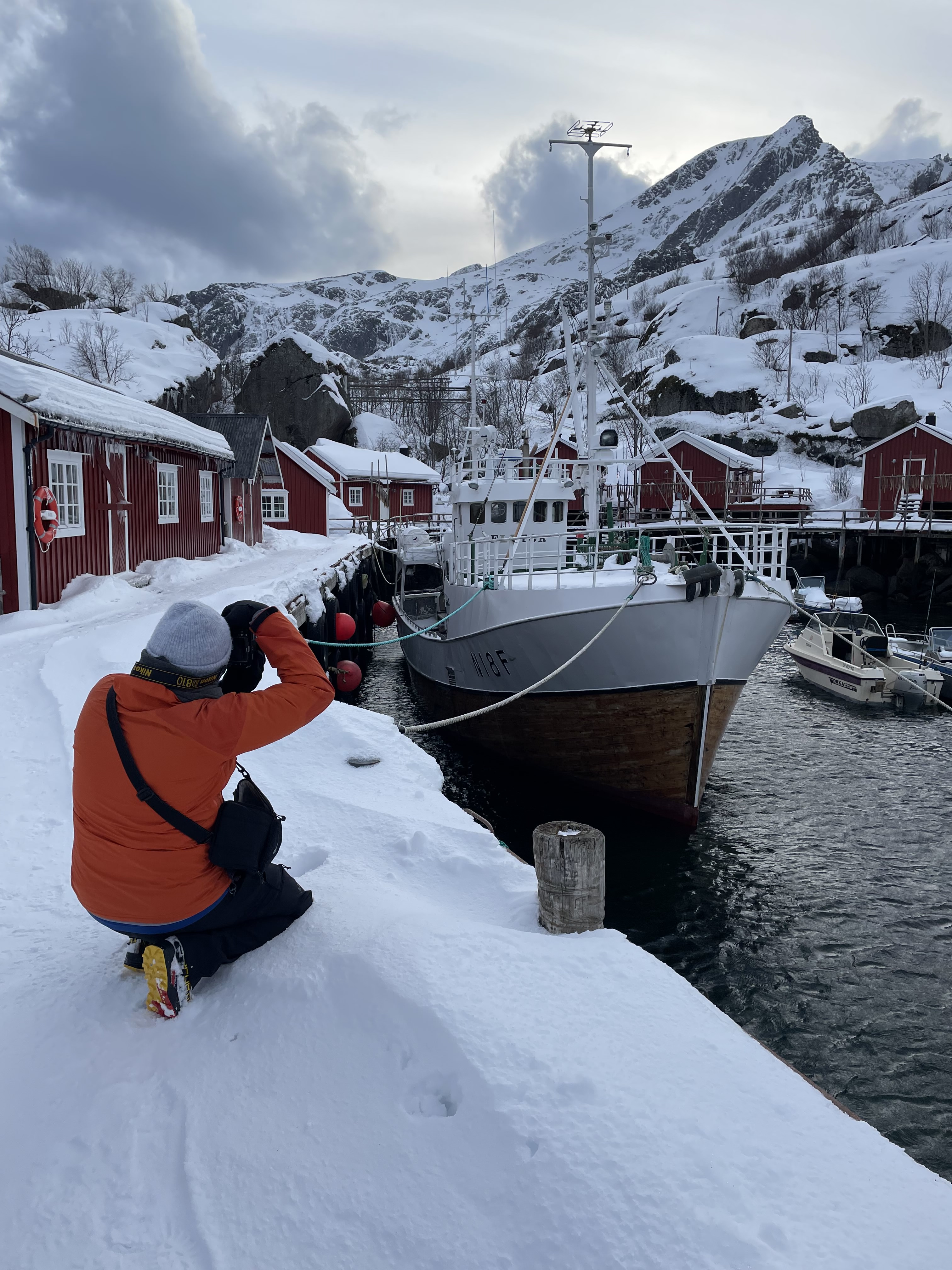
Christian’s journeys have taken him to the polar extremes of our planet: from 78° North to 78° South. He has already circled the globe twice and has explored over 114 countries across all 7 continents. He has sailed the five oceans and explored their islands, including some of the most remote on the planet, witnessed by few.
Praveen Gupta: Temperatures of Arctic and Antarctica at 30 and 40 degrees Celsius respectively higher than the normal sounds bizarre?
Christian Clauwers: It is bizarre. The pace is most concerning. It has happened so fast. We cannot talk of this as a normal cyclic happening like the ice age process. The problem is the speed of global warming and melting of polar ice caps. Polar regions are like a barometer. They indicate the global climate system.
PG: As a close observer are you alarmed with these spikes?
CC: We should be concerned about the change of pace and the declining biodiversity.
As an observer and photographer specialising in impact on polar regions, I have witnessed myself abnormal changes over time. Especially in the Svalbard archipelago during 2013 and now. I can see the evolution during these 10 years in quite a negative way – concerning ice melting and melt water. I am a witness to what is going on.
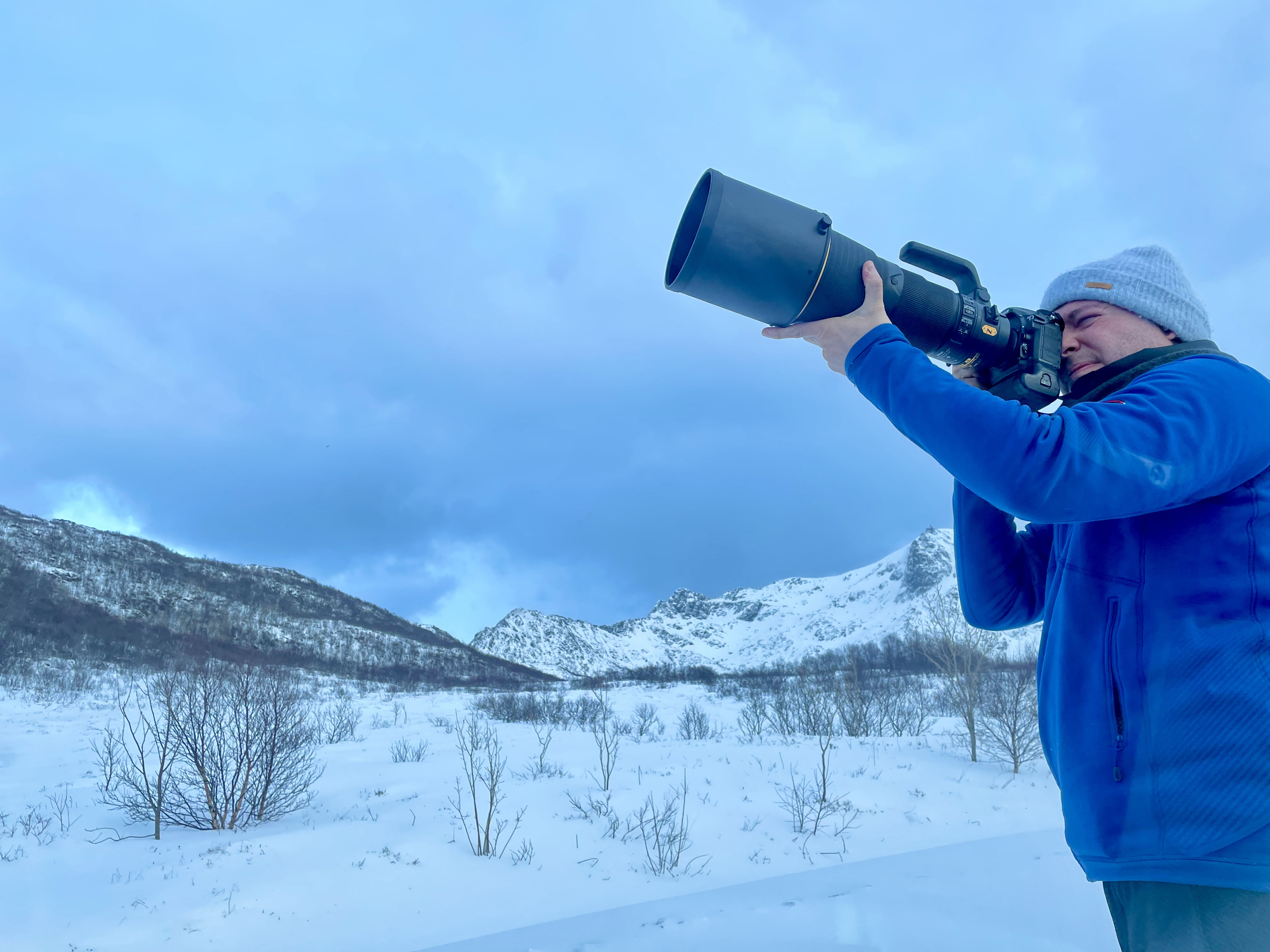
PG: What might result from this that people should be mindful of?
CC: Every one can contribute by living in a conscious and responsible way. We are all part of the same planet. Everything we do is the cause of the same whole. We are all in the same boat.
PG: No world leader seems to have had time to even comment on an existential situation such as this?
CC: I disagree slightly. Lot of world leaders have spoken out. We are living in a world which consists of influence of power. India, China, the US, Europe and many more. The European powers had their moment or chance in the nineteenth century and the US in the twentieth. At the COP26 India said we will achieve NetZero only by 2070. That’s a problem. If one of the powers pulls back a little bit, another one could follow the suit. They may say it will be a burden on our economic growth.
PG: With the fishing community – you must share some insights on fishing?
CC: Here at Lofoten fish stocks have been going down, the winter cod “skrei” doesn’t migrate southwards to the extent they did, compared to some years ago. Island communities on Lofoten islands depend heavily on this. Also stockfish, the traditional way of drying fish on wooden racks is becoming more problematic: due to rain, the fish doesn’t dry from the inside out so easily anymore, instead it rots from the outside.
PG: Happy shooting, Christian! I sincerely hope that you do see some positive signals whilst at the Arctic circle.
My Op-Ed: Illuminem
https://illuminem.com/energyvoices/518640f9-2ede-4c13-9a93-28b061570e9c
My Op-ed for Illuminem: In a week that witnessed Arctic at +30 degrees Celsius above normal, Antarctica hitting +40, glacier collapse in East Antarctica and Great Barrier Reef bleached, yet again – the news on discovery of micro plastics in human blood, for the first time, was bound to be subdued.
What was supposedly a wonder material is beginning to haunt the entire ecosystem. By 2050, if not before, plastic will exceed the fish in our oceans. Although a breakthrough, having found it in human blood, should it be a surprise?
Prof. Atsuhiko Isobe of Kyushu University highlights the scale of its ubiquity: “We were able to estimate the budget of ocean plastics, but they are only the tip of plastic-waste iceberg on Earth.” His next task is to assess the whereabouts of the nearly half a billion metric tons of mismanaged plastics trapped on land. “That’s going to be a Herculean task. Few advancements have been made so far in the field of ‘terrestrial plastics’ due to the lack of observation methods.”
“More detailed research on how micro – and nano – plastics affect the structures and processes of the human body, and whether and how they can transform cells and induce carcinogenesis, is urgently needed, particularly in light of the exponential increase in plastic production. The problem is becoming more urgent with each day.” Says Dr. Dick Vethaak, Vrije Universiteit Amsterdam (VU Amsterdam), who led this discovery.
In the meantime, plastic production and its reckless ‘waste management’ goes on. (I draw from ‘Thicker Than Water’, by Erica Cirino). Recycling does not seem to be the solution. For instance, Australia continues exporting plastic waste as Refuse Derived Fuel (RDF), highlights the Plastic Soup Foundation. International Pollutants Elimination Network (IPEN) typifies the dumping of waste on recipient countries as neocolonial. RDF will be one of the subjects that the international community will have to agree upon within the ambit of the international treaty.
Plastic tends to be a blind-spot in the overall Climate space. The potential implications dwarf asbestosis. By outsourcing the issue to the likes of UNEP, the insurance industry is abdicating something it ought to be in control of. That there is no alternative to plastic would also mean justification for the continuity of the Oil & Gas industry.
Despite all the negative energy, it is the ‘Love letter to our future team’ from Natalia Dorfman, Kita Insurance CEO, which gives me the hope: “The #ipcc climate change reports are both clear and terrifying. We urgently need concerted climate action to enable a liveable and sustainable future for all”. That is the way forward for the Planet and the #insurers.

Doctors living longer is a growing breed. Longer living doctors serving generations of patients longer and longer are on the rise, too. However, those of them with a pedigree and a genius to effortlessly navigate way outside the box – remain a rarity. I have had the privilege of knowing one such.
The reason for writing this blog coincides with the publication of ‘To Talk Of Many Things‘. It is much more than a biographical account of nonagenarian Dr. Lalit Kothari’s glorious journey before, during and beyond the medical profession. While he had a brief stint as a student of liberal arts – growing up in a family of distinguished scientists, science was bound to draw him in. He chose medicine. Human Physiology has ever since been a lifetime passion as he endeavours to refine the art of medicine as a science of happiness.
The latest book echoes of an earlier title by him: ‘Man, Medicine And Morality‘ – a bouquet of withered flowers, with a subtle fragrance – as he calls it. Given his penchant for literature and history, he dips the readers into four key themes, in a unique style. Evolutionary history of medicine; ethical and cultural aspects of health, and healthcare; health beyond medicine; medical education, and the exciting life of medical students and doctors. All with a trademark sense of humour. For anyone wishing to explore Dr. Kothari’s written works – must draw the nuggets from these two books in conjunction.
Medicine: The Art
Modern medicine is science, but its use on individual patients – men and women, young and old, rich and poor, the confident and the skeptics – is almost an art.
The good physician humanizes the science of medicine. He adds human understanding, sympathy and hope to his science, drawing from the rich traditions of his noble art.
Following Descartes, we may consider man as a sophisticated machine but, unfortunately, the Celestial Manufacturer provides no handbook or operating manual to tell us how it should be handled and serviced!
Following Descartes, we may consider man as a sophisticated machine but, unfortunately, the Celestial Manufacturer provides no handbook or operating manual to tell us how it should be handled and serviced! That makes the work of a physician very difficult and challenging, and mistakes occur. With each patient different from all others (except in the case of identical twins, or clones of the future) because of the unique and infinite randomization of our genes, the doctor has the scope of an artist to do his work.
When medical science can no longer help the patient, the wise doctor carefully uses all his experience and skill to keep alive the patient’s hope and will to live. This is the Art of medicine.
Fault lines
Can health care be purely an industry? Doctors are entrapped on all sides by relentless pressure from pharmaceutical industry. Like a mysterious force-field emanating from a network of medical representatives, it is modulating every aspect of the medical profession, from treating patients to conferencing in Honolulu.
Take for instance an area where medicine and morality are sometimes at conflict, he points out, relates to the use of drugs. In India, more than 70,000 drugs or drug formulations are being sold in the market. Despite the World Health Organisation (WHO) having declared that this number is ridiculous and only 250 or so are normally needed.
In India, more than 70,000 drugs or drug formulations are being sold in the market. Despite the World Health Organisation (WHO) having declared that this number is ridiculous and only 250 or so are normally needed.
Medical education, he laments, provides only a surfeit of ‘mental experience’, some little ‘manual experience’ but no ‘moral experience’ at all. Just when the concern for morality in medicine is gaining momentum. The teaching of medicine is unique in the sense that half of it is on a blackboard and half around living patients in the hospital. This requires great sensitivity and experience. Traditional old hospitals will have to be reborn to function as a medical college hospital. It must be fully prepared to perform its 3 vital functions: Patient-Care, Teaching, Research. Only then will the hospital perform its full purpose.
From the beginning, I was constantly searching for ways to make physiology more and more interesting and clinically useful for students, he says. Teachers should also respect and admire their students; normally we expect only the students to respect their teachers.
Individual masters of healing art as the very embodiment of the highest human values? Dr. Kothari’s top picks being Charak, Sushruta, Hippocrates and Galen. And he reminds us of Sir William Osler’s famous words: “One of the duties of a doctor is to educate the community not to take medicines”.
Moral commitment of a health care establishment cannot be better stated, he illustrates, than this engravement on the gate of renowned medical missionary late Dr. Albert Schweitzer’s jungle hospital in Lambarene, Gabon (Africa): “Here, at whatever hour you come, you will find LIGHT and HELP and human KINDNESS”.

“Particularly, I was interested in the lives of three scientists – Dr DS Kothari, Dr Homi J Bhabha and Dr. Vikram Sarabhai“: Late Dr. A.P.J. Abdul Kalam.
Talking of many things
That doctors rarely see any books beyond their text-books never got into the way of his vast explorations. The Time has now come to talk of many things. But is anyone listening? He draws from ‘Of cabbages and kings’ – Alice in Wonderland.
If only had Queen Mumtaz Mahal not died during her fourteenth delivery, in 1631, Emperor Shahjahan might not have thought of the Taj Mahal. Likewise, have you ever wondered what an important role diseases have played in shaping the course of history? From Alexander the Great, Napoleon, Franklin D. Roosevelt, George Washington!
Then he takes you through – Mahabharat; relaxing in the modern world; yoga; power of thinking; spirituality; superstition; Charles Sherrington to Alexis Carrel to Aldous Huxley; Charles Dickens; Wordsworth; medical progress in the 20th century; health and culture; nonviolence. TS Eliot, The Time Machine, Descartes, Tantra, Rasputin, doctor patient relationship; The Monkey Who Peeped through the Key-hole; George Bernard Shaw & His Tailor; Paulo Coelho.
We have discovered the science of life, but not the Science of living. Will medicine rediscover the soul?
Healthcare beyond medicine has been his constant pursuit. We have discovered the science of life, but not the Science of living. Will medicine rediscover the soul? Strangely the word ‘soul’ which has completely disappeared from all modern textbooks of medicine, he laments. Incidentally, it occurs frequently in Alexis Carrel’s book.
In search of happiness
Where have I gathered all these anecdotes and historical stories? I really don’t know, he quips! For the polymath in him, perhaps this is his way to stay happy. While Dr. Kothari wraps up the book ahead of the onset of the pandemic, his deep concerns touch upon the many fault lines we have seen manifest as vaccine apartheid and profits before people. He yearns for the soul to return to medicine, however, it is eventually the quest for happiness that he believes is the most fundamental pursuit.
Happiness can be both elusive and evasive! He quotes Somerset Maugham from ‘The Summing Up‘. “I saw in the wards what hope looked like; and fear and relief. I saw the dark lines that despair drew on a face. I saw courage and steadfastness. I saw the gallantry that made a man greet death with an ironic smile because he was too proud to let those near him see the terror in his soul.” All the more reason as to why it is worth seeking.
In his impressive list of influencers two that stand out the most are – his late father Padma Vibhushan Dr. Daulat Singh Kothari, an eminent scientist, and Mahatma Gandhi – both a rare embodiment of austerity and self-effacement. With a moral compass such as this, our good doctor’s Rx should not be any surprise: “Seeking Happiness? Count Your Blessings and Be Happy”.
“My formula is easy and it has a use for every human”, he tells me.

Vibhuti’s work includes providing decarbonization pathways, including its impact on environment, air pollution, jobs; promoting clean energy solutions for the agriculture sector by adopting water-energy-food nexus approach; enhancing national and international understanding of India’s progress; and helping inform governments and financial institutions globally about the pace and opportunities of reforms in India.
Praveen Gupta: Analysis of country-level data shows that the greater the proportion of a country’s population that has access to electricity, the greater its gender equality?
Vibhuti Garg: Absolutely, with greater access to electricity, more women are able to free their time from general household chores and divert their time on income generating opportunities, which make them more empowered. They have a voice in pushing for their child education especially girls, use more sustainable energy choices, energy efficient appliances etc. which in turn has a positive impact on their income and productivity.
For example, many women in small towns are now selling solar lamps and solar house systems which enhance energy access but also create opportunities for them to become entrepreneurs.
With greater access to electricity, more women are able to free their time from general household chores and divert their time on income generating opportunities, which make them more empowered. They have a voice in pushing for their child education especially girls…
Also, it allows more girls to undertake education and be part of the formal workforce. Women feel more protected with improved street lighting in their areas. Further, in some households shifting to electric cooking will also save them the time and hard work of collecting biomass, cow dung, wood pellets for cooking. It will also have positive impact on their health as they will not be exposed to indoor pollution using traditional fuels which are polluting.
PG: What are the challenges for women to participate in the active workforce?
VG: It needs to be noted that women participation is ~20% of the workforce. Most of the micro enterprises set up by the women are self-financed, which makes them more vulnerable. A lot more supportive ecosystem needs to be created for them to thrive and have better livelihood opportunities.
There are limitations for women to relocate in search of livelihood. They do not have finance for upfront payment to start business. Lack of awareness and required skillsets impact their confidence to engage in income generating opportunities.
By imparting them education, required skills, providing energy access, and more importantly financial inclusion – the biggest challenges would get addressed.
PG: Women and girls are often disproportionately responsible for household duties – particularly in rural settings – where they spend considerable time on collecting firewood for basic cooking, heating, and lighting needs?
VG: Women account for just 22-25% of total employees in the power sector, and a low proportion work in science, technology, engineering and mathematics (STEM) roles. It has been demonstrated that a lack of gender equality in the energy sector puts utilities at a disadvantage, boards with at least 30% women have higher profit margins than those that do not. It has also been suggested that energy sector organisations that improved gender equality can boost innovation.
Energy access would allow reduced time burden for women on activities like cooking, heating etc. A better use of their time and skills will allow them to be part of earning members of the family.
Women in rural India are now getting opportunities in high earning jobs, because of improved energy access they will have more options. Solar Sahelis in Rajasthan is a classic example of how women have turned entrepreneurs. They rope in more women to their network, demonstrate improved sales and after sales services. By participating in income generating activities, their welfare and both physical as well as mental wellbeing has improved.
Solar Sahelis in Rajasthan is a classic example of how women have turned entrepreneurs. They rope in more women to their network, demonstrate improved sales and after sales services. By participating in income generating activities, their welfare and both physical as well as mental wellbeing has improved.
PG: Studies demonstrate that improved access to electricity improves baseline living conditions for women?
VG: Studies evidence positive correlation between energy access and women’s economic empowerment. However, this is still not considered as one of the big levers for women’s economic empowerment and thus has not got the due which it should be given.
As highlighted above women can use their time more productively and in income generating activities. Young women can invest their income to education and skill development. They will be financially more independent and able to raise their voice and put their demands forward.
In order to empower women from low-income communities, an initiative called Project Vahini, which involved promoting female ownership of e-rickshaws by addressing the challenges around access to affordable finance, infrastructure, awareness etc. This project can be scaled up as it provided lot of job opportunities for women by creating women micro-entrepreneurs in last mile transportation. We also have big taxi aggregators like OLA with ‘By Women, For Women’ taxi service.
PG: Firewood as a dominant source of energy – triggers deforestation?
VG: It is criminal to cut trees to use as a fuel for energy demands. Climate risk is one of the biggest risk impacting mankind. Efforts should be directed towards afforestation and use of clean energy to meet cooking and electricity needs.
There is a large renewable energy potential in our country which should be exploited. The health costs of burning fossil fuels or using firewood is much higher than using renewable energy. These fossil fuels are subsidized or come at no cost to people. However, the indoor and outdoor air pollution they cause is a big price in terms of high mortality and morbidity rates. A comparison of the health costs vs renewable energy costs, renewable energy wins big.
It is criminal to cut trees to use as a fuel for energy demands. Climate risk is one of the biggest risk impacting mankind. Efforts should be directed towards afforestation and use of clean energy to meet cooking and electricity needs.
PG: Volatility of gas pricing makes the dependent population vulnerable? Is solar the long-term answer?
VG: India relies heavily on gas imports. Price volatility of gas has exposed the vulnerability of nations relying on such expensive fuels. In recent times, gas prices have been extremely volatile, reaching unprecedented lows in 2020 and all-time highs in 2021. Japan Korea Marker (JKM), considered a benchmark for spot Asian LNG prices, went from US$2 in April 2020 to US$30 in September 2021 due to the onset of Covid-19 and post-lockdown economic recovery, respectively.
Volatile fuel prices can raise the operating costs of downstream projects in the industrial, power and CGD sectors – harming product competitiveness, utilisation rates and returns on investment.
The government should reduce reliance on gas and increasingly start replacing it with renewable energy. In urban areas where the electricity load is relatively stable, there should be increased effort to switch to electricity. India would eventually have to move to electric cooking and mobility to achieve the target of 450 gigawatts (GW) of renewable energy by 2030, so leapfrogging now would be a more pragmatic long-term strategy.
PG: Do you see opportunities to directly employ women in the electricity sector along the entire value chain?
VG: Yes, women after acquiring the required skill sets can do lot of jobs including billing, collection, also for decentralized renewable energy generation. They can be entrepreneurs as well responsible for sales, revenues and providing after sales services.
An initiative called Promotion of Women in Energy Related Enterprises for Development (POWERED), a first if its kind accelerator programme supporting female led ventures across the energy value chain, has led to creation of 3,700 jobs for women, 260 women supported to set up micro enterprises and 22 women-led energy startups.
Women can also promote solar pumps in farming. This will help in enhancing income and improved productivity but also at the same time improve water conservation and prevent use of harmful diesel for meeting their irrigation requirements.
PG: Many thanks Vibhuti for sharing these insights. Best wishes in all your ongoing endeavours at such a critical juncture.
My Op-Ed: Illuminem
https://illuminem.com/energyvoices/d6476570-88fa-4221-93f7-164412a03745
With much of tokenism relating to #IWD to be soon behind us, securing energy for millions of women and girls particularly in the developing countries cannot be lost sight of.
Ukrainian scientist Svitlana Krakovska, at the final sign off of the recent #IPCC report said: “Let me assure you that this human-induced climate change and war against Ukraine have direct connections and the same roots. They are fossil fuels and humanity’s dependence on them”.
This battle is also about renewable versus non-renewable sources of energy. However, as the unfortunate drama escalates, #fossilfuel pricing keeps scaling new highs. Some optimists believe this is a tipping point for the #renewables.
In the meantime, as the #extractive industry merrily continues to destroy the green cover, how do we sensitise the billions about #biodiversity and #ecologicalservices that we take for granted? I cite the works of celebrated author Amitav Ghosh and renowned ethnobotanist Mark Plotkin.

Thanks to a friendly intervention and this invitation, I had an opportunity to revisit the ‘Climate Change Exclusion’ clause and read it between the lines. Happy to note that anthropogenic gets attributed directly or indirectly to human activity. Having said that, there is a problem with our siloed thinking. Even though issued for the liability teams, the fiduciary responsibility could very well make this omni applicable to any other class/es of business.
If an insurer or a reinsurer were not to hold a subject matter covered (redline) against Climate Change – should it be investing (as an investor) in any such business? If it still does, would it not be oxymoronic? And if it stops doing so, that would be a truly benign influence of this clause!
Key messages
As Climate Change nudges insurers out of their comfort zone; Institute of Public Policy Research warns us of new emerging risks; Financial Protection Forum (World Bank Group) reminds of assessing financial risks from physical climate shocks; ESMA classifies Climate Risk as a new distinct risk category; Patrick Flynn of Salesforce shows the way forward as climate pledges crumble under scrutiny; there are many a slip between the cup and the lip – whilst dealing with Science Based Targets initiative (SBTi)!
Strategy is no longer bounded by shareholder value, reinforces Alison Taylor. And insurers must quickly change too. Textile consumption, for instance, has the fourth biggest impact on the environment and climate change – after food, housing and mobility! Ah, the magic of marketing. Insurers – watchout for greenwashing! Embedding sustainability is work in progress. But we do not have time.
“Engagement with customers on Climate Risks, not exclusion, the best way forward!”
– Zaneta Sedilekova, Climate Change Lawyer
Transition to low carbon economy has its opportunities and threats. Can the insurance industry support this critical transition? There is a price to be paid for fundamental changes in the business models. Insurers must assert as stewards. How can we forget pricing nature in insurance? Remember both TCFD and TNFD will hold insurer boards responsible for aiding and abetting biodiversity loss.
Carbon removal remains unproven, thus net-zero could be a mirage. Fossil fuel must go. Without action, WHO and The Lancet tell us, both excess morbidity and mortality can be expected. Climate litigation is here and insurers are bound to get enmeshed. Australia has shown how tort is good enough pending ecocide codification. Reputation and existential risks as a quid pro quo for procrastinating? A rather heavy price…

 The Diversity Blog