http://www.thediversityblog.com

Praveen Gupta: What drew you towards nature and conservation?
Mehreen Khaleel: I have always found solace in nature. I believe it were my parents who were more inclined towards nature and that’s why i find my peace in it. I remember the excitement on my mother’s face whenever she would see a new bird. That was something I missed the most while pursuing my higher studies. But very fortunately, I have had mentors who would encourage to spend some time watching birds on campus. It not only kept me occupied but helped me develop interest in nature and conservation. Very luckily, I could pursue my interests and now I am trying to sow the same seed of conservation in many young minds. The passion which many of our students show is infectious, and I think that keeps me going.
PG: What did you have in mind when you created the Wildlife Research and Conservation Foundation (WRCF)?
MK: During my PhD research, I realised Kashmir’s wild flora and fauna is less studied. General awareness about wildlife in Kashmir was lagging among the younger generation. Unfortunately the traditional environmental knowledge wasn’t given much importance and maybe that was the reason behind this lag. When we started WRCF, we wanted to start a conversation about wildlife of Kashmir, and bring in ideas from the locals. We are a team of dedicated researchers who use scientific knowledge to explore, understand and tackle various issues related to wildlife conservation.
When we started WRCF, we wanted to start a conversation about wildlife of Kashmir, and bring in ideas from the locals. We are a team of dedicated researchers who use scientific knowledge to explore, understand and tackle various issues related to wildlife conservation.
PG: Which animals are most affected by the Human Wildlife Conflict? Is any of it the focus area for WRCF?
MK: In Kashmir it’s the Asiatic Black Bear which has been affected by the Human Wildlife Conflict (HWC). There could be many reasons to it, be it the shift in agricultural practices to cash crops, unregulated garbage management in fringe zones, seemingly increase in the number of bear population etc. WRCF has been trying to understand the dynamics of this conflict scientifically. We have been focusing on mitigating HWC with the appropriate use of technology. We have been in constant consultation with the local stakeholders as we address this issue.
PG: What is the impact of Climate Change in the Himalayan region – visible & invisible?
MK: I remember seeing snow clad Mahadev peak in Srinagar hold its snow till the next winter, which nowadays looks naked as July sets in. It’s disheartening to find such abrupt changes in just very short span of time. Reports of new tropical species of birds and insects is a hint to the wise that “Not all is well in the Himalaya”. Many of us would not be bothered by Climate Change but for an ecologically sensitive place like Kashmir these things matter a lot.
There are too many things which at the inception can be attributed to the Climate Crisis and need immediate ponder. Every year during summers, more than a dozen places witness flash floods, erratic rains. The four seasons (Spring, summer, autumn and winter) which Kashmir was known for, have no longer a clear demarcation. We have seen winters getting warmer with none or very less snow. There is a substantial shift in the phenology of native flowering species in response to climate change.
The four seasons (Spring, summer, autumn and winter) which Kashmir was known for, have no longer a clear demarcation. We have seen winters getting warmer with none or very less snow. There is a substantial shift in the phenology of native flowering species in response to climate change.
PG: Any specific learning from your work: ‘Distribution & feeding ecology of Himalayan gray langur’?
MK: Himalayan gray langur is the least studied high-altitude primate. Not much was known about its ecology and distribution from Kashmir. Previously it was known to occur in Dachigam National Park, but my work establishes its presence in a wider range. They were found in the mountainous protected areas of Kashmir (Kazinag NP, Wangath-Naranag CR, Tral-Shikargah CR, Rajparian WLS, Overa WLS) preferring an elevation range of 1600-3000m. This work served as baseline for various scientific studies and management policies towards the conservation of this high-altitude primate. I also tried to understand the feeding ecology of these primates in seasonal habitats of Kashmir Himalaya. They mostly depend on tree bark, seeds of native tree species found in Kashmir forests.
PG: Do smaller animals, birds, insects and the flora also get your attention?
MK: Yes of course. WRCF has started research projects pertaining to smaller animals, such as Kashmir Flying Squirrel, monitoring local and migratory bird populations. We have already worked on the floral diversity in one of the protected areas of Kashmir, and are expecting a publication on it sometime soon. Last year, in collaboration with WWF-India, we conducted a Wetland monitoring of Odonate survey. We are the first organisation from Kashmir which started the moth week and butterfly month citizen science surveys in partnership with National Moth week and Big Butterfly Month initiatives respectively.

PG: Any thoughts on how to popularise nature conservation and biodiversity protection with the masses?
MK: We have been trying to work out some very conventional models such as use of audio-visual in conducting lecture workshops, nature camps. Mass awareness on social media engages more people at the same time and has turned out to be more effective as well. Since our focus is on the people living in the fringe zones, we have conducted these programs in local languages. Benefits of using local language is that people can easily relate and they can come up with better ways and suggestions about biodiversity protection.
PG: Don’t you think women from Global South should play a much bigger role in environmental matters in the likes of COP27?
MK: I definitely believe that women should play a much bigger role in environmental matters. The likes of COP27 should recognise and encourage such women leaders who would be a source of inspiration for many.
PG: Your thoughts on the role of indigenous people as stewards of nature?
MK: I believe indigenous people have the best knowledge for nurturing biodiversity. They have been the stewards of nature but we have failed to acknowledge their efforts. They have mastered coexistence with nature. Be it agricultural practices, use of natural resources, or dealing with human-wildlife interactions, indigenous people have had the best of practices. This knowledge should be transferred to their younger generations. But somehow this flow has been hampered due to modernisation.
PG: Many thanks for these wonderful insights, Mehreen! My best wishes to you and the team.

The Journal, Chartered Insurance Institute: September 9, 2022
https://thejournal.cii.co.uk/2022/09/09/calm-storm
Delighted to co-author this think piece with the brilliant Zaneta Sedilekova. London based biodiversity and climate risk lawyer. she is the Founding Managing Director of Climate Law Lab Ltd.
We analyse the role that climate liability risk can play in shaping the insurance industry. We look at the main trends in climate litigation against corporates, and its impact on the insurance jargon, wordings and investment outlook. We conclude with some practical suggestions on how climate liability risk can be mitigated on both underwriting and portfolio levels.
Zaneta’s work entails strong focus on risks and opportunities climate and biodiversity crises present to the financial system as well as individual decision-makers. “Most importantly”, as she puts it “I help clients turn these risks into opportunities for their business and wider stakeholders”.
“If we don’t do everything right, that “near to two degrees” will actually be nearer three degrees Celsius, which is five or six degrees Fahrenheit, which is a world where civilizations won’t be able to function in the ways we’re used to them functioning. That civilizational breakdown – a political and human phenomenon, not a scientific one – could come sooner; we don’t know where the civilizational red lines are, only that we’re close”. Warns ecologist and activist Bill McKibben. That would surely redline much of what insurers do!
Very dark times
“We face dark times. Very dark times. All of us… What is coming is especially difficult for those under 40 or 50 years old. They have never experienced this level of adversity that is hitting their ways of life, homeland, communities, and all they take for granted… Closing eyes and a belief that somehow, we can ignore what is fast overwhelming us are simply not options. Highlights Nik Gowing – Founder & Co-Author, Thinking the Unthinkable.
UK-based litigation funders have amassed record war chests to finance the growing interest in class action law suits, according to a new study by RPC. Litigation funders’ assets jumped 11% last year to hit £2.2bn, almost double the £1.3bn that had been built up in 2017/18 and a more than ten-fold increase over the past decade… This is a game changer for GC, Companies. Boards and Law Firms and is not filing anywhere but up.
“I approve of the idea of class action law firms and litigation funding as they do something towards creating equality of arms which is critical to the Rule of Law”. Observes the renowned Prof Paul Watchman.
Insurers with fossil fuel fixation, affinity for biodiversity destroyers and purveyors of pollution – wouldn’t be taking their loss reserves and all the attendant greed of executive rem and board rewards for granted too long. If only they start following what lies in store. A lip service to NetZero Insurers Alliance (NZIA) is a farce and only hastens the encounter with the “very dark times’’.
“Nature merely sends warnings, then consequences… no judgements. The four Horsemen of our impending Apocalypse – ignorance, arrogance, avarice and apathy – are in full gallop today”. Thank you Bittu Sahgal, you couldn’t be louder and clearer!
For those seriously wishing to follow what next, please do track Zaneta’s work. The rest might as well enjoy the calm before the storm!
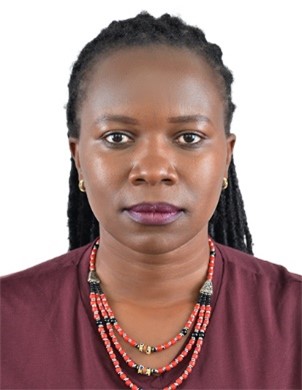
Praveen Gupta: What got you interested in Climate Change?
Robina Abuya: I trained in climate change (MSc) from Heriot-Watt University, U.K. Beyond that, I have practiced for over 10 years in various capacities at different institutions in the listed thematic areas of climate change. I got interested in climate change during the late 2000’s when Africa and Kenya in particular were facing challenges due to rising impacts and risks of climate change. After completing my undergraduate studies in Biology, I registered for post-graduation in climate change. I was fortunate enough that the commonwealth identified me for sponsorship. During that time, there was no concrete syllabus and specific studies in climate change – especially on policy, adaptation and mitigation.
These roles sometimes put women at risk, but they have over time learnt to adapt and mitigate, so they have vast knowledge on traditional adaptation and even mitigation approaches which they can share with a larger audience.
PG: Don’t you think more women from Global South need to be inducted into global climate leadership, including the COP?
RA: Yes, more women from the Global South should be inducted into global climate leadership, because:
- Women form a high percentage of vulnerable groups, facing multiple vulnerabilities due to various circumstances and risks.
- They interact more with the natural systems and, therefore, any risks due to climate change impact them substantially.
- The various cultural set up and roles played by women in the communities they come from. These roles sometimes put women at risk, but they have over time learnt to adapt and mitigate, so they have vast knowledge on traditional adaptation and even mitigation approaches which they can share with a larger audience.
- Women’s voices need to be heard because they have first-hand experience and, therefore, applicable solutions to some of the risks posed by climate change.
- Leadership of women at that higher level will give confidence to the vulnerable groups because those who understand their plight would be representing them.
PG: How do you think a more expansive role for women would make the desired difference to the Climate agenda?
RA: Women will be able to incorporate practical climate actions. With a visible leadership presence of women, this will give confidence to especially those at the grass-roots that their voices would be heard and incorporated into the various policy initiatives.
Women will be able to incorporate practical climate actions. With a visible leadership presence of women, this may give confidence to especially those at the grass-roots that their voices would be heard and incorporated into the various policy initiatives.
Not only would women be not looked at as a vulnerable population, but will be also recognised as a people that are able to offer solutions and contribute policy mechanisms. This will enable them to relate better with the policy decisions and translate the actions better at implementation level.
The expanded role of women will also mean that they are able to demand for better approaches, mechanisms, compensation etc.
PG: Do you expect to continue your Climate related passion in your new role at the Red Cross?
RA: Yes, my profession is in climate change and environment. I endeavor to continue pursuing this at various lengths and in my new role.
PG: Many thanks, Robina. My best wishes in all your endeavours.
Read on illuminem: August 31, 2022
https://illuminem.com/illuminemvoices/a8382ea2-7424-4c6a-9449-e556e8ce4577
In an in-depth interview, Praveen Gupta spoke with Dr. Kinnari Bhatt on the importance of land rights and the protection of local communities. The interview was originally published on www.thediversityblog.com.
Dr. Kinnari is a widely published & influential solicitor, and the founder of Surya Advisory, an ethical business and just transition legal advisory firm.

Praveen Gupta: Don’t you think more women from Global South need to be inducted into global climate leadership including the COP?
Lilian Motaroki: Given the gender differentiated impacts of climate change, women need to be at the fore front of climate action. For them to do this, inclusion must start from the local/community levels where the impacts are felt most, through to the national, regional and global levels. In the agriculture sector, where I have worked for a few years now, there are serious gender gaps in productivity owing to the constraints that women face in production despite contributing most of the labor. Inducting more women into global climate leadership will lead to better prioritisation of gender dimensions decision making, policy and in implementation programmes.
Global forums like the conference of parties (COP) that happens every year and the constituted bodies of the UNFCCC continue to exhibit limited engagement of women owing to different structural issues and barriers.
Global forums like the conference of parties (COP) that happens every year and the constituted bodies of the UNFCCC continue to exhibit limited engagement of women owing to different structural issues and barriers. The number of women that are represented in national delegations or serving as heads or deputy heads of delegations, robbing them of positions with the most power. The 2020 UNFCCC gender composition report showed that only 27% of all the heads and deputy heads of delegation were women and the numbers dropped further when considering women from developing countries.
Both the preamble of the Paris Agreement and the Lima Work Programme on Gender acknowledge the critical need for the participation and meaningful engagement of women in climate action. This will ensure that women’s needs and priorities, their voice as well as leadership are taken into account in policy and decision-making processes, ultimately enhancing sustainable climate action and closing gender gaps in production sectors like agriculture.
PG: How do you think a larger role for women would make the desired difference to the Climate agenda?
LM: The meaningful engagement and participation of women is vital if we are to achieve gender and socially transformative climate action. There is adequate data in literature to show the positive implications of giving women a larger role in climate leadership in for example policy making, research, implementation among others. In the agriculture sector for example, estimates show that closing the gender gap through actions like increased access to resources would increase agricultural output from 2.5% to 4% and reduce the number of hungry people from 12% to 17% globally.
Participation and meaningful engagement of women in decision-making at national and global level will ensure the formulation of gender responsive policies with clear action plans for implementation. Women in the global south also have high knowledge and skills owing to their stewardship roles for natural resources, especially land and water. That can be leveraged to build resilience and conserve the environment. By taking on a greater role in climate leadership, women can create wins for many areas including climate action, gender equity, food security, poverty reduction among others, contributing to not only climate goals but also sustainable development goals.
PG: Africa has borne the serious repercussions of colonialism. The Global North continues to exploit the abundant resources of Africa. How would you like COP27 to address this?
LM: We have to acknowledge that although people in the global south have contributed the least in causing the climate crisis, they suffer the most from the impacts, owing to limited adaptive capacity and high levels of vulnerability. If those responsible for the climate crisis do not support the global south with means for building resilience and cutting emissions, there is a risk that the global south will get on the same development pathways used by the West, driven by dirty fossil fuels. This would make it impossible to realise the Paris Agreement ambition to maintain global temperatures to below 2 degrees Celsius, spelling a code red for humanity.
The colonial legacies of the past continue to be seen in the actions of developed countries today, where despite achieving their ‘developed’ status by exploiting resources from the south, they continue to burden them with debt, even when addressing issues like climate change for which they are most responsible. Currently, governance for climate finance is oppressive and has not worked to advance global climate justice.
COP27 should consider options for making new and additional financing accessible to the global south to address other challenges beyond climate change, including sustainable development and disaster risk reduction, without forcing the countries to accumulate more debt.
The West failed to deliver their $100 billion by 2020 commitment. A key priority for COP27 should be to consider a new quantified climate finance goal, built on trust to ensure that there is adequate and predictable financing accessible to the global south to facilitate effective climate action. COP27 should consider options for making new and additional financing accessible to the global south to address other challenges beyond climate change, including sustainable development and disaster risk reduction, without forcing the countries to accumulate more debt. Moreover, COP 27 should call for debt cancellation for developing countries so they can use their domestic revenue to advance climate action and pursue sustainable development.
Importantly, it’s about time that the global north realises the need to pursue more ethical and equitable partnerships with their partners in the global south. This will ensure that communities in the global south have a say in their adaptation investment priorities and that funding gets to those that need it the most. Equitable partnerships will also help to transform the financing landscapes with donors providing adequate and more predictable financing with minimal transaction costs and limited use of intermediaries so that at least 70% of climate finance gets to the local level where action is most needed.
Ethical and equitable partnerships are key to climate justice and decolonising the climate agenda. The new quantified goal on climate finance is an opportunity for the developed countries to redress past failures…
Ethical and equitable partnerships are key to climate justice and decolonising the climate agenda. The new quantified goal on climate finance is an opportunity for the developed countries to redress past failures, ensuring there is accountability, ethical and equitable partnerships and getting support to the poorest and most vulnerable.
PG: Given your work in the science-policy interface within the context of climate change, agriculture and gender – how do you facilitate long-term low carbon climate resilient development (LTS)? How do you blend this with gender and social inclusion.
LM: The Paris Agreement calls upon countries to formulate their long-term low carbon climate resilient strategies (LTS). The LTS provides a bold vision for adaptation and mitigation within which countries can formulate short, medium and long-term investments for enhanced resilience and low emissions, while guiding countries to update their nationally determined contributions. The LTS also ensures that countries undertake their long-term development planning in the context of climate risks, using a multisectoral and whole of society approach, working across all segments of society and using an integrated approach to adaptation, resilience and mitigation.
With my unique positioning at the science policy interface, I am currently supporting the implementation of the Least Developed Countries (LDC) Initiative for Effective Adaptation and Resilience (LIFE AR). LIFE AR is an LDC-led and LDC-owned initiative, that is using a business unusual approach to achieve the LDC 2050 Vision for climate resilient people, economies and landscapes.
The initiative is hinged on 5 key principles including the LDCs and development partners working together on a shared and equal platform, using an integrated approach to adaptation, resilience and mitigation, providing adequate and predictable financing for climate action with at least 70% reaching the local level, strengthening in country climate capabilities, systems and structures at national and local and promoting gender and social inclusion (GESI). This is meant to ensure effective governance in climate decision, leaving no one behind. The initiative is currently being implemented in 6 front runner LDC countries that will work to identify delivery mechanisms to flow funds to support adaptation and resilience investments that will contribute not just to climate action but also to the long-term vision for development in their countries.
PG: Many thanks Lilian for these fantastic insights. My best wishes for your leadership.
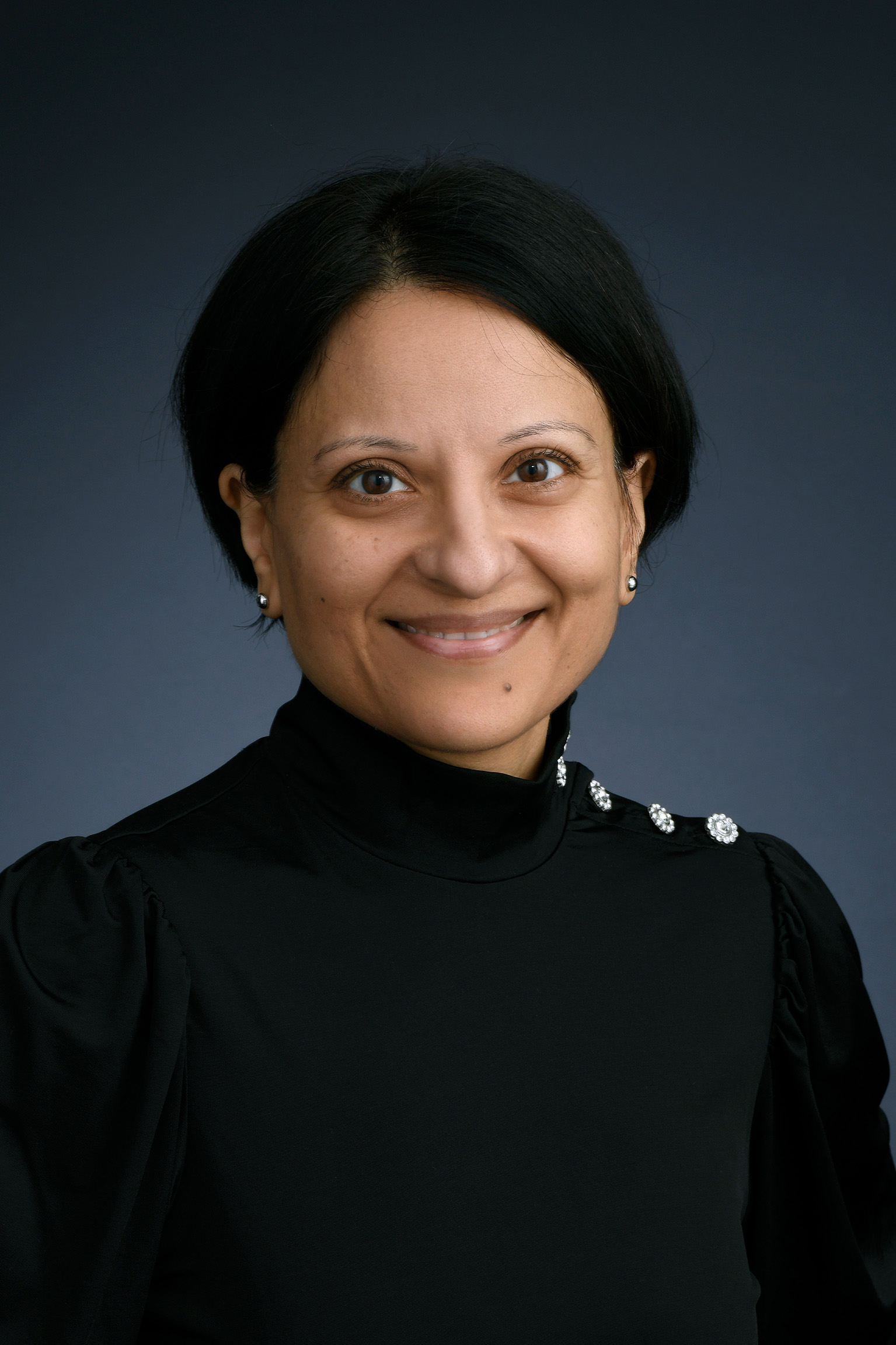
Praveen Gupta: Why are land rights so important? Particularly forest lands? What makes indigenous people a critical component of this?
Kinnari Bhatt: Simply put, because of the relationships that indigenous peoples, local communities and forest dwellers have to land. It is a non-monetary, reciprocal and respectful relationship of human tendering, stewarding and protection of intact forests. That is not something to be explored and exploited based on economic commodification of land.
We know that the successful human tendering, stewarding and protection of intact forests, nature and forest landscapes is now directly linked with secure, formal or customary community tenure over land, territory and resources. And heavy hitting science publications tell us that securing indigenous peoples and forest dwellers rights to land, particularly in forested areas will go a long way in reducing carbon emissions, protecting our largest carbon sinks and keeping carbon in the places where it is meant to be.
Climate change generally tends to frighten people but nature strikes a different chord in the heart. It is valued and this is a very different narrative. If we value nature, we value intact forests, biodiversity in all its forms. Securing land rights, strengthening local indigenous led governance and sustaining those has to be our number one priority. Sadly, I think that the international community has largely left out the important role of indigenous peoples and forest dwellers from climate conversations.
Lawyers also need to get on board but I think that this topic falls into the ‘too radical’ box for many of them. Actually I think it would be very helpful for lawyers to start to understand property rights in their relationship with indigenous rights as our legal frameworks are systemically rooted in dispossessing indigenous people. Many practising lawyers sitting in global legal centres like London do not see these connections or do see them and think of them as part of normal costs of doing business. This is an out of touch legal mentality and at its essence, quite colonial.
We need to understand these problems at the root and find solutions which go back to first principles of equity, inclusion and sustainable development. This means re-writing basic rules. So it’s radical but that sort of transformative change in legal thinking and practice is urgently needed. It cannot be ‘Business As Usual’ (BAU). Lawyers need to support this although for many that’s a controversial proposition.
PG: How effective is the UN Declaration on the Rights of Indigenous Peoples (UNDRIP)?
KB: I think it’s been an effective law and development tool for two reasons. First, as it finally puts the rights of indigenous peoples to social justice, equality, non-discrimination, development and dignity into a legal document – albeit one that is not binding on states. Crucially, the UNDRIP places indigenous peoples’ rights into part of an historical set of rights based on land and a history in which indigenous peoples’ had rights forcibly removed. That includes the right to freely pursue ones economic, social and cultural development and the right not to be forcibly removed without consent or just compensation.
Second, I see the UNDRIP as a living document which has been valuable for articulating the special rights of indigenous peoples’ and placing them in both an historical and contemporary lens. These are as important today as they were in the past. Indigenous peoples’ face threats from governments and companies for scaling up projects for natural resource extraction, biodiversity preservation, energy and infrastructure needs and the critical minerals needed for our capital and technology heavy energy transition – think of all those batteries and components for solar, for instance.
Toady’s conflicts, even killings and criminalisation, are actually still based on the same historical problem – the lack of legal recognition of land rights at the local level. This lack of legal recognition creates a vacuum which can be framed by governments, politicians and companies as trumped up charges of indigenous peoples’ causing environmental or biodiversity destruction, being anti-development or anti-green.
In our pursuit of a sustainable future it is imperative that decisions around the land and resources needed for our global transition and to meet the Sustainable Development Goals (SDGs) include at the earliest stage of planning, local community and indigenous led participation. For that we need to build multi-level and multi-stakeholder capacity about the social, environmental and developmental value of indigenous rights and I think for this endeavour the UNDRIP is useful. Especially when it is discussed alongside things such as the IPCC report which makes the strong case for indigenous rights and stewardship as a natural solution.
That said, there is room for improvement in the implementation of the UNDRIP as part of the UN Guiding Principles on Business and Human Rights (UNGPs). This hasn’t been comprehensively looked at yet. As a starting point we need to conduct large scale private sector awareness raising and then go deeper into a number of practical issues such as the development of effective mechanisms at project and national level and free, prior and informed consent (FPIC) protocols for engagement. The UNDRIP has not had a fruitful ‘implementation’ conversation with the UNGPs yet but hopefully this will change.
PG: Local communities and indigenous people continue to live under several threats. Scaling-up efforts to secure community land rights represents the world’s single greatest opportunities to act?
We also now know that there is a link between protecting land rights, keeping forests intact and the prevention of future pandemics. So there is a multiplier effect and securing land rights is a completely viable option.
KB: Yes, I agree. We know that ensuring indigenous land rights leads to two to three times less deforestation, increased levels of biodiversity and reduced emissions – making this approach more effective than virtually any other strategy. We also now know that there is a link between protecting land rights, keeping forests intact and the prevention of future pandemics. So there is a multiplier effect and securing land rights is a completely viable option.
Many great organisations and people have been working in this area for years. I think the global community has to give them far more support so that they can continue this and double down on the work that has already been done. This entails not only using policy, law and legislation that recognise rights to land and biodiversity but also nail that through the lens of intergenerational guardianship. We now have to take and apply this to many different contexts of just transition, business and finance.
PG: How do the design and coherence problems within financial & commercial legal and regulatory frameworks work to routinely displace land rights?
KB: There are a number of design and coherence deficits. Corporates and financiers have developed a variety of tool and standards aimed at identifying, measuring and mitigating the risks of investing in sustainable development projects that have the potential to harm local communities and indigenous people (LCIPs). I think that these tools have the potential for empowering and including LCIPs in development projects but current market standard legal terms and ESG frameworks are focused on shifting ESG risk away or relegating risks from the responsibility of financiers and companies. Over 20 years of complaints to ombudsman mechanisms that while these instruments are good at identifying and mitigating risk to corporations, investors and financiers – they are not adequate for producing human rights or environmentally compliant outcomes for communities.
There are shortcomings in the content, timing, authenticity and a lack of understanding of the private financial architecture in which they are embedded. Here are three design and coherence problems:
1. Current tools and standards are embedded within the private financial legal architecture of a given project and its surrounding terms, practices and culture – all of which have the capacity to sideline LCIP considerations at key moments in the project life cycle.
2. Market practice around the design and implementation of action plans, performance standards and loan agreements, mean that the legal content fails to capture the full constitutional, national, regulatory and ombudsman legal ecosystem which applies to a project.
3. Action plans and lender performance standards enter the project ecosystem too late to make any meaningful impact. Project timeframes do not allow for developing preemptive and practical FPIC policies and protocols, land and benefit sharing agreements or for inserting a culture of do no harm at early design stage.
There are more. I am producing a policy paper on this issue (coming out soon) and what we can do to fix it.
PG: Why are communally held land rights or those under traditional and collective ownerships often not recognised? What in your view is the status of women?
KB: Many reasons but in my experience, most of them come down to economics – governments and investors want to exploit land and natural resources – and prejudice that indigenous people are not capable or able to govern their own territories. This has been the rationale since colonial times and it continues – those with power treated the indigenous people as dispensable and forests as commodities. Governments were and continue to be instrumental to dispossession and criminalisation of communities, and now more and more so along side with companies and financiers. Our economic and legal systems are weighted in favour of continuing this situation.
I think things are changing (slowly) due to societal pressures, litigation and investor concerns. And we also have growing attention to these issues within EU laws and the British government is taking indigenous rights seriously in its international climate finance agenda. We need to see if the commitments are honoured and how the money is disbursed.
From what I understand, women face specific barriers to accessing their land rights so it is important to look at these issues. Experiences of indigenous women are different from indigenous men and women’s issues tend to be neglected or subsumed by male perspectives.
From what I understand, women face specific barriers to accessing their land rights so it is important to look at these issues. Experiences of indigenous women are different from indigenous men and women’s issues tend to be neglected or subsumed by male perspectives. I think that women’s land rights are being talked about more now. However more investment is needed to help NGOs on the ground address legal barriers and provide legal, institutional and empowerment support for reforming and implementing land frameworks to take women’s issues into account.
I mean we can all find commercial and constitutional laws of a country but is it that easy to find family , inheritance and succession laws – laws governing household and familial relations, if they even exist in the first place. And this is a problem but a problem that lawyers can help to fix.
I would like to stress that I am not a women’s rights expert and for those that are interested in knowing more I encourage them to follow to the trailblazing work of Resource Equity.
PG: What needs to be done to secure land rights as part of the ESG?
KB: Well we need to get to the heart of the matter – money and the economic incentives and supporting legal structures which cause dispossession and deforestation.
At the national and local state level there is a need for legal and institutional capacity building and then policies/subsidies that incentivise protection and sustenance of land and forest rights. There is also the work that need to be done in empowering local communities to know and use their rights. This obviously comes with hazards for those communities and so this needs to be done and scaled very carefully.
Another pathway would be for companies to first of all educate themselves on the ‘S’ in ESG and do risk assessments of whether there are human rights and land related exposures within their supply chains – not just tier one but further down. They need to allocate money and time to this process. They need to set up funds to assist suppliers further down the chain to do the due diligence and they need to think about their supply contracts. There needs to be a more than compliance ‘tick the box’ approach but I think the vast majority of companies and C-suite first need to educate themselves on this issue and take it seriously by devoting senior time and budget to the work and hiring of experts if those are not available in-house.
Beautiful corporate policy statements will no longer cut it and in fact, companies should be far more concerned about litigation, negative publicity and loss of customers if they are unable to back up their statements with action and implementation. Or for banks that invest in these sorts of projects – worried about having to put more money into their prudential regulatory obligations for maintaining capital as that is coming, I think.

of the Nallamalla forest (and later to other forest tribes & forest dwellers in India).
PG: Why and how are land rights coming under pressure from greenwashing – say carbon credit projects?
KB: This is an area that we need to be really mindful of. There is so much to say. I’ll start with what we don’t want and then what we do want.
What we do not want at any cost are situations where any type of investment and finance to or with communities is done through traditional market based legal and compliance methods which can have disastrous impacts on communities. We need to heed lessons from some of the awful outcomes of microfinancing in places like India where vulnerable people lost land and livelihoods and committed suicide because they could not repay loans. Any investment vehicle designed for sustaining long term stewardship and economic independence of communities must be structured and governed in new ways.
We need new finance norms and principles based on trust and crucially, rooted in legal norms found in the human rights and loss and damage fields. This is not unheard of as the mandate of the Green Climate Fund (GCF) – the funding mechanism for the UN Framework Convention on Climate Change (UNFCCC) is grounded in principles of equity and addressing vulnerabilities. And the GCF emphasises transformation and paradigm shift approaches to finance – not BAU.
We need to translate these broad legal principles into indigenous led structures and compliance mechanisms so that direct access to finance for communities becomes possible and scalable. I think that this is going to be a challenge for our legal and economic structures and BAU mindsets – we need more spaces for radical thinking. Large donors and funders must be prepared to give up space by re-thinking traditional modes of compliance and verification requirements, if they want to be part of this solution.
We will need to investigate what types and kinds of partnerships are possible with different players and whether they are open to being more flexible. We need to do things differently – that is a big responsibility and a challenge but an exciting one. I think that for too long they have overestimated risk and underestimated the benefit of giving direct funding to groups.
I am also quite concerned about the push towards conservation and biodiversity finance and the overall 30×30 agenda as this has the potential for new forms of encroachment and displacement. I am beginning to see human rights principles being developed but as with all things, the devil will be in the implementation. But with all of the instruments that will be put on the table soon – carbon credits, cooperatives, debt for nature swaps etc, the essential point is that they must be driven by indigenous communities and local intermediaries that hold trust with those communities.
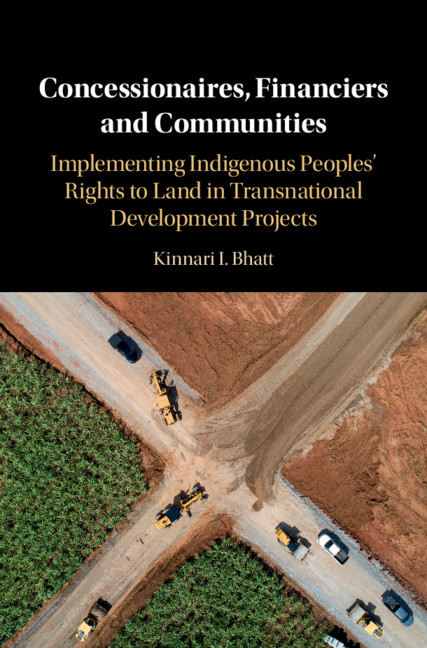
PG: Many thanks Dr. Bhatt for throwing light on some very critical and sensitive areas of your work. Also, appreciate insights into your book. I am sure it will prove to be a pathbreaking work.
Sanctuary Asia Cover Story: August 2022
https://www.sanctuarynaturefoundation.org/articles
Honoured to co-author this essay for Sanctuary Asia with its founding editor and an iconic champion of Nature – Bittu Sahgal! The Sanctuary Debate 2022: Do YOU Believe That Environmentalists Have Become Merchants of Dystopia and Doom? forms the backdrop to the essay.
As I sat down to write my part, the temperature had breached 45C. Did it really matter how far up the mercury moved from there? Frequent power cuts – nudged me to return to Mumbai. I thought there was nothing dystopian about the timing of the debate hosted at the Experimental Theatre, National Centre for Performing Arts (NCPA). It was an established reality. That this could be the ‘coolest’ summer ever – going forward – was indeed dystopian!
For a change the monsoon arrived in nick of time. Despite all the attendant woes, Mumbai felt heavenly. The heat-wave rapidly drifted across to Europe. The stage seemed set for Act 2. ‘NetZero’ was a molten resolve, coal reignited to beat the cruel heat and the case for ensuring a Greenhouse Gas buffered winter warmth was settled. A place each for gas and nuclear seemed assured in the hallowed portal of euro taxonomy.
What a coup for the fossil fuel industry! Is there a future for renewable energy? Yes, there is – if only we are serious about the well being of coming generations. There is enough science, knowledge and wisdom to get our biodiversity & eco-system back on track. Just one catch. Greed gets in the way. The choice is simple – survive or perish as a specie. The Planet can return to health, if left to itself.
https://thejournal.cii.co.uk/2022/07/29/can-insurers-catalyse-climate-actions
My latest blog for the Journal, Chartered Insurance Institute.
That the International Financial Reporting Standards (IFRS) finally overcame a big blind sustainability spot by inventing the ISSB (International Sustainability Standards Board) – in the hindsight – appears too good to be true.
“The ISSB needs to go back to the drawing board. I have seldom seen such a torrent of criticism about the inadequacy of proposals”, observes Professor Paul Watchman. “Torrent” is a really good description! It’s very difficult to keep up with all this feedback, adds Dr Raj Thamotheram.
Where is the big flaw? According to Bloomberg, “[ESG] ratings don’t measure a company’s impact on the Earth and society. In fact, they gauge the opposite: the potential impact of the world on the company and its shareholders.” Same is the case with the ISSB. One sided materiality.
“How can we reimagine our institutions and rebuild them so that they are truly effective for addressing the multiple existential threats we face?” I quote Ione Anderson. “Aligning the money-pipeline to investing for social and ecological returns” – as Bill Baue recently told me – deserves the highest rigour and vigour.
“I hope an independent journalist will help us analyse these comments”, wonders Dr Raj Thamotheram. Whatever that be – calls for a super-agile protocol not impeded by bureaucracy and analysis paralysis. Do we have that luxury, anymore?
Insurers cannot stay on the sidelines. They are the money pipeline, too. Catalysing climate action urgently beckons them to the mainstream. The stark warning from Vanessa Otto-Mentz and Marco Vet: “Picture a world that is uninsurable…” ought to be a wakeup call.

Baue currently serves as Senior Director of r3.0 (Redesign for Resilience & Regeneration), a not-for-profit common good that networks a global community of Positive Mavericks focused on transcending incrementalism to trigger necessary transformations that enact living systems principles. In this role, he serves as the Systems Convener for the Connecticut River Valley Bioregional Collaborative of the Capital Institute’s Regenerative Communities Network. His most recent major writing is as author of the White Paper From Monocapitalism to Multicapitalism: 21st Century System Value Creation (December 2020).
Baue has worked with prominent organizations across the sustainability ecosystem, including Audubon, Cabot Creamery Coop, Ceres, GE, Harvard, several United Nations agencies (UNCTAD, UNEP, UNGC, UNRISD, etc…), Walmart, and Worldwatch Institute. He serves on the Board of Co-op Power and as Senior Advisor to Preventable Surprises, and he is a certified Prosocial facilitator.
Bill enjoys camping, hiking, mountain climbing, kayaking, yoga, meditation, and dancing contact improvisation.
Praveen Gupta: You have recently cited the Lancet Planetary Health study: “Existing climate mitigation scenarios perpetuate colonial inequalities”. Would you wish to elaborate please?
Bill Baue: Sure! This study, by Jason Hickel and Aljosa Slamersak, reviewed 172 IPCC climate scenarios aligned with the Paris Agreement target of limiting warming to well below 2°C shooting for 1.5°C, and found that they essentially colonize the atmosphere by allocating more emissions allowances to the Global North (which is already disproportionately responsible for climate change) than to the Global South.
PG: You then go on to say: “The IPCC climate scenarios fail to take Global North / Global South inequities into account. Global South, therefore, deserves a longer runway”?
BB: Well, the first thing to know is that IPCC climate scenarios do actually integrate a degree of equity considerations, specifically taking into account differentiated capacity to achieve robust emissions reductions between the Global North and Global South. However, climate scenarios exist outside the IPCC databases that apply a more robust “equity tilt” that essentially not only accounts for imbalances in capacity to achieve emissions reductions between the Global North and South, but also takes into account imbalances of historic responsibility, which results in overburdening the Global North with emissions reductions expectations, and underburdening the Global South. Specifically, the Climate Equity Reference Project, and its Climate Equity Reference Calculator, created by researchers at the Stockholm Environmental Institute (and colleagues), embeds scenarios that enable users to dial up or down the level of responsibility and capability they wish to allocate between OECD regions (which generally align to the Global North) and non-OECD regions (which generally align to the Global South).
PG: It is nice to see white men and women taking up these historical inequities faced by the Global South. However, given the pace at which the climate tipping points are manifesting – do we have the luxury of an extra margin of time?
I believe that addressing historical inequalities supports this time-bound urgency, by calling on Global North regions to go beyond their own direct current responsibilities, adding to that their historical responsibilities.
BB: I fully agree on the urgency of immediate action, and I believe that addressing historical inequalities supports this time-bound urgency, by calling on Global North regions to go beyond their own direct current responsibilities, adding to that their historical responsibilities. This is possible due to the excess capital sloshing around in the Global North, looking for a place to invest. So what’s required is for folks in the Global North with excess capital to shift from only seeking investment with financial returns, to investing for social and ecological ‘returns’.
PG: Most rich white countries refuse to accept the climate debt they owe to poorer countries and communities arising from what Erin Fitz-Henry calls their ongoing “atmospheric colonisation”. Isn’t this a double whammy for the Global South?
BB: Absolutely. Part of the problem is that folks in rich white countries live in cognitive bubbles that insulate them from grokking the degree to which the conditions of their lives are predicated on centuries of systemic colonization, exploitation, extraction, and genocide. I live in the United States, and the historical record is absolutely clear that all of these dynamics have been consciously employed throughout our national history, yet this knowledge is, as they say, “unevenly distributed.” So, in order to gain acknowledgement and accountability for this ongoing “atmospheric colonization,” a key first step is to burst through this cognitive bubble, which is unfortunately fortified by layer upon layer of (unearned) power. As you can see, the work of redress is prodigious.
PG: Jason Hickel talks of a novel method for “Quantifying national responsibility for climate breakdown: an equality-based attribution approach for carbon dioxide emissions in excess of the planetary boundary”?
BB: Well, this is a great approach, but the method is not at all novel – this approach has been applied in the corporate realm for more than a decade-and-a-half. The general practice of context-based sustainability, and the specific practice of context-based carbon metrics, has been around since 2006, when Unilever subsidiary Ben & Jerry’s started assessing the degree to which their carbon footprint fits within the remaining carbon budget.
This approach has been codified into the Science Based Targets initiative (SBTi), which I helped to instigate in 2012 (it launched in 2015). Unfortunately, SBTi has suffered from corrupt governance of the BINGOs who run it (CDP, WWF, WRI, and UNGC), but the core concept is sound. Applying it at the national level is simply a variable. I’d encourage Jason to collaborate with the folks who originated the concept and practice in the first place (the Center for Sustainable Organizations), so he can benefit from their decades of experience and learnings (often from making mistakes that we now see others replicating…)
PG: How should these issues be resolved rather than fuel ongoing polemics which distracts the real issue?
BB: First, you need to understand who benefits from the framing of a dynamic as “polemic.” When the evidence is crystal clear, and yet certain constituencies – who happen to inhabit centers of political power – continue to defend status quo positions that, objectively speaking, are “extreme.” At the same time, folks who inhabit the political fringes, yet are more aligned with scientific evidence and ethical imperatives, are framed as “extreme.” This framing creates a polemic which is essentially artificial: one extreme (the mainstream status quo) is objectively speaking wrong, while the other “extreme” (the marginalized) is objectively speaking right. So a first step is to stop framing this as a “polemic,” and more accurately characterize the status quo as dangerous extremism.
Perhaps the most important thing we can convey to power-holders is that their power becomes moot when problems escalate to the levels of systemic and existential risk.
Given that the mainstream power centers are unlikely to relinquish power of their own accord, a key strategy of power-holders is to legitimize existing power structures. I mean, don’t you understand that this distraction from the “real issues” is conscious and purposeful? Perhaps the most important thing we can convey to power-holders is that their power becomes moot when problems escalate to the levels of systemic and existential risk. Ultimately, we’re in this together, and the sooner that power-holders recognize that solidarity is both altruistic AND self-interest, the better.
PG: Many thanks Bill for your candid and insightful thoughts. Best wishes for your ongoing endeavours.
https://illuminem.com/energyvoices/fb5b5870-56e8-413b-9cc6-761960b33529
My commentary on the presentation at the CHINA INTERNATIONAL CONFERENCE ON INSURANCE AND RISK MANAGEMENT (CICIRM) 2022, Changsha – published by illuminem.
The International Financial Reporting Standards (#IFRS) has had a serious blind-spot in terms of #sustainability. Is the formation and incorporation of the International Sustainability Standards Board (#ISSB) a panacea? I pick a few signals.
Is ISSB adoption by IFRS Foundation the magic wand that would drive businesses (including insurers) towards sustainability? Robert Eccles gives a green signal. Yet he cautions: “As part of its “Green Deal,” the #europeanunion is in the process of developing a set of standards for sustainability reporting… Concerns have been raised about the speed and process by which these sustainability reporting standards are being developed”. Bureaucracy continues to plague #multilateral agencies.
How do you embed #ESG to make insurers sustainable? In the course of my exploration Tamara Close, CFA explains how ESG compliance need not always mean sustainable. Nor being sustainable translate as ESG compliant.
Dr. Shiva Rajgopal believes climate reporting is the third best option for climate change. He is bullish about the role of ISSB. Prof. Carol Adams looks at the nitty gritty and highlights what else ought to be done. Bill Baue believes the Intergovernmental Panel on Climate Change (IPCC) has given the #colonial component a miss and the #GlobalSouth deserves a longer runway! So, how should the sustainability architecture account for it?
While several disconnects remain – for instance how must the bean-counters think? A fresh debate might be in the offing: is the climate crisis just about #decarbonisation? Likewise, how to account for #biodiversity and #nature? Watch-out how the nature related financial disclosures (#TNFD) begin to assert.
“Achieving Net Zero for carbon does almost nothing, yet this is the focus of most climate change work… The good news is that we can bring back nature, make the planet beautiful and fix climate change, all at the same time”, Dr.Howard Dryden shares the pros and cons.
“The world is on the attack against #ESG when it should be dealing with risks and addressing #ClimateChange”, warns Matthew Sekol. He highlights: “how ESG gets squeezed by the far-right… to the point where it is framed for #srilanka‘s collapse”.
Alison Taylor and Brian Harward reveal: “Pressure on companies to commit to ESG has so far led mostly to box-ticking… Instead, they should recognise that the stakes are high, and commit to push companies to do what they are designed for: innovating and improving our lives”.
Insurers should be no exception. Despite all the prevailing negativism – the occasional silver lining is reason enough for #insurers to act with due urgency.
Please respond to the IFRS Foundation (Link in the article). Deadline: July 29th, 2022.
Chartered Insurance Institute
清华大学经济管理学院 Tsinghua University School of Economics and Management

