“The climate crisis is brought on by technology and its solution will come only through technology”.
Venktesh Shukla (Venk) is General Partner of Silicon Valley based Monta Vista Capital. An early stage venture fund, which invests in companies that leverage AI/ML, blockchain and self-driving systems to transform industries. Portfolio of previous fund included companies solving problems in big data, hybrid cloud, cyber security for preventing data theft and bot attacks, digital marketing, power consumption in mobile and IOT devices as well as automated support through AI bots.
As past President of TiE Silicon Valley and Chairman of TiE Global, Venktesh presided over one of the most powerful networks focused on technology, innovation, and entrepreneurship in Silicon Valley and beyond. TiE, with 61 chapters across 18 countries, exists to promote wealth creation through entrepreneurship. Its membership includes the entire ecosystem of VCs, successful entrepreneurs, senior executives in public companies as well as budding entrepreneurs.
He has also worked with several state governments in India to help craft their policies on startups and to host them during their visits to Silicon Valley. He assists Ministry of Science and Technology on leveraging the diaspora for innovation in science and technology in India.
Venktesh is currently trustee of Foundation for Excellence India Trust (www.ffe.org). He was its founding President for the first 18 years. It has provided scholarship to over 17,000 talented but needy students and enabled them to become engineers and doctors in India. He holds an MBA from MIT Sloan School of Management and a B.E in Electronics Engineering from NIT Bhopal.
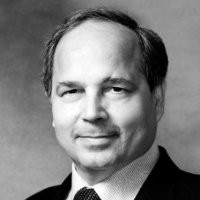
Praveen Gupta: What has transformed the Silicon Valley into a big theatre for South Asians?
Venktesh Shukla: The biggest attraction was the concentration of good quality jobs in this area. If you were relocating from another area, you did not have to worry too much whether the job you are going for will work out for you. If it did not, you knew that there were plenty of other companies in a small geography where you could try your luck. This is quite different from any other geography in US where a city or a region will have only one or two good companies that could hire you.
If you were relocating from another area, you did not have to worry too much whether the job you are going for will work out for you.
To a smaller extent, Boston area had similar concentration, but it was not the most desirable place for Desis from the weather standpoint. Boston lost its edge in the 90’s as it completely missed the internet revolution, and the difference in scale of opportunities between the two regions kept getting bigger. Once people get used to Silicon Valley, it is hard to leave the area thanks to its excellent climate, great education infrastructure, concentration of Indian grocery stores and restaurants and richness and variety of cultural activity from all parts of India.
PG: Do you see the possibility of replicating this in India?
VS: To some extent, it has already happened in pockets like Bangalore, the NCR, Hyderabad, and Pune. It is difficult to achieve the scale of Silicon Valley though – not just for India but for any other part of the world. Part of Silicon Valley’s attraction is its openness to talent from all over the world – there are 90+ nationalities represented in the Valley! It also helps that there are two world class universities that have figured out a way to commercialize their innovation.
The biggest strength of Valley now is that most of the potential acquirers of a tech startup are right here so better chances of getting in front of decision makers. Prolific acquirers such as Google, Facebook, Twitter, Apple, Salesforce, VMware, Cisco, Oracle, Splunk, Palo Alto Networks, Visa, Intuit, PayPal, eBay, ServiceNow are located here. Companies that are not headquartered here but nevertheless have a massive presence in the Valley are IBM, Microsoft, Amazon, SAP, and many others.
The biggest strength of Valley now is that most of the potential acquirers of a tech startup are right here so better chances of getting in front of decision makers.
PG: How is the Valley addressing some of the toxic issues which have been a recurring theme?
VS: For the last few years, Valley companies particularly social media companies like Facebook, Instagram, Twitter, and Google to a smaller extent, have been accused of not doing enough to police content on their platforms. Until recently, their defense was that they are not media companies and as such they should not be expected to exercise editorial oversight over what appears on their platform. They claimed that their appeal lies in the fact that are mere platforms that enable anyone to post anything. The outrage that followed the revelation of manipulation of Facebook data for US Presidential Election in 2016 by Cambridge Analytica and Russians put pressure on these companies to accept some responsibility for what appears on their platform.
Gradually, a bipartisan consensus appears to be emerging to hold these companies liable for the content on their platforms or to regulate them outright just as electricity, telephone and cable companies are regulated. Other issues that get attention are inadequate representation of women and minorities (other than Indian and Chinese of course) in tech companies. These are complex social issues that defy easy solutions. It is easy to pay lip service but making a fundamental difference is hard.
Gradually, a bipartisan consensus appears to be emerging to hold these companies liable for the content on their platforms or to regulate them outright… Other issues that get attention are inadequate representation of women and minorities… in tech companies.
PG: As a VC how do you ensure that valuations do not tend to dominate a business model?
VS: Valuations are a function of supply and demand and they also depend on the skills of the negotiators. If the valuation is not justified by fundamentals, sooner or later there is a reckoning of truth. Everyone saw what happened with WeWork and other overhyped companies. Oyo was a great company with a pioneering business model until Softbank got involved. The pressure to grow at a much faster pace made Oyo change its business model and assume much greater risk which was brutally exposed with the collapse of travel after Covid. Not clear though what could be changed here – all investing is in the final analysis an emotional act and sometimes emotions get way ahead of your judgment.
Oyo was a great company with a pioneering business model until Softbank got involved...all investing is in the final analysis an emotional act and sometimes emotions get way ahead of your judgment.
PG: To what extent has COVID-19 put the VC boom on hold? It is being said that the next wave of startups is expected to ditch the ‘unicorn’ envy and strive to be ‘camels’?
VS: What has happened over the years is that venture capital has emerged as an asset class by itself in the asset allocation model that deep pocket investors use. If the overall capital base increases, the funding available to the venture capital community increases proportionately. The capital base keeps increasing regardless of the prevalent market conditions because most of these are pension and retirement funds that grow every year. What that means is that the pool of venture capital available for investment has not been dented in this crisis. Funds are available but the psychology of the venture investment community has changed. They are more cautious now and there is greater emphasis on fundamentals. It is the behavior of the investment community that had given rise to the obsession with Unicorns and it is this behavior that is undergoing change.
It is the behavior of the investment community that had given rise to the obsession with Unicorns and it is this behavior that is undergoing change.
PG: The ‘migrant crisis’ demonstrates that India also needs ‘smart’ villages. Like the rest of the country they need jobs, healthcare, vocational training. The metro cities are bursting from the seams. The virus driven ‘WFH’ model has shown that not everyone needs to live in the big cities. Any thoughts?
VS: It seems to me that the idea of a self-sufficient and smart village is a mirage. Throughout the history of the world, it is the cities that have produced the finest writers, poets, artists, scientists, engineers, and other professionals. In other words, it is the cities that are the cradle of civilization. It is far cheaper to provide basic services such as jobs, housing, water, electricity, health, education per capita in a city than in sparsely populated villages. Therefore, much less adverse impact on climate. If the cities are bursting at the seams, it is a failure of governance rather than a failure of city model for development per se. In most of the other countries, as many as 70% of the population lives in big urban areas. If all these other countries have managed it, India should be able to manage it as well.
If the cities are bursting at the seams, it is a failure of governance rather than a failure of city model… If all these other countries have managed it, India should be able to manage it as well.
PG: India is the third largest emitter of CO2 in the world. The middle class aspires to live an American dream. Does that not run counter to sustainability?
VS: Of course, it does. Everyone wants the conveniences of modern life. And why should they be denied? The climate crisis is brought on by technology and its solution will come only through technology. Government policy, individual initiatives and societal restraint will have impact only on the margins, but it will not be a game changer. For example, no hand wringing was enough to stop countries from building coal fired power plants. Now that the solar and wind power is cheaper to produce, justifying a new coal fired power plant is becoming increasingly difficult. Government policy, climate treaties, and climate activism so far had only marginal impact but shift in technology made a much bigger difference.
No hand wringing was enough to stop countries from building coal fired power plants. Now that the solar and wind power is cheaper to produce, justifying a new coal fired power plant is becoming increasingly difficult.
PG: Can the Valley play a transformational role for India?
VS: How much transformation takes place really depends on India itself. There is no shortage of talent or ideas or desire to change in India. The best thing that has happened to India in the last few years is emergence of startups as drivers of change and innovation. And they are the best hopes for transformation of India. All that India must do is adopt best practices from around the world for nurturing startups and sit and watch. There has been progress in ease of doing business but the regulations in India are still such that it is holding up the transformation of India as an innovation powerhouse. Without innovation, no country in the world has ever become prosperous except for those with the petrodollars.
The regulations in India are… holding up the transformation… as an innovation powerhouse. Without innovation, no country in the world has ever become prosperous except for those with the petrodollars.
PG: Would the pandemic trigger automation with higher application of AI/ ML?
VS: The enthusiasm for AI/ML was already there and the Covid is only accelerating the trend. The need for automation has grown to spare human contact or to spare humans from going to the office.
PG: Many thanks and best wishes for your leadership, Venk!
Chartered Insurance Institute Blog: June 25th, 2020.
A look into the stories of past vaccine development, recent clinical trials and overall disease and related crisis management brings to the fore some eye-opening insights into diversity and inclusion. The role and contribution of women, in multiple facets of this, tends to be overlooked – whether as leaders, subject matter or even the lack of equitable representation. Names like Louis Pasteur or Alexander Fleming dominate a male narrative. It is, therefore, time to remember a few inspirational stories from the past and present. Perhaps these will reinforce the path towards a more diverse and inclusive order – and a sustainable planet!
Also: Fighting the COVID-19 Virus: Clinical Trials Have Opened the Second Front!
Enlightened buyers, particularly those with complex global exposures to litigious markets, are waking up and demanding sophisticated covers for their specific needs.
Topics
Coronavirus | Insurance policy | insurance cover
Praveen Gupta Last Updated at June 20, 2020 23:48 IST
https://www.business-standard.com/article/pf/covid-19-brings-insurance-policies-for-directors-back-into-mainstream-120062001389_1.html : Companies need to learn from all that is unfolding and anticipate what is in store. The lesson is straightforward. If you are in any form of business, whether local or global, and do not have a directors and officers cover, seriously reconsider. If you have one, revisit the coverage and limits. If you do not offer them adequate protection, quality independent directors will not agree to serve on your board, if they foresee risks to their personal assets. This is a growing trend. Do not go for cheaply priced covers, avail reasonable coverage limits, and also look at all other insurances in conjunction with the D&O cover. And remember, insurance is but a part of overall risk management. There should be no trade-off.
Pierre-Eric Lys is both a space and telecom scientist who successfully dabbled in space insurance for many years. He started as the Director of Space Risks at Allianz. Subsequently founded Paris based Spaceco, later moving it across to Dubai – where he founded another successful space insurance venture Elesco. It eventually became a world leader. An ace competitive sailor, Pierre is also a helicopter pilot. During the last five years he is involved in aeronautical research on solar power stratospheric UAVs and other humanitarian projects. Pierre is a keen observer of anything and everything to do with space. In this conversation he highlights the race, rivalry, and collaboration within the exclusive space club. He recalls the magic of live launches from the launch pads and how they sent his adrenaline gushing. In his view space projects fuel ‘positive visions’ thereby helping cope with the challenges we face today. The International Space Station, he believes, is the safest place to be in these times!

Praveen Gupta: Does the successful SpaceX mission to the International Space Station (ISS) by the USA gets it ahead of Russia, in the manned launch capability?
Pierre Lys: To answer this question, you would have to look back into the entire history of manned spaceflights. It all started back in the days of cold war between USA and Soviet Union. Both parties have had their own path – with USA flying to the moon in the late 60’s and Russia flying long duration spaceflights using their Mir station in the late 80’s. As of today, the longest duration flight record is still held by cosmonaut Valery Polyakov, who spent 438 consecutive days onboard Mir in 1994-1995. China later joined the club in 2011. The ISS was then put together as a joint effort between Russia and Western countries, at the end of the 90’s.
Talking about the manned rated launch vehicles – USA developed the Space Shuttle, which was operated between 1981 and 2011, now replaced by SpaceX Falcon 9. Russia has used the Soyuz rocket and its evolutions and has flown nearly 2000 times since 1966. Russia remains today the most experienced country in launching and flying humans into space. Their technology is getting old but has reached an unprecedented level of reliability. In terms of capabilities and technology, Falcon 9 is indeed way more advanced than the Soyuz. However, I believe we would need to see a few more successes before it becomes the reference in the field of human rated launch vehicles.
Russia remains today the most experienced country in launching and flying humans into space. Their technology is getting old but has reached an unprecedented level of reliability.
PG: Is the entrepreneurial zeal of Elon Musk the differentiator over an established bureaucracy of Boeing?
PL: It is certain that Elon Musk had a vision and has remained committed to it, even in difficult times of early failures of Falcon 1 rockets. Both the technical and the manufacturing efficiencies of SpaceX give them a very substantial advantage over any competition. Boeing needs to re-focus on making good aircrafts and good space vehicles in the hard environment of Covid crisis and strong aerospace competition. It is even more challenging for them to switch all their staff to a “nothing is impossible” mode – like SpaceX staff seems to have adopted since day one.
Boeing needs to re-focus on making good aircrafts and good space vehicles… It is even more challenging for them to switch all their staff to a “nothing is impossible” mode – like SpaceX staff.
PG: Did you watch the SpaceX launch from its own ‘trampoline’? Did you feel any different from any past onsite launches? Which of them has been the most memorable?
PL: Indeed, I watched the entire live cover for both the first attempt and the actual launch on May 30th. I would not miss any step of the amazing launch preparation sequence. I was lucky enough to be involved in many manned space program starting from Shuttle to Mir docking and ISS key life support systems. I attended many launches in many countries but launch of humans is always more emotional than satellite launches. I have seen Shuttle launch from Cape Canaveral and Soyuz inhabited launch from Baikonur cosmodrome. I cannot help from thinking about the exceptional number of equipment and qualified people who need to be ready and work exactly as planned at T-0 (launch second).
As an engineer, I am also always impressed by the performances necessary to bring astronauts to a much faster speed than a bullet. This Dragon 2 Demo flight was no different. However, attending a live launch on the launch pad is incredibly special and cannot be forgotten. When the sound of the rocket hits you, your body physically feels the power of the vehicle. And when you know someone is sitting on top of the vehicle, the adrenaline connects directly to your emotions. I was lucky to seat just next to Dennis Tito’s family on the launch pad of Baikonur in April 2001. Today, I still remember every moment of this event, not only because he was the first tourist to fly to space.
When the sound of the rocket hits you, your body physically feels the power of the vehicle. And when you know someone is sitting on top of the vehicle, the adrenaline connects directly to your emotions.
PG: Would space tourism generate enough traffic to make it commercially viable? Would it commence with visits to the international space station?
PL: Space tourism has always been extremely popular. Just ask your friends and relatives, you would be surprised by the number of people who would like to fly to space. The hurdle is usually not the risks but the financial part of it. Dennis Tito’s flight to the space station cost him USD 20 million in 2001. Twenty years later, the price has reduced by a factor 100. No doubt this trend will continue. I need to add the numerous number of near space experience offered today from accurate simulators to 0-gravity flights in airplanes.
I believe, however, that the International Space Station is not the easiest place for tourism. First, it was designed as a laboratory and it requires specific and complex training. Second, I do not believe that tourists would want to fly for more than a few hours, simply because the body reactions during long spaceflights are still difficult to accept just for pleasure. Third, going to and returning from the International Space Station requires a difficult in-orbit rendezvous. It is inefficient to fly there and return just for fun. I believe that short term flights to experience no gravity and to see the earth from above using a dedicated vehicle is certainly the future.
I believe that short term flights to experience no gravity and to see the earth from above using a dedicated vehicle is certainly the future.
PG: Are actuaries and underwriters ready to price such risks?
PL: Underwriting space risks is usually not an actuarial exercise, for the simple reason that the statistics are usually too low in numbers to draw any inference. Space underwriters are usually qualified space engineers who would consider the flight data, manufacturing record and testing of the equipment that are used – to price the risk. I remain proud to have provided insurance for the first commercial Falcon rocket.
Space underwriters are usually qualified space engineers who would consider the flight data, manufacturing record and testing of the equipment… to price the risk.
PG: Do hedge funds continue as risk carriers for launches?
PL: From my experience, space risks is like any other high volatility risks. The first benefit of only insuring launches is that you can actually ‘watch the claim live’ – right in front of your eyes. However, if you decide to insure satellites, it is the opposite, you cannot send an expert to assess the damages! You would have to rely on temperature, voltage, current data to assess the loss and determine the claim value. Hedge funds are looking for risks which are de-correlated from large natural disasters on earth as a good supplement to their portfolio.
The first benefit of only insuring launches is that you can actually ‘watch the claim live’ – right in front of your eyes. However, if you decide to insure satellites… you cannot send an expert to assess the damages!
PG: Jeff Bezos believes fastest way to Mars is via moon. Is he on the drawing board? What kind of time frame could he be nurturing?
PL: Bringing humans to Mars is a challenge in many ways. I would just start with an analogy which helps to visualise the distances: if the earth were a size of a football, the moon and mars would be the approximate size of an orange. The moon would be a few meters away from the earth ball, but mars would be a few kilometres away. This generates a large list of issues but just to share a few would help to answer your question. Communication with the earth would necessitate for the signal a few minutes to reach planet earth and then again, a few minutes for the mars inhabitants to receive an answer. Scenarios like “Houston we have a problem!” would then be somewhat different.
Bringing humans to Mars is a challenge in many ways… Scenarios like “Houston we have a problem!” would then be somewhat different.
The mars inhabitants would have to be autonomous in many ways. They would have to solve all kinds of problems (technical, medical, etc.) on their own. This brings me to my second point: you need to carry a lot of mass on the planet in order to embark all life support systems, and by the way you would also need to have the rocket and fuel to come back to earth at some point. This is a big challenge. Of course, we can imagine that fuel needed to return is produced on mars (therefore the search for water is so critical). However, the quantity of hardware is so significant that it cannot be a single rocket mission. One would first need to aggregate the cargo outside of earth gravity and then move this assembled cargo to mars.
The moon is certainly a good base for this because it is a lot easier to leave lunar gravity than to leave earth’s gravity. Interestingly, it took a decade to put the ISS together, but SpaceX has shown that it is possible to reduce the delays by a large factor. Once qualified for orbital missions, it is likely that Bezos’s Blue Origin program will show same pace. It is quite conceivable that building an infrastructure in the earth orbit or on the moon could be done in less than 5 years from now.

PG: Last but not the least, what makes you believe that we need projects like this, in these times?
PL: Our world is permanently subject to difficult challenges such as natural disasters, malnutrition, and more recently the Covid pandemic. Humanity has shown its resilience, however, there are multiple benefits for the people to have ‘positive visions’ as well as challenges to face. In today’s world, international cooperation is often reduced to international organisations like United Nations and World Health Organisation. Apart from large sports events like the Olympics or World Cups the outcome is never as visible as an actual project which everyone can see, understand and be part of. Space projects are exceptional, in this respect, in several ways. The International Space Station is a good example.
The Chandrayaan missions have been followed by millions of people around the world. Thousands of Indian engineers have been involved directly or indirectly in this project. I am amazed by the level of details known by your countrymen about the past and future Indian exploratory missions.
There is certainly an enhanced pride when significant projects have a national content. I would just refer to a speech from Dr APJ Abdul Kalam during the International Astronautical Congress 2007, in Hyderabad. His speech was a direct message to the young generations. Dr Kalam explained the importance for a country to have a sustainable growth path, and the vision to see India proud of its leadership. He explained to the young generations that every one of them will be an active contributor to these goals. During the following decade, the Chandrayaan missions have been followed by millions of people around the world. Thousands of Indian engineers have been involved directly or indirectly in this project. I am amazed by the level of details known by your countrymen about the past and future Indian exploratory missions.
PG: Many thanks for these ‘out of this world’ insights, Pierre!
BIMAQUEST, Volume 20, Issue 2, May 2020: To those who may have missed out an eye-opening interview with Shailabh Kumar (do please also look at the TEDx Dharavi link – right at the beginning of this post) and his remarkable mission, this is but a gist. Shared with the Journal of National Insurance Academy, as a guest author.
http://northwardho.blogspot.com/2020/06/new-story-coming-here-with-links.html?m=1
Saa Yue the shark spirit, around which I penned “An Appeal” whilst in HK 25 years ago, reappears here. From a physical causation of typhoons in the South China Sea, this #CliFi entails a play of quantum biology. The Saa Yue eventually succeeds allying with two driven Homo sapiens and fixes the disruptive bug in the human genome. Welcome to lookout for the twists in the tale, including a hindsight into what ‘troubles’ us today…
The Journal – Insurance Institute of India (April-June, 2020).
June 5th is the World Environment Day. This year’s theme is “Celebrate Biodiversity”. How have we changed, what David Attenborough calls, the ‘complex web of life’? To quote him – 96% mass of mammals on this planet is us and the livestock we have domesticated. Likewise, 70% of all birds is domesticated poultry!
A series of missed opportunities over the last few decades has brought us into this situation. What really did happen or did not or ought to have happened – Ambassador Navtej Sarna helps me navigate through the developments during the past 40 years. A three-pronged approach involving Climate Change, Biodiversity and Desertification, he believes, is best way to address the Climate Crisis. In our conversation, we explore the whole range of diverse issues – the dynamics of climate movements becoming international agenda and their handling by multilateral agencies. Lessons from arms control negotiations and tailoring them to climate realities. The power of and abuse thereof by the fossil fuel companies. The competing and adversarial interests that come in the way of sustainability. Literary narratives or activism, something that catches the world’s attention – like the carbon neutral voyages of Greta Thunberg – ought to be quickly followed by agreements that bind nations. Environmental damage can bring further global disasters like the pandemic, he warns.
In his near four decades of distinguished diplomatic career – Ambassador Sarna has served as India’s envoy to Israel, United Kingdom and the USA. He has had the distinction of being the longest serving Spokesperson for the Foreign Ministry. He headed International Organizations division in the Foreign Office and oversaw work related to India’s Presidency of the UN Security Council, arms control, nuclear negotiations, environment negotiations and peacekeeping operations. He spearheaded India’s entry as Observer to the Arctic Council. Ambassador Sarna is an established author of fiction and non-fiction.

Praveen Gupta: From your time, as a young diplomat, at the UN desk do you recall any missed opportunities in addressing the menace of escalating Climate Emergency?
Navtej Sarna: There was a time when environment was the next big frontier – I am talking of the early nineties. The Cold War was getting over, the Soviet Union was on the brink of collapse, the nuclear face-off was no longer an immediate threat. Mankind, it seemed, could turn its attention to other matters. Soon there was enough momentum behind environment to make it a subject attractive to world leaders. This led to the Earth Summit in 1992 in Rio de Janeiro. The Summit had a huge hype, the prep meetings were long and protracted, and it resulted in clear definition of three areas of work – Climate Change, Biodiversity and Desertification. Follow up action did take place in the shape of framework conventions and setting up bodies that would take forward this agenda on a multilateral basis.
However clearly somewhere along the way we could not keep the required pace, the focus was lost, there was too much wrangling for political advantage and a loss of the ideal objective – to protect the earth’s environment for the next generation. This was true of the climate change arm and now the present generation can rightly blame us for a loss of opportunity – the fight may have been easier if it had been fought in the nineties.
However clearly somewhere along the way we could not keep the required pace, the focus was lost, there was too much wrangling for political advantage and a loss of the ideal objective – to protect the earth’s environment for the next generation.
PG: Don’t you think the Climate Change agenda today is saddled with excessive bureaucracy which is impeding real action? As an outsider I tend to get flummoxed with the number of agencies involved and the abbreviations!
NS: Unfortunately, this tends to happen in a multilateral setting. Multiplication of agencies, agendas is a natural corollary when interests of so many countries, leave only careers of individuals, have to be balanced. There is a time when something is a movement – fueled by thinkers, activists, NGOs and so on. Then it becomes a part of international bureaucracy and all that comes with it. The effort has to be to keep that international agenda moving and that comes only when individual governements feel strongly enough – either on their own, for their own reasons, or under pressure from domestic lobbies, powerful countries and so on.
There is a time when something is a movement – fueled by thinkers, activists, NGOs and so on. Then it becomes a part of international bureaucracy and all that comes with it.
PG: In your view did the three-pronged approach – Climate Change; Biodiversity and Desertification – a more appropriate format to address the challenges faced by our Planet, rather than ‘clubbing’ it all together?
NS: Yes, I think since we must deal with a multilateral set up, separating these areas probably gives us more flexibility and agility to handle the problems, even though they may all be inter-related.
PG: The EU recently announced a plan for a climate law. Given your work in the space of International Law and the UN (agencies), is there a case for structuring this on the lines of Strategic Arms Limitation Talks/Treaty?
NS: This is an interesting parallel that is now being drawn – a sort of equivalent not so much of the SALT but of the Nuclear Nonproliferation Treaty (NPT). SALT was a bilateral treaty between the US and the USSR during the cold war. But the NPT was a multilateral treaty, though not global in its reach. India for instance is not part of the NPT, as we considered it a flawed treaty, discriminating between haves and have nots in terms of nuclear weapons.
A Climate agreement would necessarily have to be multilateral and to have any real meaning it should cover the whole world. Most important it should not be discriminatory and what that means would be very different in arms control issues and climate issues. Also, arms control is a more exact science, dealing with specific weapons, specific thresholds and a very detailed verification system. This may not always be possible in Climate treaties – these begin with being aspirational, and then add on national contributions and so on. Though there is a science to climate, verification aspects may be far too wide and far too intrusive. Also, arms control issues deal ultimately with governments. They are usually not the concern of ordinary people nor do they usually impact day to day life. Quite the contrary in climate issues. So yes, there can be lessons from arms control negotiations, but they would have to be tailored to climate realities.
So yes, there can be lessons from arms control negotiations, but they would have to be tailored to climate realities.
PG: The fossil fuel companies seem to be behaving like the East India Company – trying to push opium under the guise of free trade. Any thoughts?
NS: That is an interesting connection you draw. Fossil fuel companies have been among the most powerful companies in the world because they control a very valuable and limited resource. More so when this resource is not evenly distributed around the world. So, they have exerted power, sometimes more power than some nations. Fossil fuel companies have been among the most powerful companies in the world.
Fossil fuel companies have been among the most powerful companies in the world… Fossil fuel companies have been among the most powerful companies in the world.
The East India company too showed a deeply avaricious nature. It played politics, controlled armies, fought wars, and gathered immense wealth which then helped build huge influence back home. Trade was at the heart of it, but so much more then followed as a consequence of this trade, because this trade was no longer between equals. It stopped being trade, it became loot. And soon the flag followed the trade and continued the loot. Perhaps the power of these companies can only be challenged when the power of the resource they control is challenged.
PG: What is your vision for ensuring – urgency, collaboration, and timely action to restore sustainability in today’s fragmented world? Given its vulnerabilities, any specific thoughts on the Asia Pac?
NS: I believe the issue of sustainability is as complex as it is fundamental. If it was that simple, it would have been done by now. There are competing and adversarial interests – of industry, of technology, of fossil fuel lobbies, of the imperatives of development and these have to be balanced by a rising awareness of sustainability, accentuated by the current crisis. Ultimately there is no one vision – or silver bullet – that will take us where we want to be. So, we have to take whatever comes – multilateral bench marking, national action by States, people-driven action, activism and so on.
I believe the issue of sustainability is as complex as it is fundamental… Ultimately there is no one vision – or silver bullet… So, we have to take whatever comes – multilateral bench marking, national action by States, people-driven action, activism and so on.
I think the Asia Pacific is a hugely important region for the world and this will only be more evident in the decades to come. It is home to populous countries like India and China, it is the area which will be the center-point of global trade, global energy transit, small island vulnerable states, and the power play between China and the US. A focus on sustainability, given the potential of the Blue economy for states such as Seychelles or Mauritius or even the Pacific islands is absolutely essential. Many of these countries cannot do this by themselves so multilateral action, or imaginative bilateral or regional frameworks assume great importance.
PG: Silent Spring – by Rachel Carsen – inspired the creation of EPA in the US. Unfortunately, a very critical institution is being dismantled just when it is most required. What can recreate something similar – environmental activism, literature?
NS: Literary narratives can provide a philosophy for activism, but the world has to be ready for them. Else they sound like science fiction. Again, something catches the world’s attention – like the carbon neutral voyages of Greta Thunberg – and that then must be quickly followed by agreements that bind nations. These narratives be they a book, a film, an individual act of courage can at best be catalysts. We live in a world where policies are made by states, albeit under influence from society, and that is where the ultimate direction of change comes in on a national and thence, a global level.
Again, something catches the world’s attention – like the carbon neutral voyages of Greta Thunberg – and that then must be quickly followed by agreements that bind nations… We live in a world where policies are made by states, albeit under influence from society, and that is where the ultimate direction of change comes in.
PG: The coronavirus outbreak may exacerbate nationalism and stall climate change action. Do you believe any such concerns are unfounded?
NS: I think such concerns are valid. Covid 19 has the world in disarray. Health systems, economies, social engagement, work practices and so on have to come to terms of with the new reality – of hundreds of thousands dead, economies in sharp contraction, unemployment, travel disruption, anti-globalization trends and so on. It is only natural that countries are going to have to look inwards and handle the crisis situations on their hands first. This is the time to reactivate the climate narratives so that policy makers see them on their radars.
Environmental damage can bring further global disasters like the pandemic. Loss of biodiversity, loss of forest cover, rising sea levels and so on all have their potential for immense damage.
Environmental damage can bring further global disasters like the pandemic. Loss of biodiversity, loss of forest cover, rising sea levels and so on all have their potential for immense damage. These concerns need to be handled at the national as well at the multinational levels. At present it seems that a hard effort will have to be made to achieve this.
PG: I really appreciate all these rich & wonderful insights, Ambassador Sarna!
Chartered Insurance Institute Blog: May 28th, 2020
Will COVID – 19 bring a much-awaited trigger for class action? There have been several near-misses in the recent past – Coal India, Nestle, Infosys and ICICI Bank, to name a prominent few. Time will tell. However, it is surely high time to take D&O seriously.
https://thejournal.cii.co.uk/blog/india-directors-and-officers/
 The Diversity Blog