Translation in simplified Chinese courtesy InsConsulting Team:
Climate Change and Insurers: A much desired paradigm shift!
气候变化与保险人:一个亟待发生的转变!
While insurers tend to be linear in their thinking and action – there is an element of circularity between insurance and climate change. COVID 2019 is for sure one such bender but then there is a lot more that comes in the way of the rounding! This is something embedded deep down in insurers’ DNA. Not only an element of ‘remote’ ought to counter the obsession with proximate, so does the singleminded pursuit of predictability with unpredictability. Let us look at some of the challenges that tend to act as the blind spots.
保险人在战略思维和公司运营上是“线性的”——即使用二元论的思想指导行为,但他们却忽略了保险和气候变化之间的相互作用。COVID-19就是这种相互作用的一个例证,但绝不是最后一个。这种二元论的“线性”思维深植于保险公司的骨子里:用业务的长期“远虑”以抵御风险的“近忧”扰动、永远孜孜不倦地追求事物的“可预测性”和“不可预测性”。但以下几个例子说明,二元论的盲点往往会成为保险公司的挑战。
Climate change is a cross class financial risk: Ecological disturbances such as urbanisation and deforestation together with rising temperatures as well as sea level rise are forcing wild animals closer to domestic animals and humans. Thereby exposing us to novel diseases. It is estimated that in the last few decades 60% of all recognised human diseases and 75% of emerging infectious diseases were zoonoses or transmitted from animals to humans. Corona virus is neither the beginning nor the end of it. Health and life insurers get directly impacted apart from the supply chain implications. We are also witnessing customers scrambling for coverage against Business Interruption losses emanating from cancellations and restrictions to pre-empt a Covid-2019 breakout.
气候变化是一个跨类别的金融风险:城市化和森林砍伐等活动造成了生态扰动、气温和海平面上升迫使野生动物离家畜和人类更进一步,这使得人类面临新的疾病。据估计,在过去几十年中,60%的人类公共疾病和75%的新兴传染病是人畜共患或由动物传染给人类的。冠状病毒既不是这些悲剧的开场,也不是它们的尾声。健康险和寿险公司的保险业务和上下游产业供应链受到了直接冲击。非寿险公司也迎来了为抢在新冠肺炎爆发前投保营业中断险、取消险而排起长龙的客户。
By 2100, it is projected that, stress from extreme heat and humidity will annually impact areas which are home to about 1.2 billion people worldwide (according to Rutgers University-New Brunswick, USA). This may damage the brain and other vital organs. Another big threat for both life and health insurers.
据美国罗格斯大学-新不伦瑞克分校预测,到2100年,全球约12亿人每年都将生活在极端高温和潮湿的环境压力之下,他们的大脑和其他重要器官将因此受损,从而给寿险公司带来另一个重大威胁。
While some climate deniers disagree with the fact that the intensity of bushfires in California and Australia were a result of climate change. Likewise, burning rainforests in the Amazon delta and elsewhere will have adverse implications for global climate. What does this have to do with insurance? Well, some assets in vulnerable locations prone to high frequency and high severity losses are being ‘redlined’ by insurers. Thereby attracting higher pricing and deductibles. And in some instance rendering uninsurable, as well. The full thrust of climate change on the insurance industry tends to get camouflaged under the guise of Natural Catastrophe or Act of God.
尽管一些人否认气候与自然灾害有关,但美国加州和澳大利亚的森林大火是气候变化的恶果这一事实已不容置喙。同样,此时此刻在亚马逊三角洲和其他地方燃烧着的热带雨林也会使全球气候雪上加霜。有人也许会问,这和保险有什么关系?事实上,保险公司正在对易受冲击、容易发生高频率和严重损失的地区的一些标的进行“评级”。从而提高对应保险的价格和免赔额。在某些极端情况下,保险公司也会因标的风险过高而无法承保。气候变化对保险业的全面冲击,往往伪装在自然灾害或天灾的幌子后面。
While the science of Climate Change is well established, regulators and activists have begun to challenge insurers on their investments in the fossil fuel industry. Insurers not only underwrite risks including the non -renewable energy segment which has precipitated the climate crisis – they are risk managers and particularly the ones in North America are big investors in the fossil fuel industry.
气候变化科学的发展已经日趋成熟,监管机构和气候活动家已经开始质疑保险公司在化石燃料行业投资行为的社会效益。保险公司是风险承保人(承保的风险也包括引发气候危机的不可再生能源行业的风险),是风险管理者,也是化石燃料行业的大投资者(特别是北美保险公司)。
Pollution globally kills approximately 7 million people each year. If you continue insuring polluting industries and invest in them – you are truly between the devil and the deep blue sea. Any drop in the auto sales makes insurers gloomy. Perhaps they miss out on the fact that this could be good news to their health portfolio. It’s been more than 25 years since California sued top auto manufacturers for causing Greenhouse Gas (GHG) effect. Needless, therefore, to mention the recognition of the linkage between pollution and climate change.
全球每年约有700万人死于污染。如果保险人继续为污染行业承保风险并为他们提供资金——那他们将处于进退维谷的地步。现在,新车销量的下降让保险公司感到悲观。但他们或许没意识到这可能是对于其健康险业务的利好消息——加州起诉顶级汽车制造商造成温室气体(GHG)效应已经25年了,空气污染与气候变化之间的联系不言自喻。
What till recently also sounded remote was management liability. Not only fossil fuel companies are expected to face growing class actions from a range of stakeholders, Norwegian Cruise lines is faced with a D&O lawsuit. The first such arising from Covid 2019. Dismissing this as a Black Swan event would be rather naïve. Infact the repeated strong signals of an imminent global killer pandemic breakout over the years was missed out in all the noise. The buck, therefore, ends up with the boards of responsible businesses.
“管理责任”这个词直到现在听起来离我们还很遥远。不仅化石燃料公司将面临来自众多利益相关者的集体诉讼,挪威邮轮公司(中国境内叫诺唯真邮轮公司)现在也同样面临着董事责任诉讼。有人认为这是新冠肺炎疫情导致的第一起类似案例,并将其视为黑天鹅事件,但事实证明他们太天真了。全球致命流行病爆发的强烈信号在近年来反复出现,它们却在社会的各种噪音中被忽略了。因此,责任最终只能落在了企业董事会身上。
The current risk management practices of insurers tend to be myopic. To deftly deal with Climate Change calls for both a wider time frame and imagination. Risk modeling based on a couple of centuries historical data – of a 4 billion-year-old Planet – is too miniscule for it to be predictive. Lastly, it needs to be accepted that the effect of some of the things insurers insure and invest in results in Climate Change. Howsoever seemingly remote a cause Climate Change might seem; it is increasingly turning out to be proximate to loss triggers. The starting point for insurers to cope with Climate Change calls for shedding the linearity.
保险公司目前的风险管理做法往往是短视的。要巧妙地应对气候变化,需要长远的眼光和对未来的构想。对于一个拥有40亿年历史的星球来说,仅仅基于几百年历史数据的风险建模实在微不足道,无法帮助人类掌握自然的规律。最后,一个大家不得不接受的事实是,保险公司承保或投资的标的确实导致了气候的变化。无论气候变化离保险事故的“近因”有多远,标的的出险概率已经被它潜移默化地提升了。从应对气候变化的角度出发,保险人是时候跳出“线性”思维了。
Praveen Gupta
英国特许保险学会会员
前保险公司首席执行官、气候活动家
As one of India’s largest foreign investors, it’s time for Blackstone to invest in renewables. The investments till date have been largely transactional. To be truly impactful, Blackstone needs to become a transformational player.
https://ieefa.org/blackstone-could-provide-indian-energy-security-a-strong-boost/
Ms. Hetal Dalal is the Chief Operating Officer of Institutional Investor Advisory Services India Limited (IiAS), a SEBI-registered India-based proxy advisory firm. Her role includes voting recommendations published annually by IiAS on over 800 listed companies that aggregate over 95% of the total market capitalisation on Indian exchanges. Also, the oversight of the governance research published under IiAS’ that enhances market participants’ understanding of best practices. Hetal leads IiAS’ efforts in working with International Finance Corporation (IFC) and BSE Limited on the Indian Corporate Governance Scorecard, which assesses Indian companies on their corporate governance practices. She provided oversight to the ESG assessment framework developed by IiAS: IiAS is the first domestic agency to have created such an assessment framework.
Hetal is a Chartered Accountant and holds a management degree with a specialisation in finance from NMIMS Mumbai. It was my pleasure speaking to her on a host of subjects including Women on Boards; Corporate Governance; Fiduciary responsibility; ESG and Sustainability.

Praveen Gupta (PG): Your last report Corporate India: Women on Boards was truly pathbreaking. How has been the real progress since then?
Hetal Dalal (HD): There has been a lot of progress since our 2017 report on Women on Boards. There are a greater number of women on boards and an increase in the number of directorships being held by women. Almost 45% of NIFTY 500 companies now have two or more women on their boards and there are three companies that have five women on their boards. From an overall board composition perspective, 27% of the NIFTY 500 boards have women that comprise over 20% of the board, up from 11% on 31 March 2017.
Almost 45% of NIFTY 500 companies now have two or more women on their boards and there are three companies that have five women on their boards.
The regulatory change requiring the top 500 companies to have at least one woman director has had limited incremental impact – at the time of our 2017 report, 69% of the NIFTY 500 companies already had one Independent Woman Director – on 30 November 2019, 91% of the companies have at least one woman director. Despite the improvement, India remains well behind other markets that have targeted at least women representation at 30% of board composition.
PG: ‘The plethora of well-meaning men and organisations that have sprung up to “mentor” and “train” potential women directors are more patriarchal than progressive in their prescriptions, reflecting a poor understanding of what inclusion is really about’. Any thoughts on this observation by Ms. Rama Bijapurkar?
HD: I tend to agree with all the arguments that Ms. Bijapurkar has made in her article. The quota for women is being brought to correct a generational or a systemic defect – but that does not take away the argument of meritocracy. Sure, having training is important – and even companies are required to conduct ‘familiarisation’ programmes for its directors. But, one can neither be effective nor command the respect of peers because one has simply undergone a training programme. For all directors – not just women – having their own mettle is important.
PG: While pressure is growing on fund managers to pay greater attention to environmental and social issues, is there a realisation that ESG and impact investing can generate strong financial returns as well? According to Bloomberg – nine of the biggest ESG mutual funds in the U.S. outperformed the Standard & Poor’s 500 Index last year, and seven of them beat their market benchmarks over the past five years.
HD: Several domestic funds are now focused on ESG. We believe the asset managers are clearly seeing the value of ESG, and in several instances also being compelled by their own investors / unit holders, to focus on ESG. With stewardship codes now becoming mandatory for almost all asset classes, it will propel the focus on ESG factors. While this is still relatively new for Indian markets, we believe the pace at which ESG will become a centre stage conversation will be quick.
We believe the pace at which ESG will become a centre stage conversation will be quick.
PG: Some asset managers believe that not considering ESG exposes legacy investors to uncompensated risks and may even constitute a breach of fiduciary duty?
HD: Although most of the ESG tracking seems to be in chase of long-term returns and attracting capital, there is a coterie of asset managers that believe ESG factors do expose investors to uncompensated risks. There have been ESG failures that have resulted in sharp deterioration in market capitalisation resulting in losses for investors. At the same time, there is a need for investors to be more discerning around how to proactively factor in ESG – for a large part, investors (and the market) is reactionary. Even so, I don’t think asset managers in India consider this to the extent of interpreting it as a failure of fiduciary responsibility.
PG: Do you think Climate Change is becoming an important agenda for enlightened Indian boards? Measuring Sustainability Disclosure: Ranking the World’s Stock Exchanges 2019, both Bombay Stock Exchange and National Stock Exchange of India rank 37th worldwide. How do we move up?
HD: 38 of the NIFTY 100 companies are signatories to CDP Worldwide (Carbon Disclosure Project), which shows that climate change is a focus for corporate India. However, only in 9 companies have the sustainability objectives been embedded on executive directors’ performance goals. One could conclude therefore that while climate change is being addressed through business, the focus on this at board levels is still limited.
The increasing issuances of green bonds is also testimony to the fact that not just companies, but investors too are showing an increased focus on sustainability.
The Indian exchanges consider their dominant role to be one of providing a platform for exchange. They do not pursue an agenda, believing that this may compromise their position as an unbiased market fiduciary. Therefore, the first step will be for exchanges (and perhaps the regulators) to redefine their role as influencers of Indian markets.
While climate change is being addressed through business, the focus on this at board levels is still limited.
PG: Indian Corporate Governance Scorecard framework developed by you jointly with the International Finance Corporation and the BSE – to what extent can it facilitate underwriting management liability exposures of individual corporates rated here?
HD: Our research shows that companies that score well on the CG Scorecard (score of 60 and above) have outperformance the index over a two-year period. Their stock beta (volatility) also tends to be lower than companies that do not score well on the CG scorecard. Clearly, equity markets seem to attach a premium to governance quality. Similarly, from a liability perspective, it can be interpreted that companies with a good governance score, in effect, are likely to have a lower probability of governance failures.
PG: Many thanks, Ms. Dalal. Truly appreciate these wonderful insights. My best wishes for all your endeavours.
Translation in simplified Chinese by InsConsulting Team:
Our banks, insurers and asset managers will assume significant scale with growing penetration. There could not be a better timing to align individual lifestyles and aspirations with the country’s sustainability goals as well as those of all financial institutions…
Walter Murphy and Praveen Gupta in conversation on the Preventable Surprises blog. Preventable Surprises, to quote them, is a London based ‘think-do’ tank that seeks to drive behaviour change within the investment sector to help prevent major market dysfunctions. In an increasingly complex and polarised world, Preventable Surprises creates a safe and creative space where ‘positive mavericks’ inside the investment system, scientists, policy experts and corporates can collaborate. The outcome is lasting change that benefits investors and corporates that have a long-term focus and thus society at large. Their major programme focuses on climate related systemic risk and is called ‘Forceful Stewardship’. They are also engaged in work relating to ESG leadership, sell side research and investment scenarios:
Externalities are fascinating. Perhaps a bit too daunting for the imagination of bean counters. It is not just the accountants that I am alluding to but the actuaries, rank & file and the risk managers. Economists included. The provocation for the latter comes from Inside Out Economics: Are Externalities the Main Event? (by Duncan Austin) and so does much of the (‘beyond)meat’ to reinforce my conviction.
If risk-management is indeed meant to make governance robust – the function ought to shed its myopia. ‘Tell us more’ said the chairman of a risk committee in response to my choice of the phrase. So, I alluded to Nassim Taleb’s ‘hindsight bias’ followed by a case for liberal arts education as an antidote to myopia. Coz bean counters, I said to him, left to themselves are a risk to the risk function!
How do we de-risk our businesses to ensure their sustainability as well as our planet’s? In response to US treasury secretary Steven Mnuchin’s suggestion that the champion of Climate Change – Greta Thunberg – must study economics, the author Duncan Austin has something specific to say. “Yet possibly what Greta has noticed is that many of society’s influential decision-makers are either formally trained or well-practiced in economic thinking and still struggling to find convincing remedies to our sustainability crisis. Perhaps the way we have been teaching economics is part of the problem?”.
While the author does not undermine the role of economics as a valuable body of knowledge – he bemoans “downplaying the significance of one of its own discoveries made exactly a century ago” which “has potentially calamitous real-world consequences”. To get under the skin of this hard hitting truth – everyone word in the following quoted text must be read.
“Pigou’s inconvenient truth
In 1920, Arthur Pigou, a Cambridge economist, conceived the idea of externalities to describe how market transactions may create unintended harms or benefits for which no monetary compensation or reward occurs.
For example, one study estimated the monetary value of the ‘services’ provided free by the Earth’s ecosystem at $125 trillion in 2011, nearly twice the value of global GDP (gross domestic product). That is just an estimate of certain ecological values ignored by the market. Important social values are missed as well. In the UK, unpaid housework in 2016 was estimated at about 65 percent of GDP – another huge block of nonmarket value. These two studies alone indicate that measured GDP captures about a third of some larger conception of value.
Such estimates suggest that it is not that the market doesn’t capture all things of value, it doesn’t even capture most things of value. Far from externalities being peripheral, they may be the main event!
We have a sustainability challenge because the entire financial system repeats the problem of the discredited EBITDA metric at the level of the whole economy. This is the invisible conceptual cage we have wrapped around our decision-making and from within which the ESG movement is frantically trying to make a difference. Alas, given the incompleteness of our markets, the ESG movement increasingly resembles a hopeful grafting of good intentions onto an unchallenged accounting reality that remains the largely intact source of our problems.
So, every single financial metric on the Bloomberg screen is a BESDA (‘before ecological and social depreciation and amortization’ basis) metric – profits-BESDA, earnings per share-BESDA, return on capital-BESDA, return on equity-BESDA, etc. The millions of financial numbers processed daily by our increasingly automated markets – which, in turn, steer our economy and drag our culture along behind, ripping up nature in its wake – are all BESDA numbers. It might not only be EBITDA with which we’re conning ourselves, but every financial number in the book. They all represent different degrees of disembedded value, some of which we have unmasked, some of which we have not.”
How does all this tie in with insurance economics?
Let us leave aside the logic or illogic of pricing models, the adequacy or inadequacy of the time frames in which they are expected to operate and the obsession with predictability. Asbestosis by hindsight looks very probable (as Mr Taleb would put it) but the shortsightedness which brought upon all the attendant woes – meant you were collecting too little a premium and something unforeseeable was beyond your imagination. It would be interesting to dig into actuarial signoffs. A formal risk management function was absent, but someone was responsible for something akin. Underwriting profitability – then as it is now – takes a back seat. Lloyd’s almost went broke. Pricing continues to be a mockery, thanks to the seemingly endless supply of ‘alternate capital’.
Climate Change is not a peril priced for. Together with Cyber and aspects of D&I, these three externalities – constitute biggest of the risks. Too far and out of their boxes. Valuation of insurance entities is an addiction that generally induces the insurance industry to gloss over a sustainable price. Many covers like motor third party (GHG / health consequences), pollution and contamination would not pass the sustainability test for not only these run counter to the risk carriers’ sustainability but more importantly our Planet’s too. When car sales fall (including diesel fuelled) insurers panic as their auto portfolio shrinks – not for a moment is there a sense of rejoice that there could be resultant reduction in emissions meaning less impact on the health of those who end up inhaling it.
Is there some unintended good? From outside the blinkers of all concerned arrived – what I like to call Post Millennials – they are not meek, and shall inherit the earth. It is very much in our interest that they join the shareholder activism – cut through the bureaucratic barricades, recharge the imaginations of all those in serious need of getting externalities inside the pricing models! An art of liberating all forms of bean counting…
As urban spaces expand – many historical, architectural and natural sites of significance fall by the wayside. Increasingly neglected, into disrepair and struggling to survive. Charming Udaipur seems headed in this direction, too.





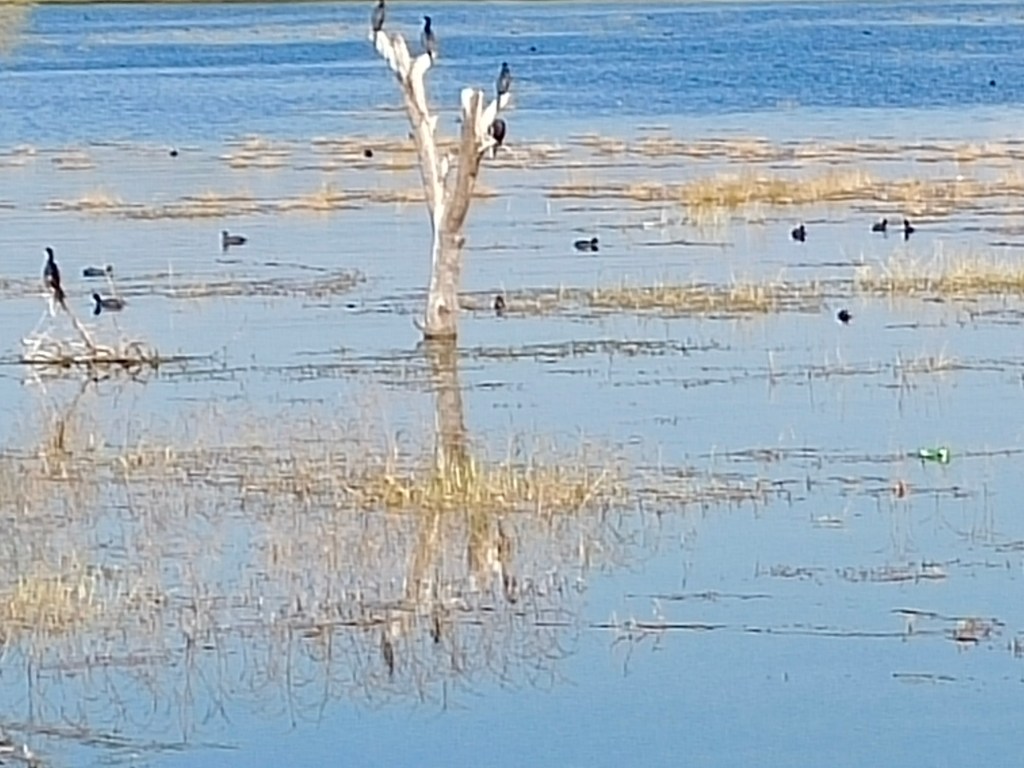
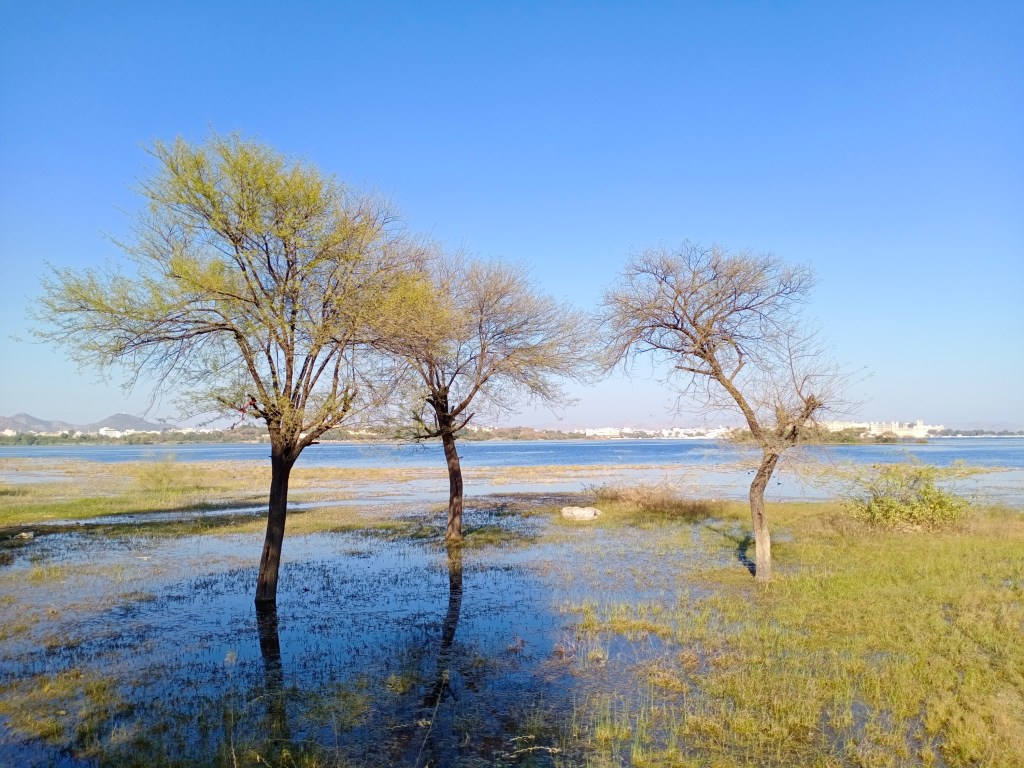






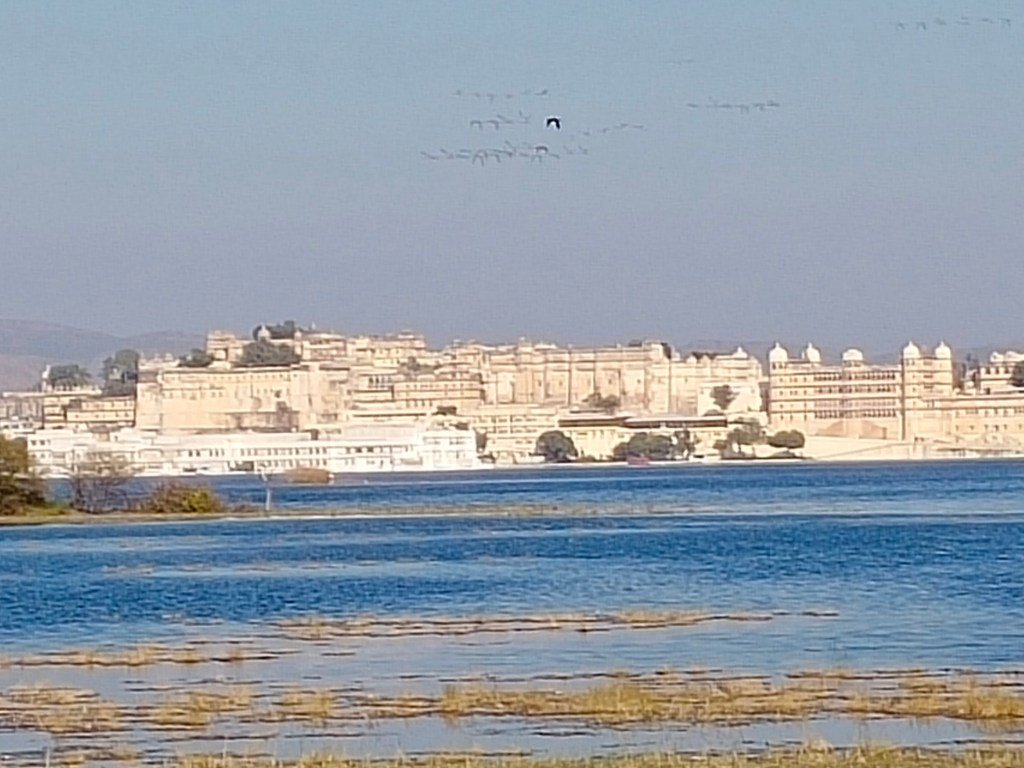
While I am finalising my presentation Climate Change: Elephant in the Boardroom! for the Insurance Law Association, I am equally engrossed in Raavan. The gripping fiction by Amish Tripathi, based on the Lankan king, devil incarnate in the Ramayana. With the story unfolding, I begin to believe that this Lord of evil is the polluter, pollutant and pollution – the unholy trinity! And that a single deviant can radically vitiate the overall climate.
To be the last speaker of the day calls for extra vitality both in terms of what you wish to present and how. Therefore, nothing like fortifying the narrative with real stories. Sometimes, what others tell you lends a whiff of oxygen. And sometimes what you have said something – somewhere else – gives a new context to your fresh explorations. Most interestingly it’s what an another might tell you without even having to ask, after you have delivered your story, that triggers a new insight.
How about the last thing first? So, at my presentation I seriously fret and fume about everything that is going wrong with our lovely Planet. Coal, the king of fossil fuel and blackest of them all, is at the very epicentre of the trouble! Once I am all done and settle down for an Uber ride home – I am wishing to cool down. Expecting it to be a quiet trip. However, the driver Rahul has other plans.
That he is from some place called Deoghar, by the Mayurakshi river, in Jharkhand is an inert input. Given my equally inert response – it is his turn to lace it up. ‘That’s where Raavan left behind the Shivalinga’ was something I was least expecting to come my way. He then tops it by saying how coal is abundant and virtually free around Deoghar. Not surprised by the fact that it is right in the heart of India’s coal belt. Not too far apart Jharia where fires have been raging for over 100 years, like uncontrolled demons, in the coal pits. Free and plentiful supply makes it a darling and an addiction. Leaves me wondering whether he can read my mind or was he present at the just concluded event, that evening?!
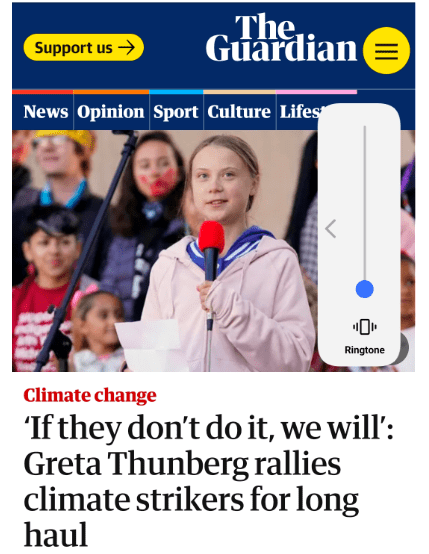
Late 2017 I ‘crystal ball gazed’, to write a blog on invitation from the CII (A leaf from the Chartered Insurance Institute Blog!), as to what lay in store for 2018. One trend that I talked about was the non-state players taking on the role of influencers. Emerging charisma of individuals was in mind too – particularly Sian Fisher (CEO of the CII) in context of her inspiring ‘HeForShe’ initiative. That was how far I could think at that point of time. Greta Thunberg was nowhere in sight. Perhaps just a fourteen year old then. Early last year at the Asianinvestor panel discussion on megatrends, in Hong Kong, the context of leadership evolved and I dared to say that ‘Post Millennials’ like Greta should be sitting on the boards of corporations. Howsoever, naïve it might still sound, the urgency to cut on our carbon footprint calls for Raavan-of-a-Climate-Crisis slayer like Greta.
With the rising sea level much of Mumbai will be under water by 2050 – I tell my friend quoting New York Times. This is before the local media breaks the story, a few days ahead of my presentation. I am surprised that he is not surprised and tells me what his late grandmother said. Lending more than a whiff of oxygen. The paternal grandma used to attend to the needs of a spiritual lady one Shantabai. Sometime between 1925 to 1941 – during her spiritual journey – the name Ramtanu was bestowed upon her. Shantabai visualised a great city emerging from the Sea, where Navi Mumbai stands today. More importantly, she also told the grandmother that in about 100 years the sea would claim the city back! In Turbhe (once a village), now a suburb of Navi Mumbai, stands a temple dedicated to Ramtanu that is believed to protect all its residents.

There are signals galore! Are we willing to be not distracted by the noise? Uncanny or uncanny not?!
Published in Business Standard on December 28, 2019: https://www.business-standard.com/article/current-affairs/the-crucial-role-of-banks-and-insurers-in-reducing-greenhouse-gas-emissions-119122800822_1.html (Paywall)
 The Diversity Blog