illuminem
March 26, 2025

https://illuminem.com/illuminemvoices/natural-capital-went-from-overlooked-to-unstoppable
“We are facing a global crisis. We are totally dependent upon the natural world. It supplies us with every oxygen-laden breath we take and every mouthful of food we eat. But we are currently damaging it so profoundly that many of its natural systems are now on the verge of breakdown”: Wrote David Attenborough in his foreword to The Economics of Biodiversity: The Dasgupta Review.
The ‘Review’ released in early 2021 reminded, as Dr. Partha Dasgupta explains, about “Nature’s worth to society – the true value of the various goods and services it provides – is not reflected in market prices because much of it is open to all at no monetary charge. These pricing distortions have led us to invest relatively more in other assets, such as produced capital, and underinvest in our natural assets… Many of our institutions have proved unfit to manage the externalities. Governments almost everywhere exacerbate the problem by paying people more to exploit Nature than to protect it, and to prioritise unsustainable economic activities…
Illuminem
March 13, 2025

LinkedIn post:
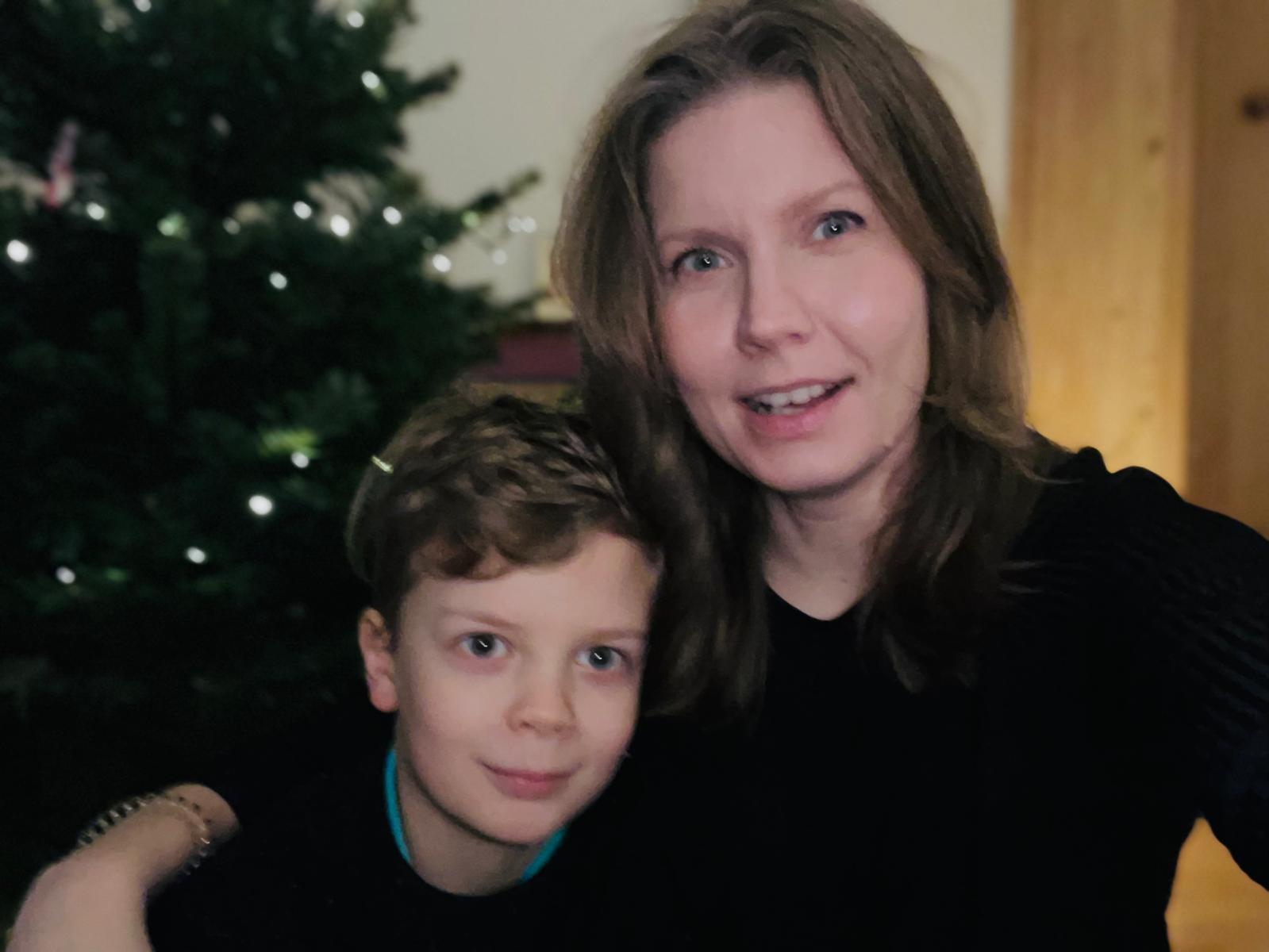
Vilhelmiina with son Veikko
Vilhelmiina Vulli (VV) is the Head of Media at illuminem – which has emerged as world’s largest and premier expert network in sustainability. She devises comprehensive communication strategies, manages content creation, and nurtures the vibrant community of illuminem Voices.
Working with a creative agency gave her a front-row seat to the rise of AR, VR, and AI. She has been closely following their adoption, independently testing tools, and engaging with the evolving conversation. At university, Vilhelmiina focused on media studies with international politics and linguistics.
Originally from Finland, she has always been drawn to technology. She was part of a SaaS startup in Helsinki focused on 3D performance optimization and has worked with large players such as Kone, Valmet, and Yaskawa.
Vilhelmiina’s deeply international perspective is shaped by living across Europe, including the UK, Ireland, Finland, Germany, Italy, and Spain. She shares her unique perspective on the eve of IWD.
PG: US exiting the Paris Agreement and abandoning DEI. Isn’t this a significant environmental and societal setback? Your personal thoughts?
VV: Sustainability is not only about the environment, it’s about sustaining life — creating a world that supports livable conditions for all.
Far-right extremism and focus on the US domestic economy are part of the on-going development since Trump’s previous term and will affect Europe. Financially struggling governments and individuals are trying to find solutions to cope with actual and perceived aggressors, and this naturally leads to a focus on defence in Europe. Not to mention how the EU is already preventing immigration and with nationalising agendas often focusing on the part of population “born and raised” in a country. This is something we will need to actively try to prevent.
How do we attempt that at illuminem: by diverse hiring (team mates for example from Zambia and Liberia), by working with and listening to diverse groups/people, by representing diversity through our news and illuminem Voices, and making sure that this is part of our editorial policy.
On a positive note, I see sustainability as an incremental part of defence in terms of resilience and adaptation, on a regional and global level. With more resources in innovation there is a possibility to use tech and solutions for good. I’m also hoping that the market that is evolving around sustainability (from nature-based solutions, to EVs, to renewables, to CDR) grows inclusively and with the value of sustaining life (not only for the few, but for the many). Climate change has a global effect, and we cannot predict how the weather will change in a specific place, for a specific person — sustainability should be a concern everywhere, and those who have the financial means and power have a responsibility to drive it forward.
I’m also hoping that the market that is evolving around sustainability (from nature-based solutions, to EVs, to renewables, to CDR) grows inclusively …
PG: How is it being perceived in Europe? Would an imminent NATO reorder be any surprise?
VV: The general perception has been devastation, but I also see the sustainability community reacting quickly. Everyone from politics and academia to engineering to finance or charity, are reacting to the US/Ukraine/China/Russia situation. The way I see it, is that even if the US stepped out of NATO, it would be first and foremost for cost reasons, not spending money on military or other aid for Ukraine or elsewhere, but taking care of domestic “sustainability”. In the same line of thinking, thinking about the economy and future costs, one could argue that it is in US interest to adopt sustainable solutions.
PG: Given your insights into AI, are the virtues and vices too hyped?
VV:
1. Inclusivity: AI is a technology, developed and trained by humans. With any technology there will be a chance to develop it in many directions — and of course, we should intentionally develop inclusive technologies. Unfortunately, we humans are naturally afraid of anything different and at times of war or defence – nations and individuals have the tendency to turn inward, find the enemy, fight the difference. This is why the EU is investing in developing its own AI solutions. How inclusive they will be, is a great question.
2. Energy: AI and our digital environments in general, require a lot of data processing, which requires a lot of space, energy, and infrastructure. Whether we really need all of this technology is one question, and another one is, what do we power it with? From what I see, all energy options are on the table, but should be used in the most sustainable way, i.e. if you must continue using fossil fuels, it still makes very much sense to invest in alternatives like renewables to safeguard remaining natural resources.
3. Information: I think the biggest potential problem, even an existing one, is humans being “locked-in”, separated from each other, not having conversations and sharing information, whether through writing, reading, etc. but taking information from a selective system, in a selective format, and failing to make their own informed and critical decisions. AI has the potential to entirely monopolise what we think — therefore should be developed with this consideration in mind.
Unfortunately, we humans are naturally afraid of anything different and at times of war or defence – nations and individuals have the tendency to turn inward, find the enemy, fight the difference.
PG: How to mitigate the gender and racial bias of AI? Would the likes of Deep Seek be the answer?
VV: Kind of in the above 🙂 And yes, more options typically means less monopoly, which is more democratic, so to speak. The driver behind different countries developing their own solutions is a political one now. If there is war, data and information equal direct power. Thus, the US wouldn’t like all of their data to be shared with China, and so on.
Equally, it’s evident that innovation is constant and somehow information has ways of finding people. But, will the right information find the right people at the right scale?
PG: A recent HBR report finds women adopting AI slower than men. Is it about digital divide and accessibility, or a more discerning and judicious usage?
VV: With a background in the tech industry, I’d say the whole process starts from a societal level. Are women encouraged to be inquisitive, encouraged to enter tech, are they supported if faced with obstacles, what is the surrounding culture and working culture in the industry? Is it easy for women to attain the education and respect needed?
Of course, one could argue, that whether for genetic or cultural reasons, women are more altruistic/empathetic (or am I just repeating a false narrative?) and that they don’t want to jump into new tech because it perpetuates one view-point more than the other. I strongly believe you can be both discerning and learn new things 🙂
PG: “The next civilisation is being birthed in large part by deep-thinking women, but hundreds of millions are highly vulnerable to planetary and social risks… and likely to become more so unless we can change the systems of resilience and self-sufficiency”. I quote Dr. Phoebe Barnard. What are your thoughts?
VV: Fully agree, but also think we have come to a level of education/economic stability/know-how for larger global minority communities, who have power to create change — for the many.
PG: Grateful for these unique perspectives, Vilhelmiina. Happy IWD!
It was a privilege running these three seminars – three hours each – with a very diverse representation including some distinguished members of Hong Kong SAR insurance community. All exceptionally participative.
Well done Team CII HK for identifying two of the most challenging risks facing us today – Climate and AI – and pioneering to address these.

Day One at the Hong Kong Club facility

Post lunch with Alpha Ho (to my right) – Regional Corporate Development Manager HK & Asia Pac and Kenny Siu – Regional Director


Day Two with Ellen Ho – Regional Project & Membership Engagement Executive & Alpha Ho

Day Three with the go-getter Alpha Ho!

TGIF: At the CII HK office. Vincy Ho, Regional Operations and Engagement Manager – Hong Kong & Asia Pacific also here.
Key takeaways:
Compelling case for embedding Climate risk in mainstream insurance/ risk management theory and practice.
Urgent need for a serious course correction the way we educate and train insurance workforce.
Heartening to see the resolve of a broad spectrum of practitioners wrt Artificial Intelligence: Leverage it as and when necessary. Tap into natural intelligence as much as possible. In the growing noise, look for the signals.
February 20, 2025
Blog interview published by Illuminem

Zaneta helps clients turn biodiversity and climate liability risks into opportunities for her clients. As any professional working in this area, she spends her days reading the narratives of fear and shame. Many of them present a grim or even a doomsday picture of our common future.
The current narratives are largely fear or shame based, says Zaneta. “Fear completely inhibits us from imagining our shared future. Shame is paralysing and more often than not leads to denial or backlash.”
“We need to change the narrative about climate change to bring everyone on board. This is where reframing may help…If we remove fear and shame and instead approach it with neutrality, our future becomes visible and attainable for us all.”
The Journal, CII
February 19, 2025


https://thejournal.cii.co.uk/features/2025/02/19/california-wildfires-metaphor-insurance-dystopia
https://www.linkedin.com/feed/update/urn:li:activity:7299706509741981696/
My blog for the Chartered Insurance Institute Journal.
“Virtually any city on Earth can burn now – probably not Dubai, but just about any place that has a lot of hydrocarbons. Berlin could burn, New York could burn, Pittsburgh can burn. LA is burning”: John Vaillant – author of ‘Fire Weather’ – tells Kiley Bense in Inside Climate News of January 16, 2025.
Southern California is a perfect blend of ‘unholy’ trinity – ignition, oxygen and fuel. Growing developer greed, setting aside Indigenous wisdom and invasive plant species that came with the colonisers – together with intensifying climate change ensure the deadly outcome.
“What climate change does is it takes naturally occurring phenomena and makes them more intense and more erratic, and also creates conditions for them to occur in places they didn’t normally occur. We all know Southern California is flammable. It’s part of the rhythm of this landscape”: explains Vaillant.
Given that these events are going to happen more and more often… should we be surprised? Lots to learn for markets wishing to scale insurance penetration in fragile landscapes.
Hong Kong SAR
February 25 to 27, 2025


Illuminem – first published by Sanctuary Nature Foundation
February 12, 2025
https://illuminem.com/illuminemvoices/naive-risk-management-at-best-and-fatally-foolish-at-worst
Sanctuary Asia
Feb-Mar, 2025



https://www.linkedin.com/feed/update/urn:li:activity:7295492196168822786/
My Op-Ed for February 2025 issue of Sanctuary Asia.
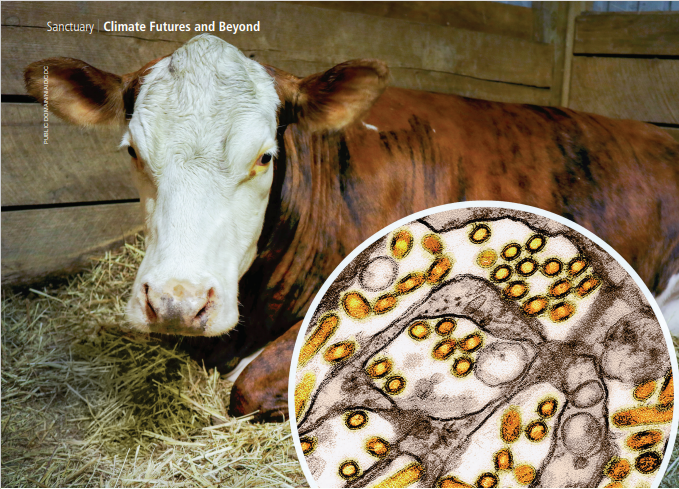
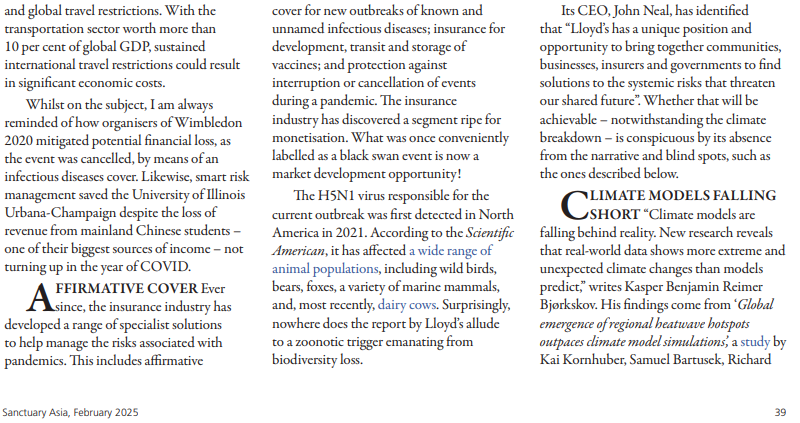
With a bull on rampage – the strain of a highly pathogenic avian influenza virus H5N1 currently spreading among dairy cows in the US – seems to be getting overlooked. It is reportedly one mutation away to readily latch on to human cells found in the upper airway. If and when that happens, will it be consigned as yet another black swan? As of now the ‘pandemic segment’ is monetization in progress.
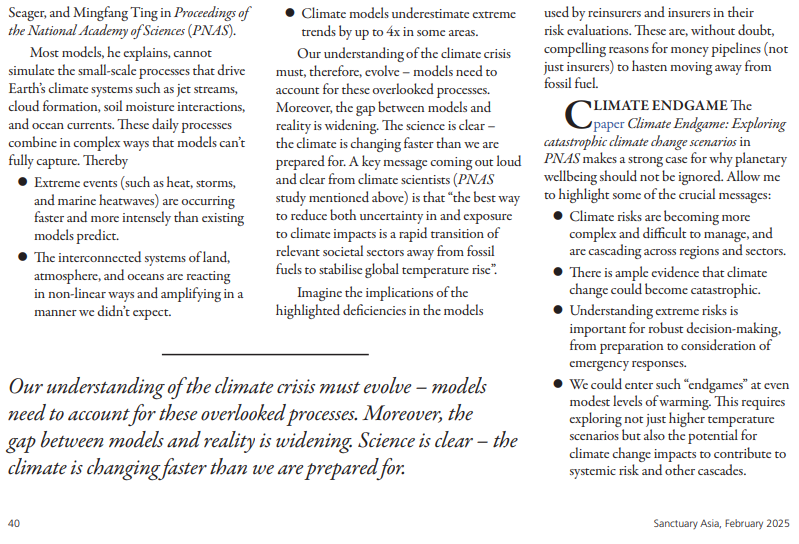
Climate models are falling behind reality. New research reveals more extreme and unexpected climate changes than models predict. The gap between models and reality is widening. Science is clear – the climate is changing faster than we are prepared for.
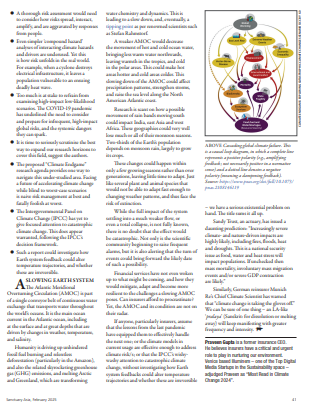
The proposed “Climate Endgame” research agenda provides one way to navigate this under-studied area. Facing a future of accelerating climate change while blind to worst-case scenarios is “naive risk management at best and fatally foolish at worst.”
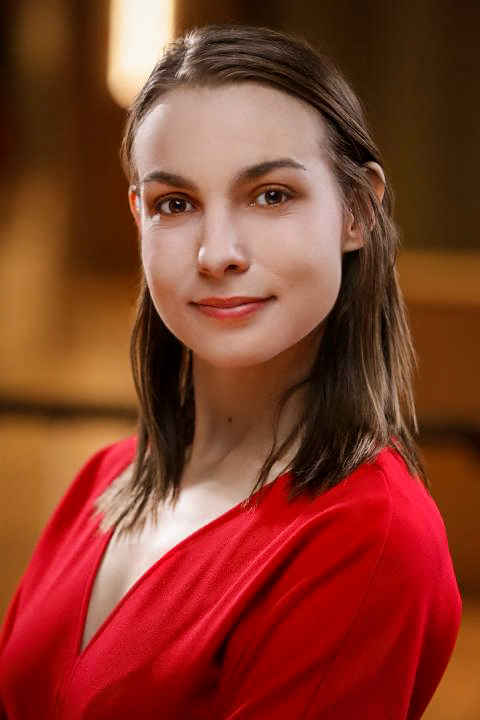
Zaneta is a Biodiversity and Climate Risk Lawyer qualified in England and Wales with a strong focus on risks and opportunities climate and biodiversity crises present to the financial system as well as individual decision-makers.
She helps clients understand and mitigate their exposure to biodiversity and climate liability risks, prepare for the regulatory changes anticipated in the decarbonisation of the worldwide economy and implement their own Net Zero targets in a responsible and transparent manner. Most importantly, as Zaneta puts it, she helps clients turn these risks into opportunities for their business and wider stakeholders.
Praveen Gupta: While Climate breakdown, Biodiversity loss and Pollution together constitute the biggest existential threat – how do you believe should these be addressed?
Zaneta Sedilekova: There is no single solution to the triple crisis of climate change, biodiversity loss and pollution. We know that they are driven by our dominant economic system and therefore can only be addressed through system-wide change. Systems change happens at multiple levels of individual behaviour, collective culture, government and corporate decision-making, among others. Law has its own role to play in enabling and solidifying such systems change through interpretation of existing principles and progressive regulation for new markets.
PG: You have mentioned Climate change as a friend and as a direction of travel. Would you please explain?
ZS: My point here is to reframe how we communicate about climate change. The current narratives are largely fear- or shame-based. We either talk about climate change as a threat to address, a problem to solve, or even, in some cases, a danger to fight. These narratives create fear among everyone who dares to listen. Fear completely inhibits us from imagining our shared future.
“Very much like fear, shame is paralysing and more often than not leads to denial or backlash”
The second narrative is based on shame – we shame people for their life or work choices, their lifestyles. While I appreciate lifestyle prevalent in some countries is heavily contributing to climate change, shaming people for adopting such lifestyle is not going to help. Very much like fear, shame is paralysing and more often than not leads to denial or backlash. We need to change the narrative about climate change to bring everyone on board. This is where reframing may help.
Climate change is a natural process, driven by the Earth’s systems, irrespective of its consequences for us, as a species. When we communicate it through negative emotions, such as fear or shame, we necessarily attach a judgment to otherwise neutral natural phenomenon. If we decide to speak about climate change more neutrally, such as ‘a friend’ or a ‘direction of travel’, our response completely changes. We stop fighting it and start looking in the direction in which it is pointing.
That direction of travel is very clear – decentralised renewable energy sources, restoration of natural ecosystems that help restore balance in the atmosphere, shorter supply chains and nature-centric decision-making across all levels of the society – government, corporate and individual. If we remove fear and shame from our narrative about climate change and instead approach it with neutrality, our future becomes visible and attainable for us all.
“If we remove fear and shame from our narrative about climate change and instead approach it with neutrality, our future becomes visible and attainable for us all”
PG: Of late you have been drawing much of your inspiration from Eastern traditions/ philosophies? How does that help?
ZS: As any professional working in this area, I spend my days reading the narratives of fear and shame I describe above. Many of them present a grim or even a doomsday picture of our common future. It is not easy to stay positive, or indeed find joy in everyday life without strong mental resilience. I find that my daily yoga, breathing and meditation practice helps me see the bigger picture, stay focused on my priorities, both in my personal and professional life, while making sure that I can make difficult decisions with integrity and responsibility on a daily basis.
It was more of a happenstance than my deliberation to turn to Eastern traditions, yet for the past ten years, I have been diving deeper and deeper into them to find balance and peace in the world that is becoming more and more uncertain.
PG: Many thanks Zaneta for sharing these brilliant insights into your chosen path to cope with our biggest existential crisis. With all good wishes.
 The Diversity Blog