“Why do we struggle to act collectively…?
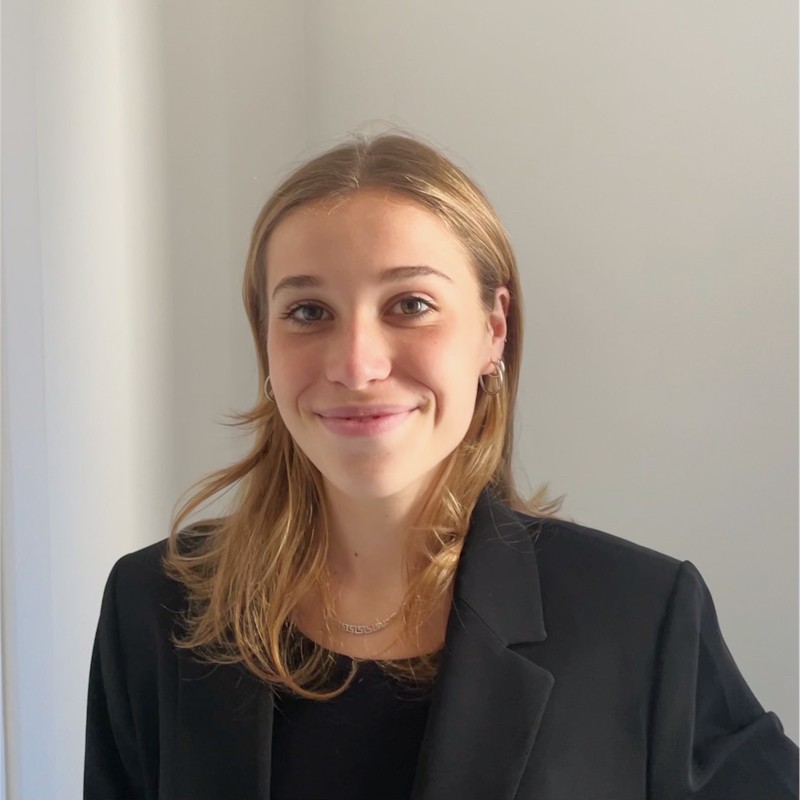
Marguerite Lynas is a Gen Z-er. She is remarkably clear-sighted about the opportunities and threats presented by Climate breakdown to her generation and beyond. “Through my experiences in people & culture, healthcare, and hospitality, I’ve become increasingly interested in creating experiences and environments that help people feel more connected, supported, and understood”.
A Psychology graduate from McGill University, Marguerite is currently interning in France. She enjoys a global perspective shaped by her own multicultural upbringing. Curious about people, wellbeing, and emotional awareness – her insights are full of optimism and pragmatism.
Praveen Gupta (PG): What’s your take on the unravelling Climate breakdown?
Marguerite Lynas (ML): Climate breakdown is an environmental and a human crisis. Of course, it’s about rising temperatures, biodiversity loss, extreme weather events, and the myriad of already – unfolding consequences. But at its core, it’s also about our relationship with the world around us and with each other.
I’ve always been fascinated by human behaviour, and climate change raises the question of: why do we struggle to act collectively when we know the threat is real?
I don’t think that fear alone is a useful response. I think there are many intricacies to it; the scale of the challenge is immense and we can’t undermine its complexity. At the same time, I think there is growing consciousness around our interconnectedness – with each other and with nature.
For me, the conversation is about, beyond prevent damage, reimagining how we want to live and care for the systems that sustain us. In many ways, climate change is forcing to ask deeper questions about the world we want to create, and the things we value moving forward.
“ In many ways, climate change is forcing to ask deeper questions about the world we want to create…
PG: How do you see it impacting the coming generations?
ML: To me, there is undoubtedly an element of unfairness.
My generation, and especially the ones that follow, will inherit many consequences of decisions we didn’t make. At the same time, I don’t want to frame it as a story of blame between generations. Many people in previous generations were operating within systems that prioritised economic growth and consumption, often without fully understanding the long-term consequences. But I think it’s important to remember that each generation operated within the context of its time. When we think about the late 1940s – after periods of war and economic hardship, it’s understandable that people sought prosperity and comfort and were eager to spend. Ultimately, that too is human psychology.
What concerns me most is that climate change will amplify the inequalities that already exist. Those with the fewest resources are often the most vulnerable to environmental disruptions, despite having contributed the least to the problem. That is where I think the unfairness lies.
At the same time, I see reasons for hope. Younger generations have more global awareness thanks to the interconnectedness. While the challenge is significant, I also think there is opportunity to rethink our priorities and build systems that are more sustainable and conscious of our interdependence – and with that, more equitable.
“What concerns me most is that climate change will amplify the inequalities that already exist…
PG: Does a multicultural upbringing better equip you to cope with it?
ML: I think a multicultural upbringing has shaped how I view complexity.
Growing up internationally gave me a strong sense of global citizenship. I feel very connected not just to one place, but to many different cultures and ecosystems across Asia, North America, and Europe. It taught me that there are many ways of seeing the world, and that no one culture has all the answers.
Because of that, I believe the most meaningful solutions will emerge when diverse people from these different ecosystems come together around shared challenges like climate change. Ultimately, it is a global issue that requires discipline and cooperation across borders
Living across different countries has also made me more comfortable with uncertainty and change. Moving, adapting, and rebuilding community teaches you that growth often comes from learning to navigate the unfamiliar. I think that mindset is particularly valuable in a world facing complex challenges that don’t have simple answers. More than anything, my experiences have reinforced the belief that our futures are deeply interconnected. Climate change may affect different regions differently, but it is a shared challenge, and our ability to respond to it will depend on how well we work with one another.
“I believe the most meaningful solutions will emerge when diverse people from these different ecosystems come together around shared challenges...
PG: What draws you to the intersection of holistic health and technology?
ML: When I talk about holistic health, I’m referring to an approach that recognises the complexity of human beings. It recognizes that we are mental, physical, social, and emotional beings – and wellbeing needs to take into account all of these dimensions. A problem I sometimes see is thinking of the brain, the body, and behaviour in isolation – when in reality they are very interconnected.
What fascinates me about holistic health and technology, is that both fields ultimately ask the same question: how can we make people live better lives?
Technology has put so much knowledge, tools, and support at an arm’s reach. All of these are accessible to us more than ever before. The problem, to me, is when we think of it as primarily a means to increase efficiency, rather than human flourishing. The intersection becomes interesting when technology helps people understand each other better, deepen curiosity, strengthen positive habits, access and ask for support, and feel more connected rather than more disconnected.
At the same time, striking a healthy boundary with technology is the true challenge that exists. But despite that, I see so much potential in the space where these two meet, and it’s something I’m very interested in exploring further.
“The problem, to me, is when we think of it as primarily a means to increase efficiency, rather than human flourishing…
PG: As a Gen Z-er, how do you believe AI could help democratise mental health and wellbeing?
ML: I think AI is a gift when it comes to democratising access to mental health and wellbeing.
Many people around the world cannot access therapy, coaching, or health education, even though these feel like fundamental resources. They have become extremely costly, sometimes inaccessible geographically, and still carry a certain stigma in many contexts. AI has the potential to lower some of these barriers and provide support at a scale that was previously unimaginable.
At the same time, technology cannot be seen as a replacement. By no means do I believe AI can replace human connection. From a psychological perspective, and particularly through the lens of the nervous system, there are aspects of healing that happen in relationship and simply cannot be replicated artificially.
So, I see AI as a powerful complement, not a substitute. The risk comes when we begin replacing human relationships rather than strengthening them. The opportunity lies in using AI to expand access to knowledge, reduce barriers to support, and carve pathways towards real-world connection – and I think this, to me, is where the focus should be.
“I think AI is a gift when it comes to democratising access to mental health and wellbeing…
PG: Your interest in creating experiences and environments that help people feel more connected, supported, and understood – is that a prescription for creating self-supporting communities in the age of climate crisis?
ML: I think we live in a society that constantly pushes us to do more, to be more: more connected, more ambitious, more successful. Yet despite being more connected through technology, the hyper-connectivity of modern life ironically seems to pull us further away from ourselves.
I was listening to as podcast recently where Seth Porges referred to this as an “autonomic society:” one that pushes our nervous system in these states of survival and hyper-vigilance.
As far as I understand my purpose today, it lies in helping bring people back to themselves.
I’ve always been fascinated by spaces where people naturally come together. How some environments make us feel guarded, while others invite openness, curiosity, and connection. I’ve experienced this through moving countries, having to rebuild community, through travelling, and through the countless hours I happily spend in cafes and other third spaces.
When I talk about creating experiences and environments, I’m interested in designing conditions for belonging and meaningful connection. Environments that make us expand – potentially through wellbeing initiatives, educational projects, events, or digital platforms.
Facing challenges like climate change, loneliness, and rapid technological change, I think community is one of the most important resources we have. Humans were never designed to navigate life alone. From a psychological perspective, we co-regulate through relationships. We find safety, and resilience through one another.
So in many ways, I do think creating stronger communities is part of the answer. Resilient communities are what allow us to adapt, support one another, maintain hope, and ultimately come together around solutions with a collective purpose in the face of challenges like climate change.
“Facing challenges like climate change, loneliness, and rapid technological change, I think community is one of the most important resources we have…
PG: Is there anything else you would wish to say wrt inter-generational risk?
ML: One thing I think about often is that every generation inherits both problems and possibilities.
It’s easy to focus exclusively on what younger generations are losing, and on all the disasters and negative things currently happening in the world. But we are also inheriting unprecedented access to knowledge, global communities, and opportunities for collaboration. The question is not only, what kind of planet do we want to leave to future generations? But also, what kind of relationships, communities, and values do we want to leave behind?
For me, climate resilience is evidently about coming up with the right infrastructure and technology. But most importantly, it is about human resilience: our ability to care for one another, to adapt together, and to maintain a sense of hope and responsibility in the face of uncertainty.
PG: Grateful for these brilliant insights, Marguerite. I really appreciate your optimism and pragmatism.
 The Diversity Blog