https://illuminem.com/energyvoices/fb5b5870-56e8-413b-9cc6-761960b33529
My commentary on the presentation at the CHINA INTERNATIONAL CONFERENCE ON INSURANCE AND RISK MANAGEMENT (CICIRM) 2022, Changsha – published by illuminem.
The International Financial Reporting Standards (#IFRS) has had a serious blind-spot in terms of #sustainability. Is the formation and incorporation of the International Sustainability Standards Board (#ISSB) a panacea? I pick a few signals.
Is ISSB adoption by IFRS Foundation the magic wand that would drive businesses (including insurers) towards sustainability? Robert Eccles gives a green signal. Yet he cautions: “As part of its “Green Deal,” the #europeanunion is in the process of developing a set of standards for sustainability reporting… Concerns have been raised about the speed and process by which these sustainability reporting standards are being developed”. Bureaucracy continues to plague #multilateral agencies.
How do you embed #ESG to make insurers sustainable? In the course of my exploration Tamara Close, CFA explains how ESG compliance need not always mean sustainable. Nor being sustainable translate as ESG compliant.
Dr. Shiva Rajgopal believes climate reporting is the third best option for climate change. He is bullish about the role of ISSB. Prof. Carol Adams looks at the nitty gritty and highlights what else ought to be done. Bill Baue believes the Intergovernmental Panel on Climate Change (IPCC) has given the #colonial component a miss and the #GlobalSouth deserves a longer runway! So, how should the sustainability architecture account for it?
While several disconnects remain – for instance how must the bean-counters think? A fresh debate might be in the offing: is the climate crisis just about #decarbonisation? Likewise, how to account for #biodiversity and #nature? Watch-out how the nature related financial disclosures (#TNFD) begin to assert.
“Achieving Net Zero for carbon does almost nothing, yet this is the focus of most climate change work… The good news is that we can bring back nature, make the planet beautiful and fix climate change, all at the same time”, Dr.Howard Dryden shares the pros and cons.
“The world is on the attack against #ESG when it should be dealing with risks and addressing #ClimateChange”, warns Matthew Sekol. He highlights: “how ESG gets squeezed by the far-right… to the point where it is framed for #srilanka‘s collapse”.
Alison Taylor and Brian Harward reveal: “Pressure on companies to commit to ESG has so far led mostly to box-ticking… Instead, they should recognise that the stakes are high, and commit to push companies to do what they are designed for: innovating and improving our lives”.
Insurers should be no exception. Despite all the prevailing negativism – the occasional silver lining is reason enough for #insurers to act with due urgency.
Please respond to the IFRS Foundation (Link in the article). Deadline: July 29th, 2022.
Chartered Insurance Institute
清华大学经济管理学院 Tsinghua University School of Economics and Management

Tamara is a Chartered Financial Analyst (CFA) and council member of the Canadian Advocacy Council for CFA Societies Canada. She is also a Board director for CFA Montreal and Chair of the ESG Committee. Tamara is a member of the Investment Committee for the JGH Foundation and acts as an advisor for several organizations and think tanks such as the Veristell Institute and PracticalESG. She is a much sought-after speaker and contributor for thought leadership to industry journals and the media.
Praveen Gupta: With Exxon staying put in the S&P 500 ESG Fund and Tesla being taken off, is there really such a thing as an ESG stock or an ESG standard?
Tamara Close: There has been much debate as of late about what constitutes an ESG stock, whether certain stocks are appropriate for ESG funds and whether certain ESG funds should even be called ESG funds.
Where a lot of the confusion reigns is the conflation between ESG and Sustainability. A company can manage their material ESG issues very well but not be a sustainable company, and a company can be sustainable while still having low scores on ESG issues. For instance, an oil & gas company may manage their scope 1 & 2 carbon emissions, the health & safety of their employees, their Board’s diversity, etc. very well and yet produce a product that has very negative externalities for the environment.
A company can manage their material ESG issues very well but not be a sustainable company, and a company can be sustainable while still having low scores on ESG issues.
On the other hand, a company may be considered sustainable because of the product it produces and yet be a laggard when it comes to managing its ESG issues. We have seen this very situation with Tesla being removed from the S&P 500 ESG Index while Exxon remained.
Since ESG indices act as de facto ESG data providers, and it is important for investors to understand the specific requirements for inclusion in these indices. ESG indices can also be sector neutral to their non-ESG counterparts so you will find sectors not traditionally associated to sustainability or ESG.
Bottom line: There is no such thing as an “ESG stock”, and there is no consensus on whether certain companies, products or industries qualify as sustainable or ESG friendly. Investors need to determine the ESG characteristics or exposures (both positive and negative) that they want, or are comfortable with, in their portfolios. Industry materiality frameworks, standards, taxonomies, indices and data providers can help guide the conversation but given the subjectivities of sustainability, these are not the only solution.
The market has finally realized that not only do you not need to give up return to invest in a sustainable company (which was never a valid argument) but investing in sustainable firms will actually help you create alpha.
PG: Disclosures and audit are sacred territories. Who should be refereeing if there is greenwashing – before a regulator blows the whistle? DWS is neither the first nor the last?
TC: We have seen a huge upsurge in ESG labelled funds over the last few years. The positive side to this is that the market has finally realized that not only do you not need to give up return to invest in a sustainable company (which was never a valid argument) but investing in sustainable firms will actually help you create alpha.
Just like there is no definition of an ESG stock. There is no true definition of what constitutes an ESG fund. Many firms were happy to relabel funds as “ESG” without putting the required governance and oversight measures around this. While firms like BNY Mellon and Goldman Sachs (currently being investigated) probably did not have an intent to mislead, regulators act to preserve investor interests, so they will crack down on any misstatement or omission of information.
As to who should referee these managers before a regulator steps in? This falls squarely in the court of internal compliance and audit departments.
As to who should referee these managers before a regulator steps in? This falls squarely in the court of internal compliance and audit departments. An underlying issue and core challenge however is the understanding of what is ESG integration. This is not a binary process. There are many different ways of integrating ESG and many different levels of maturity for ESG practices. Fund managers need to understand where they fit on this maturity spectrum and they need to ensure there are governance and oversight practices that can be tracked and measured internally.
If a firm is investigated by a regulator for greenwashing, whether it’s a lack of internal governance and oversight or whether the firm intended to truly mislead investors probably won’t matter to clients or in the court of public opinion. This however can be positive for those fund managers that are truly integrating ESG authentically as it will help identify asset managers that “do” from managers that “say they do”.
PG: What are some issues that you think will next come under focus of regulators or industry watchdogs for investment funds?
TC: Getting to net zero global carbon emissions will require the “largest re-allocation of financial capital in human history” (McKinsey), and institutional investors are the critical lever to strategically drive that transformation to a net zero global economy. With this very real need to get global carbon emissions to net zero by 2050 and reduced by 50% by 2030, there has also been an upsurge in the number of Net Zero or Transition funds.
While there are some truly innovative investment strategies out there that will no doubt help with the transition to a low carbon economy by investing in those leading companies that are transitioning and transforming their business models and by investing in those companies that are creating solutions to get us there, this has also opened the debate about what is a true net zero portfolio.
There are many ways to get to a net zero portfolio but not all actually reduce emissions in the atmosphere, which is what is urgently required to get global emissions to net zero by 2050.
There are many ways to get to a net zero portfolio but not all actually reduce emissions in the atmosphere, which is what is urgently required to get global emissions to net zero by 2050. For instance, some funds will consider the shorting of high carbon companies as a way of reducing the carbon emissions in their long positions, although this does not actually reduce emissions in the atmosphere. Others will purchase offsets, although not all offsets are created equal. Offsets that only avoid emissions are not as impactful as offsets that remove carbon and have long lived storage capabilities.
Transparency is, therefore, key when assessing the carbon intensity of a portfolio. The goal should not be to have the lowest emissions, but rather the most accurate. With that as a starting point, the plan should then be to reduce emissions as much as possible through security selection and engagement, and then finally through offsets that remove emissions from the atmosphere.
PG: Nothing, as of now (including the Paris Agreement) is mandatory. Would you not consider that as toothless?
TC: I think it will be difficult to make them mandatory, given that there is still so much political opposition. However, going forward these will probably become de facto mandatory as the world evolves and investors demand this. Countries that do not meet their Nationally Determined Contributions (NDCs) of the Paris Agreement, for instance, are already being scrutinized and this is becoming part of sovereign risk analysis. This will most probably start to affect countries’ credit ratings and hence their ability to raise debt, attract foreign capital and maintain a competitive market and foreign exchange rate.
PG: Many thanks Tamara for these brilliant insights into some very critical issues that tend to cause serious ambiguities in the world of ESG.
Link to my ‘piecemeal’ review for Amazon!
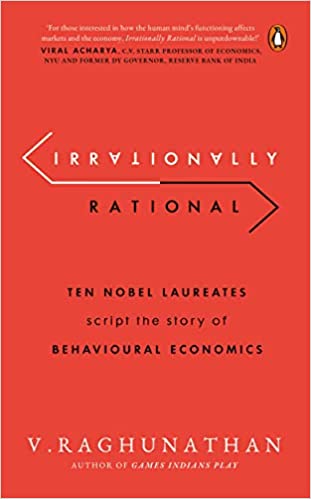
After successfully experimenting with a multitude of genre, including semi-fiction and fiction – Dr. Raghunathan V – the master of #behaviouralfinance returns to his favourite turf. His masterpiece: ‘Irrationally Rational’ was released recently.
It is a must: “For those interested in how the human mind’s functioning affects markets and the economy”. And if you wish to enjoy an “enlightening journey into the work of Nobel laureates and others who have made psychology central to economics”. Or savour “fundamentals of theory of choice and behaviour through delightfully simple and accessible language” and relish “a daunting body of knowledge accessible to everyone”. Here it is!
As for me, I would also want to understand the work of the first ever woman to win a Nobel Prize in Economics – Late Elinor Ostrom. “When I started to look for a position after graduation, it was somewhat of a shock to me to have future employers immediately ask whether I had typing and shorthand skills. The presumption in those days was that the appropriate job for a woman was as a secretary or as a teacher in a grade school or high school”, recounts Elinor. Not daunted by the patriarchal ways of the American society, she worked her way through. Delighted that Raghu dedicates time and space to this brilliant mind.
Needless to mention a remarkable coincidence – seven of the ten Nobel laureates covered by Raghu have Jewish origins! (http://jinfo.org/Nobels_Economics.html).
The link:
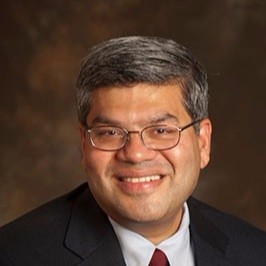
His research focuses on (i) ESG and its implications for valuation, governance and social responsibility; (ii) fundamental analysis of financial statements and valuation, especially earnings quality and accounting fraud; (iii) the efficacy of corporate governance and executive compensation; and (iv) the contribution of corporate culture to productivity at the workplace.
Shiva’s work is frequently cited in the popular press, including The Wall Street Journal, The New York Times, Bloomberg, Fortune, Forbes, Financial Times, Business Week, and the Economist.
Some of the scholarly recognition received by him include the 2006, 2016 and 2018 American Accounting Association (AAA) Notable Contribution to the Literature award, 2006 and 2016 Graham and Dodd Scroll Prize given by the Financial Analysts Journal, and the 2008, 2012 and 2015 Glen McLaughlin Award for Research in Accounting Ethics.
Praveen Gupta: You recently observed that Climate reporting may be the third-best way of focusing on the climate problem?
Shiva Rajagopal: Ideally, Congress should fix the climate issue by considering a carbon tax. However, the state of our politics is such that congressional action on a carbon tax is unlikely. The other argument is that this is best left to the Environment Protection Agency (EPA). But the Supreme Court has two cases pending before it arguing that the EPA has over-extended its authority. So, the probability that the EPA will address the climate issue, without litigation, is slim. Hence, the statement that climate reporting, albeit a small step in the larger struggle against climate change, is perhaps the third best alternative.
PG: There are references to ESG 2.0. Is this an evolved version?
SR: ESG 2.0 – yes, the process will evolve. Regulation, enforcement and awareness of greenwashing issues has increased and that to me is a welcome development. Some of the charlatans that entered the space will leave. I hope that ESG 2.0 will, at the very least, move the conversation forward with greater rigor and authenticity.
PG: Are the financial institutions procrastinating? The IFRS had a serious blind-spot in not having a sustainability component. How does ISSB change it all? Any remedy for greenwashing, as well?
ISSB might become the default standard setter for the world in the area of sustainability unless the SEC can push through the climate disclosure rule in some form or the other.
SR: The last few weeks have seen a flurry of activity in this respect. The Securities and Exchange Commission’s (SEC) action against Vale. The German Government going after DWS for greenwashing. The SEC’s new ESG funds rule, the names rule and of course the climate risk disclosure rules should all help us mitigate the greenwashing problem somewhat. ISSB might become the default standard setter for the world in the area of sustainability unless the SEC can push through the climate disclosure rule in some form or the other.
PG: Does the SEC prescription cover ‘Scope 3’ adequately?
SR: Yes, it recognizes the difficulty associated with measuring scope 3 and allows for a staggered implementation strategy and a litigation safe harbor. Some have asked for even more relaxed regime where scope 3 is required for say companies with a market cap of $10 billion or more. Attestation and/or assurance can also be quite difficult for scope 3 as of now.
PG: Twenty-two leading law and finance professors have urged SEC to withdraw the Climate Disclosure Proposal. Any thoughts?
SR: You must have seen the two comment letters I was part of. One, in my individual capacity, and one signed by several ex-SEC commissioners. These two letters offer a counter-perspective to that of the 22 leading law professors both in terms of cost-benefit analyses and in pushing back against the idea that the SEC has no authority to enact climate risk disclosure rules.
Yes, the Global South has a huge tradeoff to confront between lower emissions and lost GDP as a result.
PG: What ideally should a transition pathway look like? Any differentiation between Global North and South?
SR: The transition pathway is idiosyncratic by definition to an individual company. There is perhaps no ideal “one size fits all” path for everyone. All I am asking for is transparency with respect to how the firm intends to fulfil its pledges. Yes, the Global South has a huge tradeoff to confront between lower emissions and lost GDP as a result.
PG: Many thanks Dr. Shiva Rajgopal, for these brilliant insights!
https://illuminem.com/energyvoices/b9385884-1d97-4b0a-83f8-07e2de5d7890
This Op-Ed, for #Illuminem, is an outcome of my ‘research’ in connection with the recent #International Union of Marine Insurance (IUMI) event. While #shipping became a dominant catalyst of #globalisation, its reckless ways is wrecking the planetary health.
More than four-fifths of the international trade in goods is carried by sea. About nine out of 10 items are shipped halfway around the world on board some of the biggest and dirtiest machines on the planet.
Like aviation, shipping is not covered by the Paris Agreement on climate change because of the international nature of the industry. “Instead, it is the job of the International Maritime Organisation (IMO) to negotiate a reduction in emissions from the industry.” Environmentalists blame the organisation for the industry’s slow response.
“The ocean has absorbed one third of the carbon we’ve produced and 93% of the extra heat being trapped inside the atmosphere by the extra blanket we’re wrapping around our planet. Marine species are migrating 10 times faster than species on land … and they’re also being affected by pollution, sewage, massive algae blooms from fertilizer runoff, and 14 million tons of plastic every year. Why aren’t we talking about what’s happening in the oceans more?” Says Katharine Hayhoe, Climate Scientist.
“The ocean is our greatest ally in our fight against the climate emergency”, remind Alex Rogers at REV Ocean and Steve Trent of the Environmental Justice Foundation.
The importance of ‘green carbon’ stored on land, such as in forests, is widely recognised by the public and governments and it is included in many commitments under the Paris Climate Accord.
However, blue carbon, the carbon stored in coastal and marine ecosystems, has not been fully recognised, even though the ocean is the largest active carbon sink and store in the earth’s system.
Carbon uptake and storage by marine ecosystems must now be considered in every aspect of ocean management, from coastal development to fisheries management and shipping.
Even “If we become carbon neutral tomorrow, atmospheric carbon dioxide will still pass 500ppm, and oceanic pH will drop below 7.95 and all carbonate base life including coral reefs will dissolve within 25 years.We could survive climate change, we will not survive the loss of marine life and the Ocean Drifters upon which Life on Earth depends’’, warns Dr. Howard Dryden.
Can the IMO live up to the responsibility vested on it or will it succumb to the alleged corporate capture? Will marine insurers demonstrate leadership as general insurers and reinsurers struggle making up their mind? Would attempts at invoking #ESG be just lip service? Can Poseidon Principles navigate the shipping industry out of the dire straits?
June 18, 2022

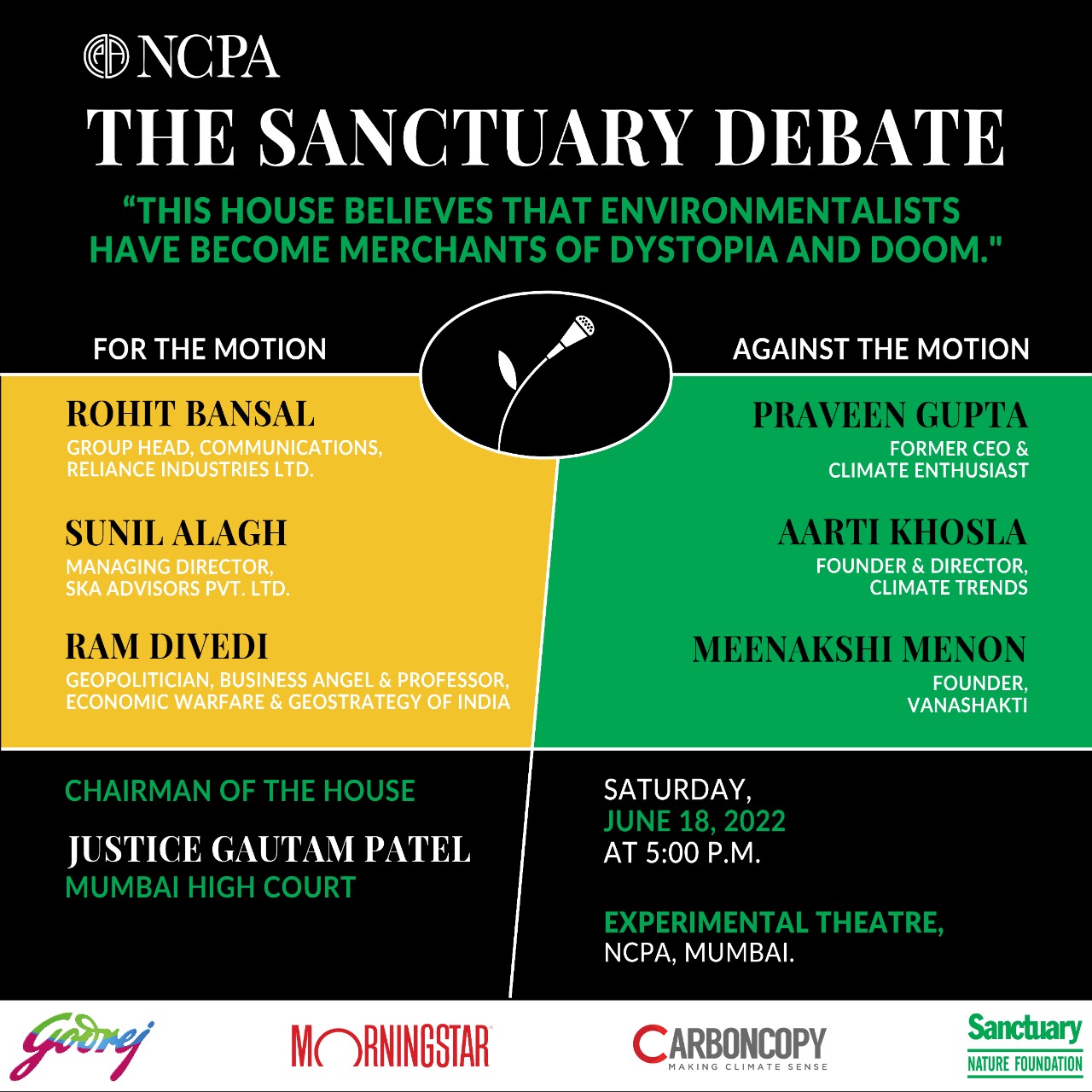
Wonderful teaming up with @Meenakshi Menon and @Aarti Khosla in a spirited session, earlier this evening. Mainstreaming Insurance and converging its importance in the Climate, Biodiversity and Pollution play can be challenging. However, it is getting increasingly critical and there is a serious urgency.
Needless to mention a growing consensus, in particular, to widen the scope and meaning of environmentalism. Associated neo-capitalist stereotypes such as dystopia and doom ought to go!
Here I am tempted to quote Christian Gollier (Pricing The Planet’s Future): “It is crucial that we allocate our present sacrifices for the future in the way that maxiizes the increase in welfare of future generations”.
Congratulations @Bittu Sahgal and @Sanctuary Nature Foundation – for this memorable event.

June 14, 2022
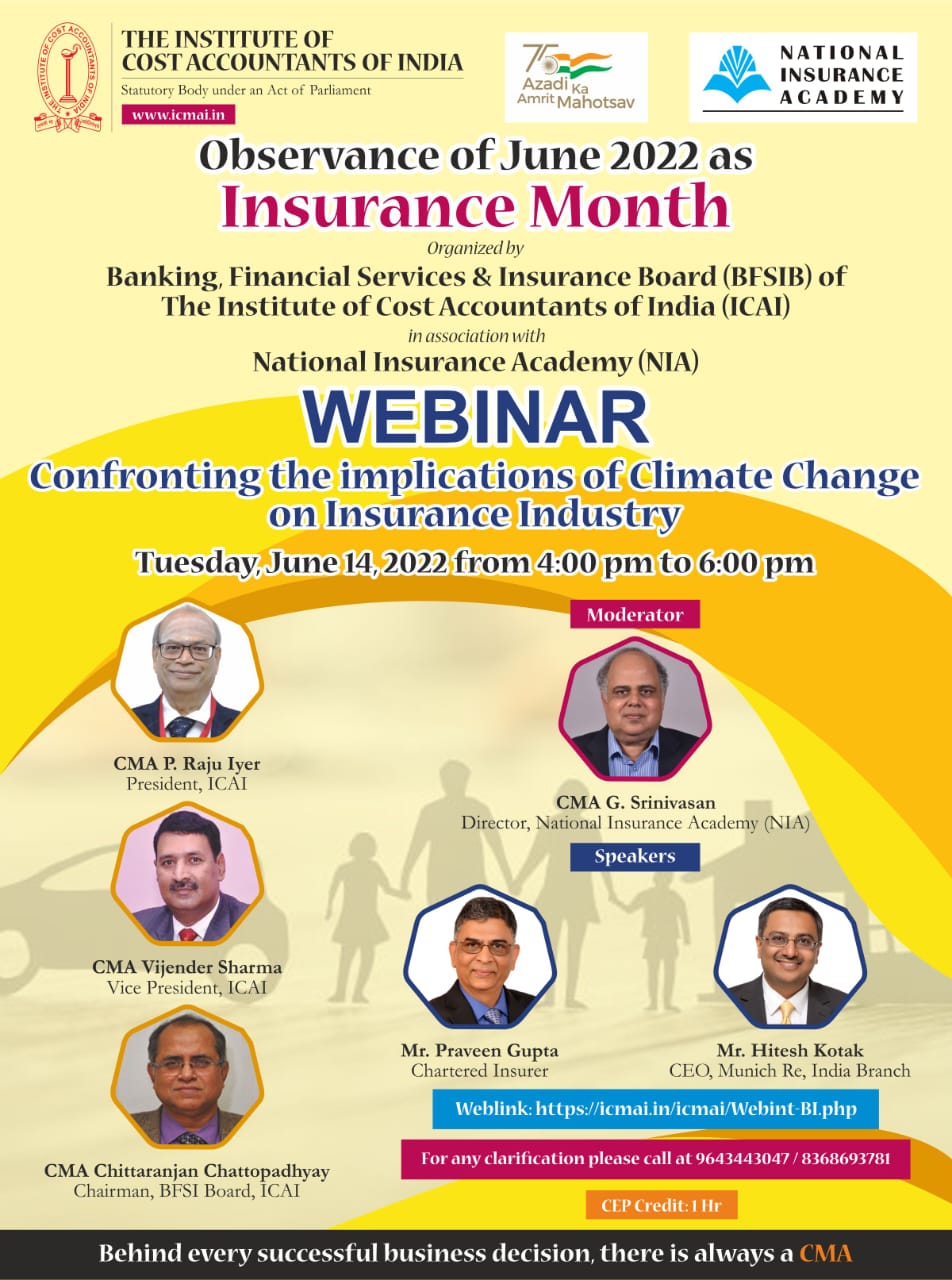
National Insurance Academy (NIA) & The Institute of Cost Accounts of India (ICAI) co-hosted this event, earlier today. Presented my perspective on the Climate Crisis.

June 2, 2022
Honoured to run a panel on “The growing importance of sustainability and ESG in marine insurance” at the International Union of Marine Insurance (IUMI) Asia Forum 2022, earlier today in Mumbai. Jan-Hugo Marthinsen, Vice President, Head Offshore Energy Claims, Gard AS (seated to my left) and Richard Turner FCII, IUMI President & International Head of Marine, Victor Insurance Holdings were the two distinguished panelists.
Congratulations to the General Insurance Council for the first ever Indian insurance industry spotlight on Environment, Societal and Governance (ESG) in the midst of a burgeoning #ClimateCrisis. While marine insurance accounts for a small piece in the overall insurance pie – the fact remains that about 71 percent of the Earth’s surface is water-covered, and the oceans hold about 96.5 percent of all Earth’s water. Shipping has some grave implications for the health of our oceans, thereby overall planetary well-being. #Pollution, #Biodiversity loss and resultant #Climate impact being the critical ones.
As part of its key initiatives, IUMI is addressing alternatives particularly to dirty fuel that ships use and discharge; over-fishing and the business of ship breaking. Before tipping points result into domino effect, a serious sense of urgency is called for.
CC Poseidon Principles for Marine Insurance
Climate and Capital Media: May 25, 2022
Op-ed for Illuminem: May 16, 2022
https://illuminem.com/energyvoices/1abf9737-eede-4a30-a243-5cc39b64909c
Who would not agree with Ukrainian scientist Svitlana Krakovska: “Let me assure you that this human-induced climate change and war against Ukraine have direct connections and the same roots. They are fossil fuels and humanity’s dependence on them”. That insurers, like the rest of the financial world, end up being facilitators of this process ought to not surprise anyone either. As we navigate ourselves into dire straits, we seem to be enacting a theatre of the absurd.
“It is astounding to me that our current economic model expects to continue to grow our energy use exponentially forever”, I quote Erin Remblance. Referring to her recent Op-Ed in Environmental Finance, says Desiree Fixler. “I call out the hypocrisy of the net zero-pledged asset managers who continue to invest in coal, oil and gas expansion projects. There is just no way for investors to achieve net zero without setting fossil fuel exclusion policies.”
All the World’s turning out to be a theatre of the absurd! “The fate of the earth rests in the hands of JPMorgan Chase.” World’s biggest financier of fossil fuel. Points out Billy Gridley 🇺🇦, Climate & Capital Media. He further reminds: “Dimon and JPMorgan cannot and will not walk away from oil and gas profits. To do so would present the company, its shareholders and civilization as we know it, with the greatest financial risk ever in the history of banking. You only have to read Carbon Tracker, PRI (Principles for Responsible Investment) and Climate Action 100+ research on Peak Oil, stranded asset risk and looming accounting and audit issues, to get a sinking feeling the entire banking industry is as dependent on the future of fossil fuel as the oil and gas industry.
In that sense, the war in Ukraine is a godsend. To save democracy, it is now the patriotic duty of the industry to extract as much fossil fuel as it can, and in as short a time as possible”.
“What will his legacy be?” Bill Gridley moves the spotlight on to Warren Buffett.
“Let’s start with carbon pollution. The allocation of investment capital beloved by Buffett is headed smack into a science-based brick wall of rising heat. What does Mr. Buffett have to say about that?
At $125 billion Mr. Buffett is one of the richest men in the world, yet he eats breakfast at Mcdonald’s every day. He is 91 years of age and will be damned! He wants to remain chair and CEO.
But his source of profit comes from companies that are coming under scrutiny for promoting a deteriorating quality of life. Increasingly, Buffett will be judged by more than profits and his ability to spin the media. Carbon pollution, diabetes – think cherry coke and DQ delights – and air pollution spewing from power plants in poor neighborhoods may be his central legacy. Only when he leaves office does he promise to split the role of chair and CEO. He is Emperor Buffett. In the meantime, his message to shareholders: Let them eat Big Macs”.
Last but not the least, “only 8% surveyed insurers on course to achieve climate resiliency” says Capgemini. Time running out for the script and the stars!
 The Diversity Blog